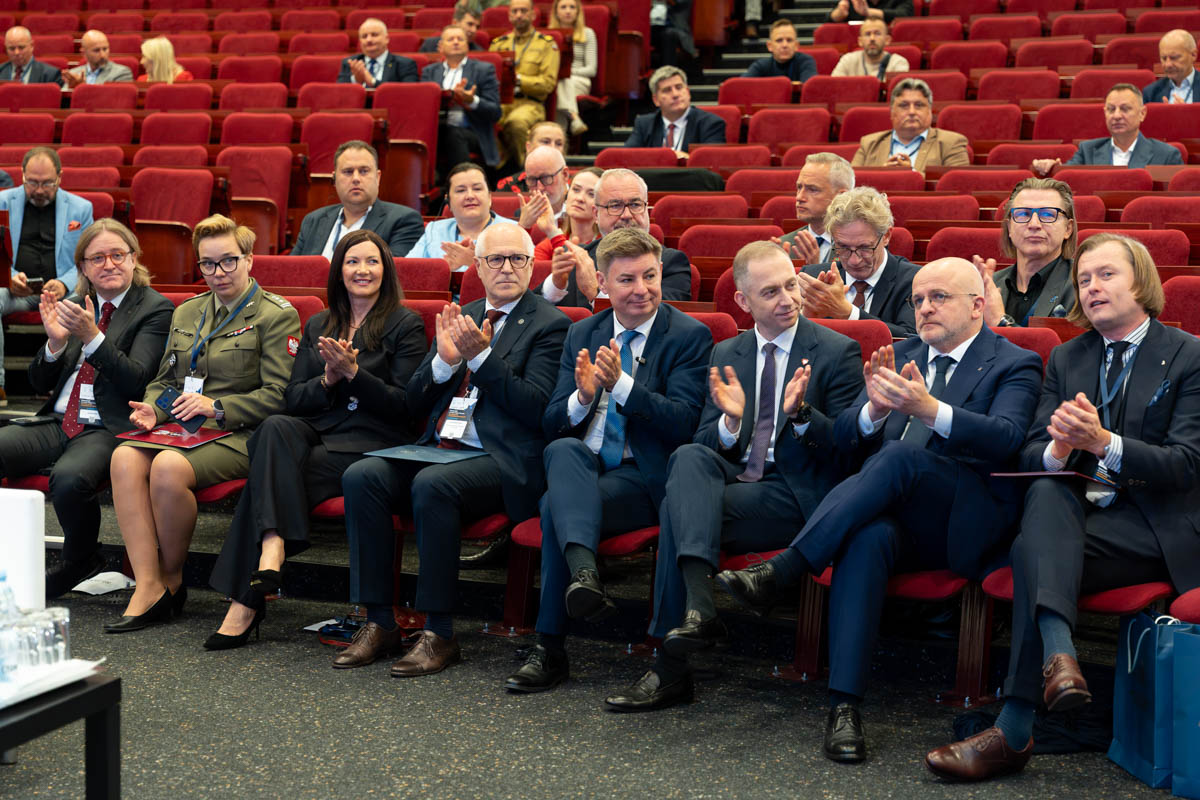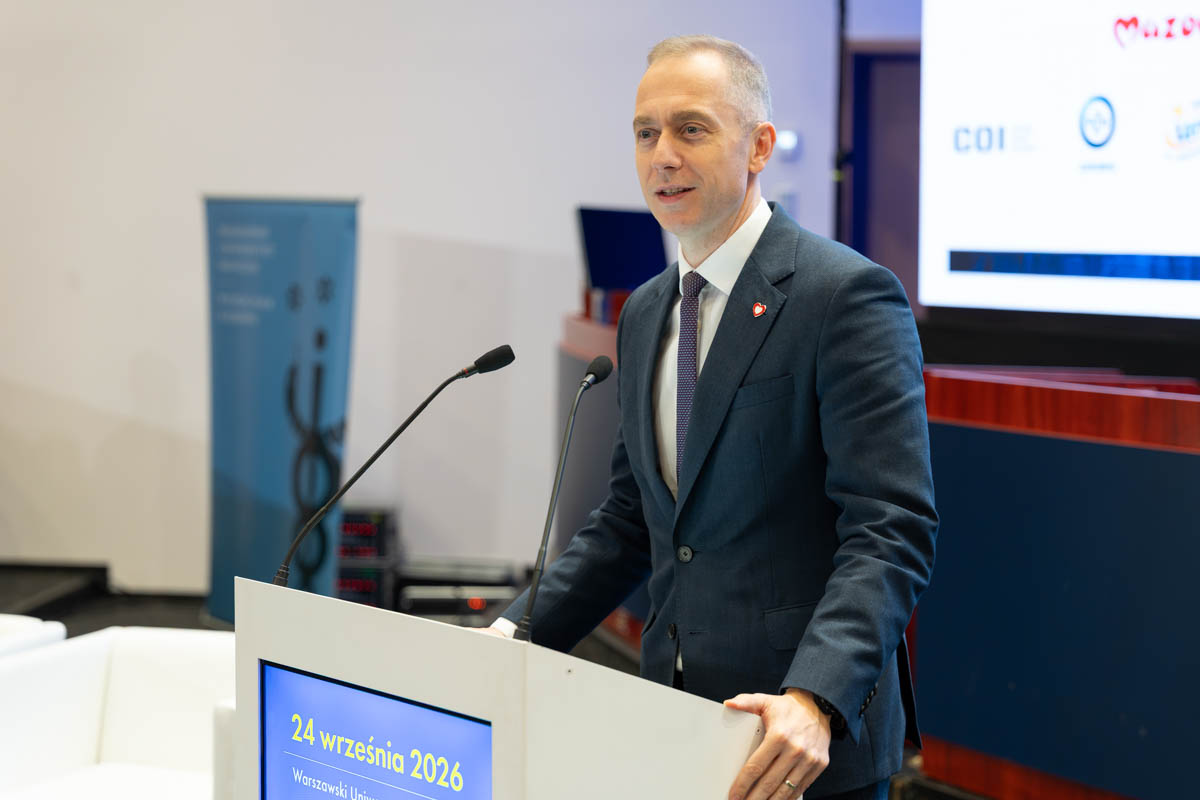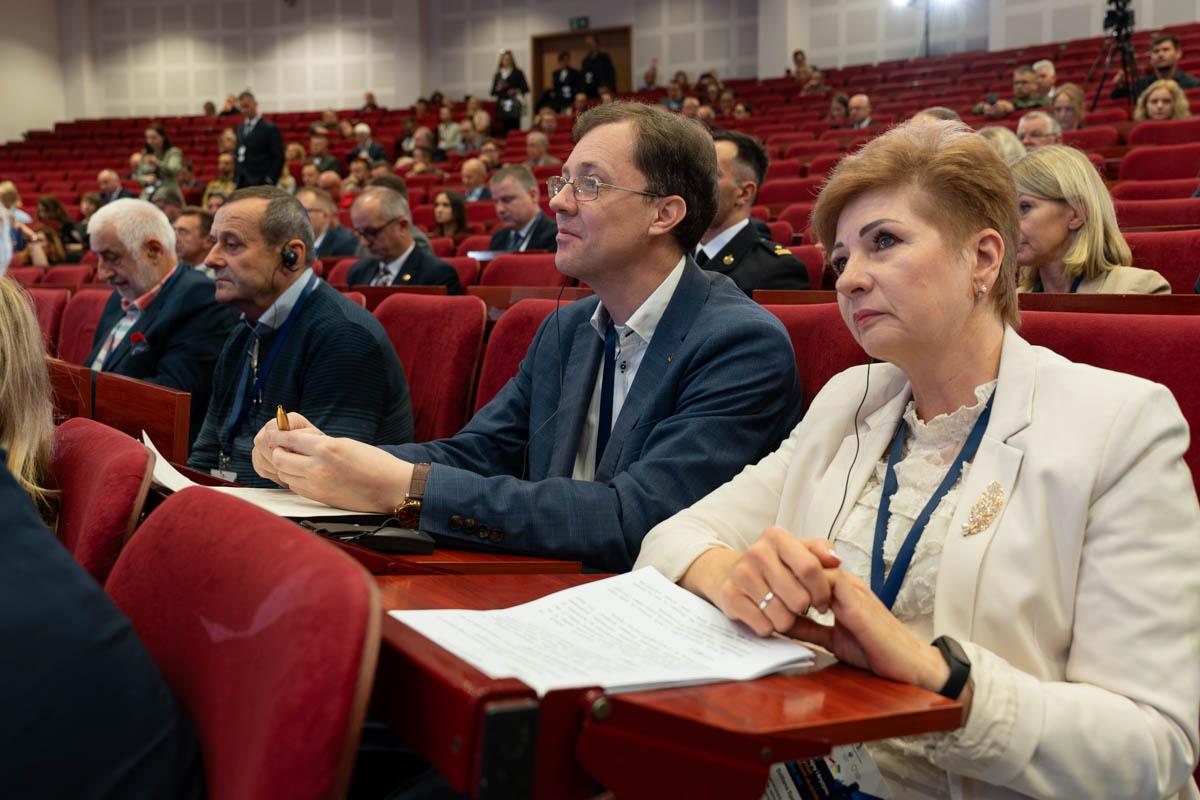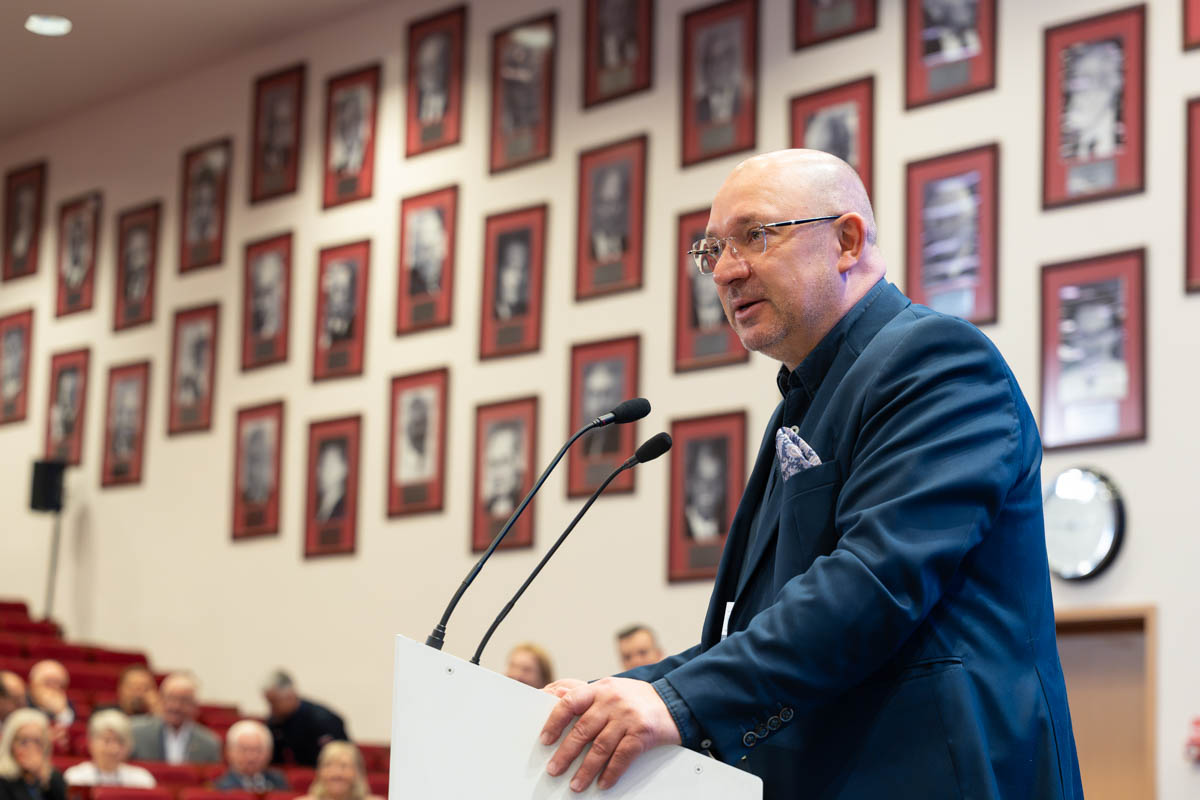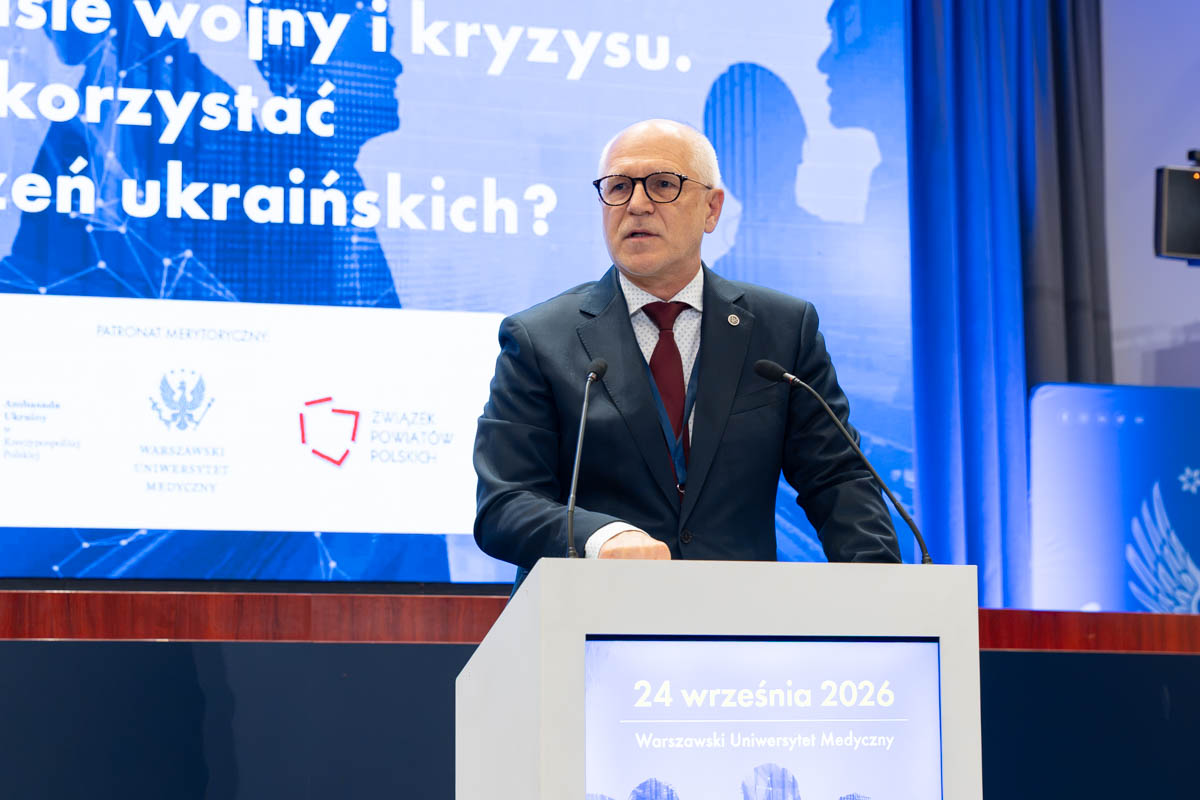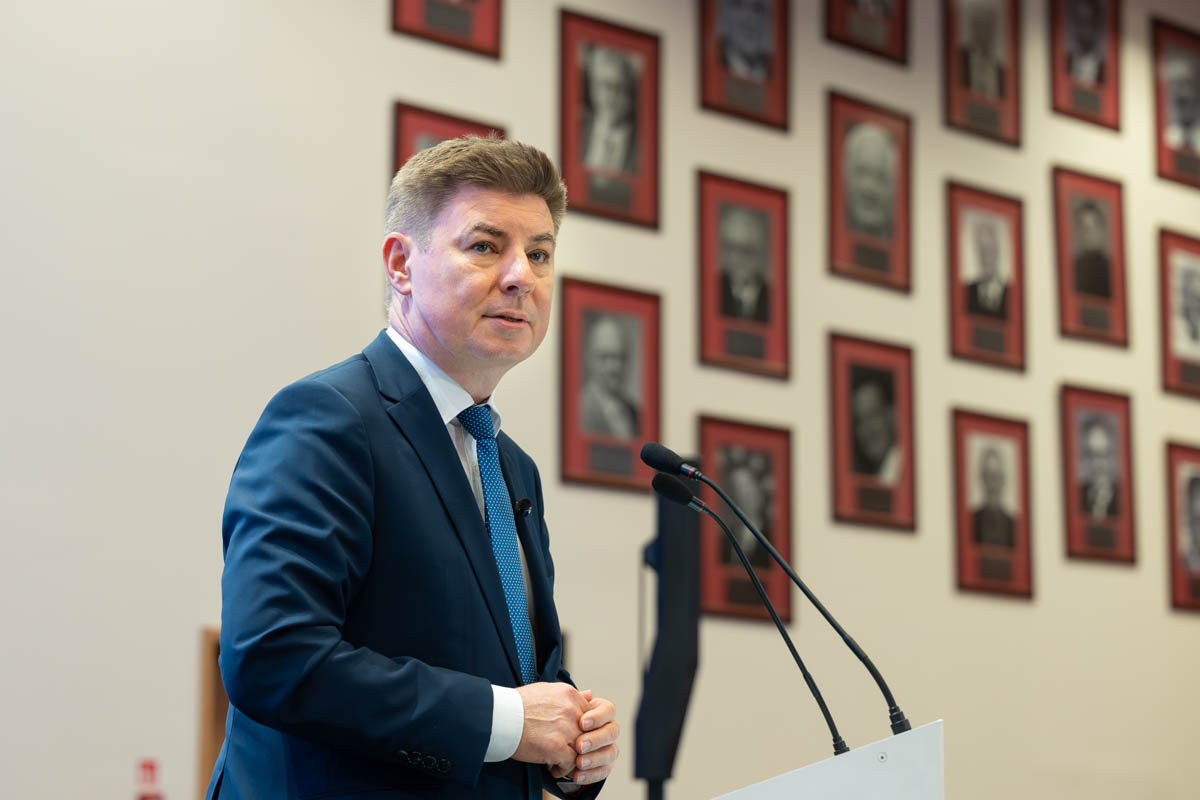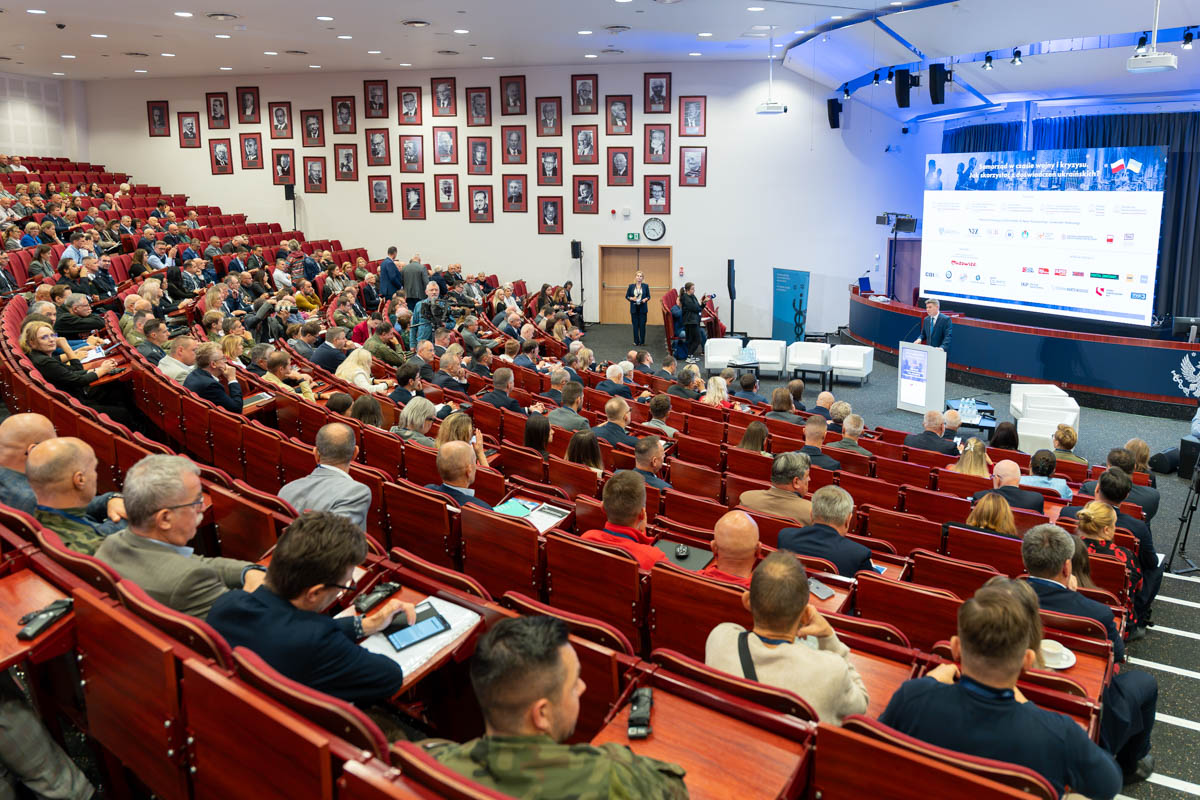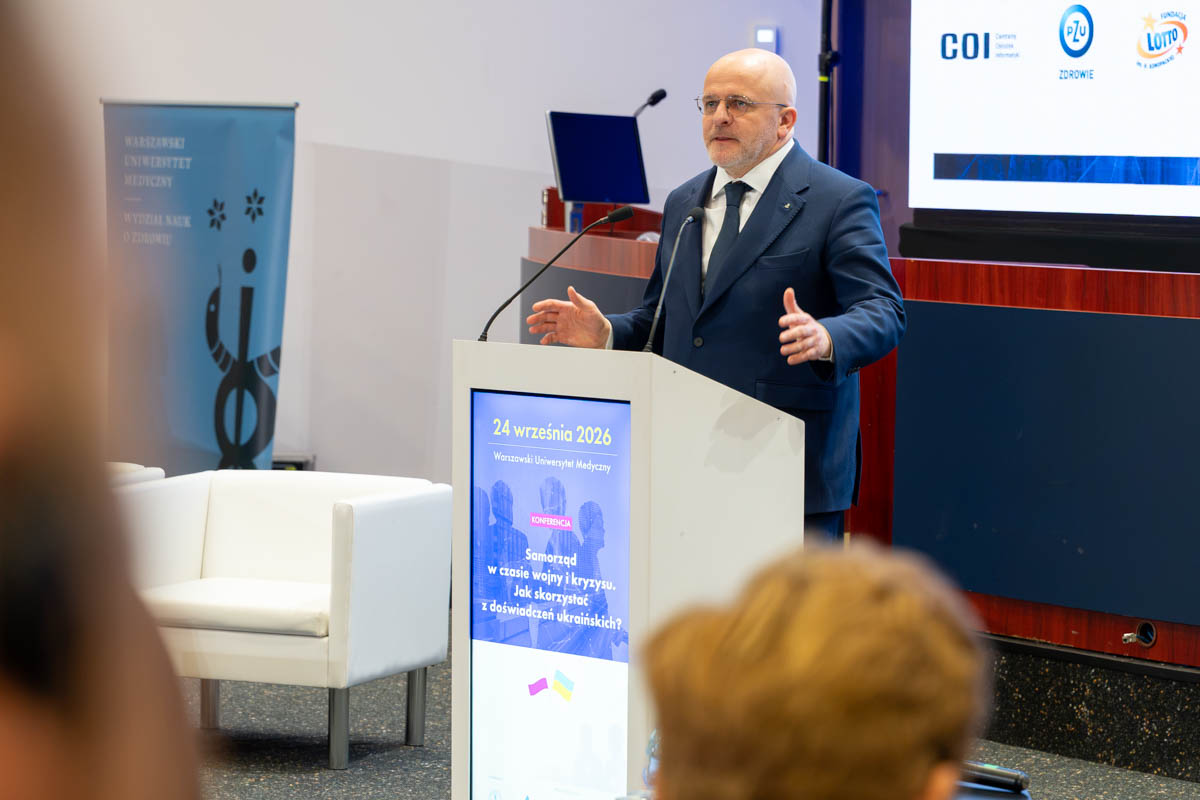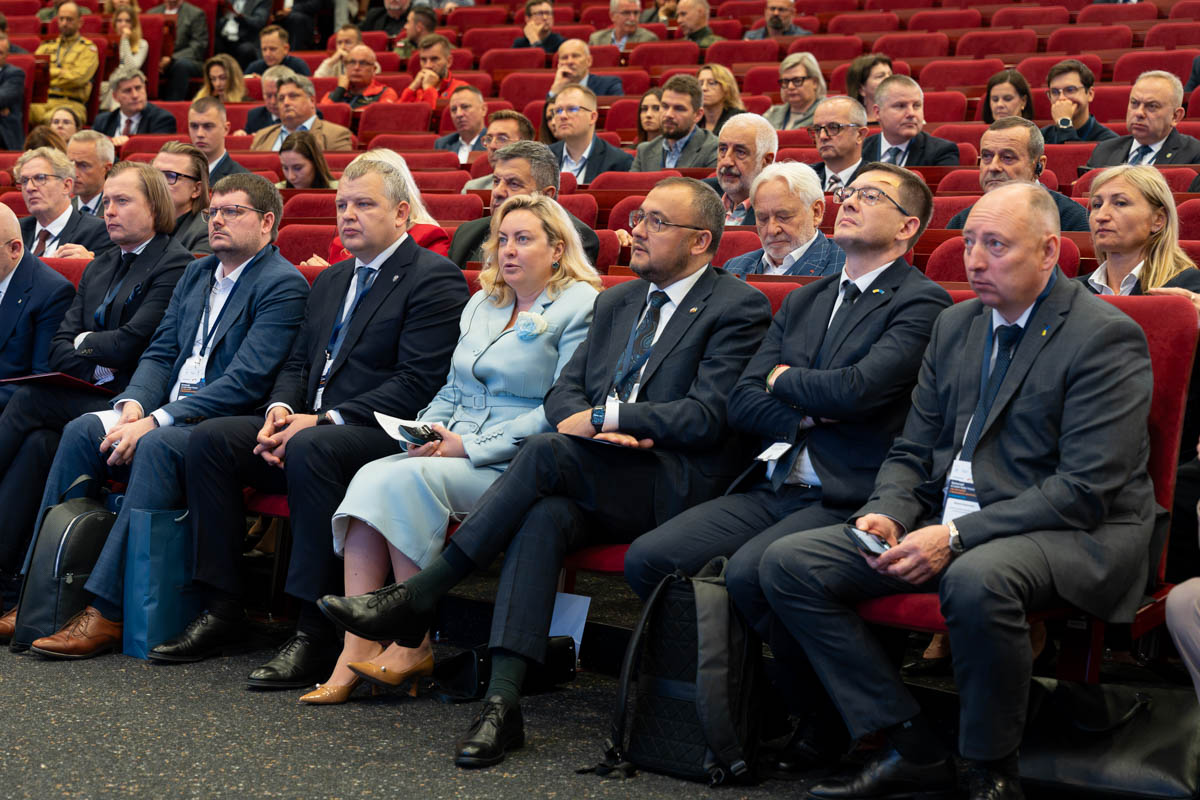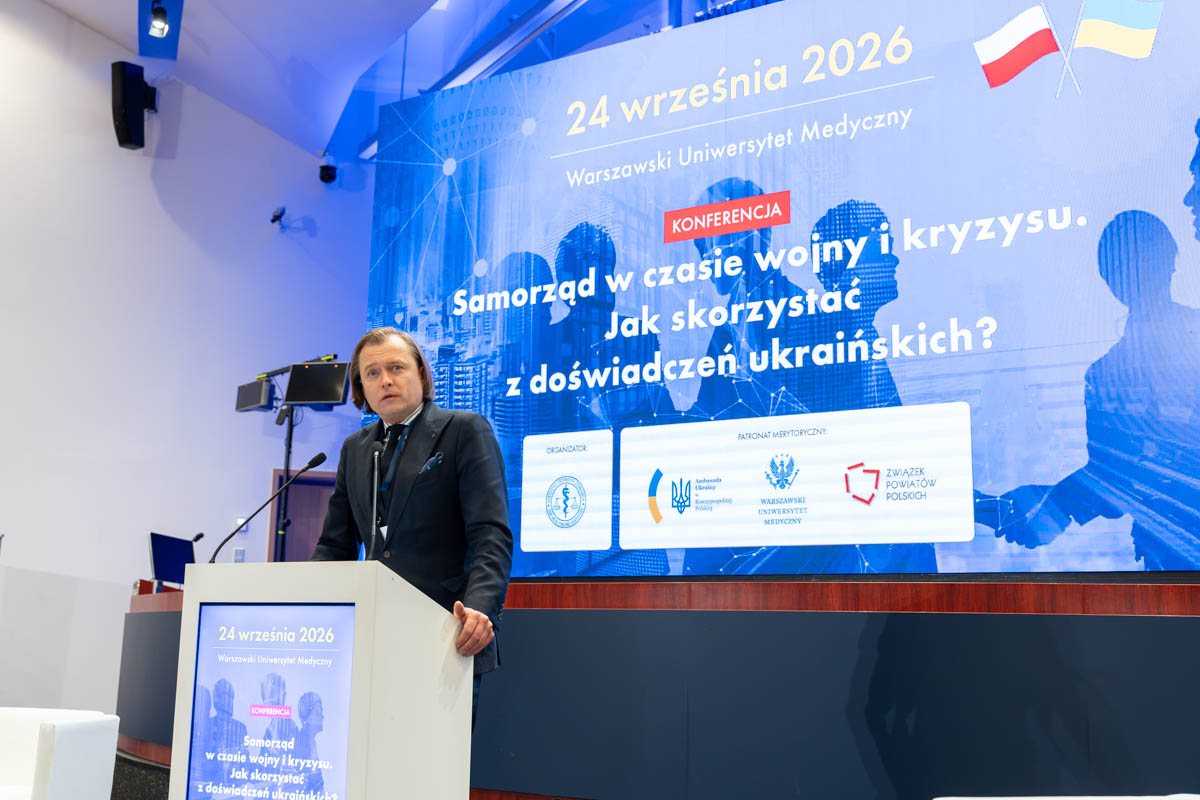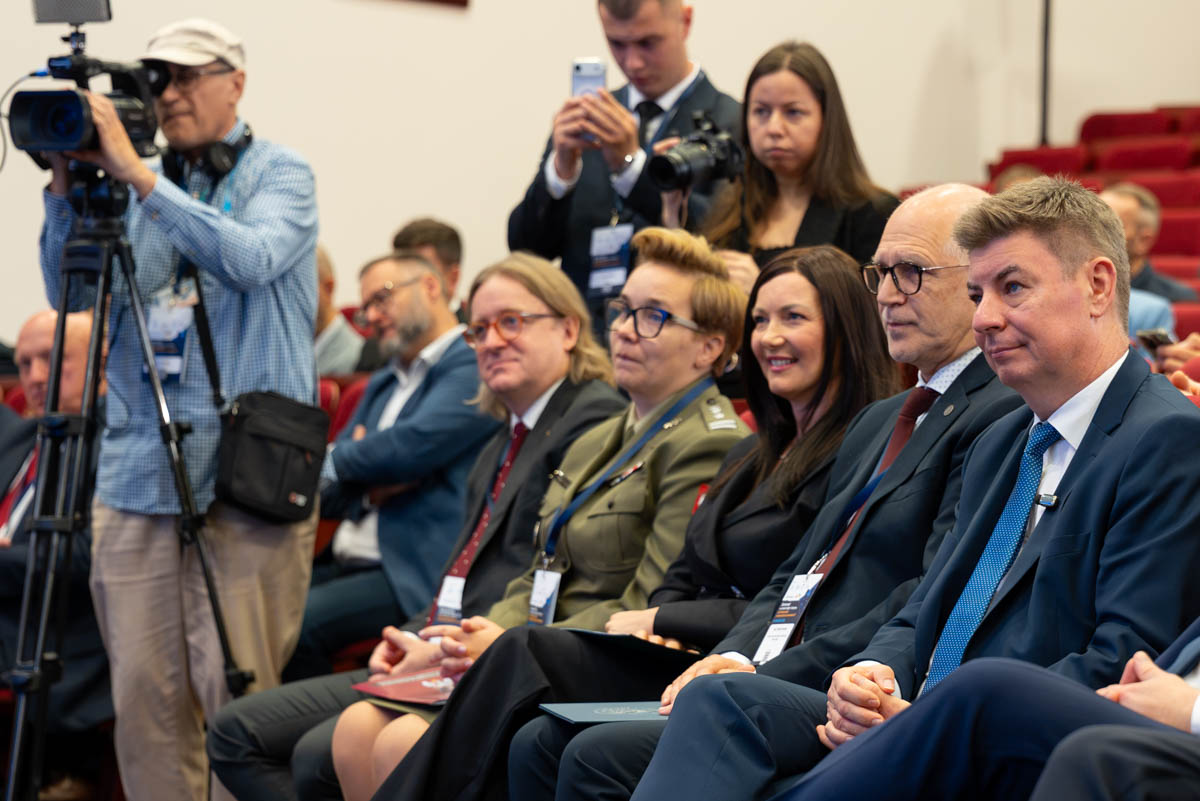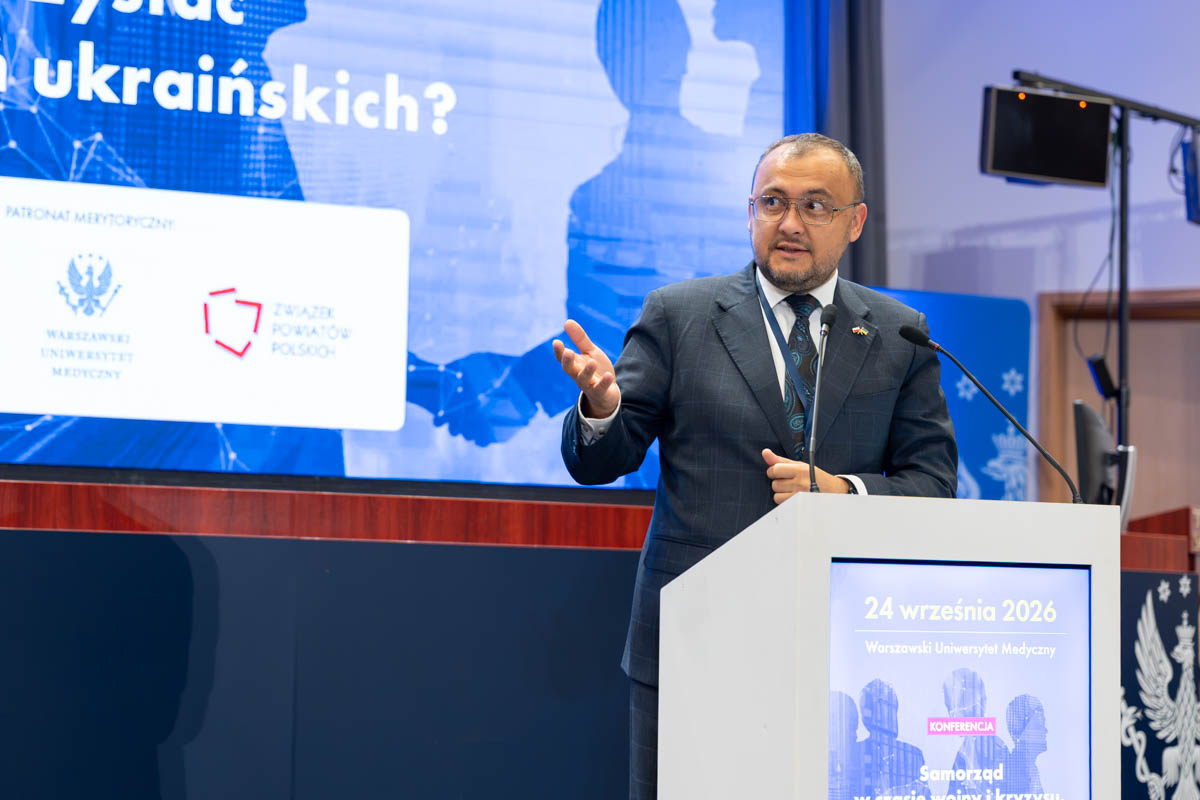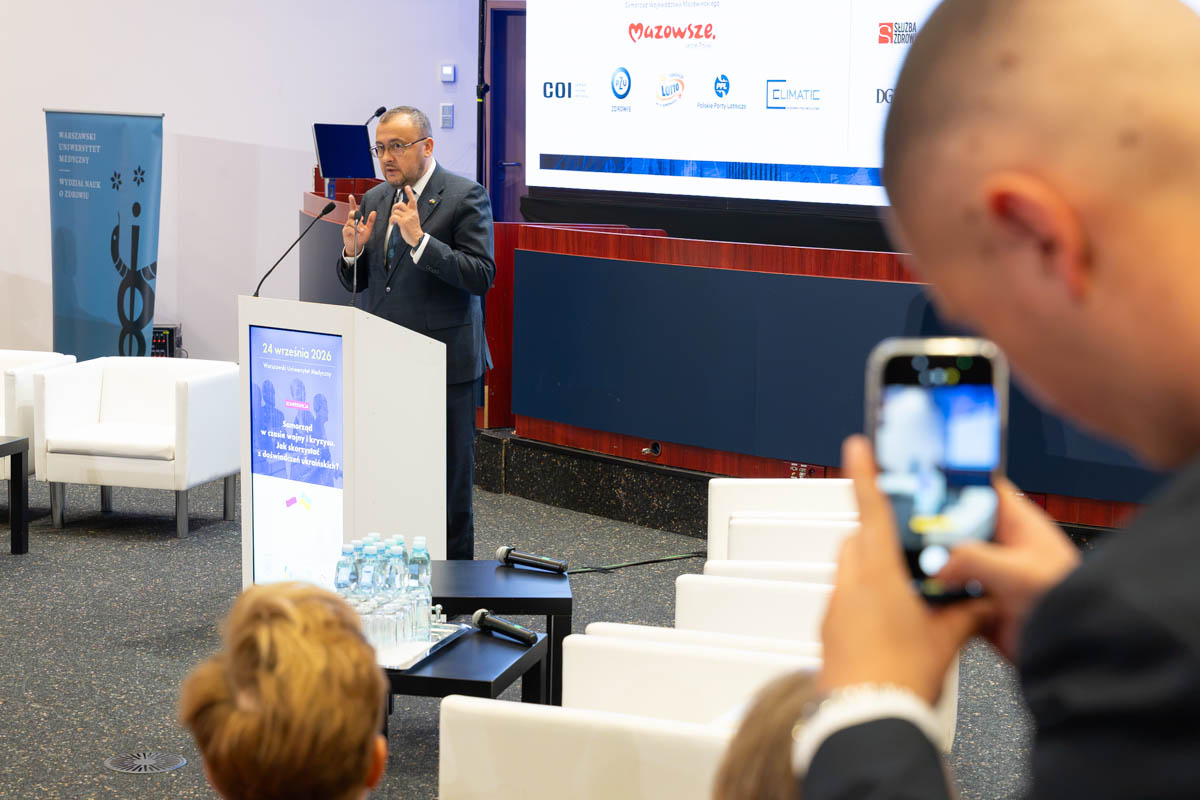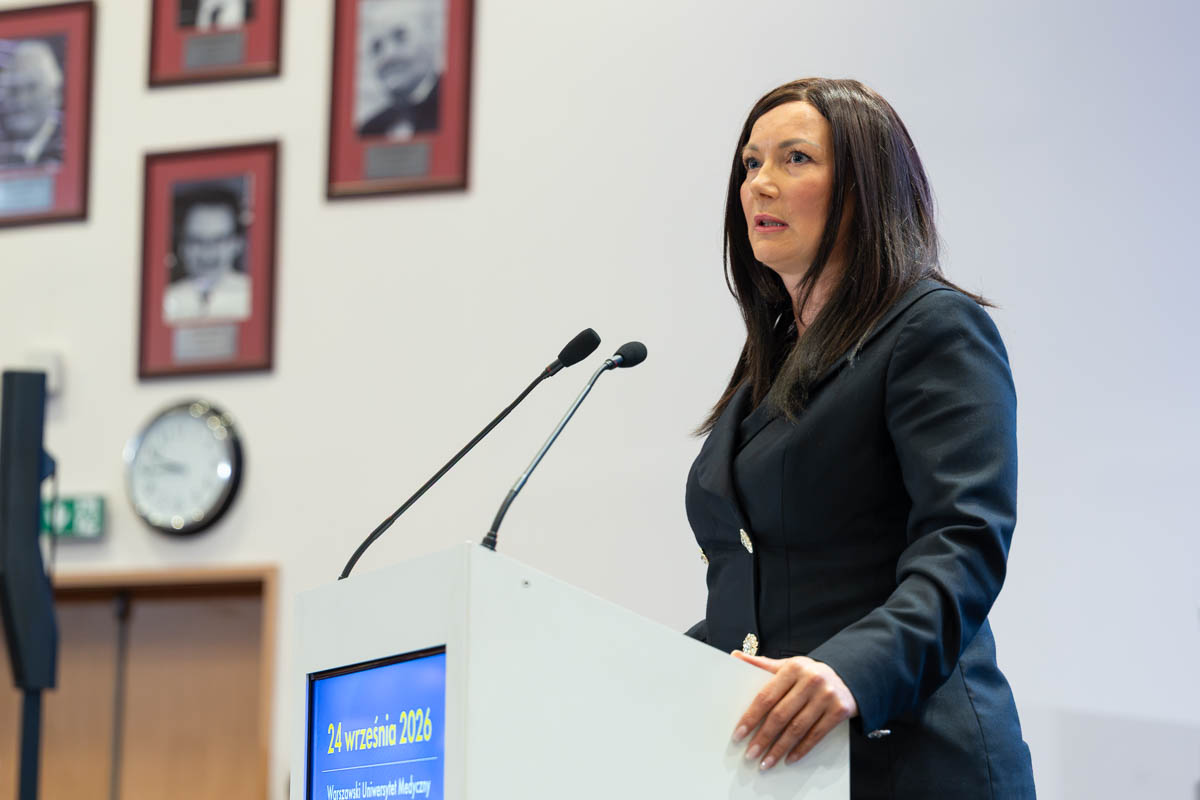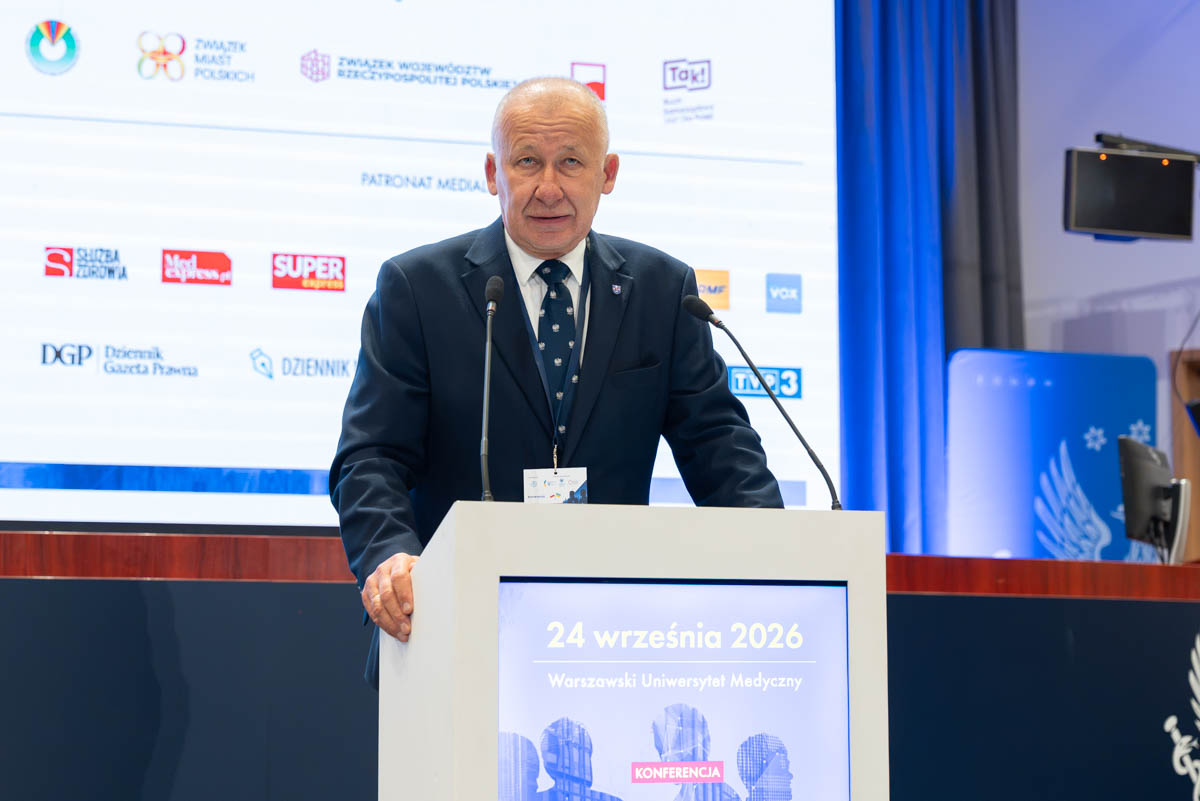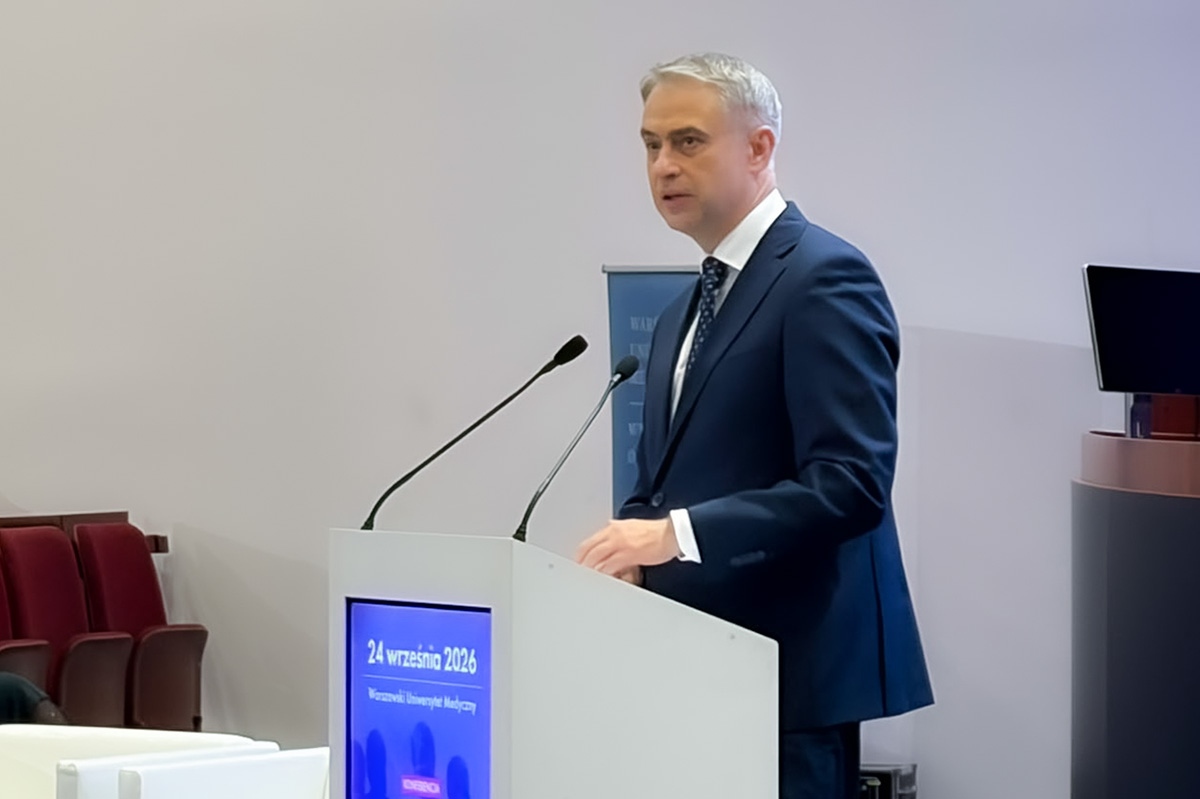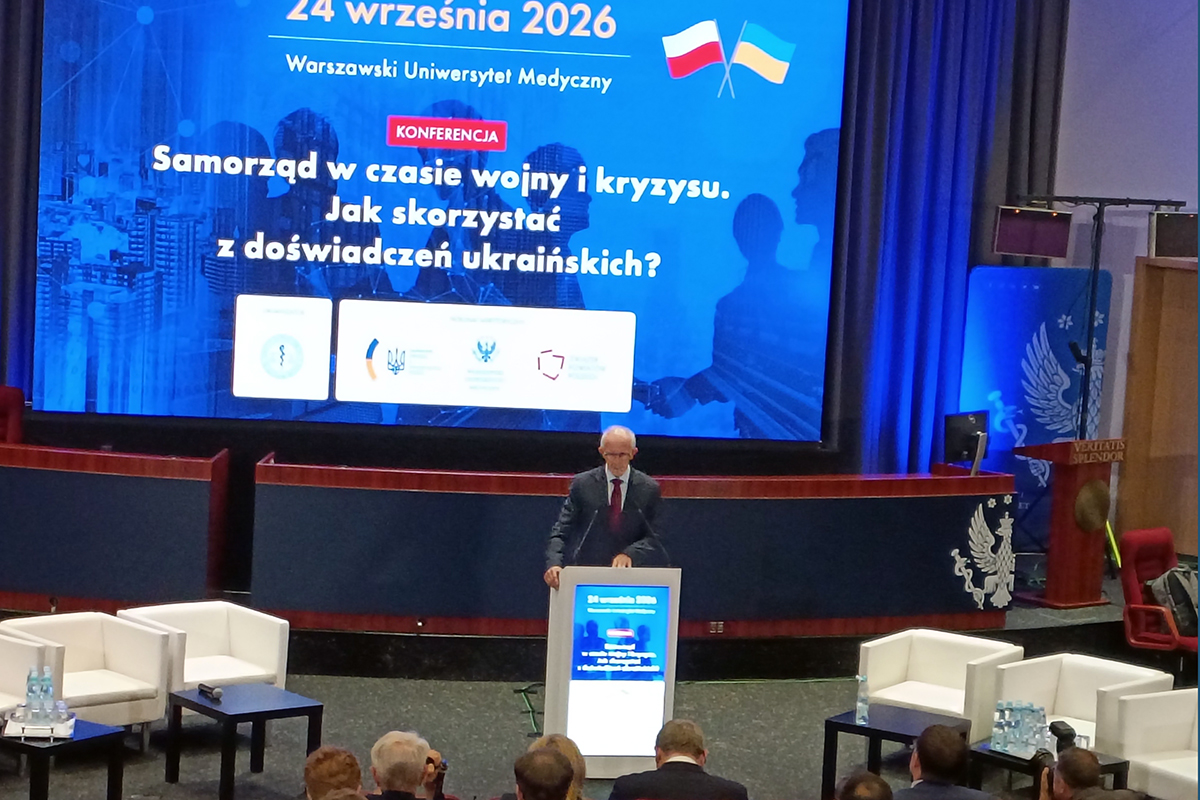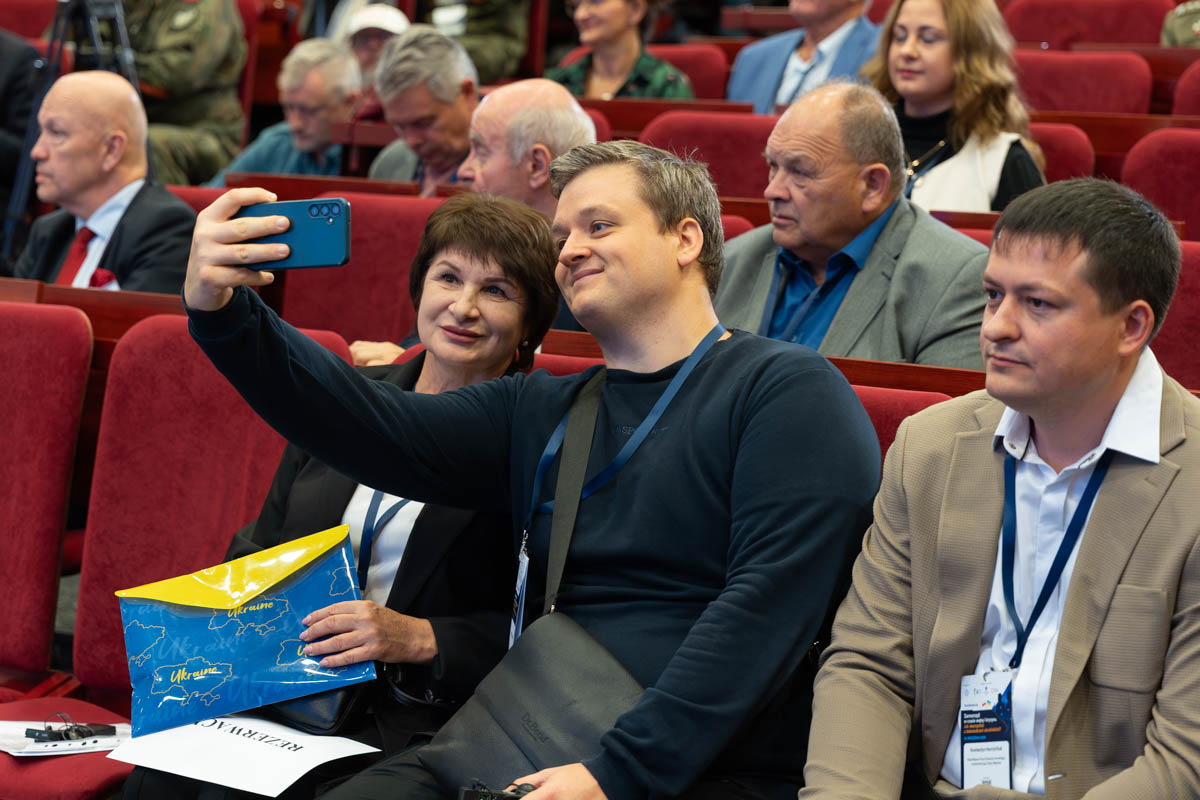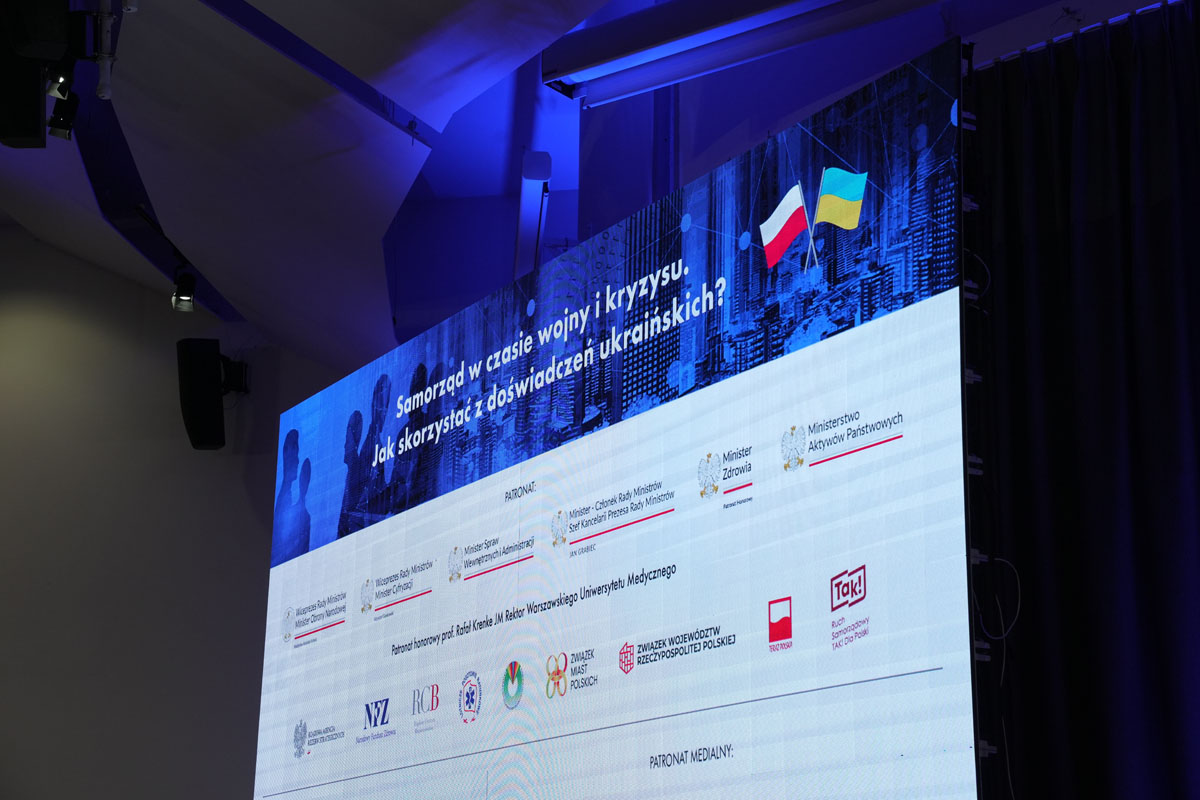
The conference, which was held on 24 September in the auditorium of WUM, was organized by the Institute of Health Care in cooperation with the Faculty of Health Sciences of the Medical University of Warsaw, the Association of Polish Counties and the Embassy of Ukraine.
The patronage of the event was granted by the Deputy Prime Minister Minister of National Defence, Deputy Prime Minister Minister of Digitization, Minister of the Interior and Administration, Minister – Member of the Council of the Ministers, Head of the Chancellery of the Prime Minister, Minister of Health, Ministry of State Assets, the Rector of WUM, and others.
What was discussed during the conference
The main topics of the event included the preparation of local governments for civil protection, maintaining the continuity of public services, effective communication with residents and cooperation with the services.
During the conference, speeches were delivered by representatives of public administration, including the ministries of national defence, digitization, and health, and Mazovian Voivodeship, as well as representatives of academia and local government, military personnel and experts in security and defense.
Speeches of local government officials from Ukraine constituted a special element of the conference, when good practices and tools supporting crisis management at the local and regional level were shared.
Ukrainian experience supporting the Polish security system
“I would like to thank the Ukrainian delegation, because today you are offering the whole of Europe something truly amazing – time,” emphasized Cezary Tomczyk, the Secretary of State in the Ministry of National Defence. “We are doing everything to support you and help from Europe will certainly not stop. For us, helping Ukraine is an absolute necessity today.”
Cezary Tomczyk also pointed out that local governments remained the first line of response in emergency situations. Therefore, developing their competences, resources and ability to act effectively is crucial for the resilience of the state.
Prof. Robert Gałązkowski, the Dean of the Faculty of Health Sciences and conference initiator, emphasized that although Poland had not yet experienced the most serious effects of the armed conflict in Ukraine, it must prepare for various types of crisis situations, such as hybrid threats or terrorist attacks. That is why it is so crucial to build the resilience of society, develop response procedures and strengthen cooperation between local governments, public services and institutions. And we can learn this from representatives of Ukrainian institutions.
“This meeting is absolutely unique. We are hosting our friends, who, since the outbreak of the war in Ukraine, have been managing local communities at different levels, facing constant attacks. Today we will hear testimonies that we will not see on television, will not read in books. Thank you for being here with us, because this is how we build our joint resilience,” emphasized Professor Gałązkowski.
Shared responsibility for state security
“The presence of representatives of the government, local governments, services, the scientific community and universities at the conference shows that our actions and the issue of security should surpass political and administrative boundaries. And building this security is our everyday, common task,” emphasized the Rector of the Medical University of Warsaw, Prof. Rafał Krenke.
The Rector highlighted that war was not only military action, but also a humanitarian, social and health crisis, which is why medical institutions play a key role in preparing the country for emergencies.
The Rector's speech particularly emphasized the value of the experience of Ukrainian local government officials and healthcare leaders who have been functioning in wartime conditions for years. Their knowledge of the organization of medical care, civilian evacuation, operation of hospitals and crisis management may help Poland better prepare for various types of threats.
“It is our duty as citizens, scientists, and officials to draw conclusions from these experiences,” emphasized Professor Krenke.
State resilience starts at the local level
Jan Grabiec, the Head of the Chancellery of the Prime Minister, pointed out that the topic of the conference accurately reflected the contemporary challenges facing the state and local governments.
“Local government is the foundation of the Polish state and is certainly the foundation of all crisis activities,” he said, adding that the experience of recent years, including the floods in Lower Silesia, showed the importance of efficient leadership, organizational readiness and quick decision-making at the local level.
However, the unpredictable nature of modern threats and limited time to prepare for potential crises still remain a challenge. Therefore, the experience of Ukrainian local governments is of particular importance.
“As much as 90 percent of the funds we allocate to the civil protection and civil defense program go to local governments. In Mazovia, within just one year, local governments received over a billion zlotys for the construction of collective protection facilities, modernization of collective protection facilities, expert opinions on such facilities, specific construction projects, upgrading warehouses with equipment,” noted Mariusz Frankowski, the Mazovian voivode.
However, as he observed, shaping attitudes and educating local community residents was as important for building security as investments in infrastructure.
Dr Paweł Kowal, ISP PAN Professor, Government Plenipotentiary for Reconstruction of Ukraine, Chairman of the Foreign Affairs Committee of the Sejm and the Council for Cooperation with Ukraine, also emphasized that state security was based not only on defense spending and government actions, but also on effective civil defense and the involvement of local communities: from parishes, through village women's clubs to volunteer fire departments. The involvement of units that know how to act in emergency situations was another important aspect mentioned.
Cooperation and exchange of experience for safety
Vasyl Bodnar, the Ambassador of Ukraine to Poland, expressed hope that the experience of Ukrainian local governments, gained while facing war and enornous losses, could help other countries better prepare for crisis situations. The most important conclusions he mentioned were: the development of security infrastructure, air defense and effective fight against disinformation, which often preceded military operations. He also thanked Poland for its cooperation and support.
Ukrainian perspective
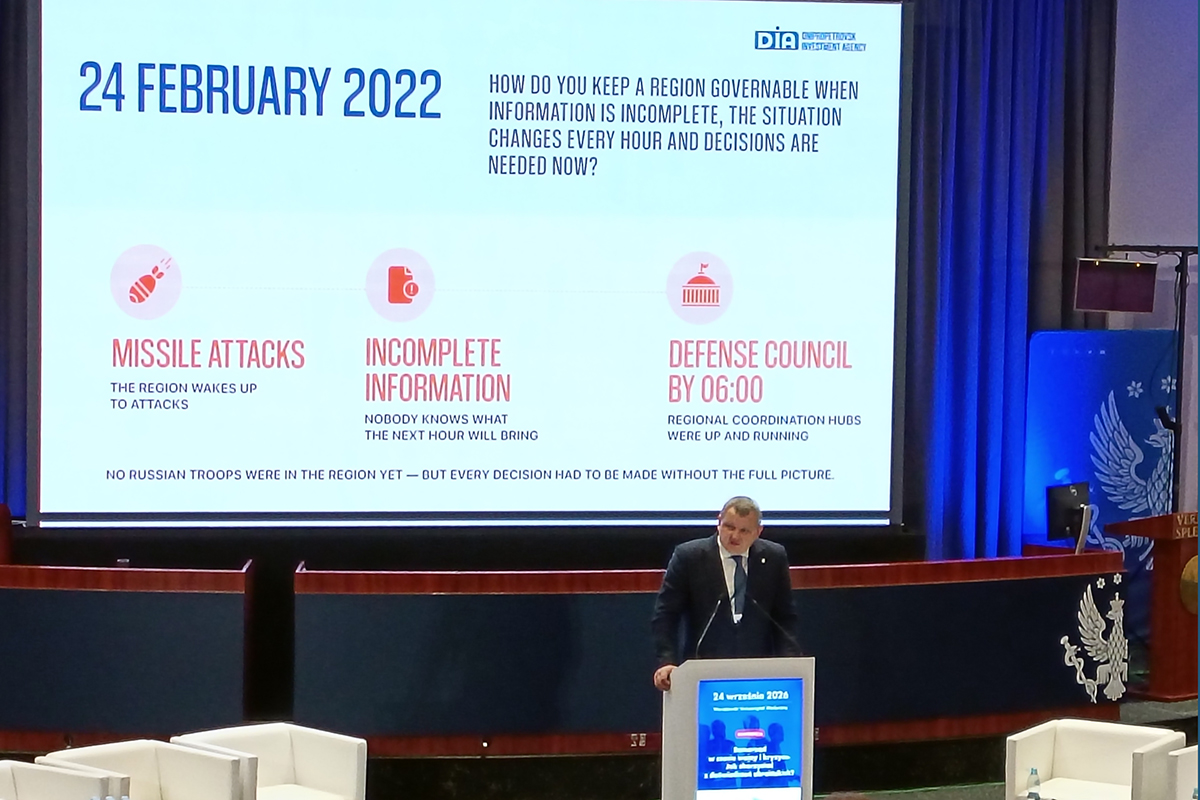
During the conference, sessions were held with the participation of representatives of Ukrainian local governments. During the first one, the discussion focused on the decisions which had to be made in the first hours and days, what the management of the city and the region looked like after the outbreak of war, how cooperation with the central administration, services and residents was organized.
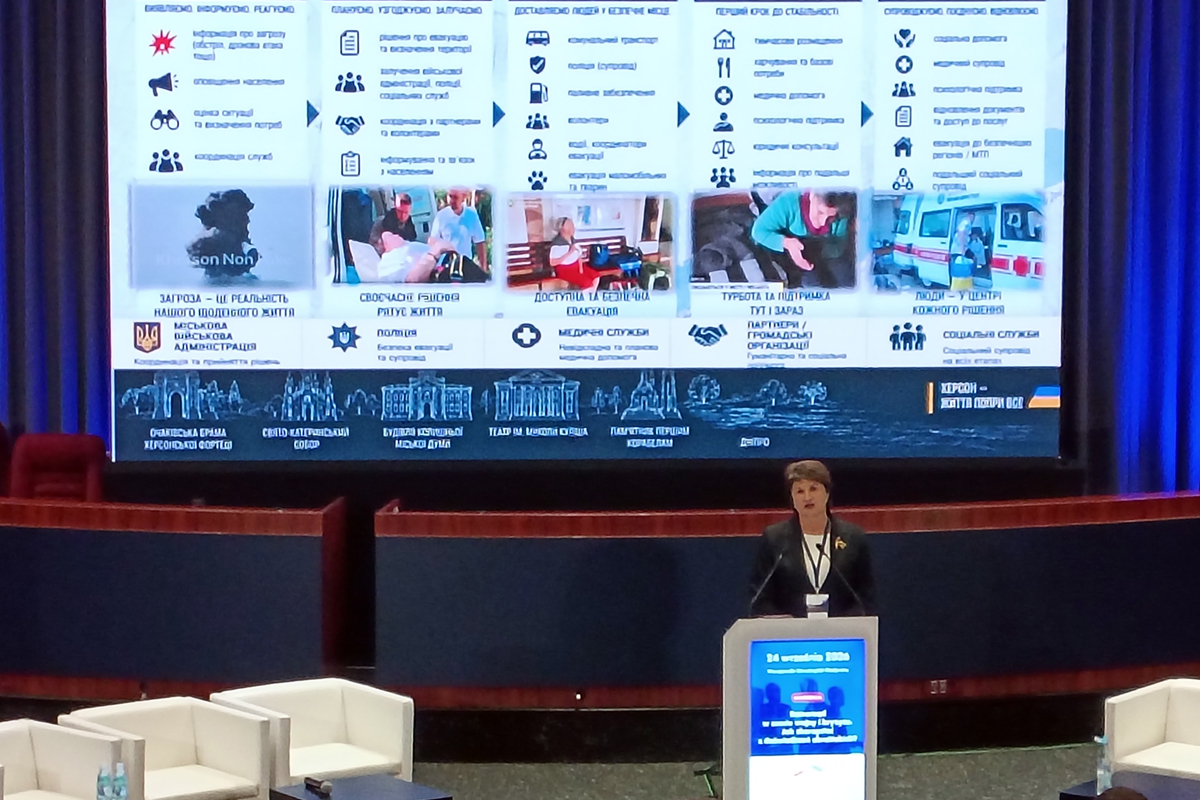
The next session addressed issues concerning the organization of civilian evacuation, relocation of residents and establishing temporary shelters, ensuring the safety of children, seniors, sick and disabled people.
The third session was devoted to such aspects as the continuity of operation of offices and basic public services, protection of critical infrastructure and response to disruptions, functioning of education, social care and healthcare, maintenance of basic services for residents despite damage and disruptions.
The next one focused on communication with residents in a crisis situation, counteracting information chaos and disinformation, as well as the organization of humanitarian aid.
The speakers were: Tetyana Yehorova-Lutsenko, Chairwoman of the Kharkiv Regional Council; Mykola Lukashuk, Chairwoman of the Dnipropetrovsk Regional Council; Svitlana Spazheva, Head of the military administration of the Pokrovske village; Andrii Druzhchenko of the Voroshbya City Council in Sumy Region; Kostyanthin Havrylchuk of the Putyvl City Council in Sumy Region; Tetiana Lebedieva, General Director of the Chernihiv Regional Children's Hospital; Dmytro Butriy, First Deputy Head of the Kherson Regional State Administration; Inna Butriy, Deputy Director of the Regional Development Agency “Office of European Integration” of Kherson Region; Natalia Chornenka, Deputy Mayor of Kherson; Regina Kharchenko, Secretary of the Zaporizhzhia City Council (the acting Mayor of Zaporizhzhia); Dmytro Pavlov, Chairman of the Pavlov, Head of the Pavlohrad District Council; Kovalenko Viktor, Head of the Zlochev Military Settlement Administration of the Bohodukhiv District; Mykola Diachenko of the Novobasansk Village Council; Chairman of the Village Council; Andrii Holovach, Village Head of the Kiinska Territorial Community.
Cybersecurity as a challenge for local governments
“Today, local government is undoubtedly the key element of building broadly understood civic responsibility,” said Krzysztof Gawkowski, Deputy Prime Minister and Minister of Digitization. “And today, the digital world is obviously the greatest threat faced by Poland as regards the area of local government administration.”
The Deputy Prime Minister reminded that local government infrastructure in Poland was the target of cyber attacks on a daily basis, which is why a number of financial initiatives have been launched in response and to strengthen the protection, e.g., Cybersecure Local Government or Cybersecure Water Utilities. However, he added that it was just as important as financing to develop effective standards and procedures to protect critical infrastructure.
The Deputy Prime Minister highlighted another important issue, namely that cybersecurity began with knowledge, awareness of threats and the responsible use of digital devices and the Internet by each of us.
“If we do not take responsibility for digital hygiene at the basic level, we will never be cyber-responsible and cybersecure,” concluded the Deputy Prime Minister.
Polish perspective
During the conference, representatives of local governments and institutions discussed the most important challenges for local authorities in emergency situations, health security, chemical, biological, radiological and nuclear threats during hybrid war or operational resilience.
The speakers were:
- Anna Brzezińska, a member of the Mazovian Voivodeship Management Board;
- Dr Agnieszka Tuderek-Kuleta, the Director of the Security Department at the Ministry of Health;
- Prof. Bernard Wiśniewski, the Director of the Research on Safety Methodology Center of the WSB Academy in Dąbrowa Górnicza and the employee of the Fire University in Warsaw;
- Radosław Maćkiewicz, the General Director of the Centre for Information Technology;
- Dr Jacek Siewiera, Naval Academy Professor of the Naval Academy and Atlantic Council, University of Oxford;
- Wiesław Leśniakiewicz, the Undersecretary of State in the Ministry of the Interior and Administration;
- Tomasz Stojek, the Director of the Operations Division of the Centre for Information Technology;
- Stanisław Jastrzębski, the Chairman of the Board of the Union of Rural Communes of the Republic of Poland, Mayor of the Długosiodło Commune;
- Jerzy Jurczyński, a Special Projects Coordinator at PolandHelps, a Honorary Ambassador of the City of Kharkiv in Poland;
- Brig. Gen. (Res.) Dr Jarosław Kraszewski, the President of RBL Defence Poland;
- Adam Krzysztoń, the Vice President of the Board of the Association of Polish Counties, District Head of Łańcut;
- Dr Marcin Mikos, member of the Management Board of PZU Życie SA;
- Grzegorz Pietruczuk, the Mayor of the Warsaw-Bielany District;
- Jacek Siemiończyk, the Deputy Director of the Centre for Information Technology.
The first conference on state resilience at wartime was held in December 2025. Page with a report from the conference
The second conference on state resilience at wartime was held in April 2026. Page with a report from the conference