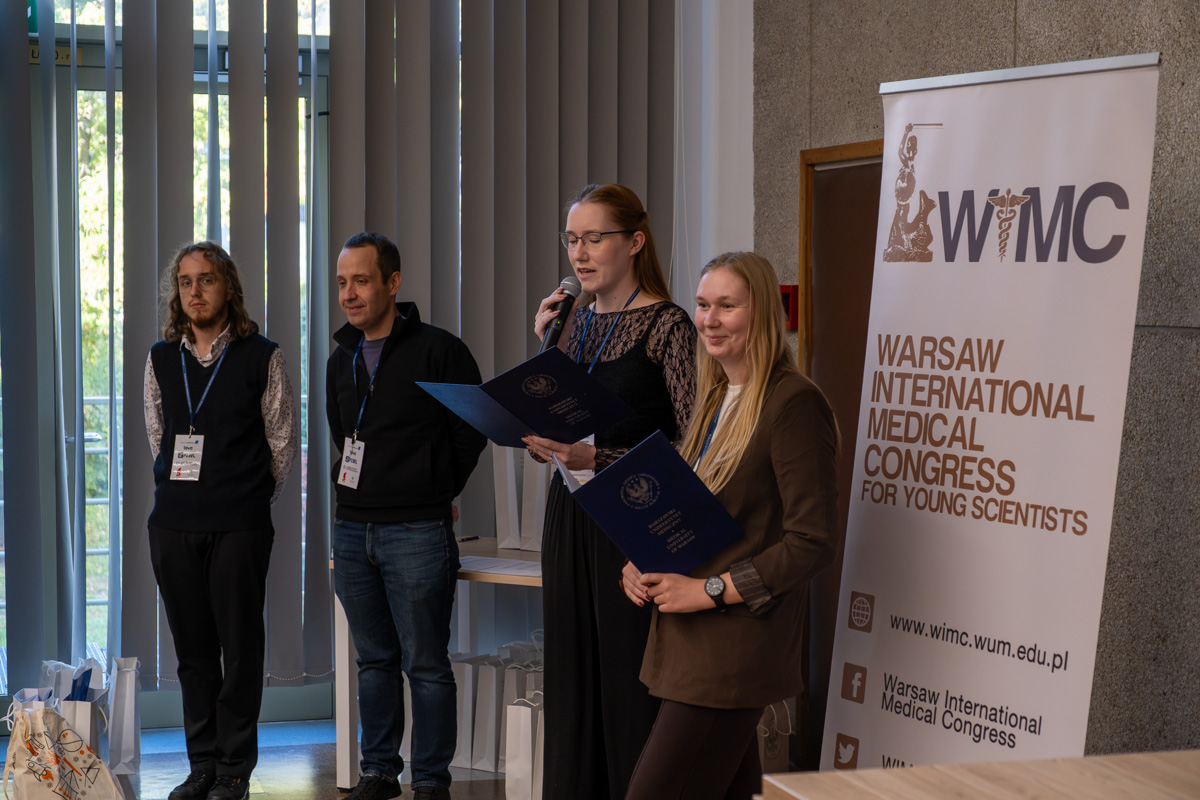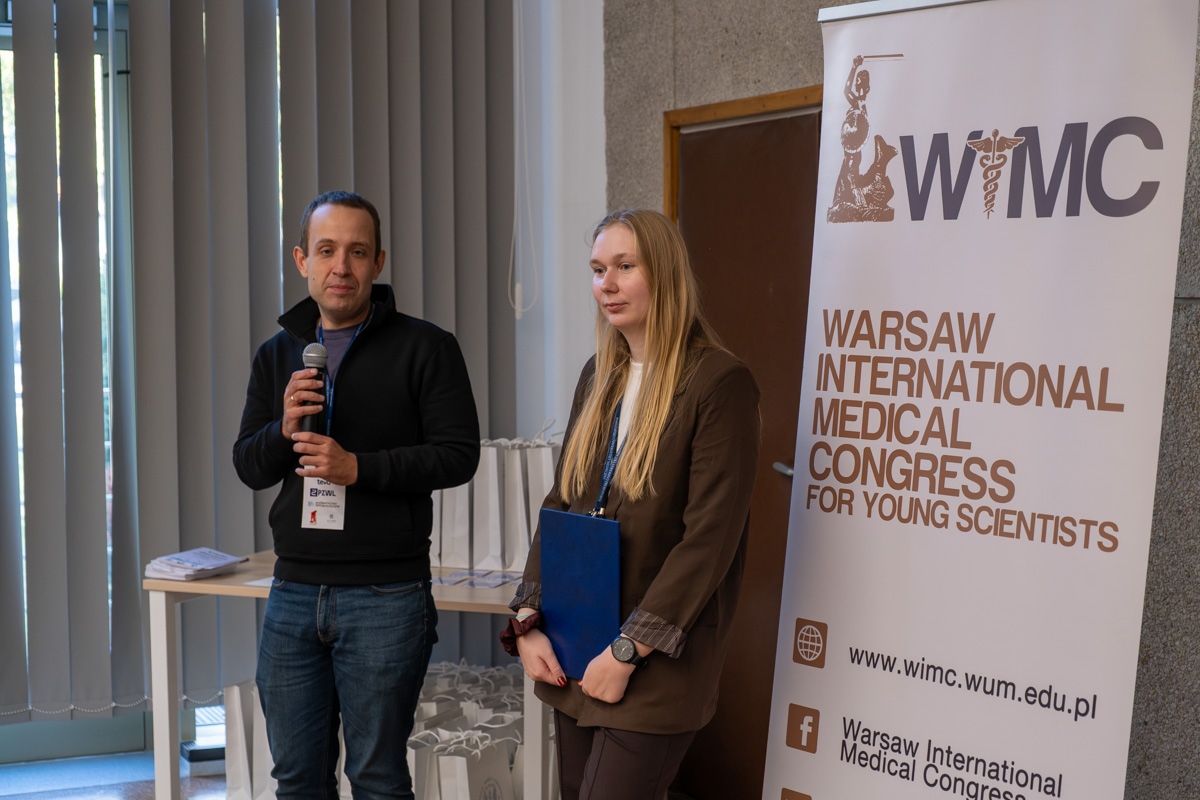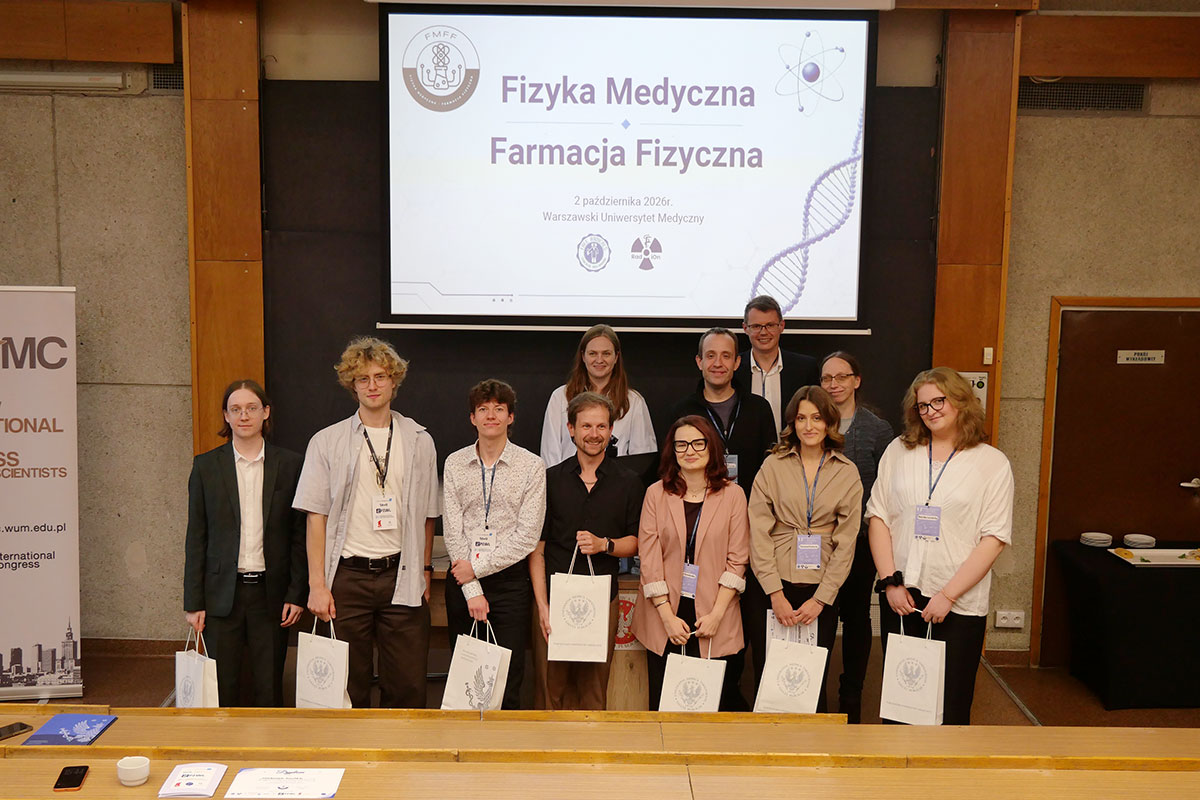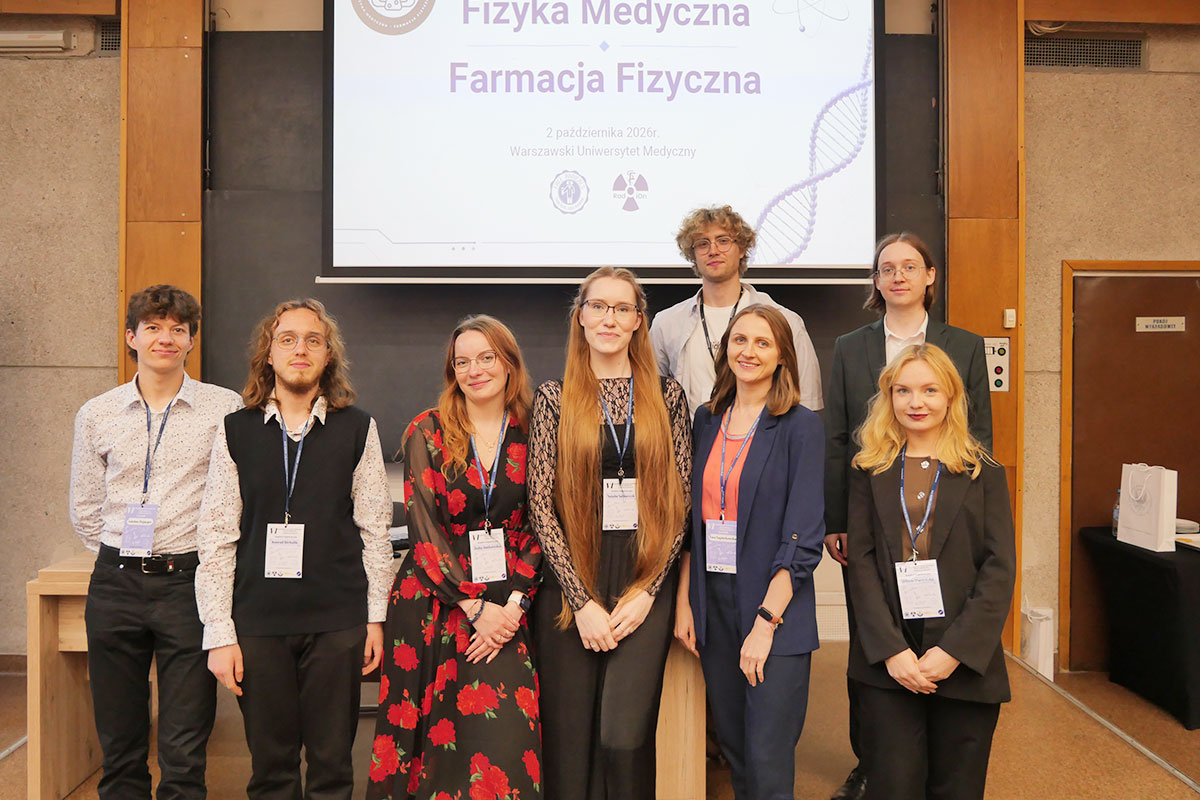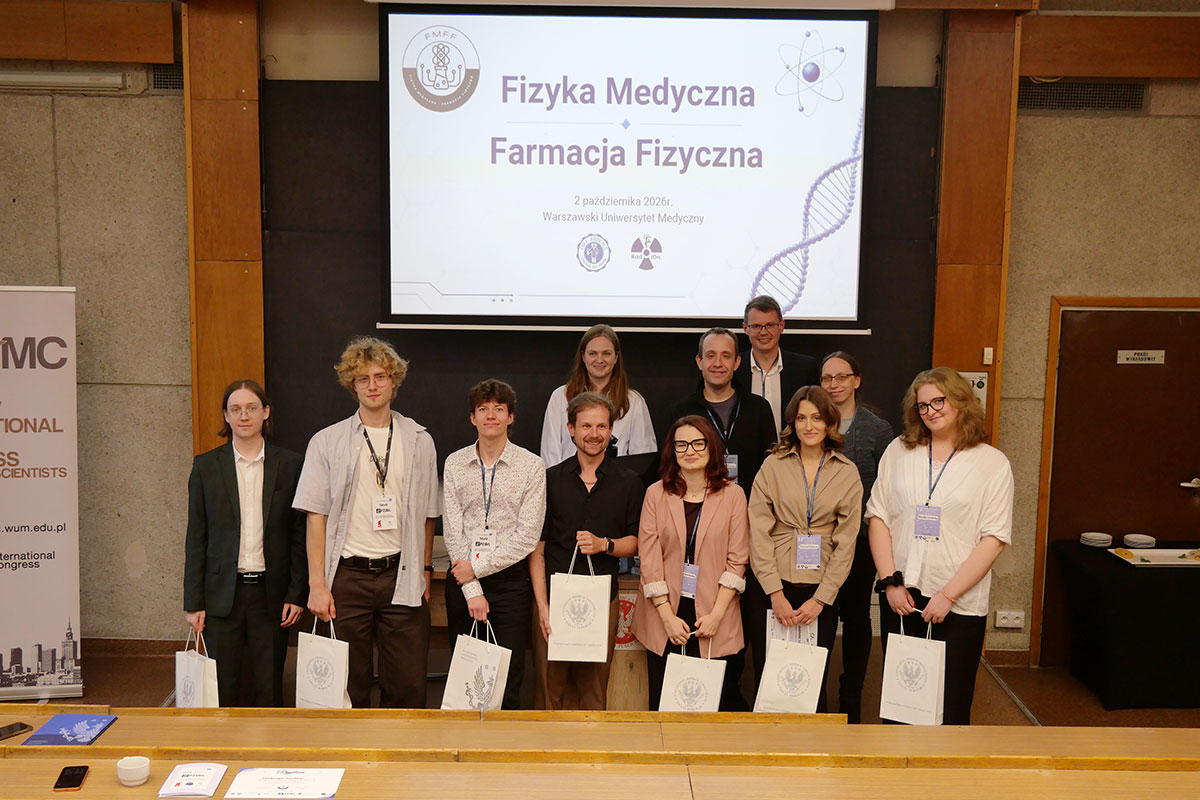
The event is organized by the Free Radicals Student Scientific Club at the Faculty of Pharmacy of the Medical University of Warsaw (WUM) and the RadiOn Student Scientific Club at the Faculty of Physics of the University of Warsaw.
“Physics helps us understand what happens at the molecular level: how processes occur, how substances interact with one another, and how we can measure them. Pharmacy examines the same phenomena in terms of drugs, their properties, effects, and use in patients. Combining these perspectives allows us to take a broader view of medical problems,” explains Oliwia Mączyńska of the Free Radicals Student Scientific Club.
This combination not only helps us better understand the mechanisms of action of medicinal substances but also makes it possible to improve analytical methods, design new drug formulations, control their release, and develop more precise diagnostic and therapeutic methods. It also promotes innovation.
“New questions and opportunities often emerge at the intersection of different disciplines. Combining physics and pharmacy also makes it possible to develop solutions that neither field could achieve on its own,” adds Oliwia Mączyńska.
New radiopharmaceuticals
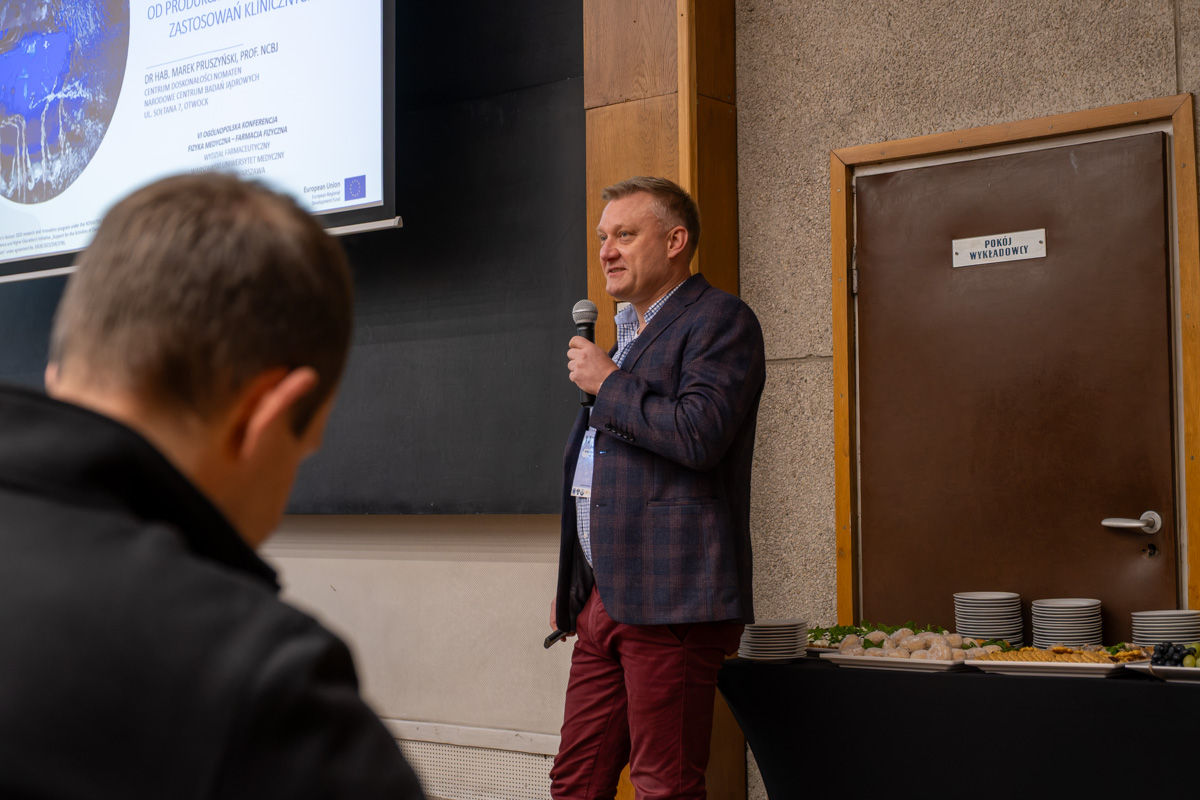
The event opened with a lecture by Dr. hab. Marek Pruszyński, professor at the National Centre for Nuclear Research, titled “New radiopharmaceuticals: from radionuclide production to clinical applications.” The lecture covered, among other things, the nature of radiopharmaceuticals and their classification according to structure and intended use. As the speaker emphasized, radioisotopes are the basis for developing radiopharmaceuticals. Approximately 3,500 radioisotopes are known, but only around twenty are used in nuclear medicine. Why?
“To develop a radiopharmaceutical for use in radiopharmacy, the isotope must be readily available and therefore inexpensive to produce. It must also have an appropriate half-life. If the half-life is too short, much of the isotope may decay during production, leaving us without a radiopharmaceutical. If it is too long, the patient receives an unnecessarily high dose, which may be toxic,” the speaker explained.
Young scientists present their research
The conference was divided into three sessions: physics, poster presentations, and pharmacy. Each young scientist who submitted their research for presentation had 15 minutes to give their talk. The conference's scientific committee evaluated all the presentations and selected the best ones.
In the physics session, Mateusz Filipek took first place for “Is LET enough? The nanodosimetric signature of cellular damage induced by charged particles.”
Agata Taranienko took second place for “What do the tests tell us? Assessing the accuracy of dose delivery in mammography in Poland,” and Wiktoria Dworak took third place for “Development of a method for the quantitative determination of Kryptofix in the radiopharmaceutical [18F]FDG.”
In the poster session, Aleksandra Nowakowska took first place, Jakub Biały came second, and Zuzanna Powierza came third.
In the pharmacy session, Mateusz Jędrzejewski took first place for “The bacterial methyltransferase CamA: analysis of its dynamics and catalytic mechanism.” Matylda Grzelecka took second place for “Comparison of methods for obtaining extracts from Psoralea corylifolia fruit (Psoraleae fructus),” and Szymon Araj took third place for “Correction of proton positioning in a crystal structure using quantum chemical calculations.”
The audience award went to Antoine Dejaeger for “Quality assessment of creatine-containing dietary supplements using spectroscopic methods.”
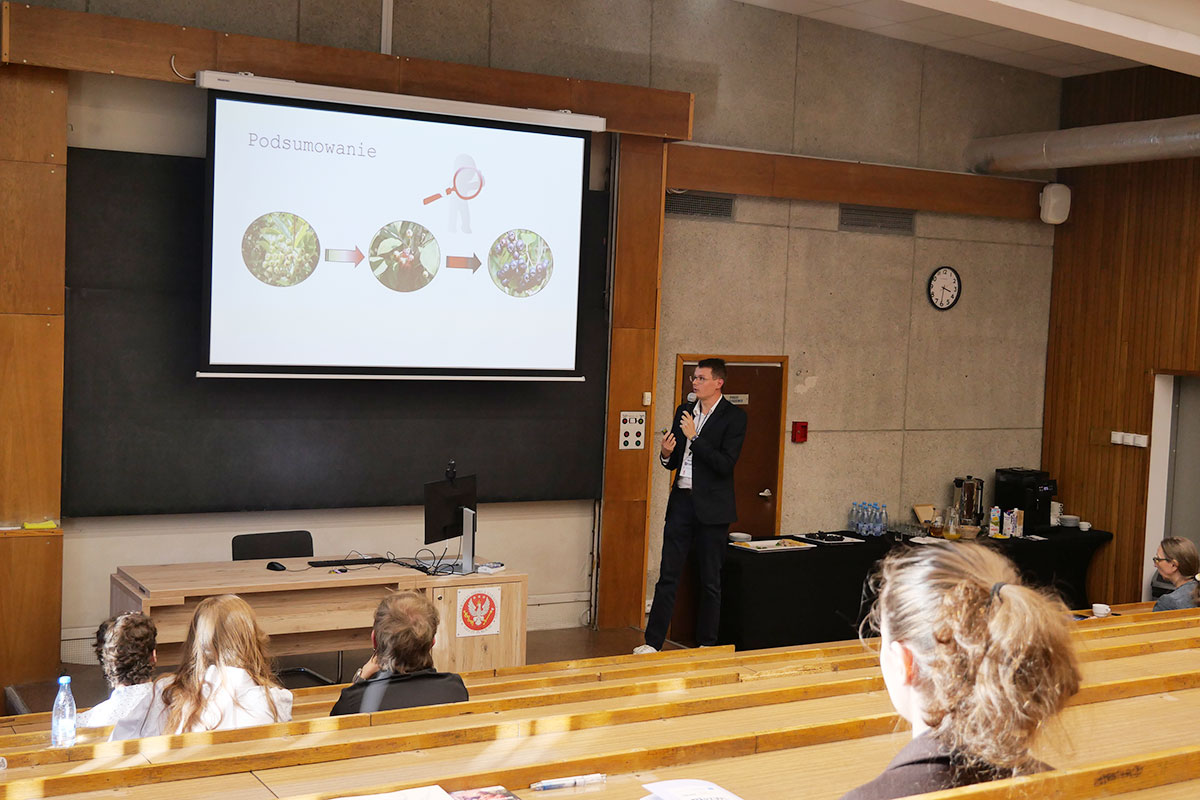
The conference concluded with a lecture by Dr hab. Paweł Siudem from the Department of Organic and Physical Chemistry, titled “From green to black: the metabolic profile of aronia fruit ripening based on NMR and chemometrics.”