Date, Location, and Registration for the Lecture
The lecture will take place on October 21 from 11:00 a.m. to 12:45 p.m. in the Janusz Piekarczyk Auditorium at the WUM Didactic Center, located at 2a ks. Trojdena St.
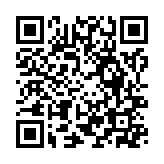
Admission to the event is free for all members of our academic community, but advance registration is required. Registration for the Nobel Prize laureate’s lecture
QR code for registration:
The lecture will be held in English.
On this occasion, on October 21, from 10:30 a.m. to 13:30 p.m., rector’s hours will apply to students and doctoral students participating in the lecture by Prof. Morten P. Meldal.
About the Nobel Laureate
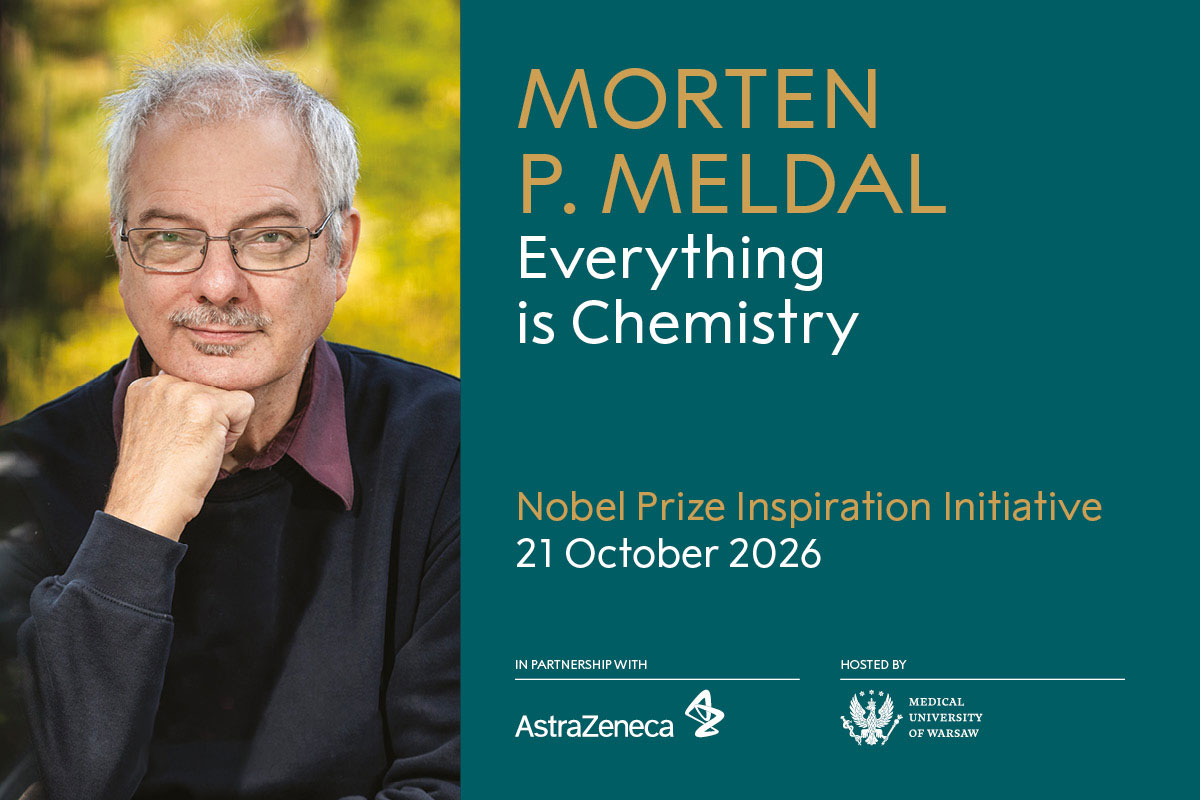
Morten Meldal is a professor in the Department of Chemistry at the University of Copenhagen and at the Center for Evolutionary Chemical Biology (CECB), a renowned research unit within the department, where he has served as director since 2023.
He received the Nobel Prize in Chemistry in 2022, jointly with Carolyn R. Bertozzi and K. Barry Sharpless, for the development of “click chemistry” and bioorthogonal chemistry. Click chemistry allows for chemical reactions in which molecules snap together like building blocks. The term was coined in 2000 by Barry Sharpless, while Morten Meldal made the discovery independently of Sharpless.
What was the breakthrough in Meldal’s research that won the 2022 Nobel Prize in Chemistry?
A prime example of “click” chemistry is the copper-catalyzed azide-alkyne cycloaddition reaction (CuAAC for short). It acts like a chemical latch that precisely and permanently joins two independent molecules. Traditional cycloaddition (without a catalyst) requires very high temperatures and yields a mixture of two different products.
Morten Meldal’s and Barry Sharpless' breakthrough lay in the use of copper ions as a catalyst, which completely transformed the course of the process. Thanks to copper, the reaction occurs instantaneously, at room temperature, in an aqueous medium, and yields only one specific product (the 1,4 isomer), without generating any toxic byproducts.
A breakthrough that revolutionized modern medicine and pharmacy
The exceptional selectivity and safety of “click chemistry” reactions have made it one of the most important tools in modern medicine and pharmacy. Its applications today span both diagnostics and the design of modern therapies.
- Targeted cancer therapies (antibody-drug conjugates): Click chemistry allows for the stable attachment of a potent cancer-killing drug directly to an antibody that recognizes only cancer cells. The drug circulates safely throughout the body and "detaches" only within the tumor.
- Diagnostic imaging in living organisms: Scientists can introduce modified sugars with an azide group into patient cells, which then become incorporated into the tumor cell envelope. A fluorescent dye or radioactive isotope with an alkyne group is then injected. With a "click," doctors can precisely see the location of the cancer on the scanner screen (e.g., PET).
- Synthesis of new drugs: Instead of creating complex pharmaceutical molecules from scratch, laboratories build vast "libraries" of smaller building blocks with snap groups. By clicking them en masse, thousands of combinations are tested in the search for new antibiotics or antivirals.
- Tissue engineering and biomaterials: Enables the creation of advanced hydrogels and artificial scaffolds for cells, which aid in the regeneration of damaged tissues and wound healing.