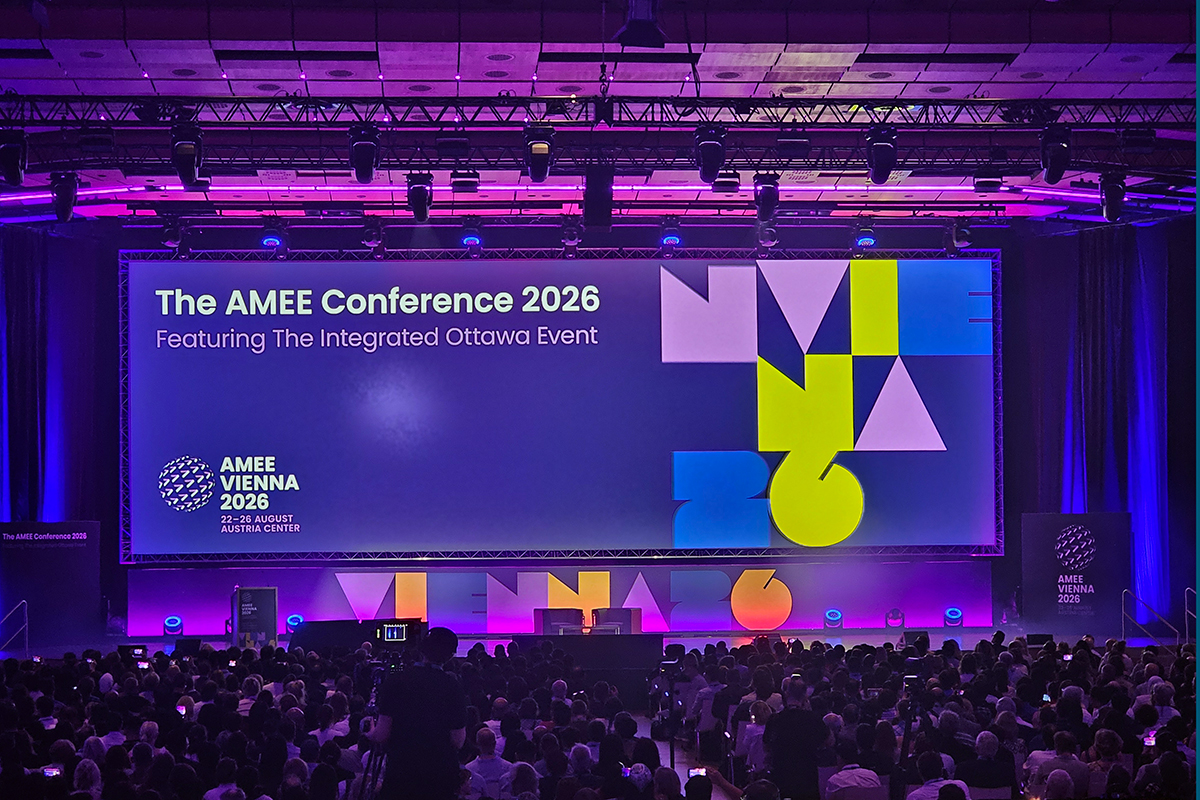
The conference theme, “Educators as Catalysts: Building the Future of Health,” highlighted that education is constantly evolving and that its future is shaped collectively by researchers, educators, students, and healthcare professionals. The conference program, however, extended far beyond this theme, providing a platform for exchanging experiences and discussing the most significant challenges, trends, and future directions in medical education.
Prominent topics included the well-being of students, staff, and entire academic communities, as well as the connections between well-being, sustainable development, and planetary health. These issues are of particular importance to the Medical University of Warsaw, which actively participates in the EUniWell Alliance - the European University for Well-Being.
As part of the conference program, Dr. Olga Rostkowska moderated the session “Arts-Based and Creative Humanities Pedagogies,” which explored the role of the arts and humanities in educating future healthcare professionals.
Milena Witkowska co-designed and facilitated the conference’s only workshop dedicated to surgical education: “Training Without the Scalpel: Low-Cost Strategies for Teaching Surgery in Resource-Limited Settings.” The workshop focused on developing medical simulators in low-resource environments and was very well received by participants, including surgeons, medical educators, and representatives of other healthcare professions.
Milena Witkowska also coordinated the Student Task Force, an international team of more than 50 students from around the world who supported the organization of the event and ensured that the student perspective was represented in discussions on the future of medical education.