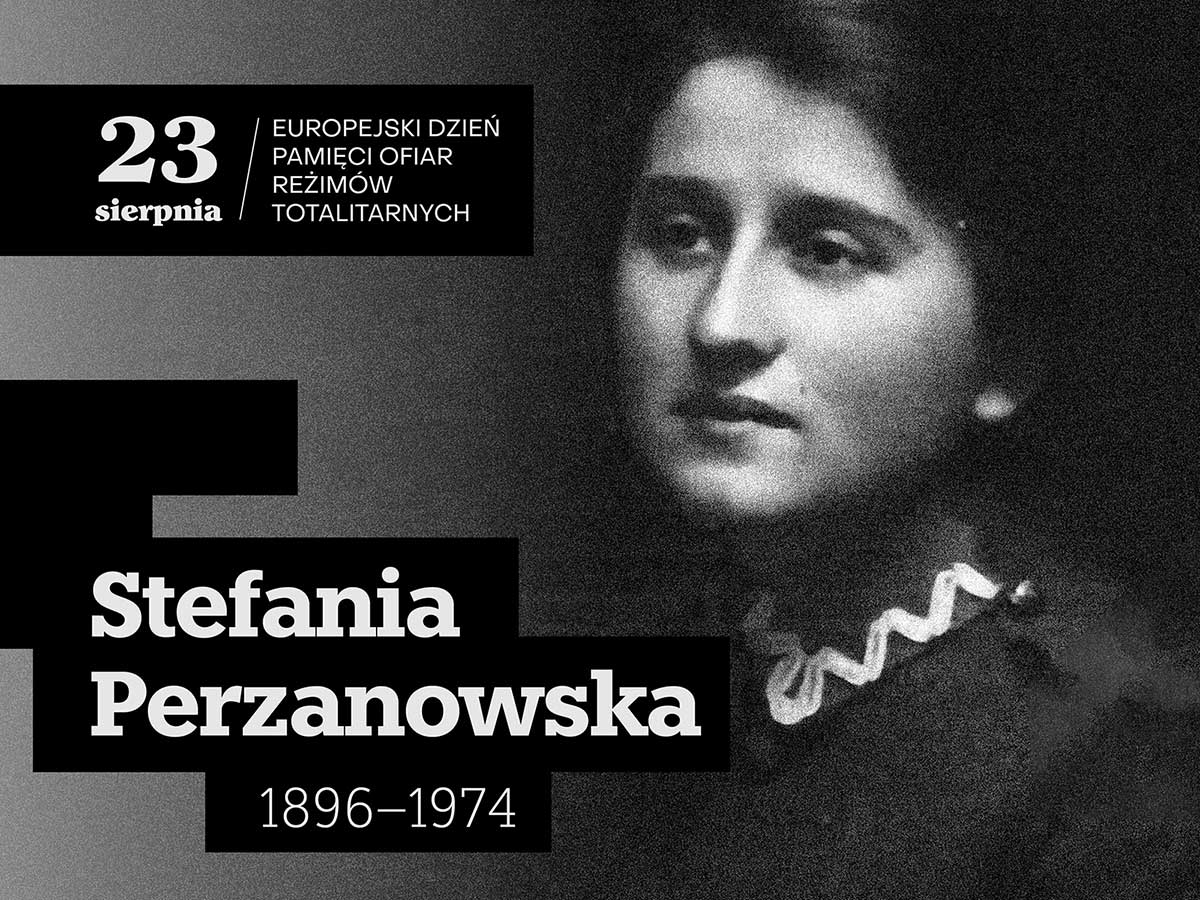
Stefania Perzanowska’s heroic conduct, her steadfastness under camp conditions, and her commitment to the professional ethos serve as a timeless example for current and future generations of medical students.
Who was Stefania Perzanowska
She was born in Warsaw in 1896 and belonged to the first generation of Polish women admitted to medical school. Even during her studies—which coincided with the waning days of World War I and Poland’s struggle for independence—she combined medicine with public service. During the struggle for independence, she was active in the Polish Military Organization and the Women’s Volunteer Legion, gaining experience as a medic and a military doctor. After graduating in 1926, she specialized in internal medicine and became the chief resident at a hospital in Radom. She always treated her patients first and foremost as human beings whose dignity must be protected regardless of the circumstances.
During the German occupation, she became involved in the underground activities of the Home Army, for which she was arrested by the Gestapo and deported to Majdanek in January 1943. In the camp, despite extreme conditions, she organized a medical care network for female prisoners. She identified epidemic threats, created conditions for treatment, and built a team of female doctors, nurses, and volunteers. She stubbornly referred to the camp infirmary as a hospital, emphasizing that even in a place designed to dehumanize people, medicine must remain true to its principles. Together with her colleagues, she hid female prisoners from selections, forged medical records to save lives, and gave the women a sense of safety and dignity.
When Majdanek was evacuated in 1944, Perzanowska was first transported to Auschwitz, then to Ravensbrück and Neustadt-Glewe, where she awaited liberation in May 1945. After the war, she returned to her medical practice and documented her experiences in the book “When My Thoughts Return to Majdanek”
More information about Stefania Perzanowska can be found in the video available on YouTube.
More information about the European Network for Remembrance and Solidarity’s campaign “Remember. August 23” and its featured figures to date can be found on the campaign website.
In addition to our university, this year’s campaign partners include the State Museum at Majdanek and the city of Vilnius.
The European Network for Remembrance and Solidarity is an international initiative whose mission is to promote knowledge about 20th-century European history and ways of commemorating it, with a particular focus on periods of dictatorship, war, and social resistance to oppression. The Network’s member countries include Poland, Germany, Hungary, Slovakia, Romania, and the Czech Republic, while Albania, Austria, Lithuania, Georgia, and Estonia hold observer member status and have representatives on the Network’s governing bodies.