What the Faculty of Health Sciences has prepared
The Faculty of Health Sciences participates in the organization of the Science Festival every year, and the whole event is coordinated by Małgorzata Witkowska, MD, PhD, from the Department of Human Anatomy, a member of the Science Festival Program Council.
Workshops for everyone interested
This time, our scientists prepared and conducted seven workshops – they were open to everyone, though some requiring prior registration. The topics were very diverse and current.
Agnieszka Bzikowska-Jura, MD, PhD, and Aleksandra Mołas, MA, from the Department of Medical Biology led a workshop entitled “Breast milk under the microscope – science and practice based on the activities of Breast Milk Banks.” The classes were held at the Human Milk Bank at the Holy Family Hospital in Warsaw, providing an opportunity to see how such an institution operates from the inside. Workshop participants also learned about the laboratory testing methods used in milk banks and analyzed human milk samples.
Grażyna Bączek, MD, PhD, Head of the Department of Obstetrics and Gynecology Didactics, invited attendees to a multimedia presentation on reproductive health, pregnancy, childbirth, postpartum care, human development, newborn care, and breastfeeding. Dr. Agnieszka Iwan from the Department of Obstetrics and Gynecology Didactics, in cooperation with the University Branch of the Polish Midwives Association, presented an overview of modern applications supporting women before pregnancy, during pregnancy, and in the postpartum period. Modern technologies in medicine were also discussed by Antoni Grzanka, PhD, Eng., Radosław Roszczyk, PhD, Eng. (PW, EMBS IEEE), and Klaudia Malicka during the workshop “Medical technologies of the future – how engineering is changing healthcare.”
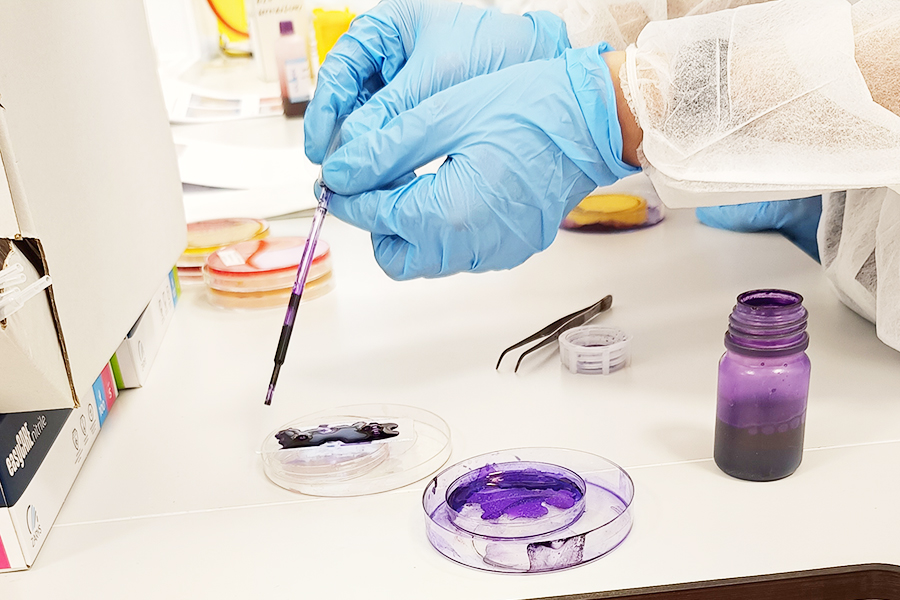
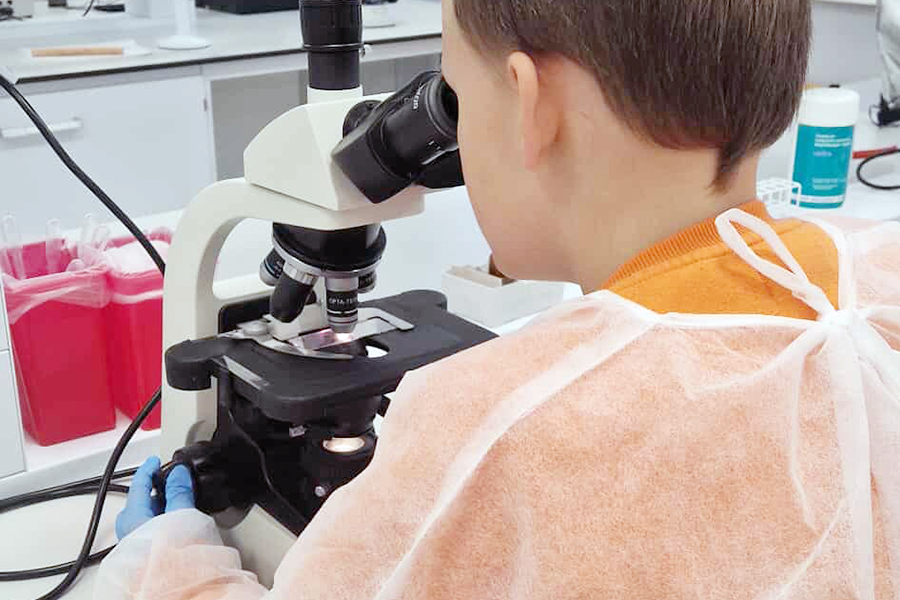
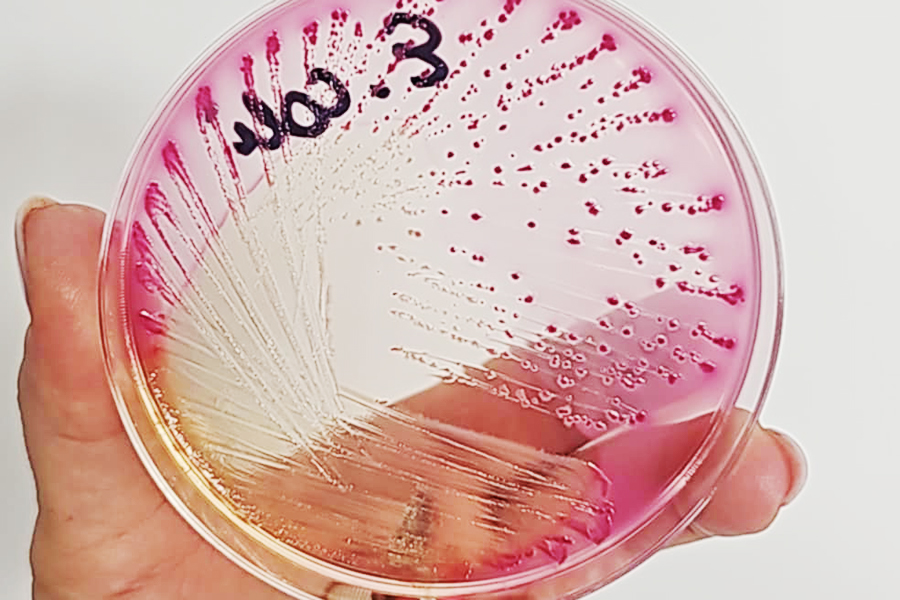
The opportunity for experimentation came in the form of classes on microbiological techniques conducted by Dr. Sylwia Jarzynka and Dr. Anna Minkiewicz-Zochniak from the Department of Medical Biology and by students from the SKN AGAR. These classes were very popular among young people.
The experts from the Faculty of Health Sciences also prepared a workshop for future grandparents. Here, participants could learn about what childbirth looks like today, what the new trends in perinatal care are, how to care for a baby and its mother, and how to talk to young parents so that they are willing to listen and do not feel overwhelmed... The classes were prepared by: Małgorzata Stefaniak, MD, PhD, Dr. Aleksandra Geller, Aleksandra Celuch from the Department of Obstetrics and Gynecology Didactics, together with the SKN Ethics.
From anatomy classes to breast cancer prevention – festival lessons
As part of the Science Festival, the Faculty of Health Sciences also organized festival lessons for schools. High school students could choose from the following classes:
- “What's going on in your tissues?”, during which they could visualize the soft tissues of their own bodies and measure the speed of blood flow in their blood vessels. The lesson was led by Dr. Paweł Kowalczyk and Anna Henriques de Sepulveda, MD, PhD;
- “Secrets of the Human Body,” which was an anatomy lesson using a virtual anatomage table. It was led by Dr. Tomasz Piątek and Dr. Marta Hreńczuk.
- “Human development and birth,” during which they learned about conception, intrauterine development, and human birth from the perspective of biology, physiology, psychology, and sociology. The lesson was led by Grażyna Bączek, MD, PhD.
- “Learn, explore, protect,” during which they learned the secrets of breast cancer prevention. The lesson was led by Prof. Anna Badowska-Kozakiewicz and students: Kamila Krupa and Hanna Miski.
- “Heart and blood without secrets,” during which they learned what an ECG test is and “decomposed” the morphotic composition of blood. The lesson was conducted by Dr. Edyta Wróbel and Dr. Paweł Kowalczyk.
- The “Bandage Challenge,” during which they could master basic bandaging techniques. The lessons were led by Dr. Tomasz Piątek and Dr. Marta Hreńczuk.
What happened at the Faculty of Pharmacy
Open workshop on blood glucose monitoring
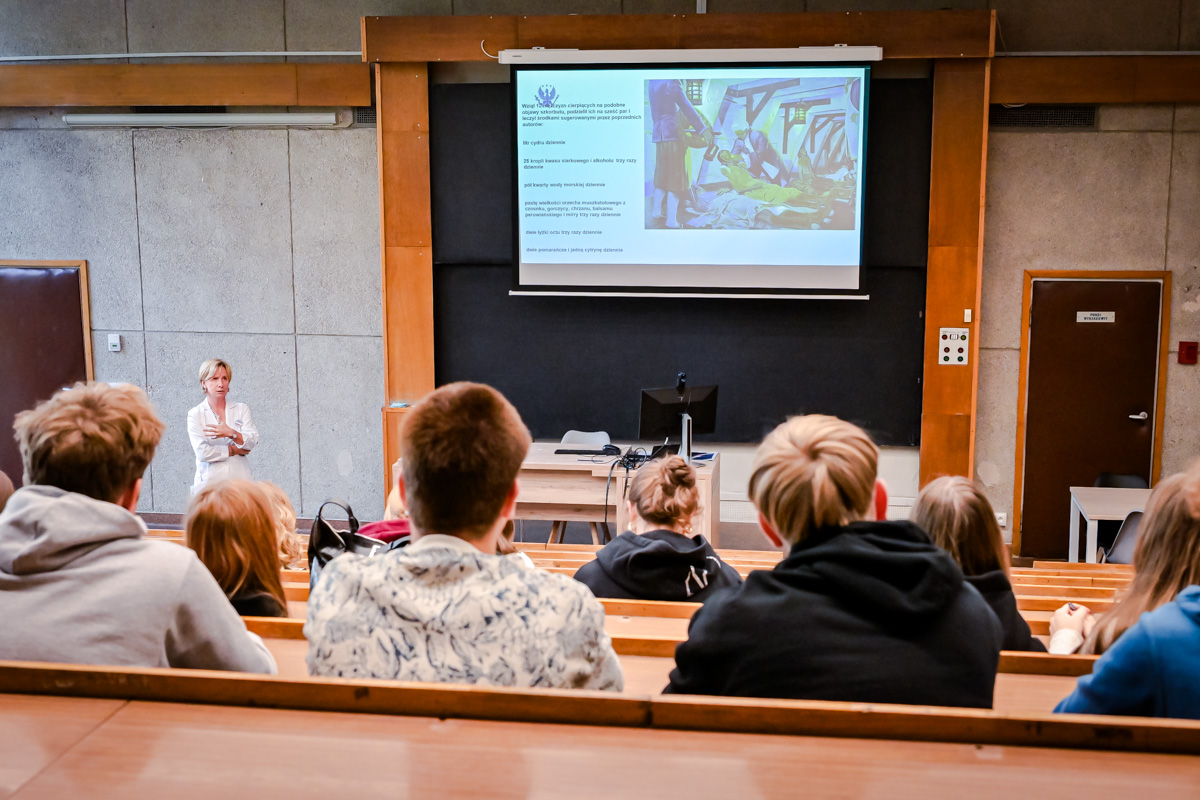
The participants of the festival had the opportunity to take part in a workshop entitled “A sweet problem – continuous glucose monitoring as part of diabetes care.” This is an important topic, as the number of diabetes patients in Poland is constantly growing, and the disease is considered by the WHO as an epidemic of the 21st century. Self-monitoring is an integral part of the treatment of this disease. The workshop leader, Sylwia Lewandowska-Pachecka, MA, presented the principles of blood glucose monitoring systems using the flash glucose monitoring method and continuous glucose monitoring, which provide patients with information on how to modify the size and type of meals and to what extent physical activity affects the maintenance of normal parameters.
Classes for students in laboratories
The department organized five different festival lessons for students from both secondary and primary schools.
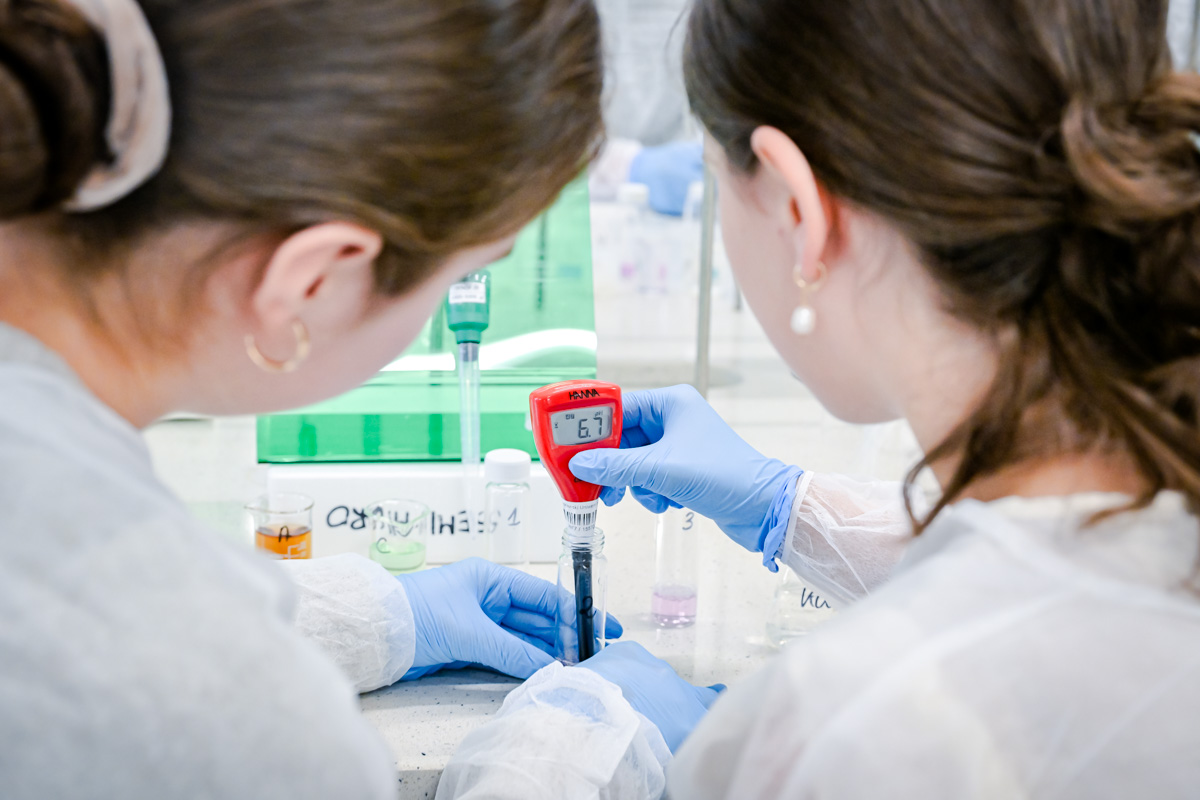
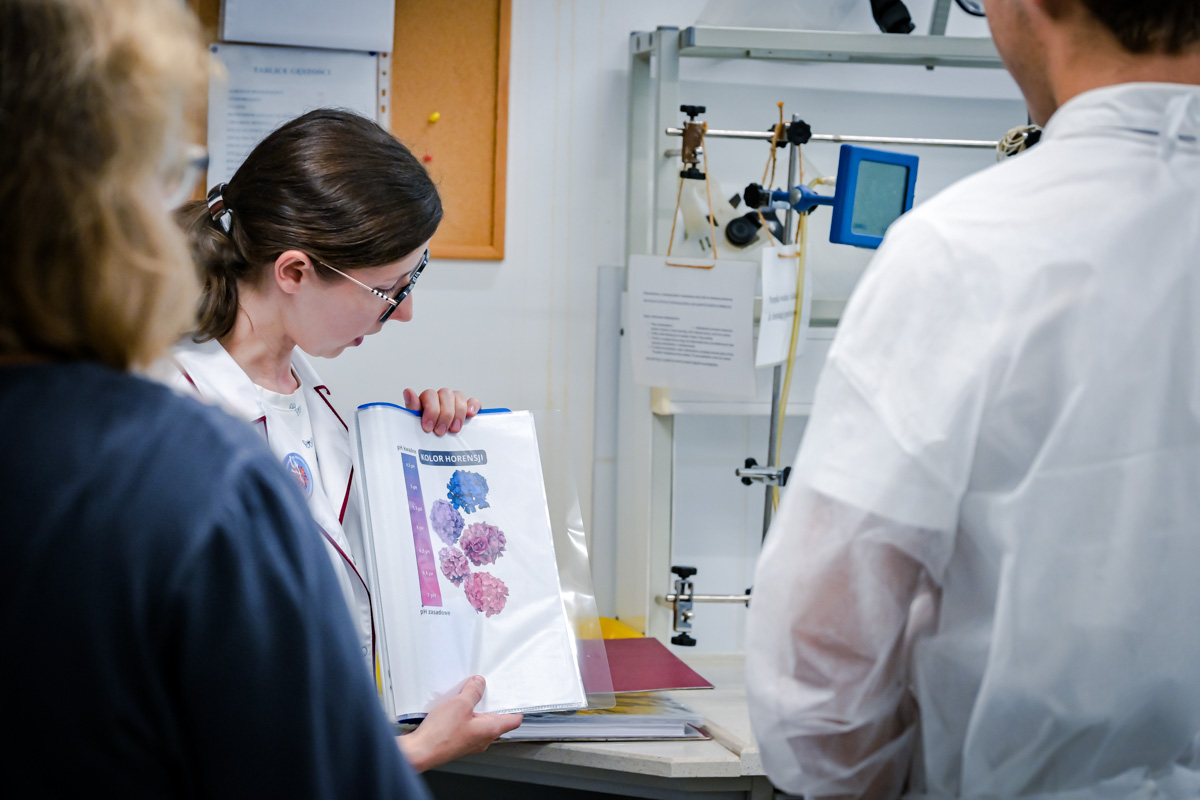
Dr. Natalia Dobros and Katarzyna Paradowska, MD, PhD, delved into the mysteries of anthocyanins, natural pigments with wide range of health benefits found in fruits and vegetables. They explained what determines the color of anthocyanins, demonstrated how to measure their total content in products, and how to determine their antioxidant properties. The lecturers also explained what free radicals are and how to reduce their excess from the body.
During the workshop “Vitamin C under the microscope,” students learned what vitamin C consists of, its content in various foods, its antioxidant properties, and its significance for human health. The workshop was aimed at high school students, and its goal, in addition to preparing students to independently verify false information about vitamin C, was also to reinforce their knowledge of redox reactions, especially color reactions, which appear in the final high school exam tasks. Dr. Ewa Szyp-Sochacka shared her knowledge with the students.
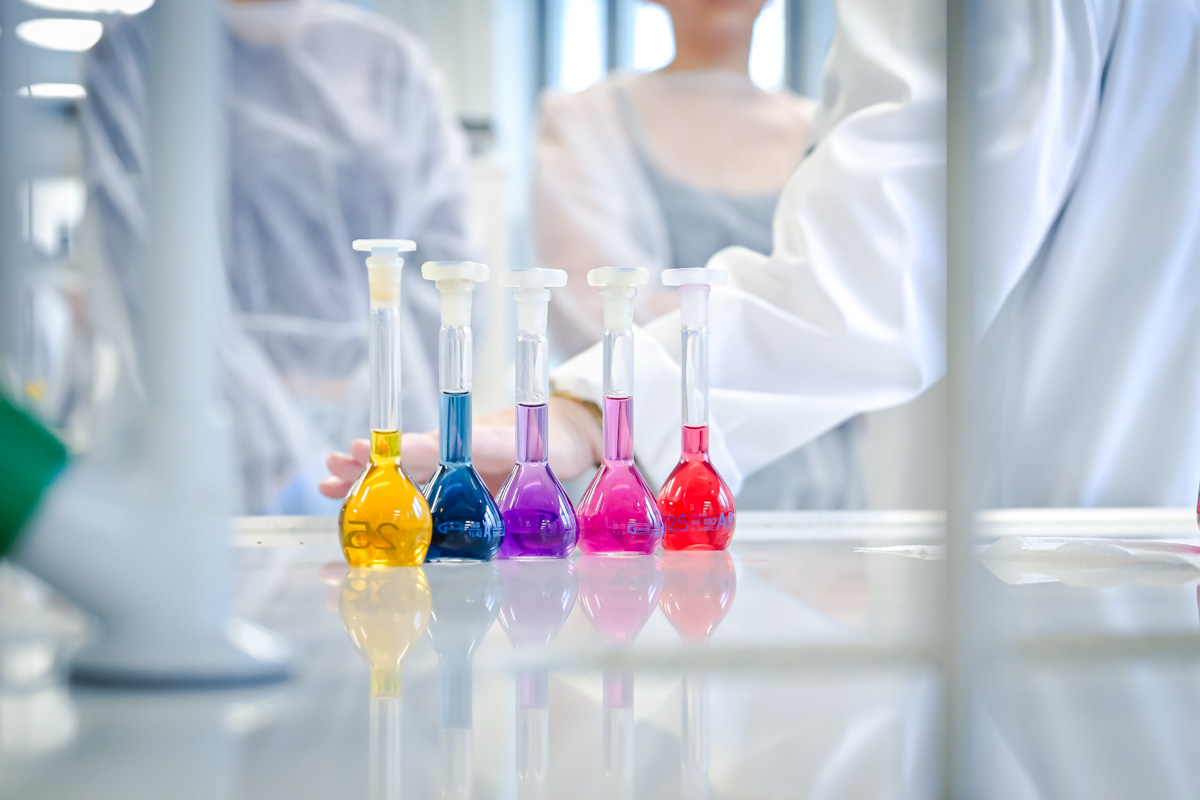
Dr. Sylwia Michorowska and Agnieszka Kalicka, MA, demonstrated how magical and colorful science can be during the “Rainbow Experiments: The Magic of Light and Colors!” workshops. Where do colors come from? Why are some substances as colorful as a rainbow, while others change colors as if touched by a magic rod? Under the watchful eye of the instructors, elementary school students sought answers to these questions. They tested how household ingredients can change colors, created colorful sediments, and learned how light affects what we see.
In turn, Kinga Ostrowska, MD, PhD, and Dr. Mariusz Dana demonstrated how drugs work and where their active ingredients come from, as well as how they are synthesized in the laboratory. During the workshop, students could feel like real chemists! They learned the secrets of the structure and action of active substances in drugs, synthesized a selected active compound step by step, and isolated natural substances from plant raw materials.