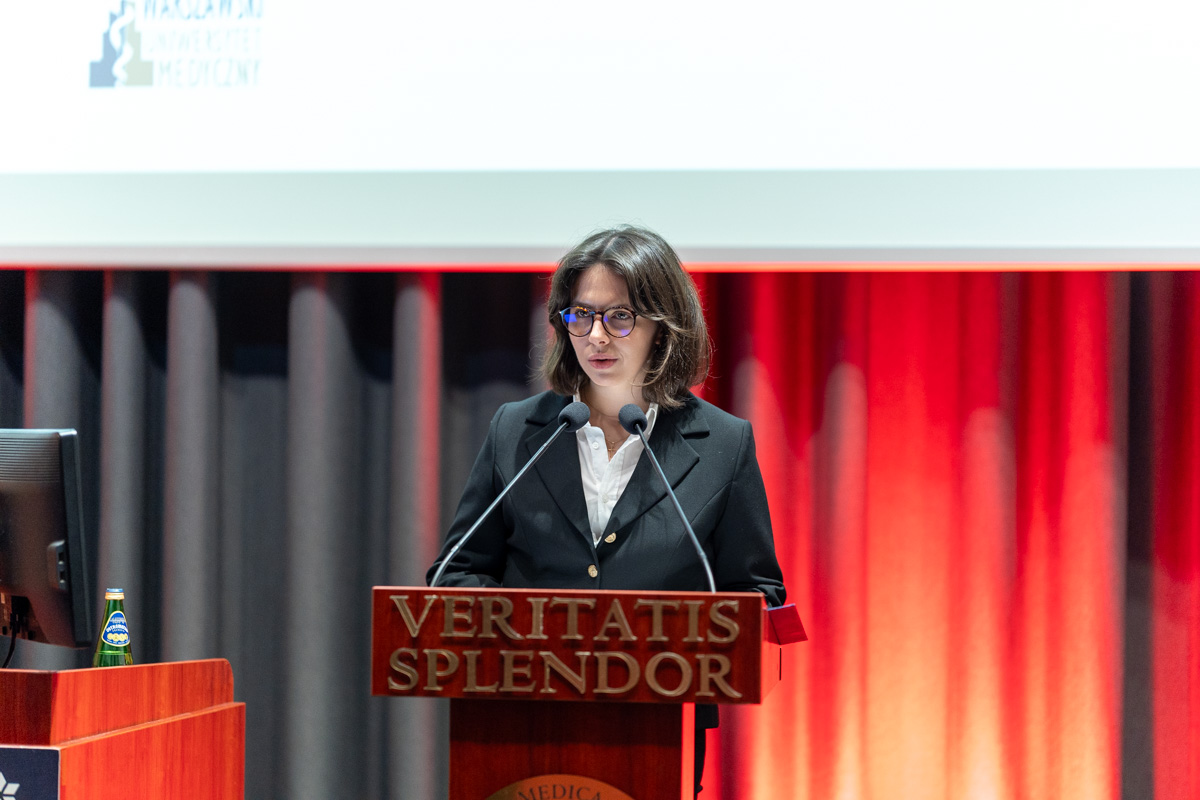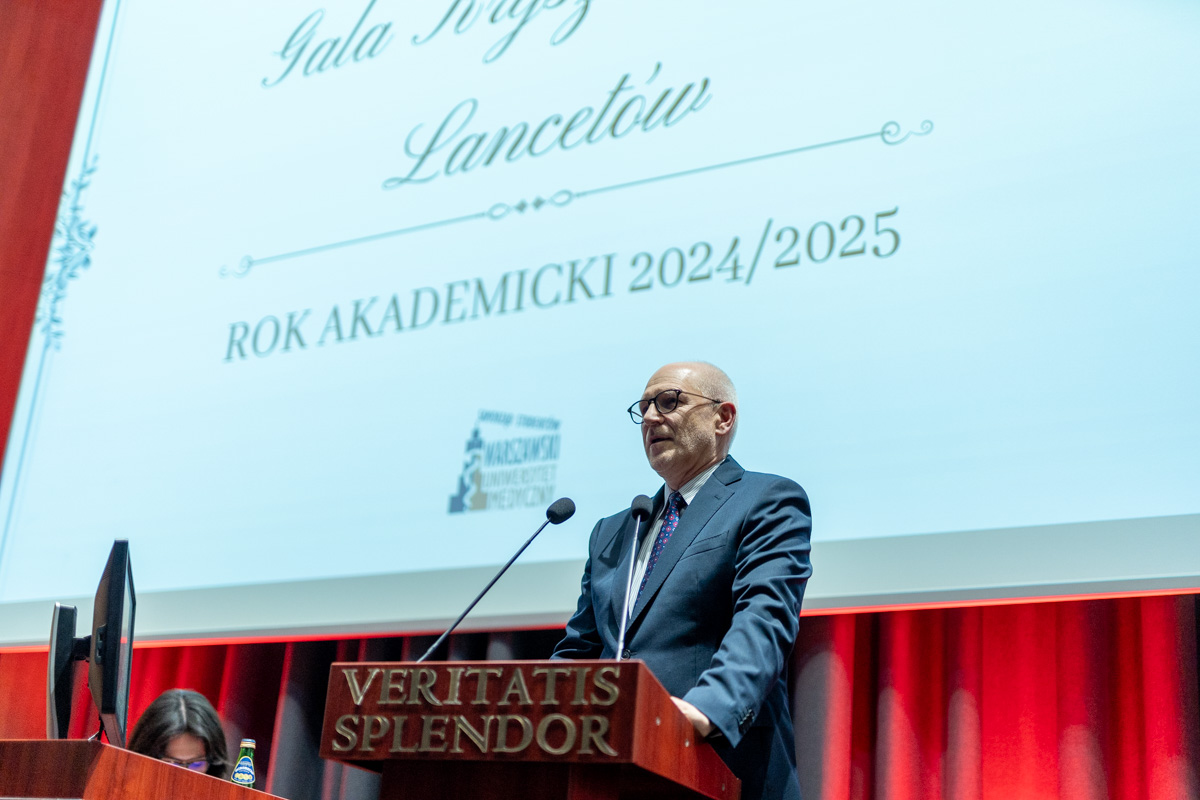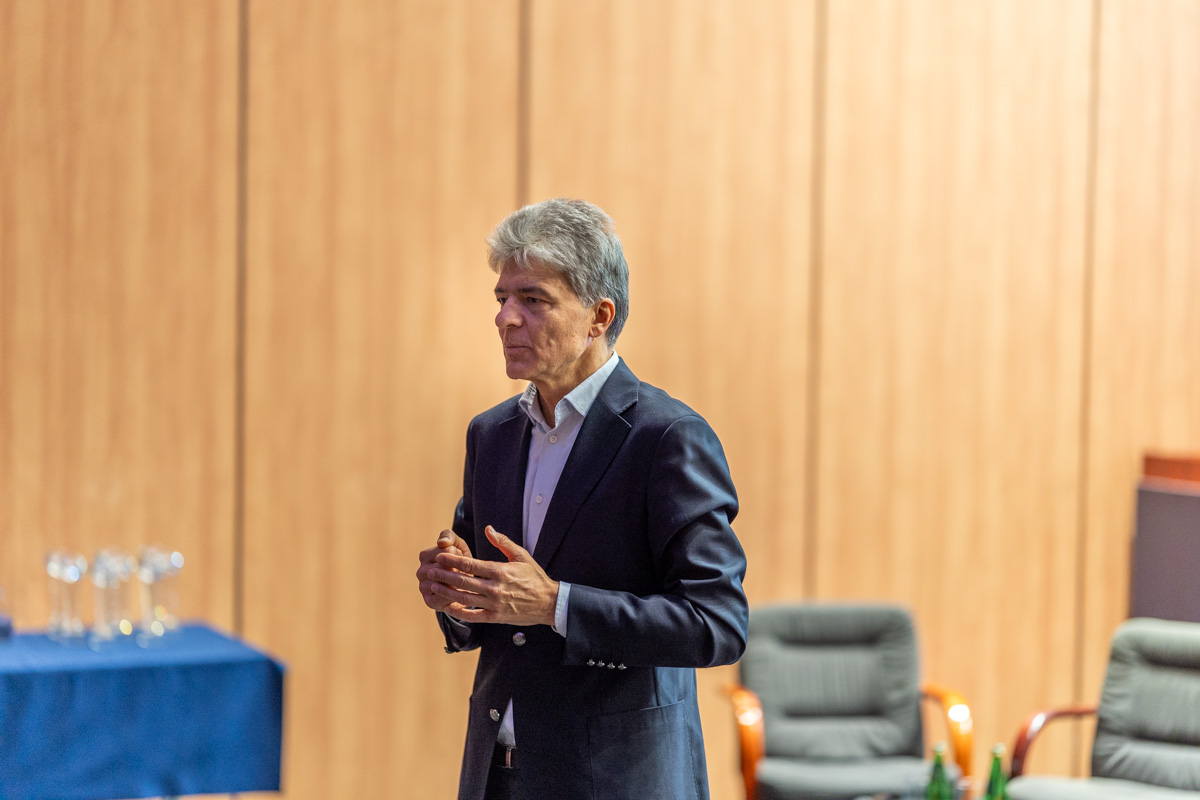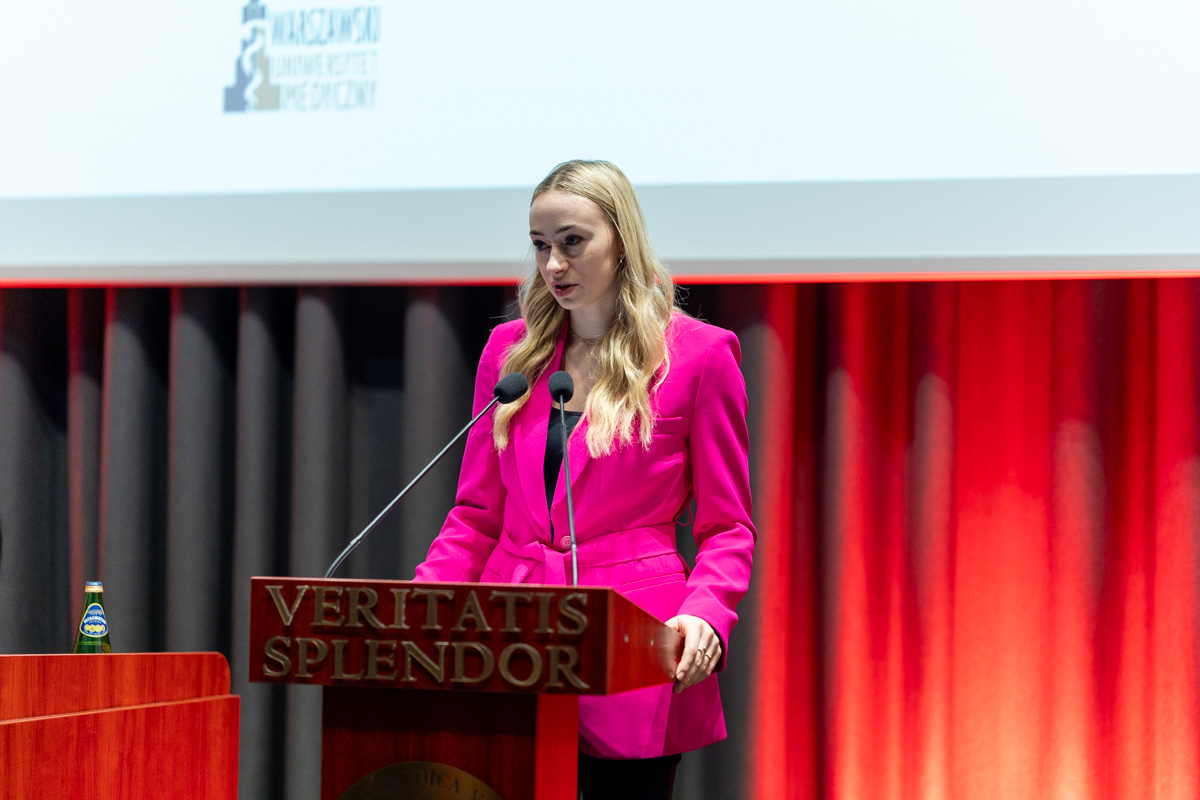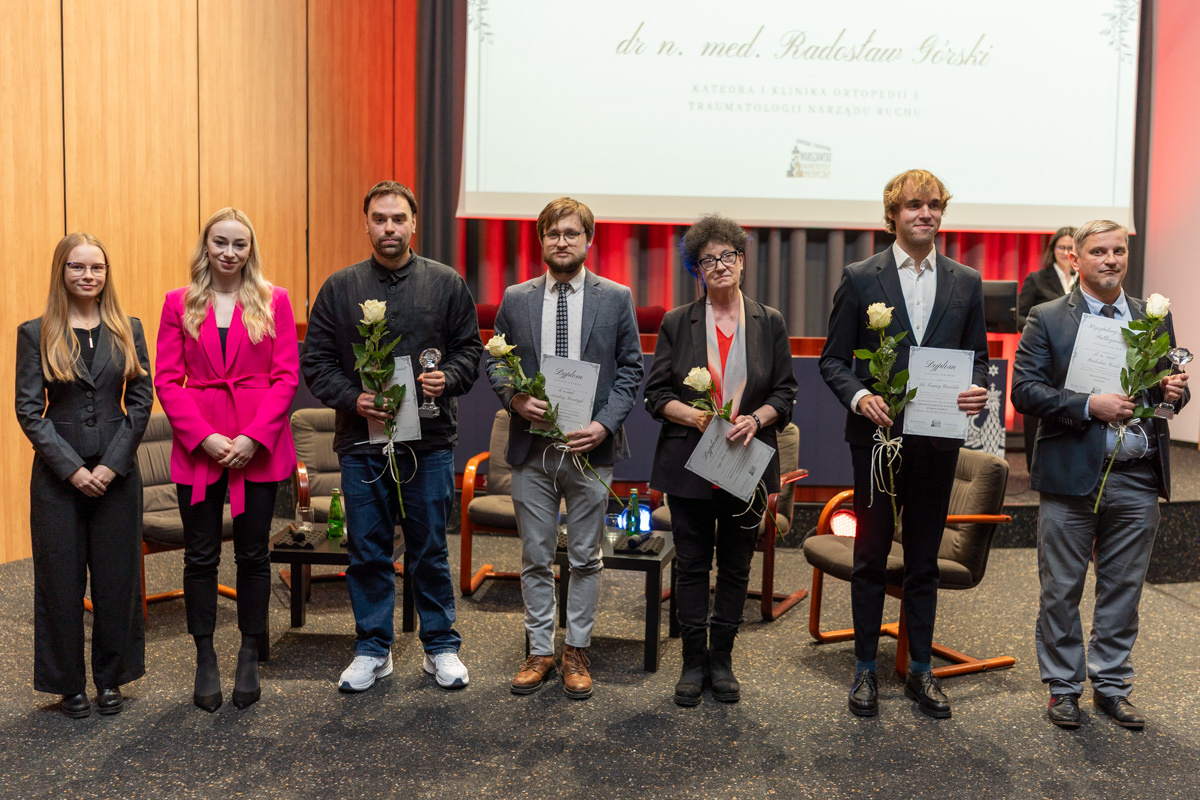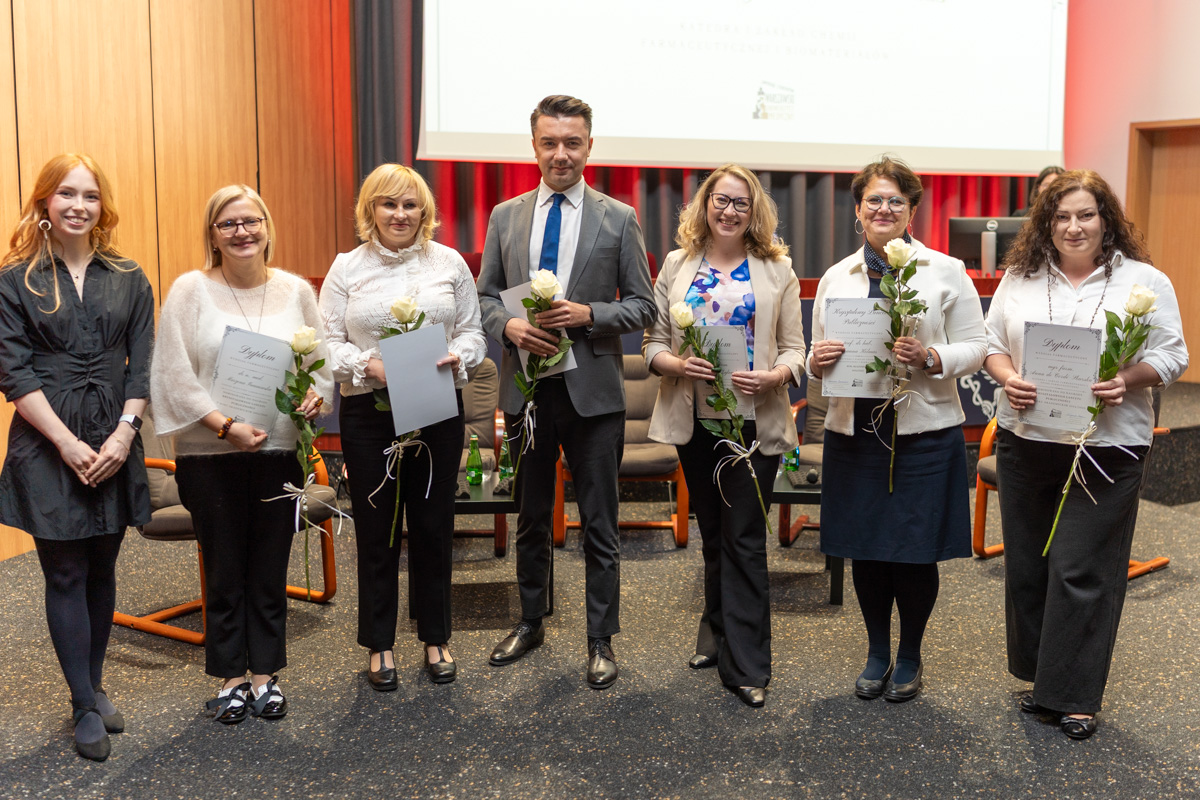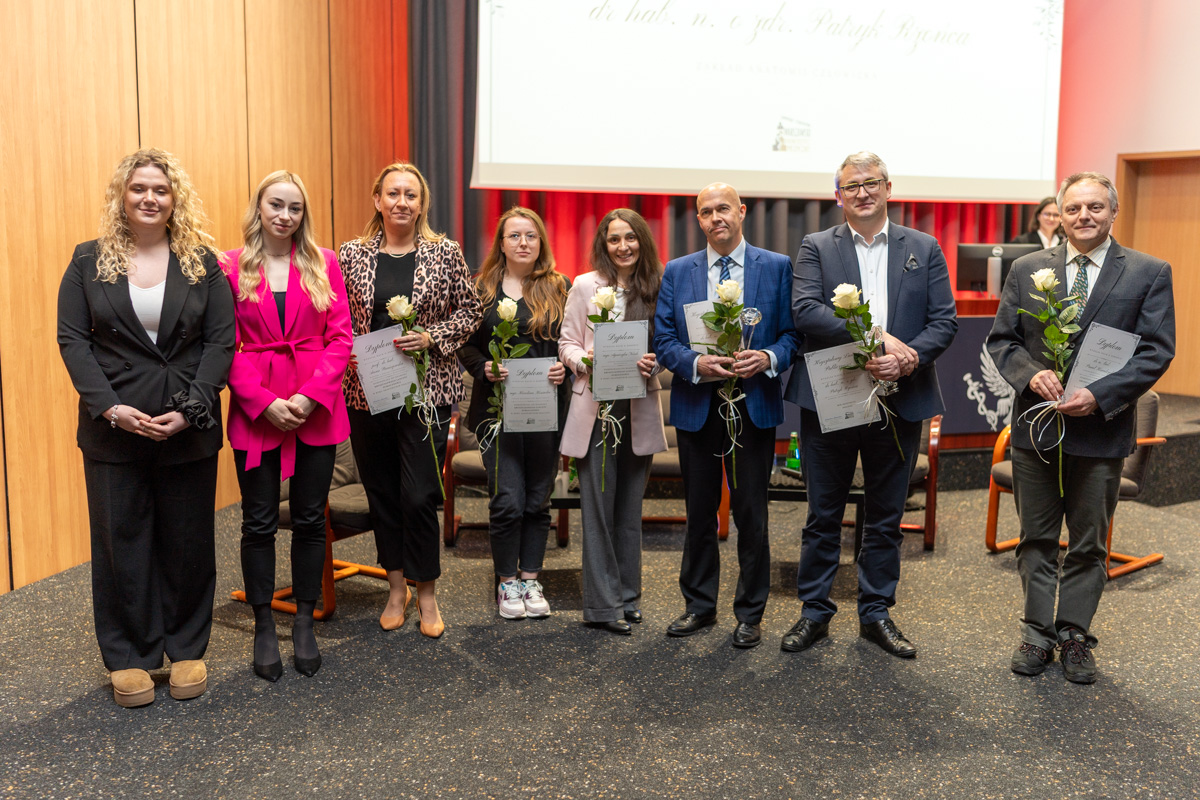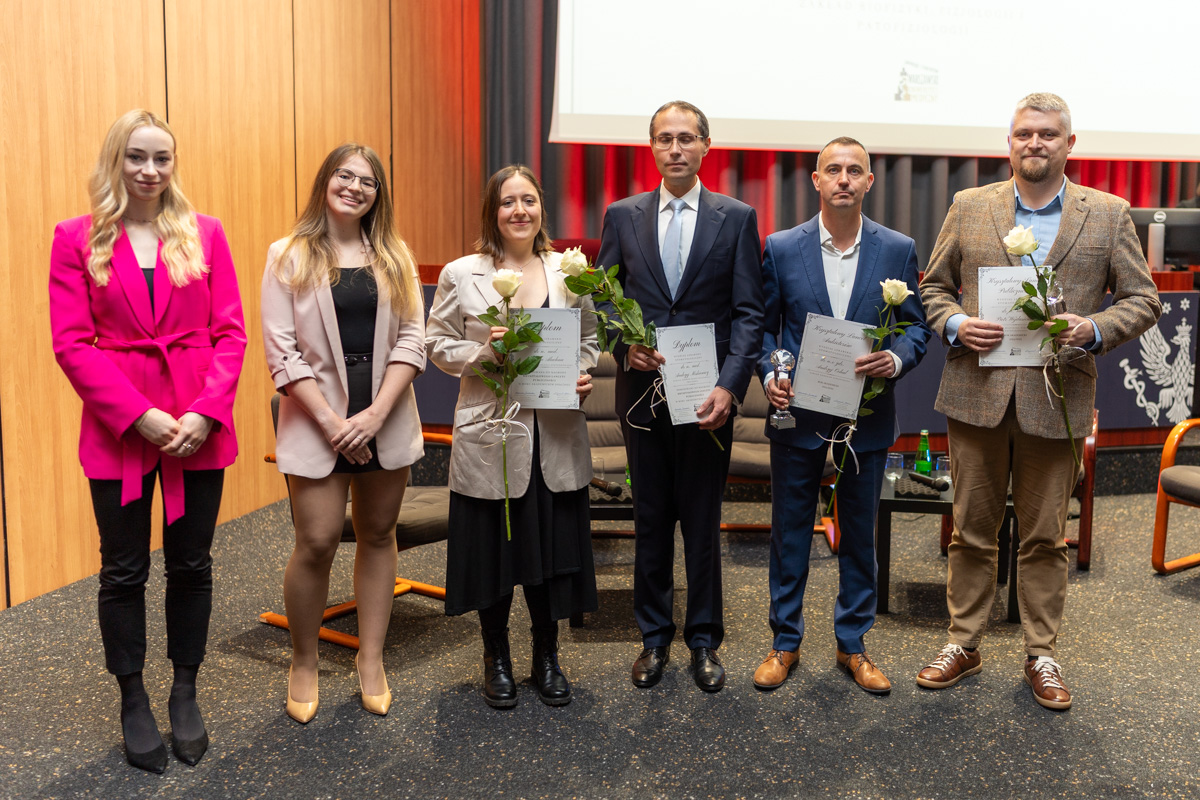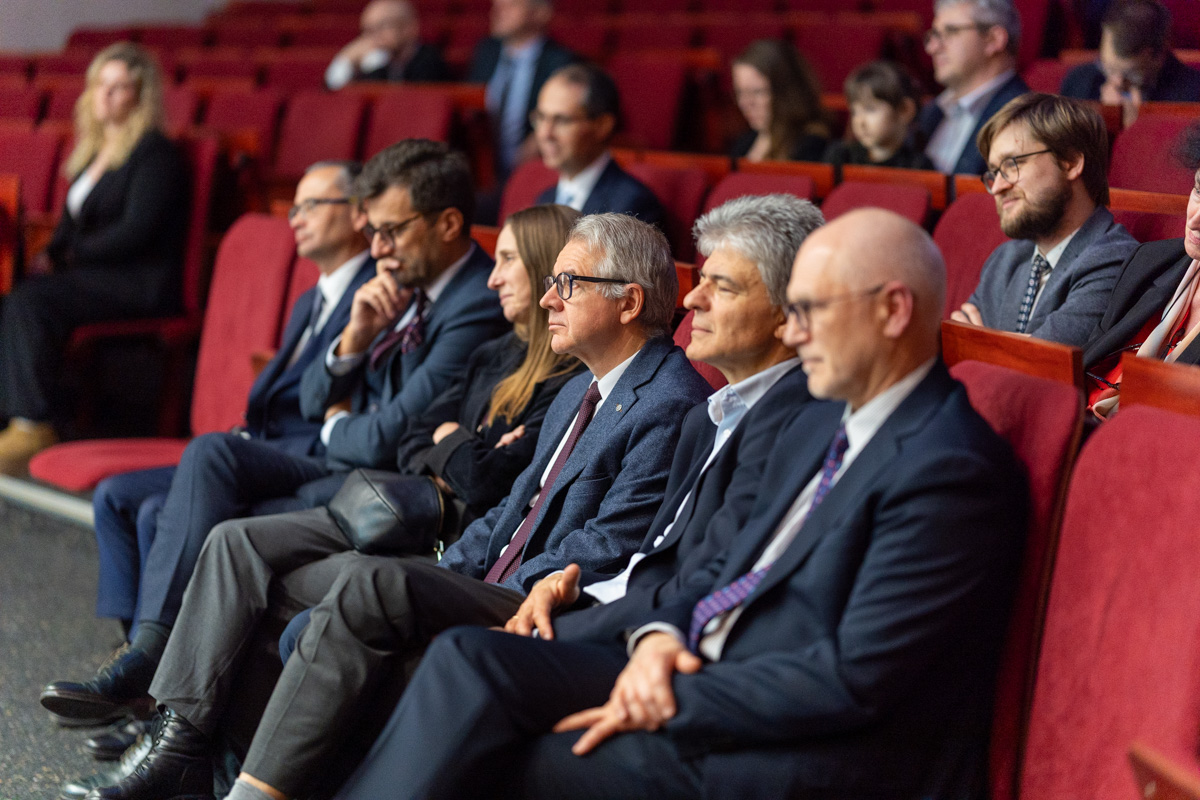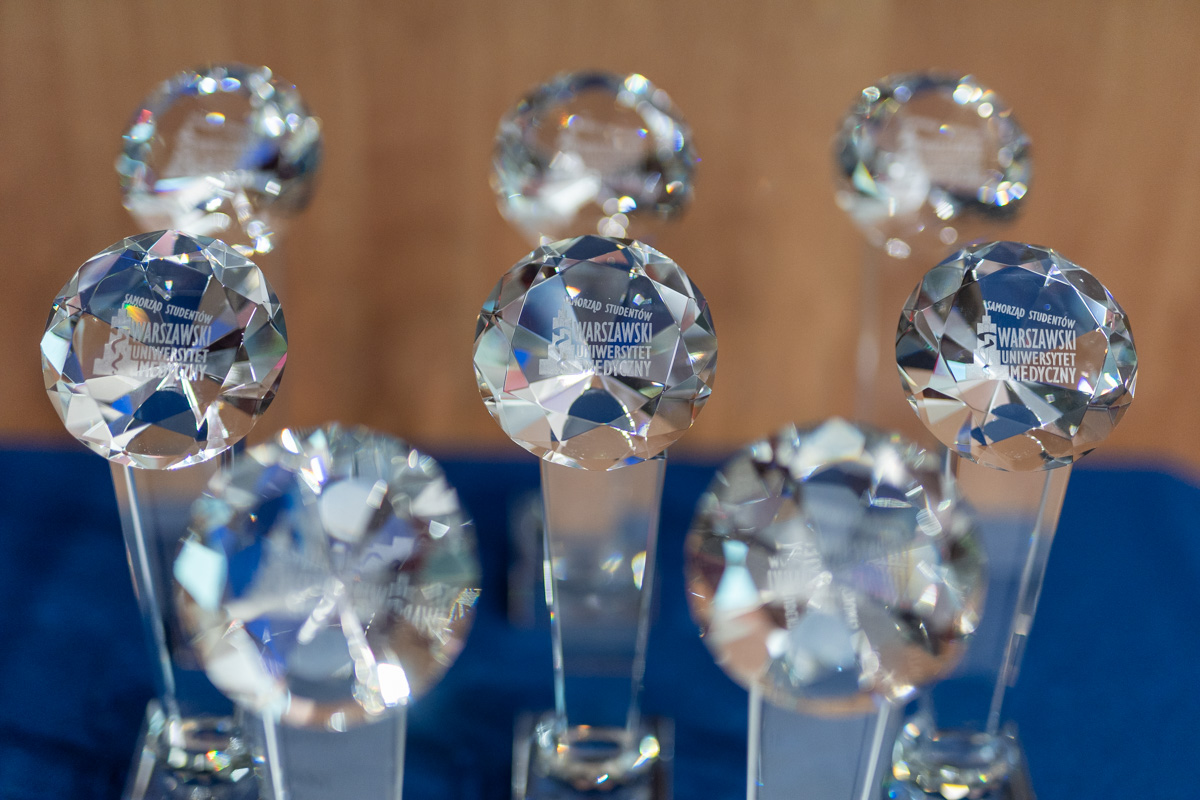
On Thursday, December 11, a gala was held during which the WUM Student Government – the organizer of the Crystal Lancets – presented statuettes to the distinguished educators. In addition to students, the event was attended by the Rector, Prof. Rafał Krenke, the Vice-Rector for Student Affairs and Education, Prof. Marek Kuch, and representatives of the deans’ offices.
Before the winners received their Crystal Lancets, they listened to many warm words of gratitude and appreciation.
“Today’s ceremony is an expression of recognition for teachers whose attitudes, commitment, and competence shape generations of scientists, physicians, and healthcare managers. They are mentors who inspire, challenge, and support students, leaving a lasting mark through their relationships with them, developing their potential, and preparing them for responsible professional practice,” emphasized Aleksandra Jasiniewska, Chair of the Student Government Teaching Committee.
“The Crystal Lancets are a very important initiative, and I thank you for continuing it,” said Prof. Rafał Krenke, adding: “Being appreciated by students, for whom we exist at the university, is a deeply moving and unique experience.”
“Within the WUM academic community, there are educators who, through their passion and dedication, go beyond the boundaries of traditional teaching, showing that true education is more than just transferring knowledge. It is about building bridges between theory and practice, supporting each of us in spreading our wings and discovering our potential, and showing understanding for our often difficult beginnings. Behind every award, there is not only hard work and commitment, but also a great passion for teaching and genuine care for students. These qualities make you not only educators, but also guides and role models for us,” stressed Anna Kupczak, Chair of the Student Government. “Together, we can build a future full of knowledge, inspiration, and shared success.”
Winners of the Crystal Lancets for the 2024/2025 academic year
The Crystal Lancets are awarded in two categories at each WUM faculty. The Crystal Lancet of the Survey Respondents is awarded to the educator with the highest average score in the Course and Academic Teacher Evaluation Survey, while the Crystal Lancet of the Audience goes to an educator selected in a direct student vote.
Crystal Lancet of the Survey Respondents winners:
• Faculty of Medicine: Dr. Wiktor Bogacki-Rychlik, Department of Experimental and Clinical Physiology
• Faculty of Pharmacy: Dr. Agnieszka Kowalczyk, Department and Unit of Pharmacotherapy and Pharmaceutical Care
• Faculty of Dental Medicine: Dr. Andrzej Ochal, Department of Rehabilitation
• Faculty of Health Sciences: Dr. hab. Tomasz Kryczka, Department of Nursing Development, Social and Medical Sciences
Crystal Lancet of the Audience winners:
• Faculty of Medicine: Dr. Radosław Górski, Department and Clinic of Orthopedics and Traumatology of the Musculoskeletal System
• Faculty of Pharmacy: Prof. Joanna Kolmas, Department and Unit of Pharmaceutical Chemistry and Biomaterials
• Faculty of Dental Medicine: Dr. Piotr Wojdasiewicz, Department of Biophysics, Physiology, and Pathophysiology
• Faculty of Health Sciences: Dr. hab. Patryk Rzońca, Department of Human Anatomy
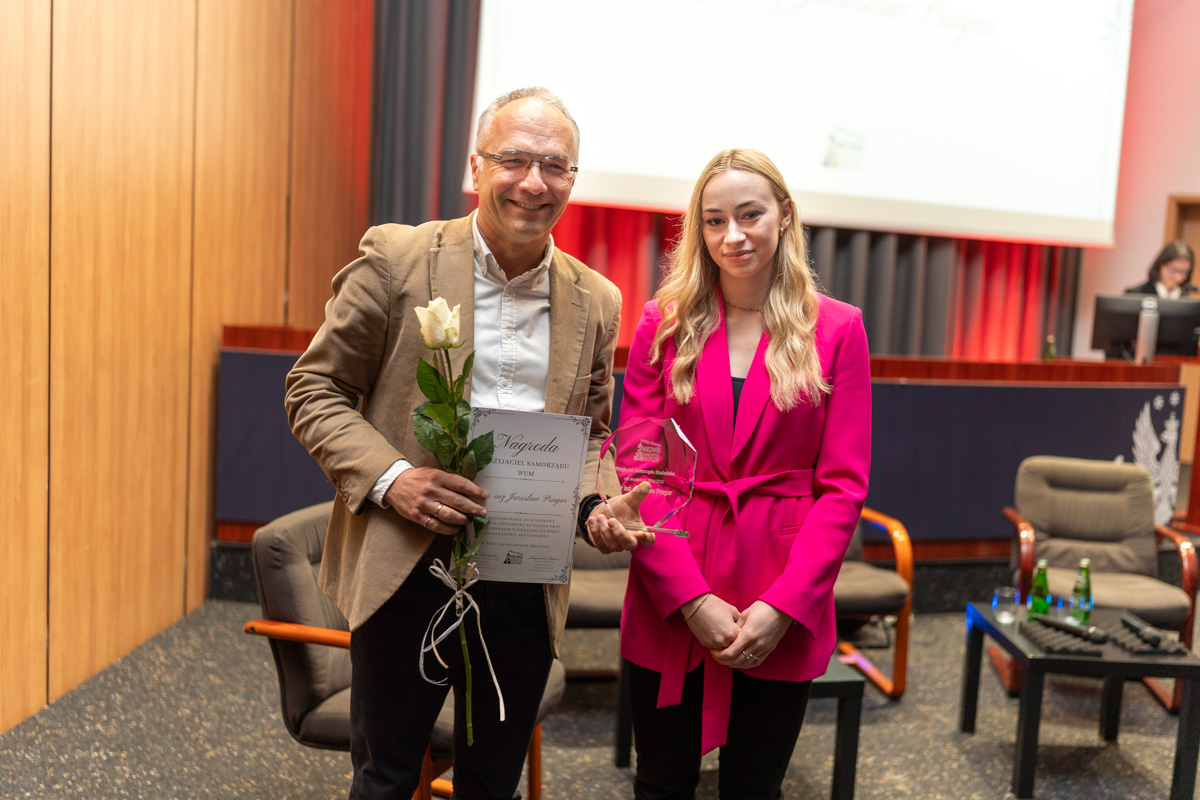
A special award, “Friend of the WUM Student Government,” was also presented to Jarosław Prugar, Deputy Chancellor for Operations.
Nominees for the Crystal Lancet of the Audience
Being nominated in the Crystal Lancet of the Audience category is a great honor in itself, so it is worth mentioning the educators who, in addition to the winners listed above, were among the nominees:
Nominated by students
Nominated by students of the Faculty of Medicine
• Ewa Ungier, MA, Department of Normal and Clinical Anatomy
• Dr. Arkadiusz Kowalczyk, Department of Normal and Clinical Anatomy
• Dr. Robert Franczyk, Department of Normal and Clinical Anatomy
• Tomasz Ciesielski, MD, Department and Unit of Experimental and Clinical Physiology
Nominated by students of the Faculty of Pharmacy
• Anna de Cordé-Skurska, MA, Department and Unit of Pharmacotherapy and Pharmaceutical Care
• Dr. Marzena Iwanowska, Department of Laboratory Medicine
• Dr. Przemysław Kurowski, Department and Unit of Pharmacotherapy and Pharmaceutical Care
• Dr. Agnieszka Zajkowska, Department of Applied Pharmacy
Nominated by students of the Faculty of Dental Medicine
• Dr. Alicja Aluchna, Department of Integrated Dentistry
• Dr. Monika Lewandowska, Department of Rehabilitation
• Dr. Izabela Korabiewska, Department of Rehabilitation
• Dr. Andrzej Miskiewcz, Department of Oral Mucosal and Periodontal Diseases
Nominated by students of the Faculty of Health Sciences
• Agnieszka Nerek, MA, Department of Clinical Nursing
• Dr. Paweł Kowalczyk, Department of Biophysics, Physiology, and Pathophysiology
• Prof. Anna Staniszewska, Department and Unit of Experimental and Clinical Pharmacology
• Karolina Kosiacka, MA, Department of Emergency Medical Services
All nominees also received congratulations and certificates.
On vocation and the academic path
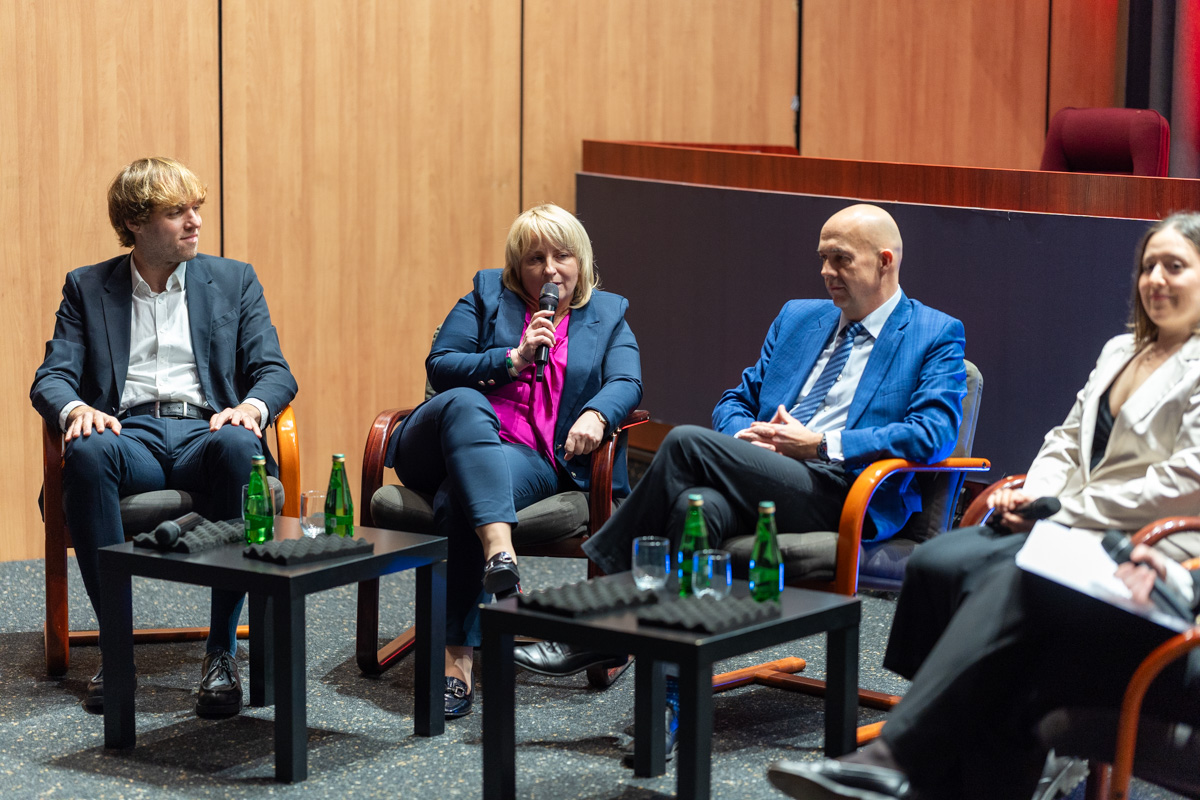
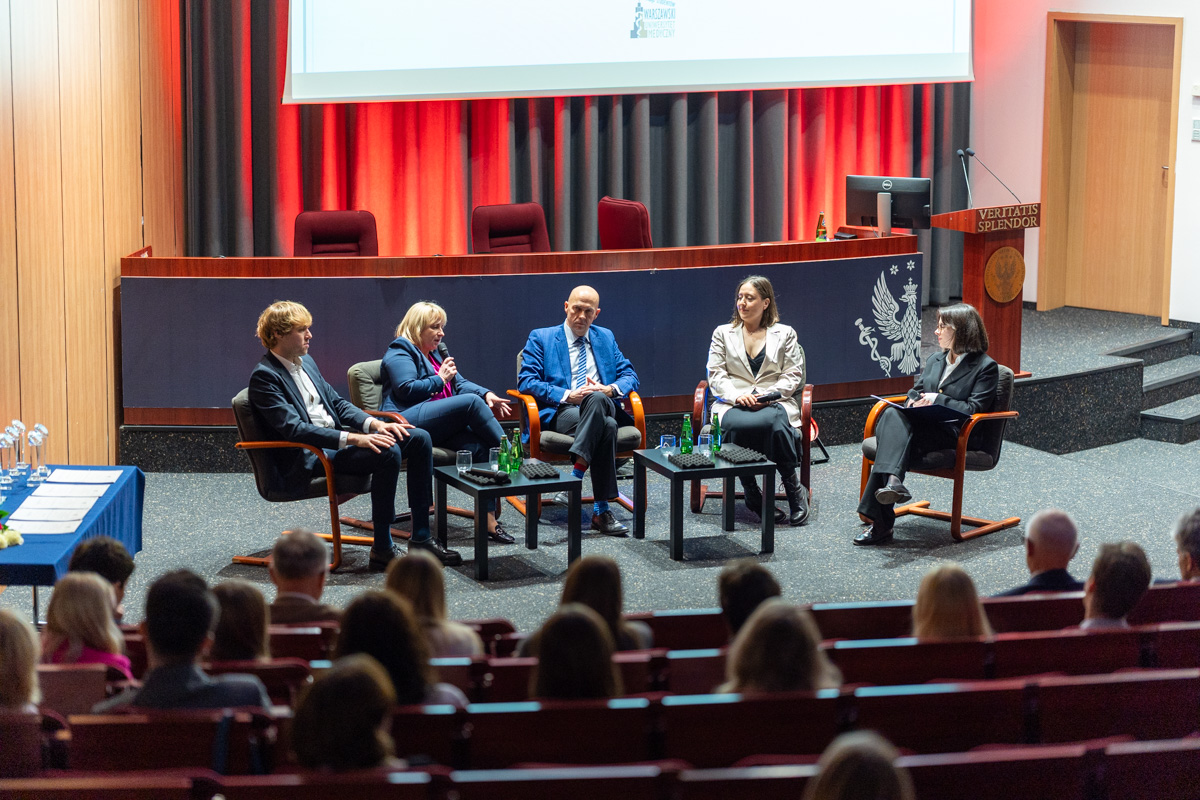
During the gala, a panel discussion entitled “Masters and students: on vocation and the academic path” was held, featuring four educators whom students wished to learn more about. The panel included: Tomasz Ciesielski, MD (Department and Unit of Experimental and Clinical Physiology), Dr. hab. Tomasz Kryczka (Department of Nursing Development, Social and Medical Sciences), Dr. Alicja Aluchna (Department of Integrated Dentistry), and Dr. hab. Katarzyna Paradowska (Department of Organic and Physical Chemistry). They spoke about what led them to choose medical studies, how they decided to become academic teachers, and what educators learn from their students.
“The most important piece of advice is this: these studies will be demanding, but you must not forget about rest, recovery, time for your passions, and spending time with loved ones, because we do not know how much time we truly have,” said Dr. Alicja Aluchna when asked what advice she would give herself if she could go back to the beginning of her studies.
Asked about what is most difficult and most beautiful in the work of an academic teacher, Dr. hab. Katarzyna Paradowska from the Department of Organic and Physical Chemistry said:
“The most difficult thing is intergenerational understanding and communication, and the most beautiful moment is when it succeeds.”
“The world is changing very quickly, so courses on how to teach and how to do it more effectively would be useful”, said Tomasz Ciesielski, MD, during a discussion on what could support teaching practice.
Speaking about what matters most to him in working with students, Dr. hab. Tomasz Kryczka noted:
“The most important thing is that we can communicate, exchange views, that students are not afraid of me, and that we can laugh together. I do not know everything, and I admit that. We need openness, and we still lack it.”
The event concluded with a performance by the WUM Choir.