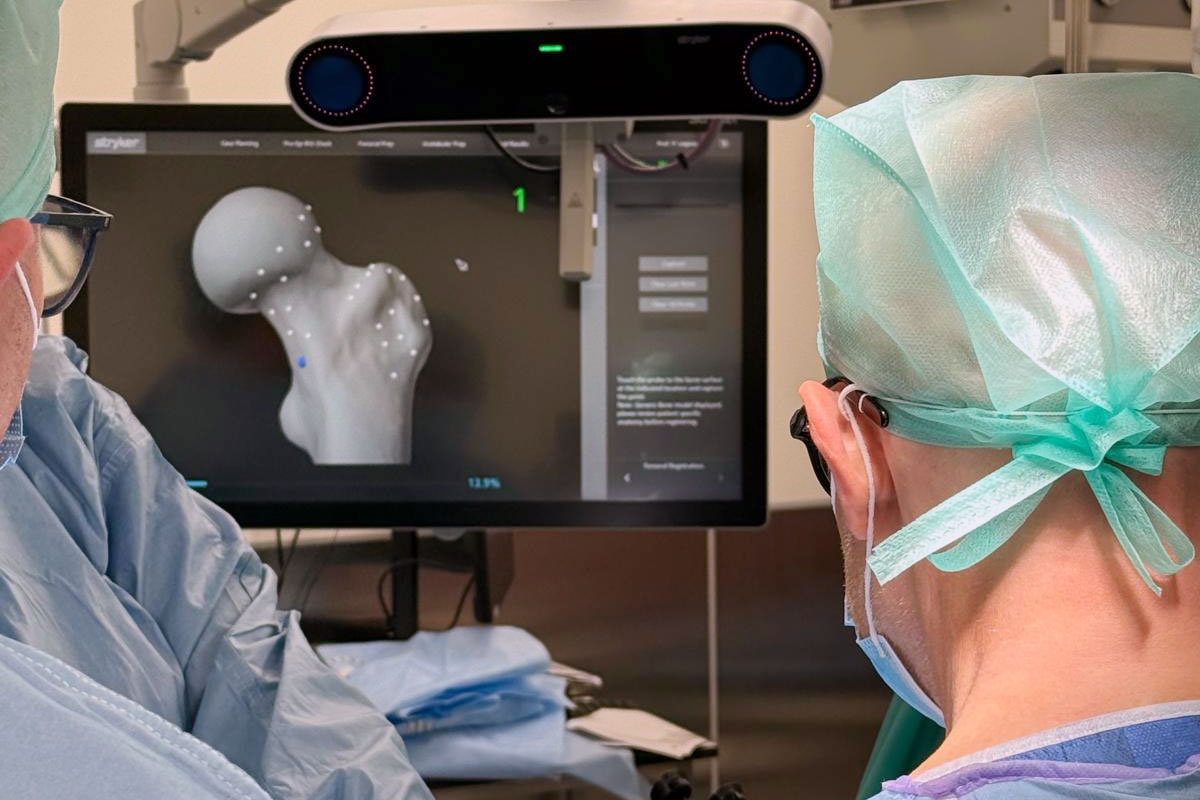
Integration of imaging, navigation and robotics
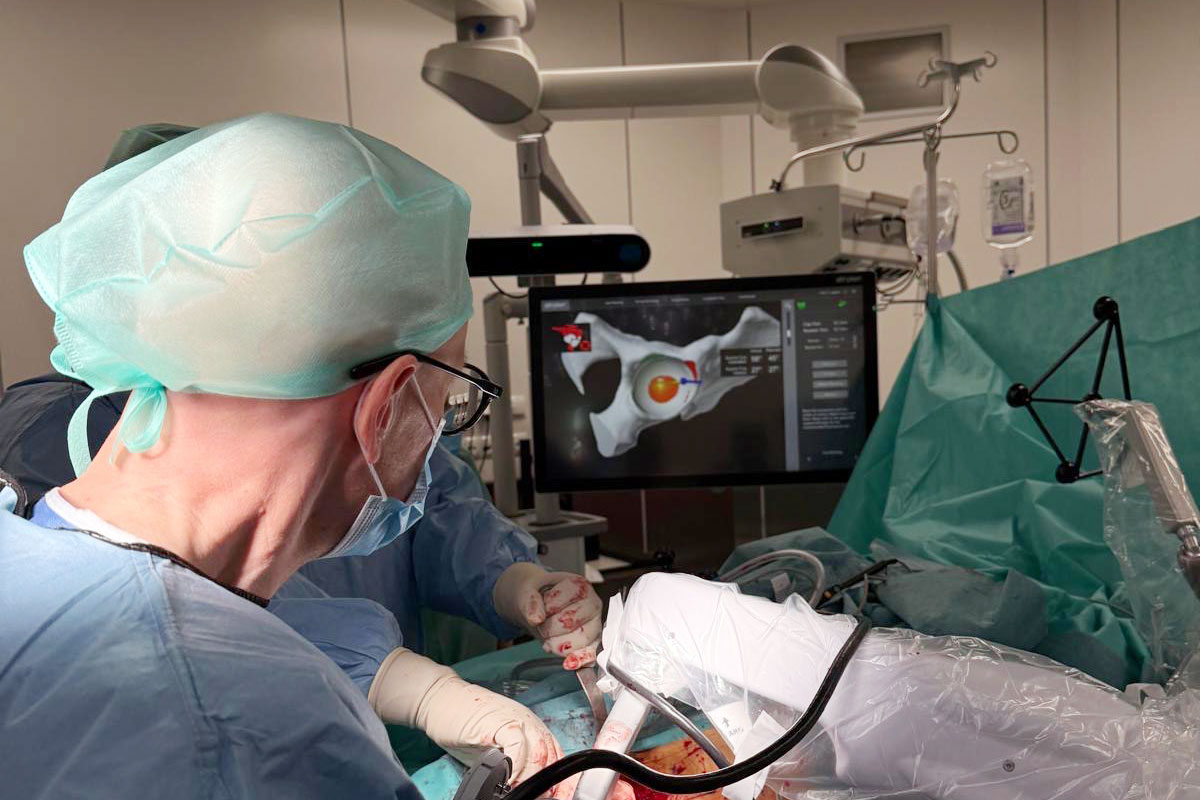
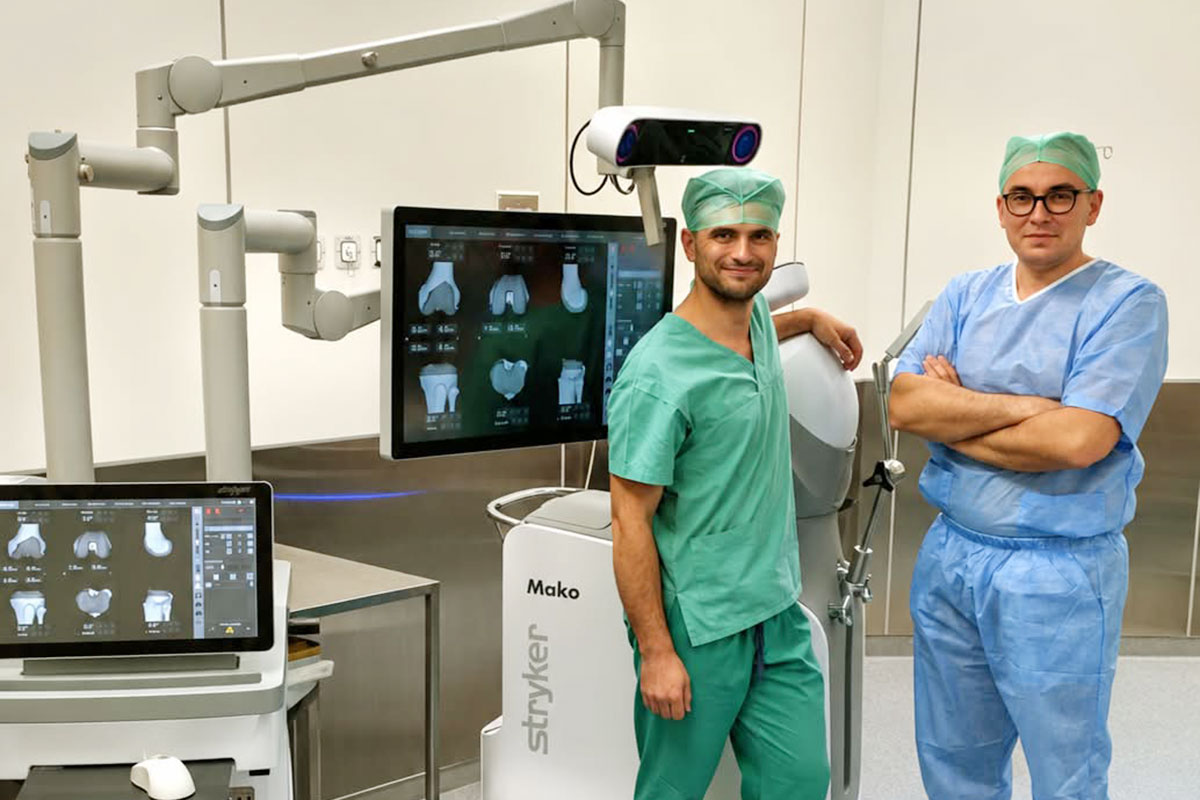
The new MAKO 4 system combines digital surgery planning, three-dimensional imaging, intraoperative navigation, biomechanics analysis and a robotic arm operated directly by the surgeon.
Prior to the procedure, a three-dimensional model of the anatomy of a specific patient is created based on computed tomography scans. This allows for the planning of implant size and position and the extent of bone preparation comprising individual anatomical conditions.
“In the case of knee replacement surgery, an intraoperative assessment of ligament balancing and soft tissue tension is also possible, which allows for adjusting the plan to the actual biomechanics of the joint,” explained Prof. Paweł Łęgosz, the Head of the department, who develops and coordinates the orthopedic robotics program.
Thanks to a new technology that creates a virtual border of the surgical area, the surgeon guides the tool and the robot controls its position relative to the previously planned area.
The first two days of the system operation and as many as five operations
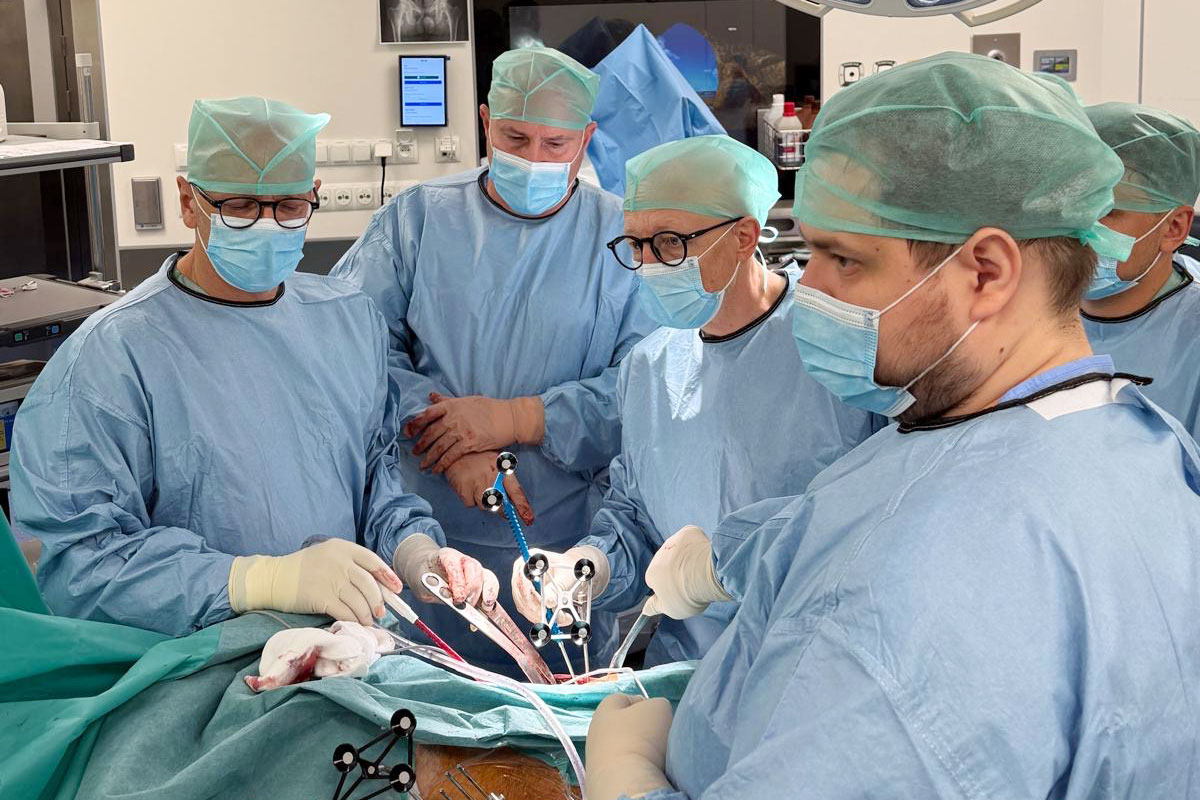
On the first day, the team from the Department consisting of: Prof. Paweł Łęgosz, Dr Łukasz Pulik, Dr Paweł Gidziński and Dr Paweł Stępniak performed two complete hip arthroplasties using a minimally invasive anterior approach.
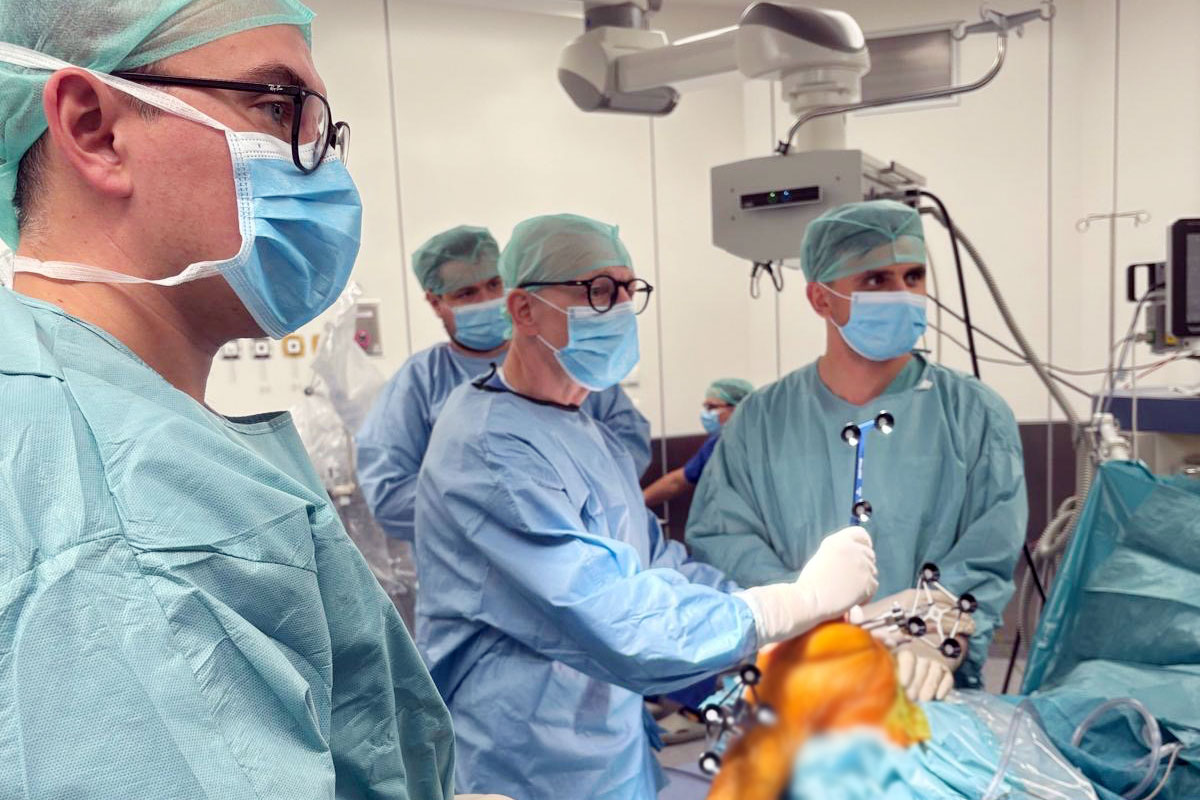
On the second day, Dr Łukasz Pulik, supported by Prof. Paweł Łęgosz and Dr Paweł Stępniak, performed three total knee arthroplasties.
All the procedures went as planned and the patients were prepared to be discharged from the hospital the next day and to continue their rehabilitation.
Robot is an advanced assistant in orthopedics
“Orthopedic robotics differs from systems used in such fields as urology, general surgery or cardiac surgery,” explained Professor Łęgosz. “In systems used in these fields, the robot primarily performs the function of an extremely precise manipulator. The surgeon sitting at the console controls the instruments in the patient's body, and the system translates the movements of the operator into precise movements of the operating tools.”
In orthopedics, the idea of robotics is different.
“Robot is an advanced assistant in orthopedics. It provides us with data, helps us plan an operation for a specific patient and allows for a very precise implementation of this plan,” said Prof. Paweł Łęgosz. At the same time, he added: “It should be remembered that it is still the surgeon who makes decisions, manages the tools and is responsible for the operation.”
Over 500 surgeries and two robotic platforms in orthopedics
The launch of the new system is the next step in the development of robotics in the department. The team has already had a unique experience using the ROSA system. This device has already been used to perform over 500 surgeries in the department!
“Having two different robotic systems makes it possible to develop further surgical techniques, compare different technological solutions and conduct research on the application of robotics in arthroplasty,” explained Professor Łęgosz.
According to Prof. Paweł Łęgosz, the next stage in the development of robotics will not only involve the improvement of device mechanics, but also a deeper integration of robots with artificial intelligence.
UCC WUM – towards an interdisciplinary medical robotics center
Specialists of the WUM University Clinical Center currently use four different robotic systems. Two of them are at the disposal of the Chair and Department of Orthopedics, Locomotor Oncology and Traumatology of Adults and Children.
The Chair and Department of General, Oncological and Functional Urology uses a system for advanced minimally invasive urological procedures. The Department of Pediatric Surgery, Urology and Pediatrics uses a modular robotic platform, thanks to which the first two gallbladder removal procedures were performed in August 2026.
Professor Łęgosz emphasized:
“It's not just about using robots anymore. We should build competences that will allow us to understand, research and co-develop this technology in the future. The robot is a support tool for the surgeon. Its value should be assessed primarily in terms of patient safety, quality of surgery and treatment outcomes.”