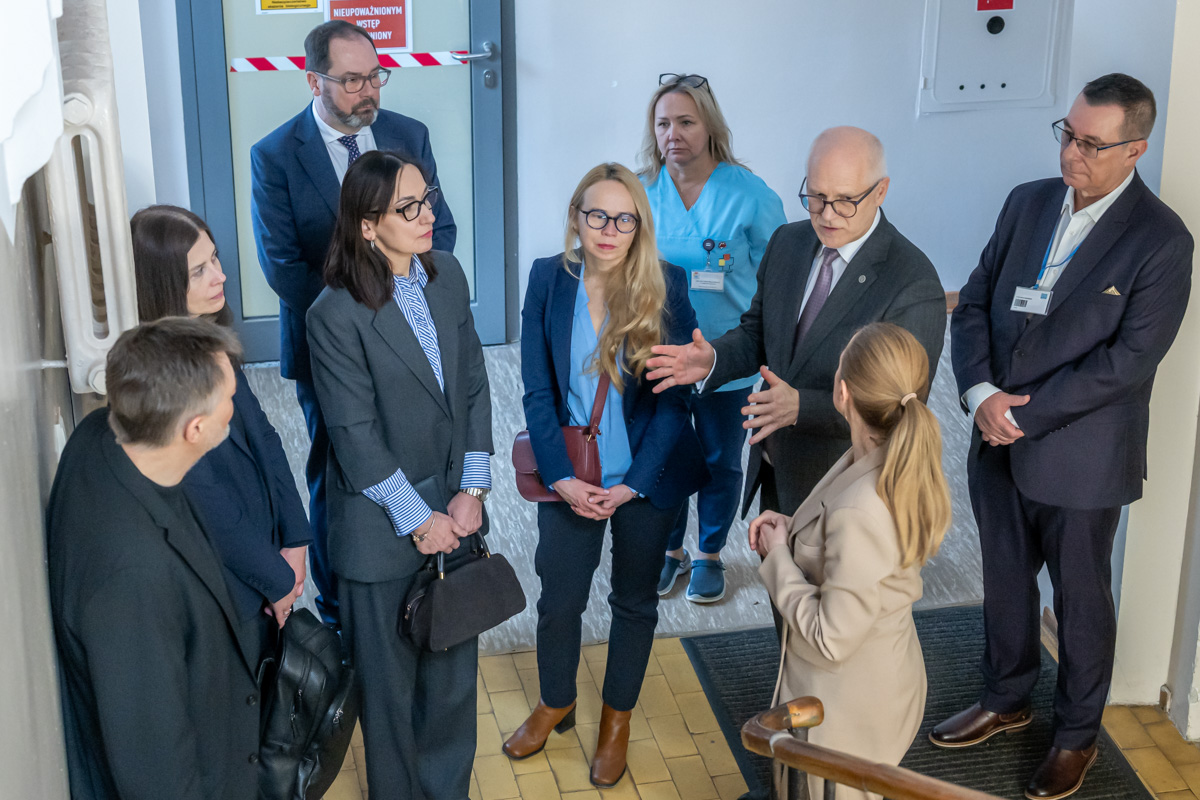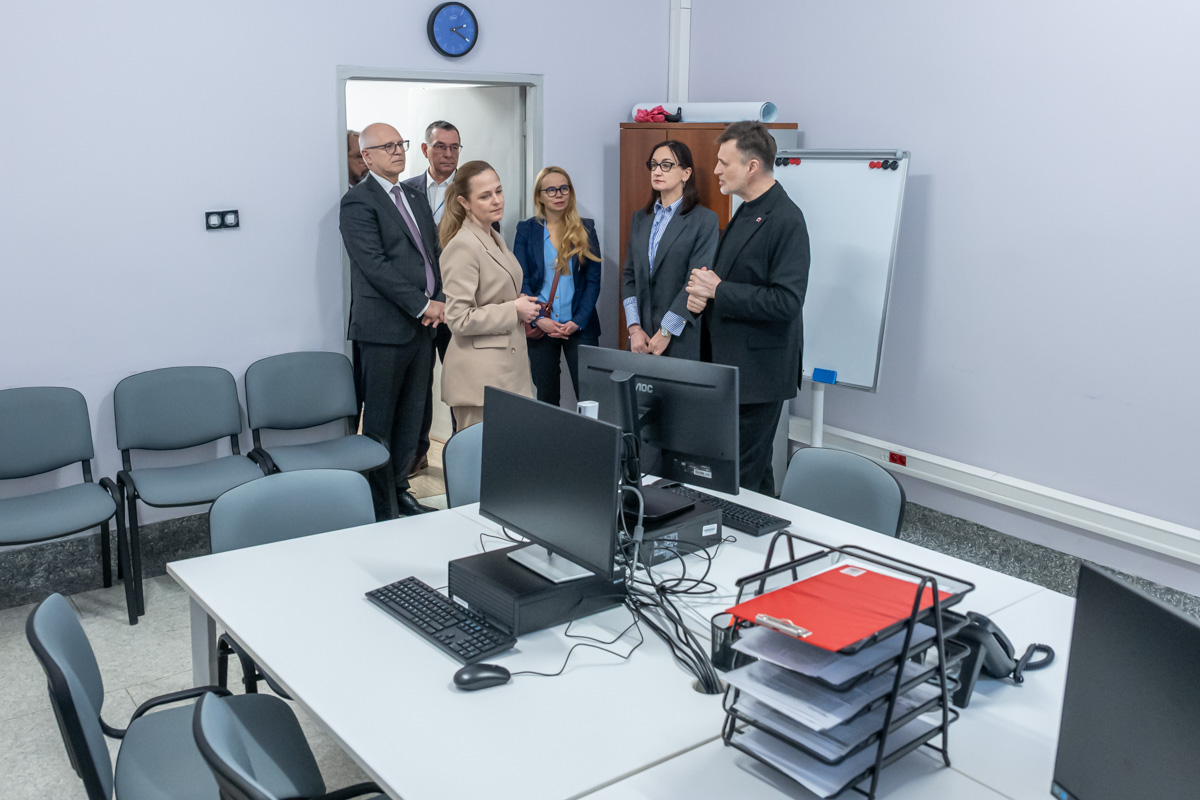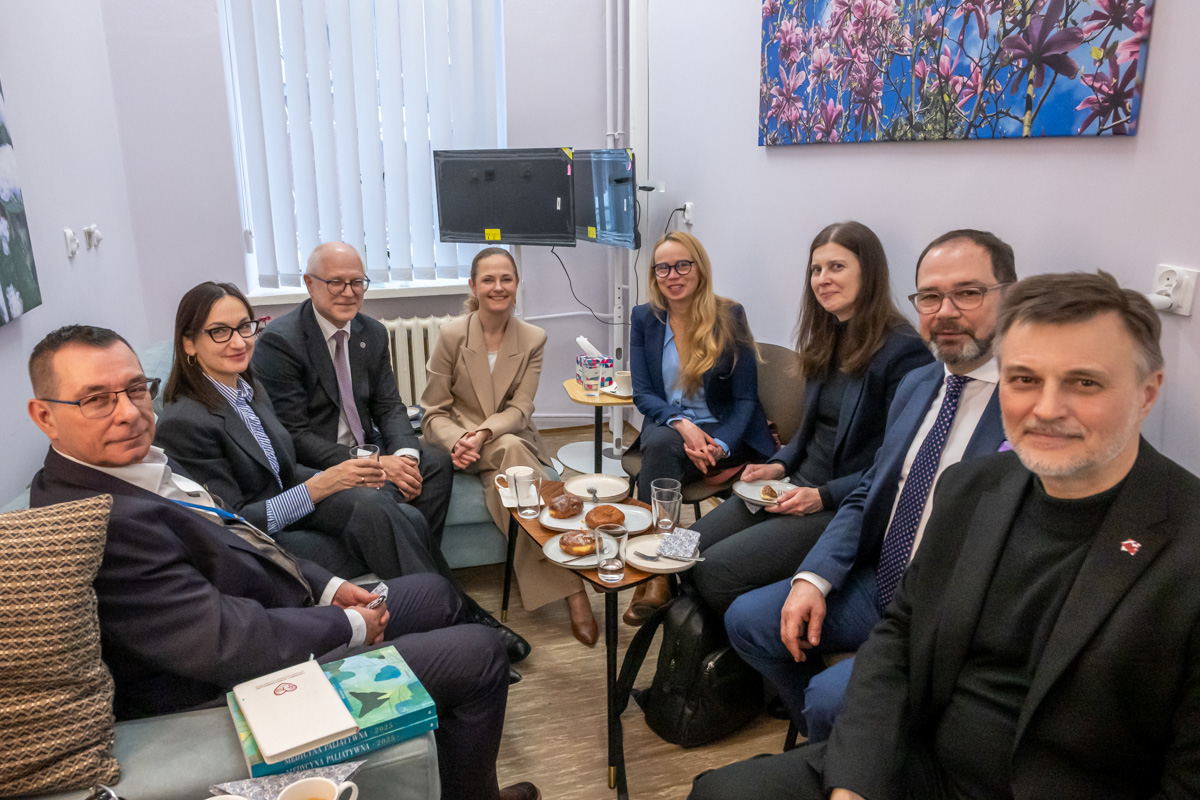
"I met the Head of the department, Dr. Tomasz Dzierżanowski, when he received an award for his exceptional contribution to the treatment of palliative patients. Then, he talked about the wonderful things that happen in the department, and how patients can be helped to pass away with dignity. This is very important." said Katarzyna Kęcka, Undersecretary of State, answering the question of what prompted her to visit this place. "We rarely talk about patients dying of cancer, especially in palliative medicine units. In general, we focus on treatment options, where we expect the patient to recover. In this department, you can see how to make use of the space around the dying patient and how to do it in a unique way."
Innovative Department
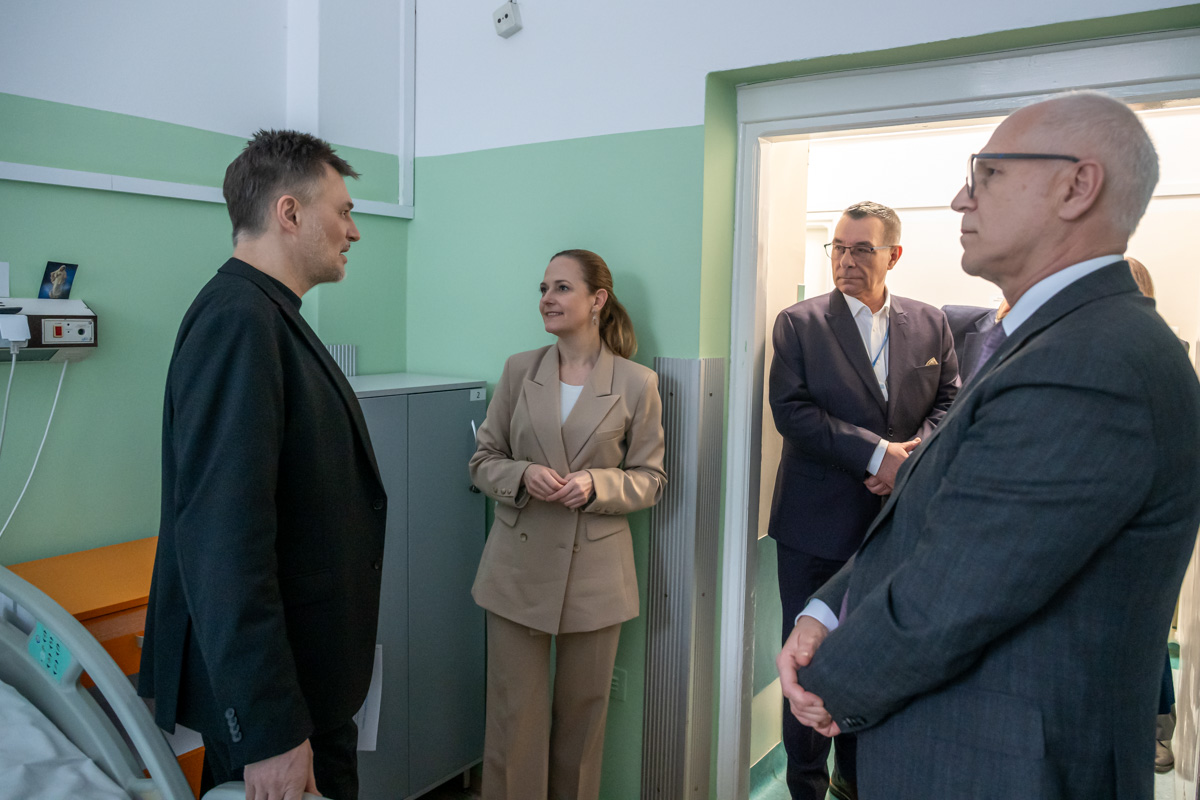
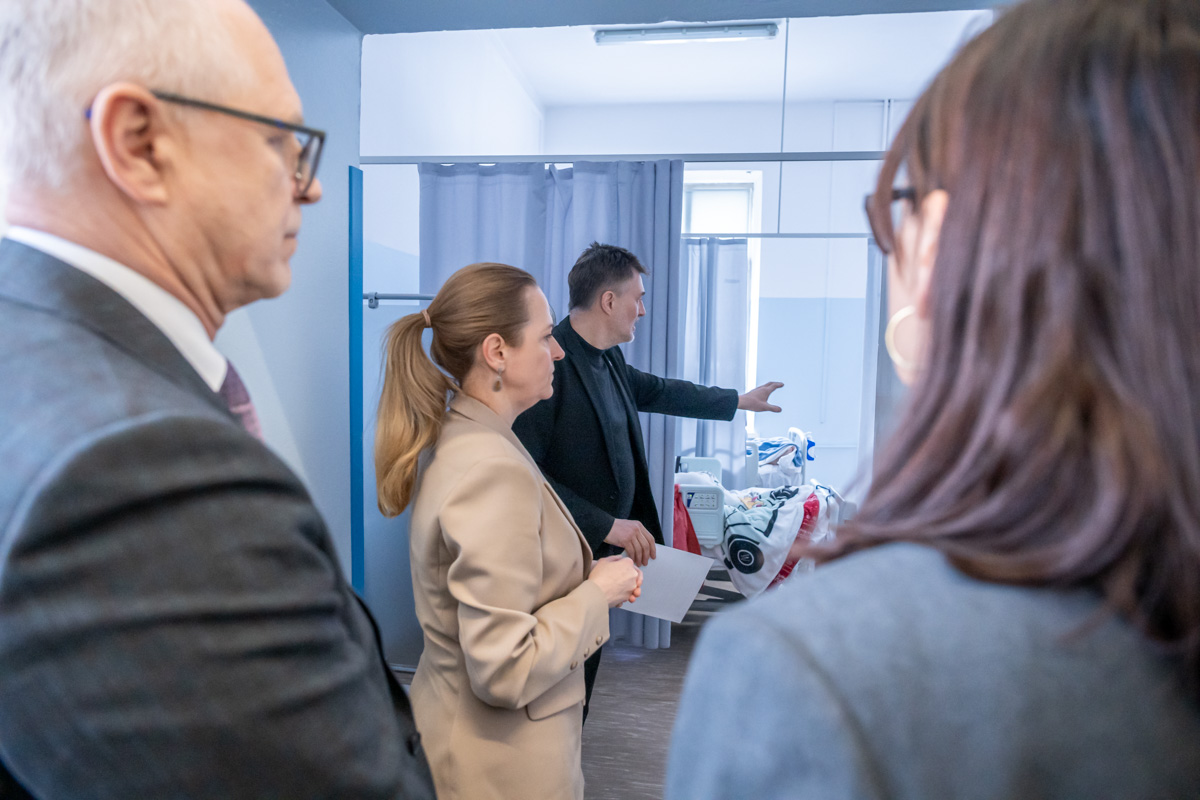
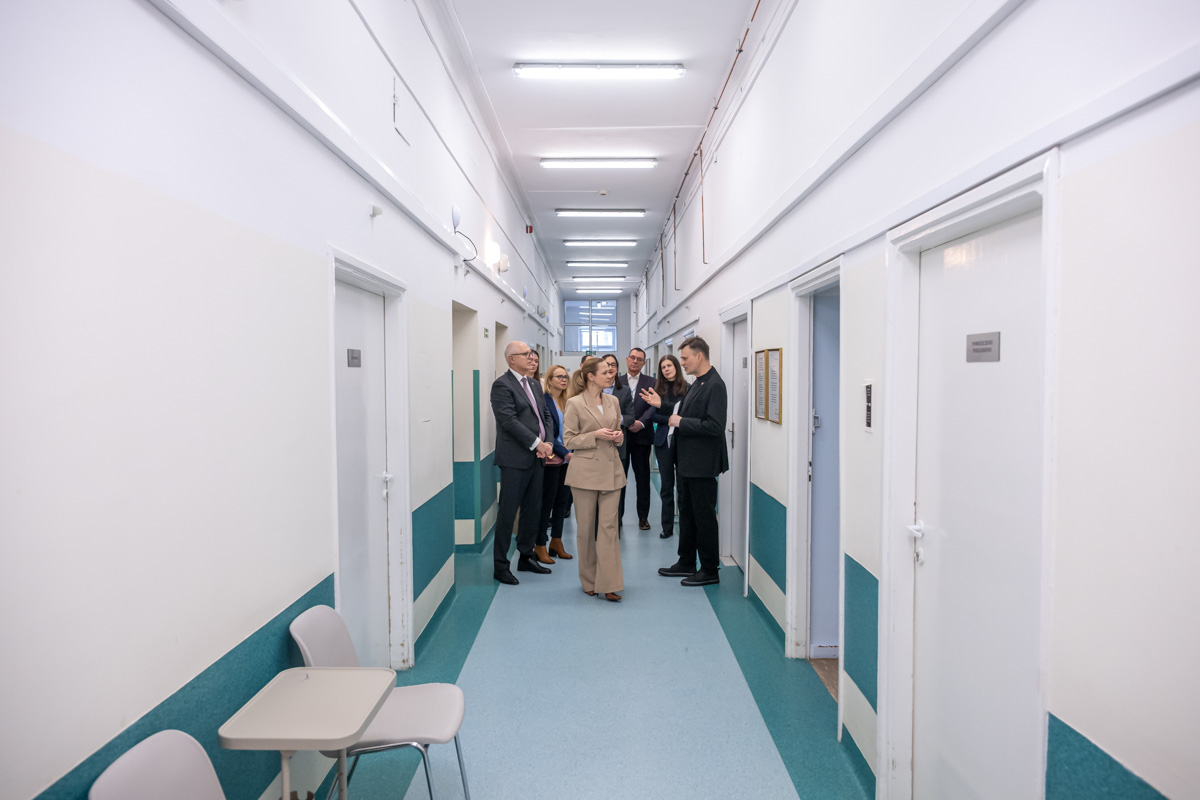
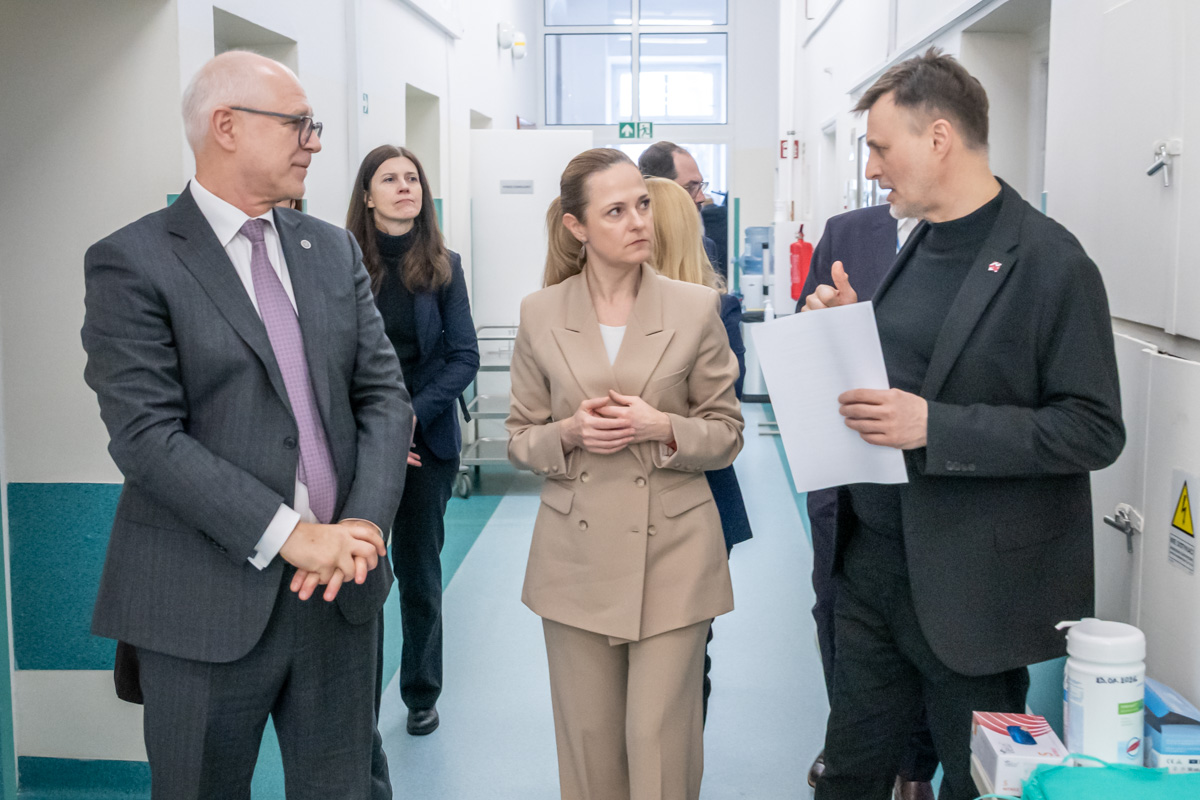
Apart from Undersecretary of State Katarzyna Kęcka, the department was also visited by: Prof. Rafał Krenke, the Rector of MUW, Prof. Agnieszka Cudnoch-Jędrzejewska, MUW Vice Rector for Clinical Affairs and Investment, Marzena Kowalczyk, the Director of UCC MUW, Bogdan Stelmach, MD, Head of the Emergency Department of Infant Jesus Hospital and Jarosław Kulczycki, the Spokesperson of the Medical University of Warsaw. Dr. Dzierżanowski guided the guests around the department, telling them about how it was established, how the work is organized and what are its most important aspects.
"I had to fight for the Department of Palliative Medicine." mentioned Dr. Tomasz Dzierżanowski. "First, the Laboratory of Palliative Medicine was established in the Department of Social Medicine, and then the department was opened. A building is not enough for a department, people are the most important. Together with Edyta Wawrzyńczuk, our nurse manager, we created a fantastic team.”
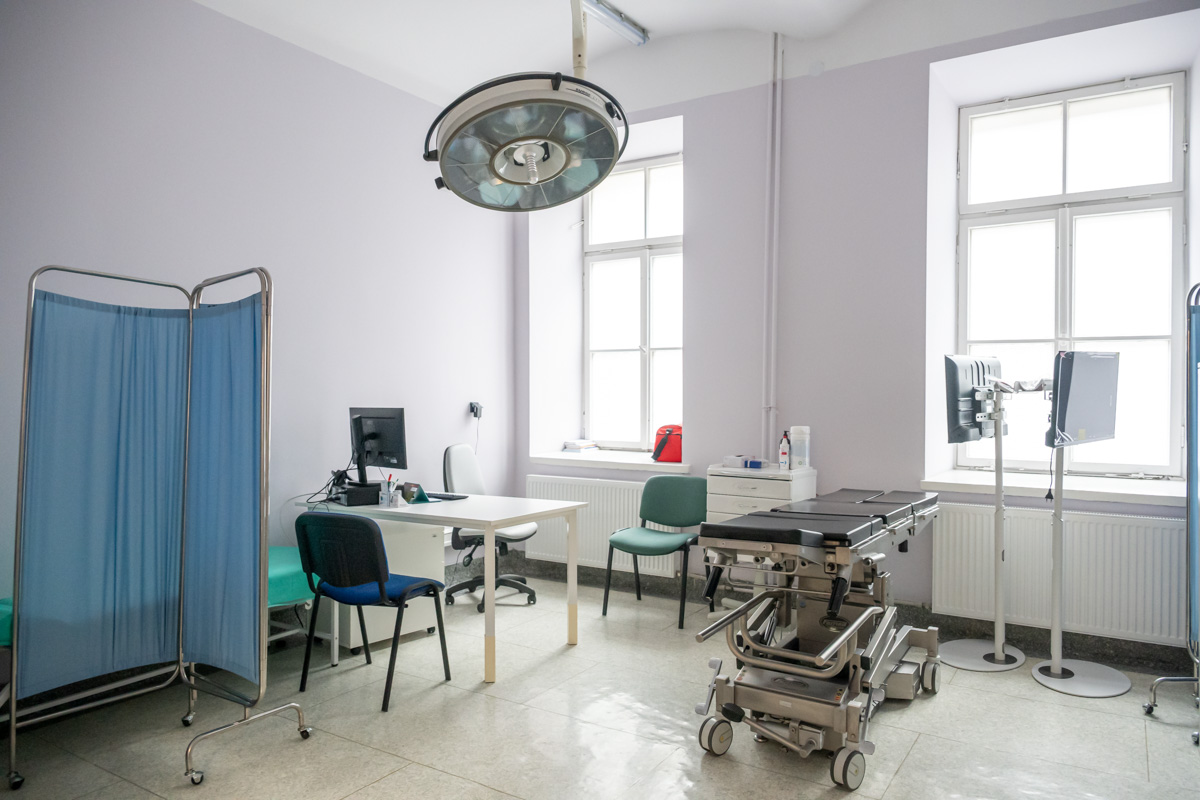
Currently, the department has 19 beds, we admit 400-500 patients annually. However, the needs are much greater.
“Sometimes 30 people wait to be admitted." said Dr. Tomasz Dzierżanowski. "Most of our patients are diagnosed with cancers, including many young people who are about 40 years old. We have recently had a 30-year-old person. Our patients require treatment for pain and other physical as well as mental symptoms such as emotional disorders, anxiety, depression, consciousness disorders, dementia or psychoses.”
Unusual solutions
When visiting the department, MUW Rector, Prof. Rafał Krenke, pointed out that although it has been operating for just over two years, it is developing very quickly.
"Thanks to the huge involvement of the entire team, the department was able to develop and provide patients with decent conditions." he emphasized. "Today, we were all impressed by various organizational solutions, completely innovative ones in many cases, ones that do not work in other Polish departments. They make it possible to improve the quality of care and improve various aspects of the functioning of seriously ill patients.”
These innovative solutions include installing small projectors over each patient bed. There are paintings of nature, works of art – everything that depicts beauty and harmony.
"In this way, we also try to meet the spiritual needs of our patients." said the Head of the department. "We want every hour, every day spent here to be the best possible."
Meeting volunteers
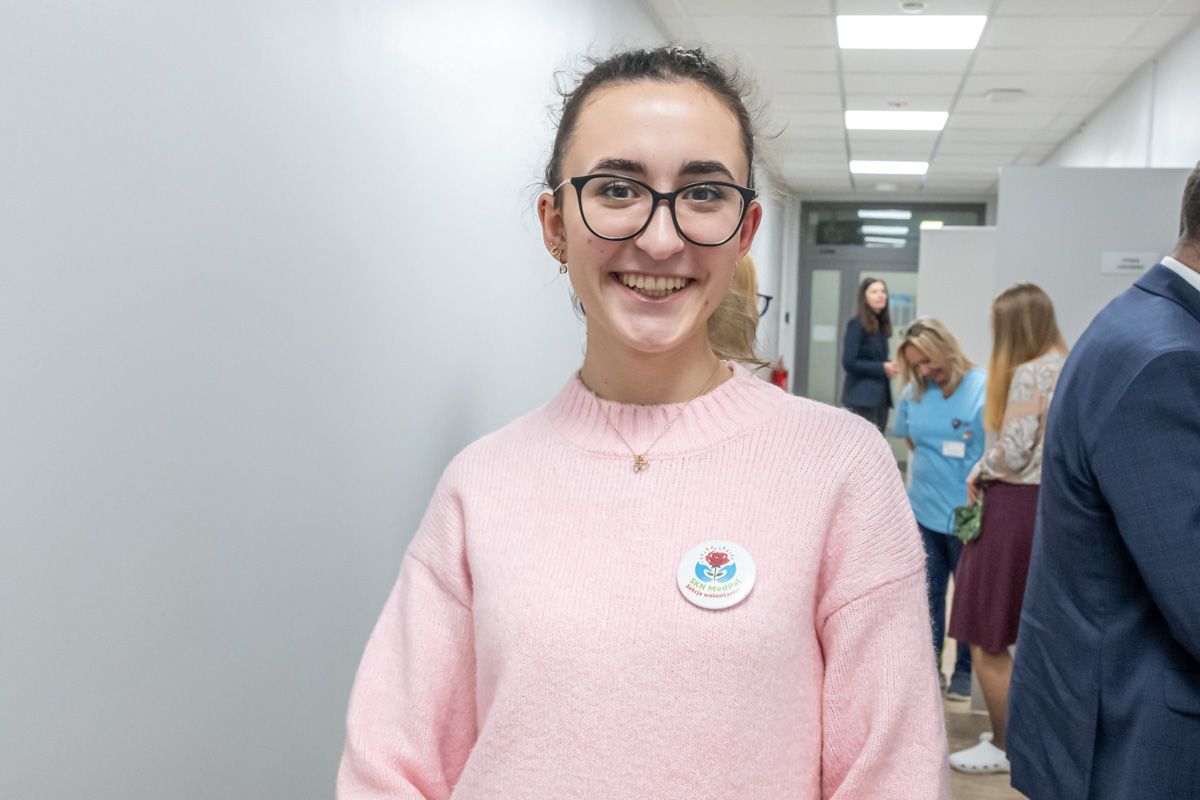
In the corridors and in the rooms of the department, guests could meet not only the staff, but also volunteers, among whom there were medical students of the MUW. They come here to talk to patients and spend time with them.
"In class, we look at the patient more in terms of how we should examine a person, how to take a history, the medical aspect." explained Patrycja Poręba, a volunteer, fifth-year medical student. "Here we have space to simply talk and see the sick person, and his needs, not only medical, but simply human, psychological ones. Ones that may seem less important at first glance, but they are very important as well."
"Sometimes these needs are crucial," said Ola Piotrowska, also a fifth-year student, a volunteer. "Especially when medicine doesn't have much left to offer and is no longer able to improve anything else than the patient's comfort."
A year ago, 146 students applied when the department introduced volunteering. This year, there are already 180 of them.
"We want students to "get infected" with medicine here." said Dr. Tomasz Dzierżanowski. "We encourage them to come to us not only to learn the profession, but also to learn to be with another person, to learn to accompany, to learn this human reflex to be with a person in need. To touch the heart of the future doctor."
Four-legged therapists
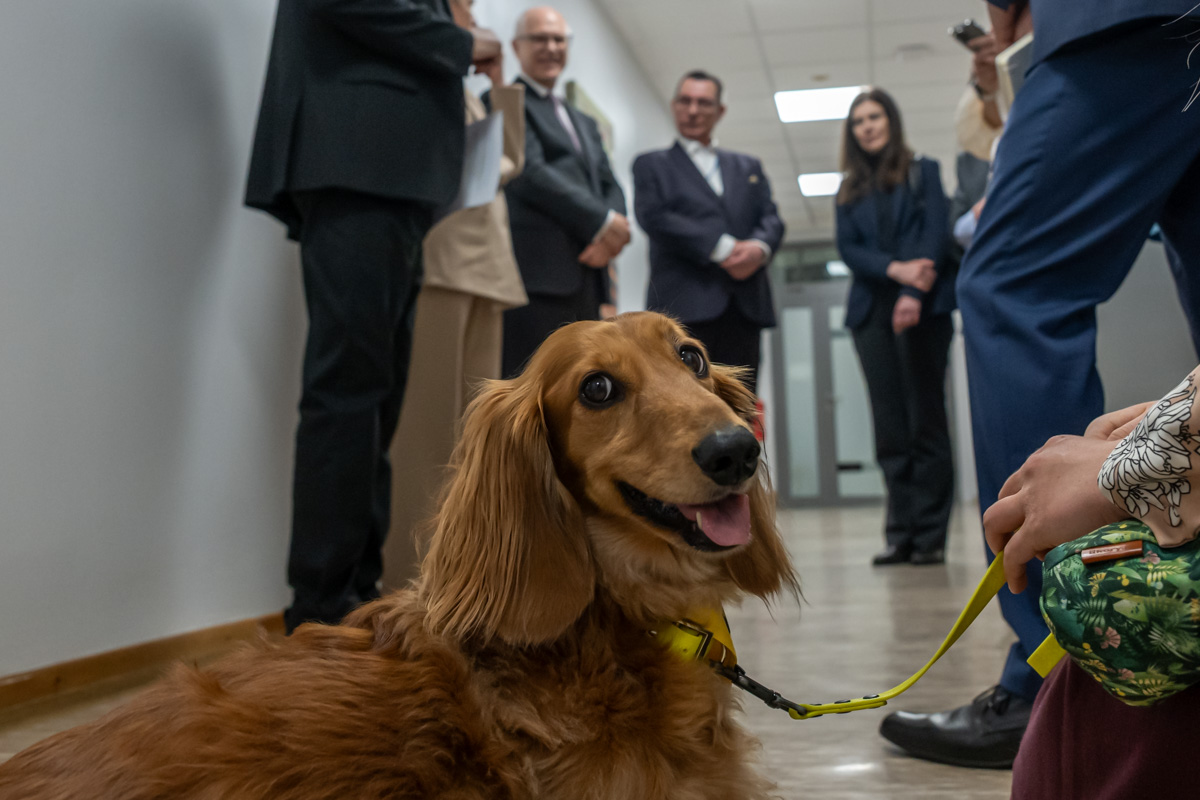
Visitors to the department could also take a closer look at the "work" of four-legged therapists who give patients a taste of home and normal life. The Department of Palliative Medicine at MUW is the first center in Poland where companion animals are allowed to visit the patients. Dr. Tomasz Dzierżanowski announced the "Charter of patient's rights to contact with companion animals." This is a petition that has already been signed by over 50,000 people in Poland.
“My dogs are therapy dogs. You can see how happy they are when they come here." said Małgorzata Brzozowska, a fourth-year medical student and a dog therapist. "They are stroked, they have a lot of their grandmas and granddads. They always get some sausage. They distract patients from everyday life in the hospital and bring a bit of normalcy. It is amazing that such a trivial thing as contact with a dog can improve the comfort of hospital life."