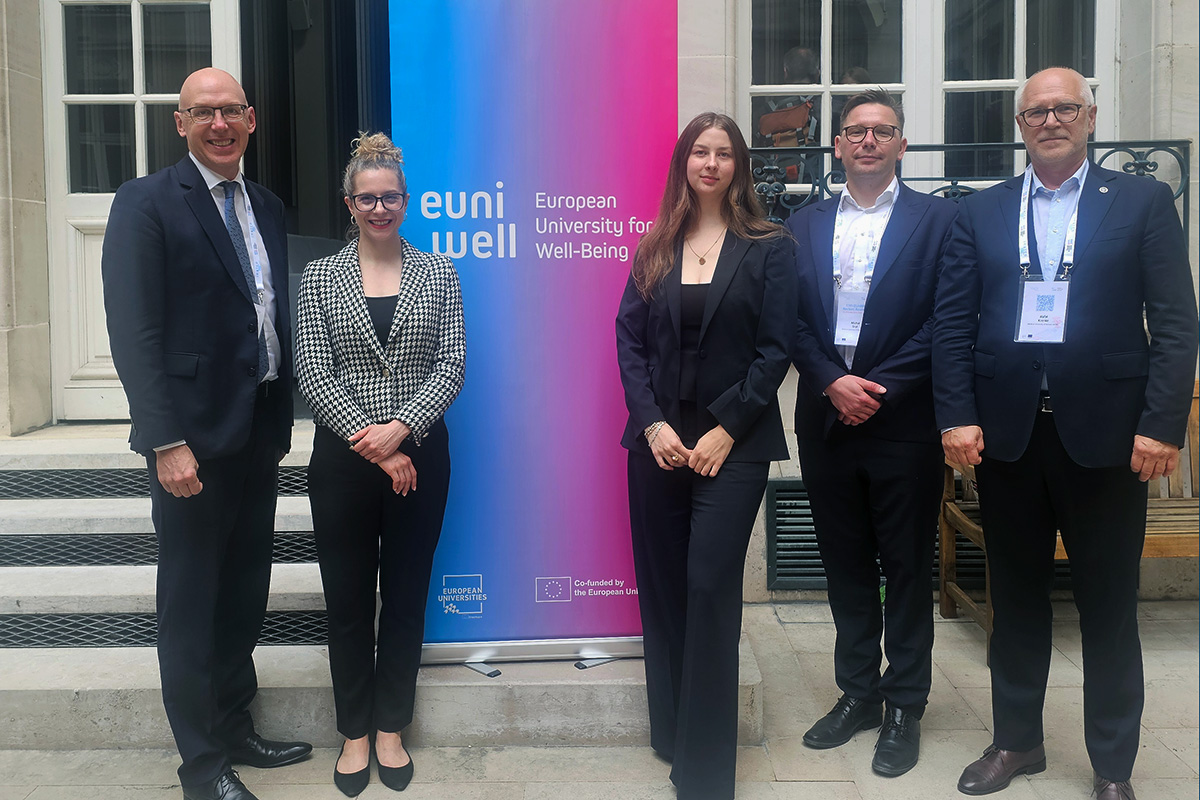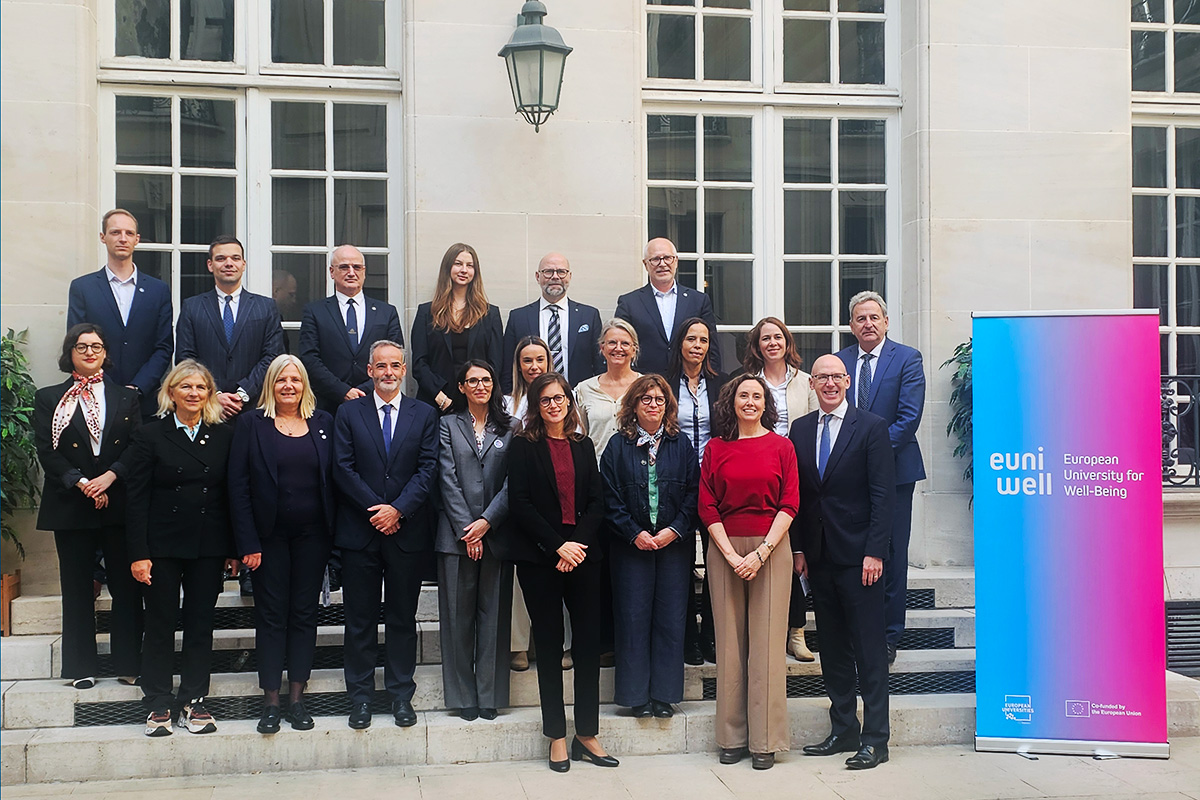
The Rectors' Assembly is the highest decision-making body of the alliance, and its meetings are among the most important events in the EUniWell calendar. During this time, the rectors, vice rectors, management representatives and student delegates establish the long-term strategy, goals and priorities.
The 11th meeting, which took place on October 11-14, 2026, in Paris, was hosted by the Institut National des Langues et Civilisations Orientales (Inalco). This is the second meeting in which our university participated as an equal partner.
Active participation in European cooperation
“The membership of WUM in EUniWell opened new opportunities for international cooperation for our students, doctoral students and employees,” emphasized the Rector, Prof. Rafał Krenke. “The active participation of universities in discussions conducted as part of the alliance is an opportunity to shape initiatives that meet the needs of both the university and the entire academic community of Europe. It is also an opportunity to draw inspiration from the experience of other universities in the field of education and science, as well as to share verified solutions.”
Joint education and research
One of the main topics of the Paris meeting was the possibility of creating international study programs, courses and short-term education programs, the European Degree Label initiative – aimed at supporting the development and recognition of joint European study programs and the implementation of micro-credentials (certificates confirming the acquisition of specific competences).
Another important issue was research cooperation, including increasing access to scientific infrastructure and research competences of partner universities, which would make it easier for researchers to establish international partnerships and implement projects requiring interdisciplinary knowledge and diverse resources.
The growing role of artificial intelligence
A considerable part of the meeting was devoted to the growing role of AI in education, scientific research and the everyday functioning of universities, as well as the need to responsibly use new technologies and develop digital competences in employees and students. In this area, the alliance may use the experience of our university in AI training and the use of new technologies in academic and medical settings.
Students as partners in the development of the European alliance
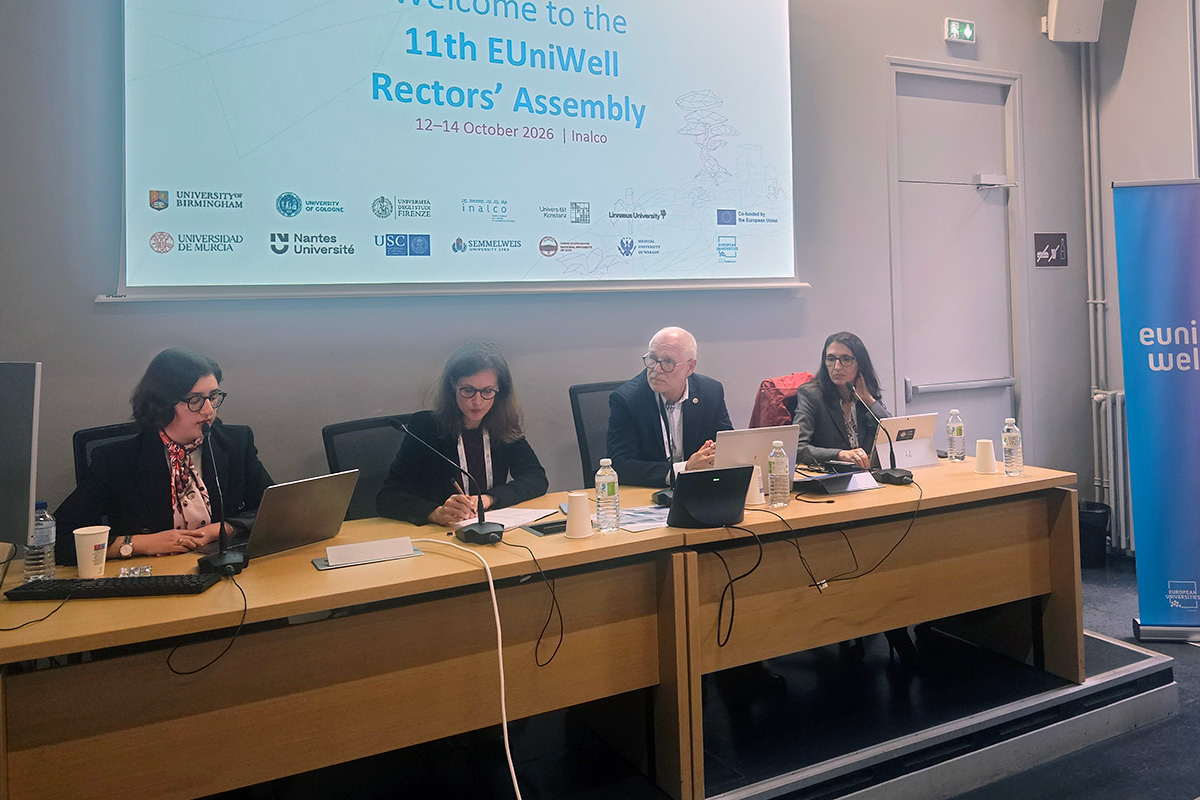
Representatives of university authorities discussed increasing the role of students in shaping EUniWell. The panel “Bridging Cultures, Building Well-Being” was a very interesting and important element of the event. It was led by the representative of the EUniWell Student Board – Gaïda Lefeuvre Mendoza from Nantes Université in France. The panel was organized for the first time. Only three rectors of partner universities were invited to participate – Prof. Rafał Krenke was among them. It is a great honor for us, because WUM students have always been and remain the university's focus of attention, and the university strives to ensure that each initiative really supports their development. Therefore, participation in the panel was a great opportunity to discuss how to cooperate even more effectively in this area.
Apart from the Rector of WUM, the panel included: Prof. Delphine Allès from the Institut National des Langues et Civilisations Orientales (Inalco) and Prof. Rosa M. Crujeiras Casais from the University of Santiago de Compostela.
The discussion focused on how universities could support students' ideas more effectively, strengthen their voice in alliance structures and translate the reported needs into specific actions.
Support for doctoral students
One of the topics discussed at the Paris meeting was the challenges that doctoral students faced. As they play a key role in the development of science, the participants of the meeting emphasized the need to support them in combining scientific activities with professional development, increasing the possibilities of international mobility and strengthening mental and physical well-being.
The future EUniWell
The Paris meeting was also an opportunity to discuss the continuation of activities for the next two years and long-term cooperation – after 2030.
“The meeting in Paris showed how numerous perspectives are offered by institutional cooperation of universities representing various fields of science, education systems and academic experience,” concluded Dr Olga Rostkowska, EUniWell coordinator at WUM. “That is why we want to increase the visibility of EUniWell in the WUM academic community, encourage the use of the educational offer of the alliance and involve further research teams in international projects.”