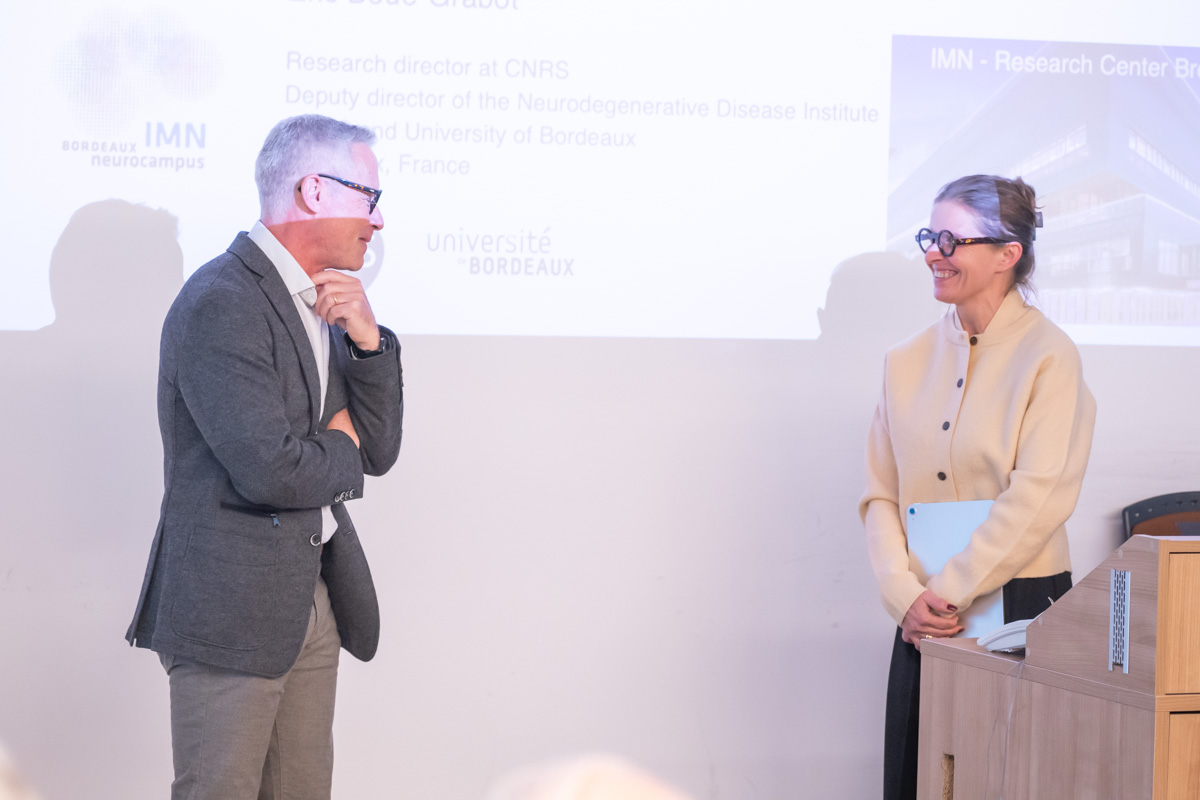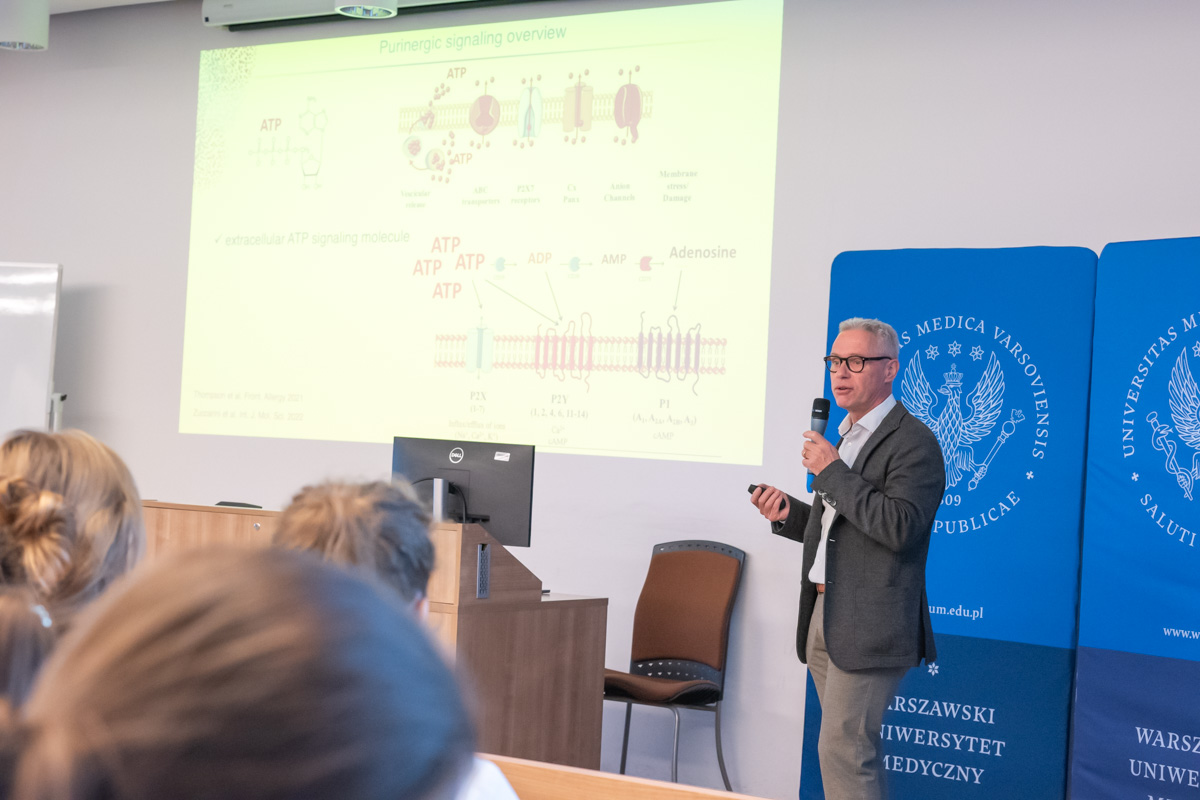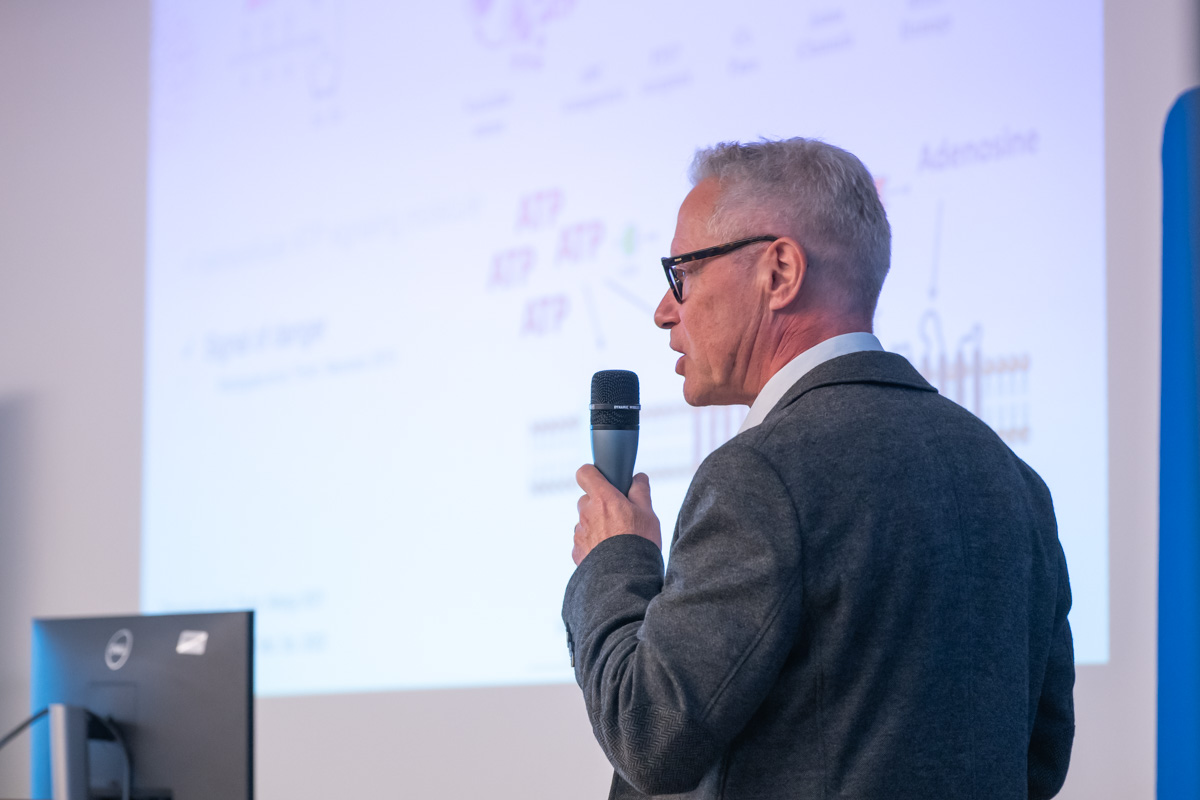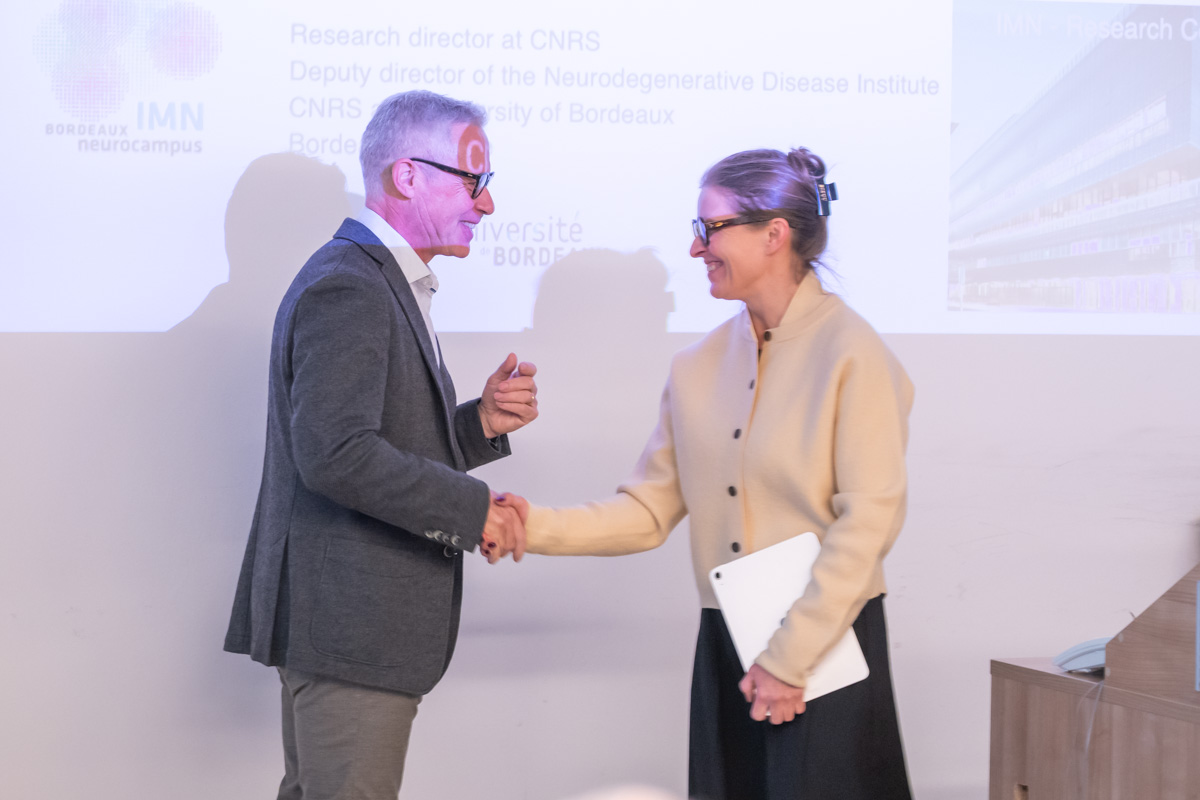
The lecture, titled “Purinergic signaling in the brain: Roles of P2X receptors in health and disease,” was held on November 16 at the invitation of the WUM Laboratory of Regenerative Medicine. The audience was welcomed by Prof. Magdalena Kucia, Head of the Laboratory.
Professor Kucia introduced the speaker's impressive credentials. With over 25 years of research experience, he has authored more than 50 scientific publications and is a co-inventor on international patents. He serves as Deputy Director of the Institute of Neurodegenerative Diseases in Bordeaux and heads the Purinergic-mediated Inflammation and Brain Disorders research team. He is also a Research Director at the French National Centre for Scientific Research (CNRS).
“I am convinced that today's lecture will provide valuable insights into the fascinating biology of P2X receptors and offer an opportunity for an engaging scientific discussion,” emphasized Prof. Magdalena Kucia.
ATP and P2X receptors: how signaling works in the brain
Purinergic signaling, a system of intercellular communication, plays a key role in regulating nervous system function. The molecules that transmit signals are purine nucleotides and nucleosides. Professor Boué-Grabot began his lecture by reminding the audience that the adenine nucleotide ATP (adenosine triphosphate), the primary source and carrier of energy in all living cells, also plays a very important role as an extracellular signaling molecule. ATP primarily activates P2X and P2Y receptors, while its metabolites, including adenosine, act on other receptor families.
“These receptors are found in various cell types and organs. They are involved in both the physiology and pathology of many body systems. They play a role in the brain, cancer, the kidneys, lungs, heart, immune system, and vascular diseases, among other areas.”
In the speaker's laboratory, researchers focus primarily on P2X receptors, particularly P2X2, P2X4, and P2X6, which modulate synaptic transmission and plasticity in the brain.
“For many years, we considered ATP to be a fast neurotransmitter acting through P2X receptors. Our understanding has changed somewhat, and we now regard ATP more as a co-modulator of signaling in the brain.”
The P2X4 receptor and its role in nervous system diseases
Professor Boué-Grabot devoted the next part of his lecture to his research on P2X4, a receptor that under normal conditions is found mainly inside cells and plays a limited role in physiological synaptic transmission.
“What is interesting, however, is that in many pathological conditions, we observe increased expression of P2X4 on the cell surface. This phenomenon is usually accompanied by increased cellular sensitivity to ATP,” the speaker explained.
He added that increased expression has been observed in many neurological diseases, including Alzheimer's disease, epilepsy, and multiple sclerosis. However, the precise role of P2X4 in most of these conditions remains unclear. Its role is best understood in neuropathic pain, where increased expression of this receptor contributes to the development of allodynia, or pain caused by stimuli that are normally not painful, and hyperalgesia, or an exaggerated response to painful stimuli.
Using specially developed mouse models that allow selective manipulation of P2X4 expression, Professor Boué-Grabot’s team conducted a series of experiments investigating the effects of this receptor on synaptic plasticity in the brain. The results showed that increased P2X4 expression impairs plasticity, leading to problems with learning and memory. The team is also currently investigating the role of P2X4 in anxiety and stress-related disorders. Importantly, increased P2X4 activity does not always have adverse effects. In a model of multiple sclerosis, the team demonstrated that it could have a protective effect.
Researchers observed a particularly complex role of P2X4 in amyotrophic lateral sclerosis (ALS). It turned out that the receptor's effects depend on the cell type: P2X4 in neurons has detrimental effects, accelerating disease progression, whereas P2X4 in microglia has a protective function, slowing the development of symptoms. These findings demonstrate that the role of P2X4 depends, among other factors, on the type of cells in which the receptor is present.
Professor Eric Boué-Grabot’s lecture concluded with a discussion with the participants.