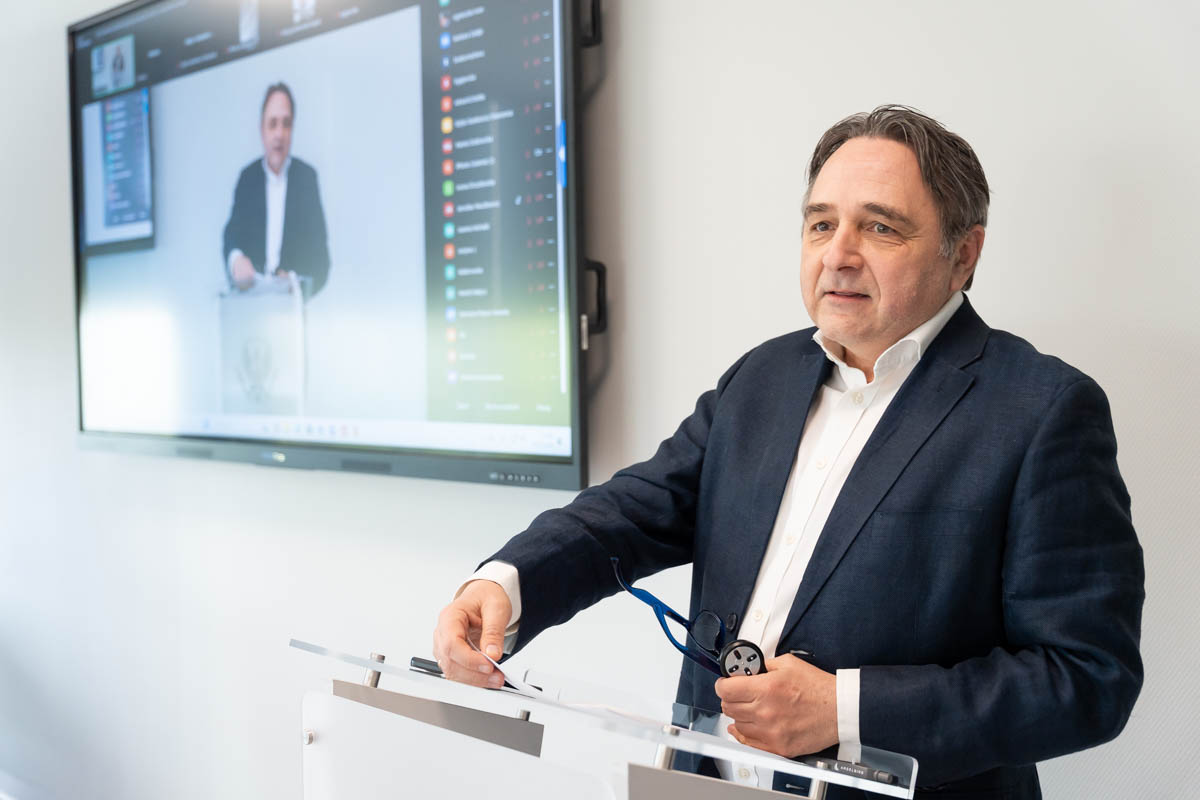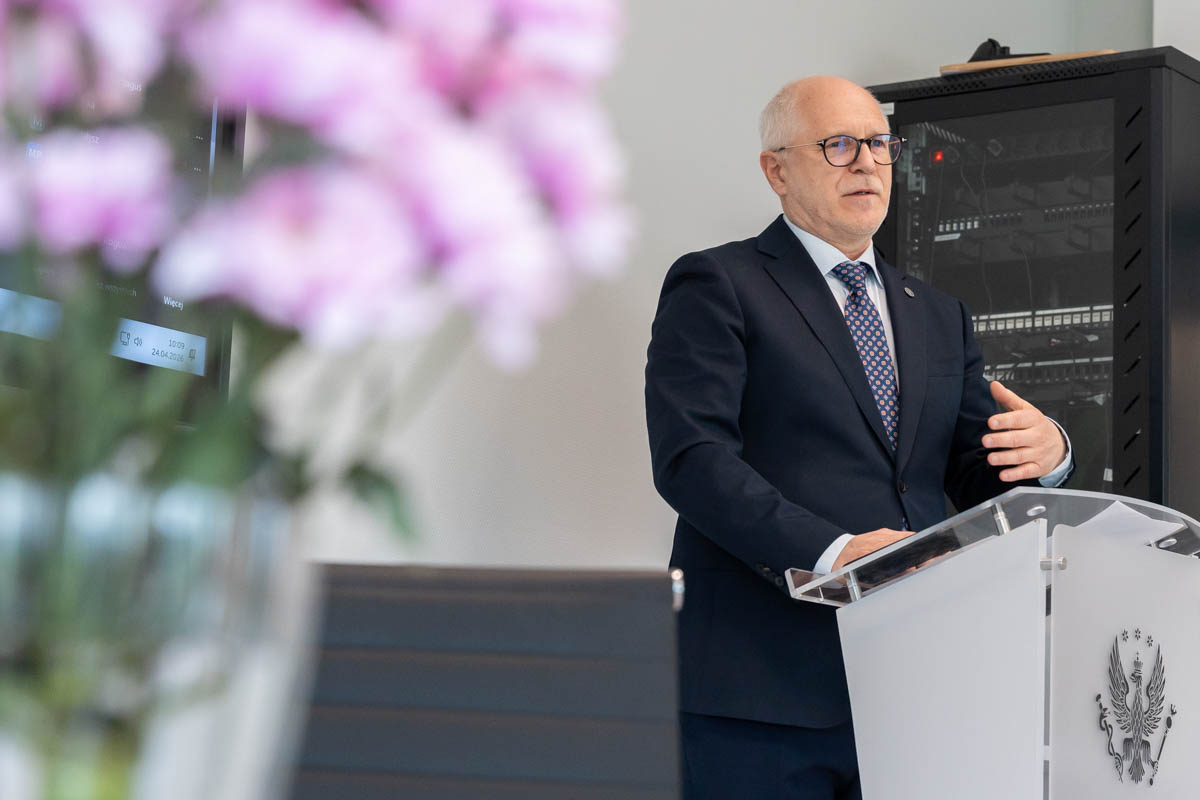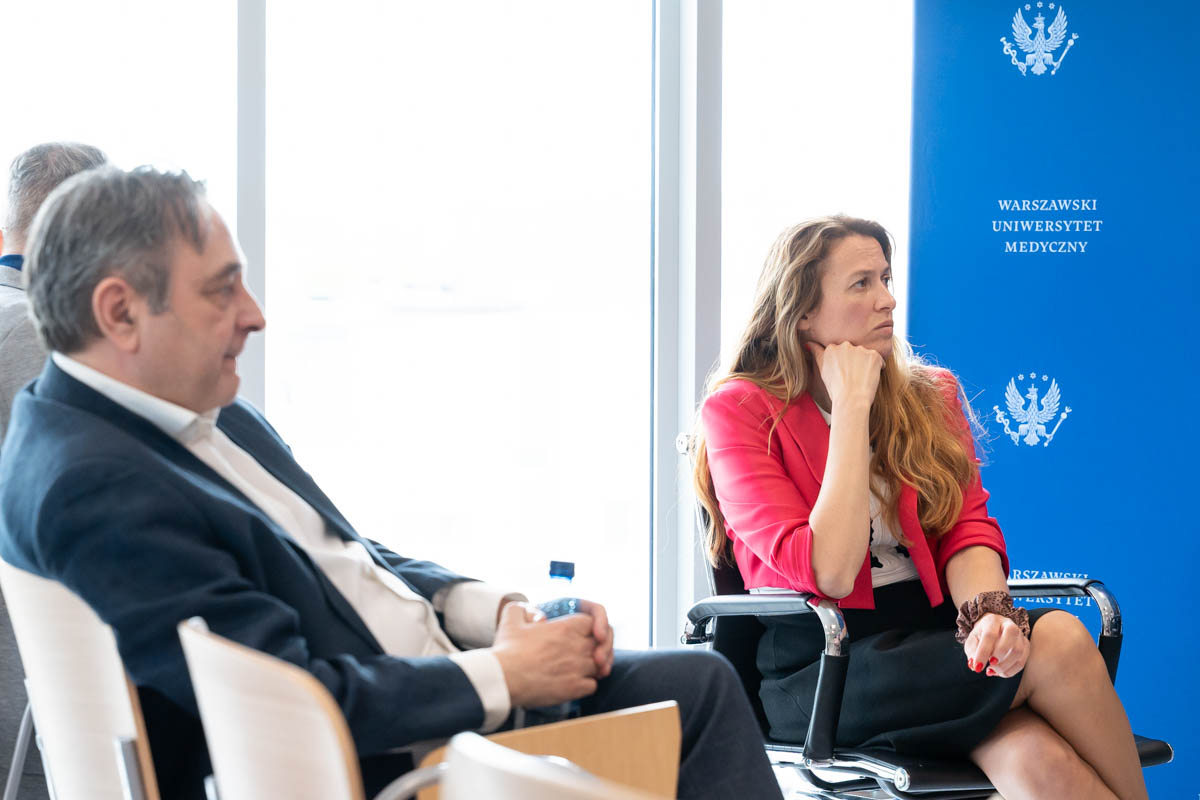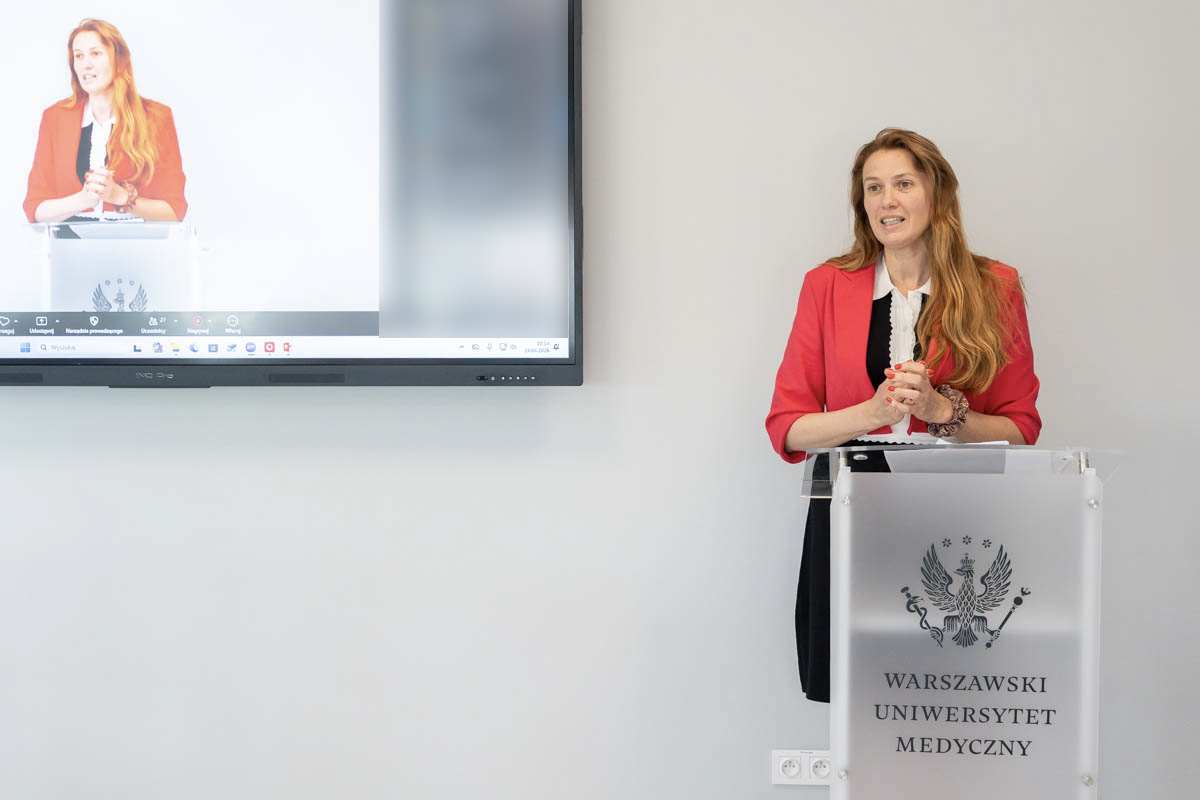
The conference was chaired by Dr. hab. Piotr Dziechciarz, head of the University Committee for Education Quality. Among the attendees was Prof. Rafał Krenke, Rector of WUM, who emphasized that quality should be understood more broadly than merely as a system functioning at the normative level.
“It is worth viewing quality also as a way of acting that stems from an internal imperative. In that case, teaching, assessment, and all other activities undertaken at the university will be carried out at the highest possible level. This is not easy given the considerable heterogeneity of the university,” the Rector noted.
What is the OSCE
The main topic of the symposium was the introduction of the OSCE at our university. OSCE stands for Objective Structured Clinical Examination, which in two years will become the final exam in the medical, dental, as well as nursing, midwifery, and paramedic programs. OSCE is a practical exam, and it will be conducted at WUM’s Center for Medical Simulation.
“OSCE exams will gradually become the standard. They allow for a better assessment of real clinical and communication competencies,” said Dr. hab. Piotr Dziechciarz. “However, questions arise: will the OSCE truly be highly objective? To what extent will it be reproducible? Since organizing the exam resembles a large-scale military operation in logistical terms, what outcomes will it bring? What will students learn about themselves after OSCE, and what will we, as examiners, learn about them?”
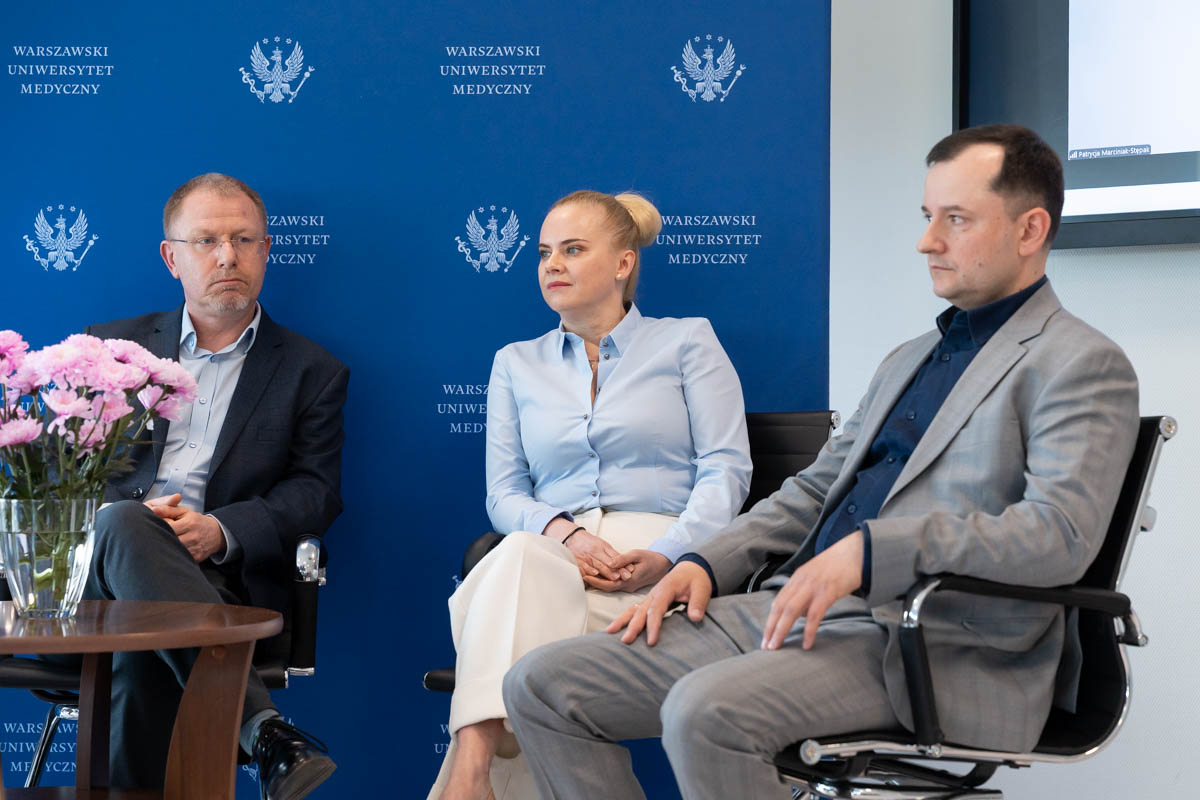
These questions became the starting point for a discussion moderated by Prof. Renata Główczyńska, the Rector’s Plenipotentiary for OSCE at the Medical University of Warsaw. The panel included experts from our university: Dr. Agnieszka Dobrowolska-Redo from the Faculty of Medicine OSCE team, Dr. hab. Łukasz Czyżewski, Vice Dean for Nursing at the Faculty of Health Sciences, and Dr. Marcin Kaczor, Head of the Center for Medical Simulation. The special guest was Dr. Patrycja Marciniak-Stępak, Professor at Poznań University of Medical Sciences, with experience in organizing the final OSCE exam.
Preparations for the OSCE at WUM
Experts emphasized that organizing the OSCE poses a major logistical and organizational challenge. It also requires sufficiently early preparation and careful planning so that both students and teaching staff can become familiar with the new examination format. Vice Dean Dr. hab. Łukasz Czyżewski noted that implementing the OSCE is a process. In nursing and midwifery programs, some exams have already been conducted in a mini-OSCE format for the past three to four years. Similar initiatives are also being implemented at the Faculty of Medicine. As Dr. Agnieszka Dobrowolska-Redo explained, three obstetrics clinics operating within the Faculty of Medicine have prepared the final exam for sixth-year gynecology and obstetrics courses in the form of a mini-OSCE. Ultimately, the faculty plans to introduce both a full OSCE exam in the sixth year, after completion of all clinical courses, and a pre-OSCE exam in the fourth year, following the first clinical classes. At the Faculty of Medicine and Dentistry, voluntary mini-OSCE exams have also been conducted at the University Dental Center.
Organizational and logistical challenges
The Center for Medical Simulation faces a significant challenge, as it will host OSCE exams for students of the Faculty of Medicine and the Faculty of Health Sciences.
“That is nearly 700 students in the Faculty of Medicine alone,” said the Center’s head, Dr. Marcin Kaczor. “Meanwhile, British or American universities, where such exams have been in place for almost 40 years, typically examine around 200 students. That is a huge difference.”
Dr. Kaczor divided OSCE-related issues into three areas: time, space, and resources. This means determining the duration of exams (whether they will be administered solely during the examination session or also outside of it), the allocation of space in the Center for Medical Simulation for designated examination stations, and the number of instructors required to conduct the exam.
Organizing the OSCE is undoubtedly a major undertaking, and many details still require resolution. How to ensure that students do not share information? Should the OSCE be recorded, and should students receive feedback? To what extent should artificial intelligence be used? These are just some of the questions that do not have simple answers.
Nevertheless, OSCE appears to be a step in the right direction, not only as a form of student assessment but also as guidance for educators on how to teach.
The symposium also included a session of presentations and a panel discussion. More information about them can be found in the event program.
The symposium was organized by the Office for Education Quality, Competence Development and Careers, the Rector’s Plenipotentiary for Education Quality, and the Rector’s Plenipotentiary for the Development of Teaching. The conference took place at the Center for Medical Simulation, with participants also having the option to join online.