Interdisciplinarity as the foundation of public health
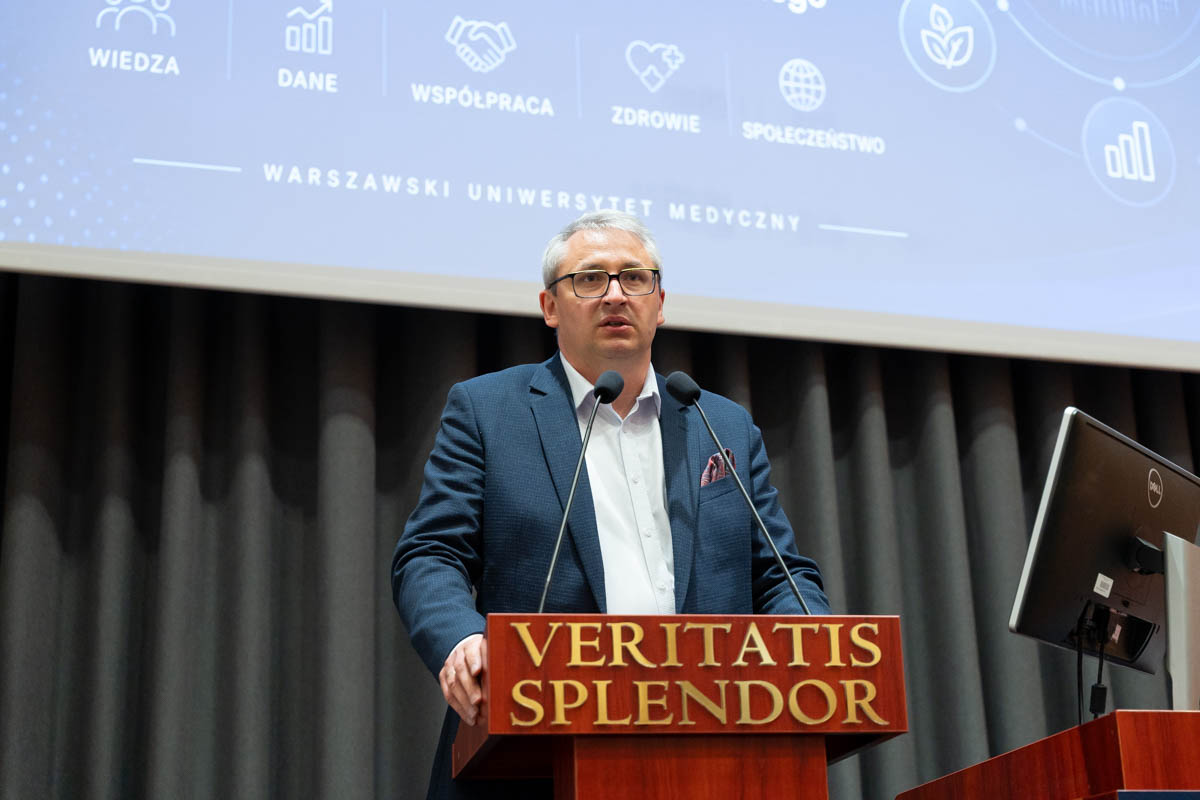
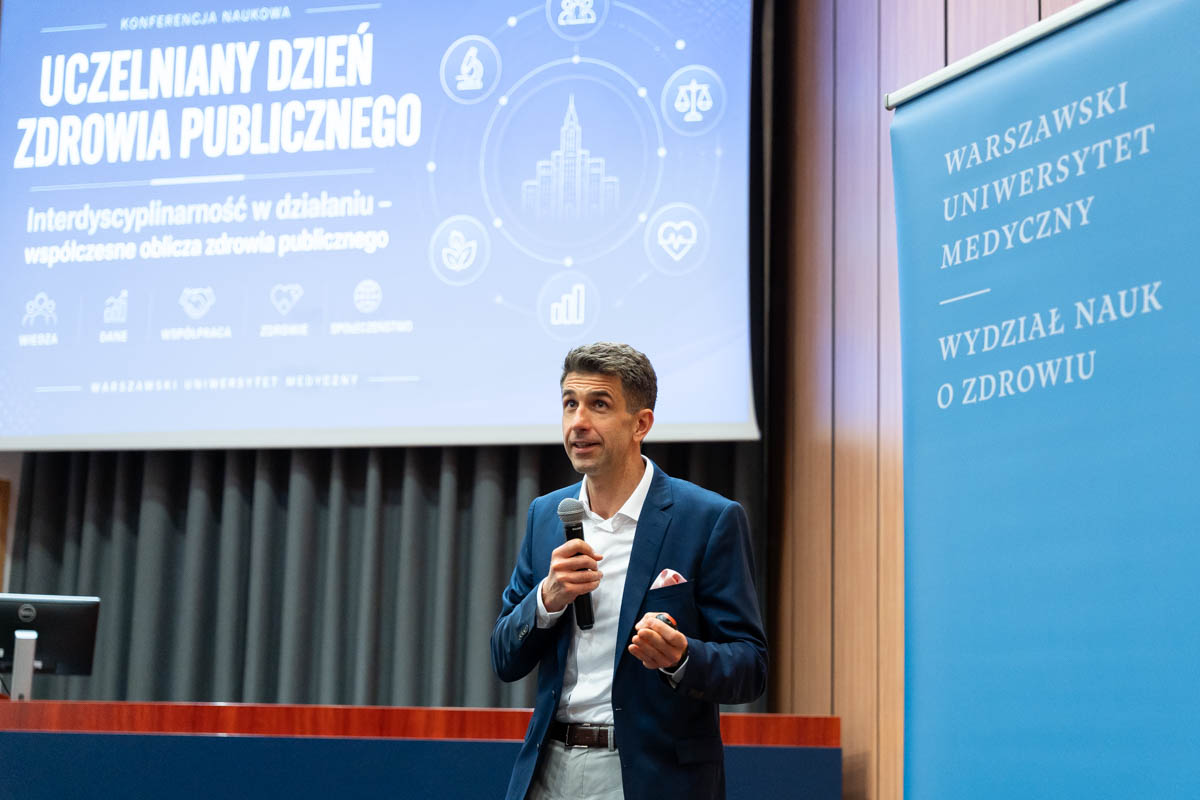
The event was hosted by Dr. hab. Filip Raciborski, Vice Dean for Public Health at the Faculty of Health Sciences of WUM, who welcomed the guests. He also read a letter addressed to the organizers and participants by WUM Rector Prof. Rafał Krenke.
“Public health combines medicine, genetics, basic sciences, data collection and the analysis of large datasets, social sciences, as well as management and politics. It is an exceptionally broad field of knowledge,” the Rector wrote.
He also emphasized the role of our university in shaping a modern healthcare system that responds to current social needs.
“We must speak about the importance of environmental changes for health and about prevention. We have a duty to appeal to institutions and national authorities to make decisions in favor of public health,” Prof. Krenke stressed.
In recent decades, public health has ceased to be viewed as a discipline based solely on medical knowledge. Cooperation among specialists from many different fields has become essential.
“We are fully aware of the geopolitical situation and the contemporary threats to public health. However, this awareness does not mean we can rest on our laurels. We must act continuously to counter these threats. I am convinced that the University Public Health Day is the ideal space for exchanging experiences and best practices in this area,” emphasized Dr. hab. Patryk Rzońca, Acting Dean of the Faculty of Health Sciences.
We are responsible for the adverse changes in the world around us
Global threats, particularly climate change and its health, demographic, and migration-related consequences, are anthropogenic in origin. Simply put, they are caused by human activity. This point was strongly emphasized by Prof. Bolesław Samoliński, Head of the Department of Public and Environmental Health and the Department of Prevention of Environmental Hazards, Allergology and Immunology at WUM. He also noted that we are currently unprepared for these changes.
“When the COVID-19 pandemic broke out, we proved completely helpless in the face of it. In a world that seems so advanced and so well prepared for everything, millions of people died because of infectious diseases,” the Professor said.
This is why public health is so crucial for present and future generations. Its essence lies in forward-looking thinking: anticipating phenomena, preventing them, and evaluating the effectiveness of actions taken.
Contemporary threats to the healthcare system
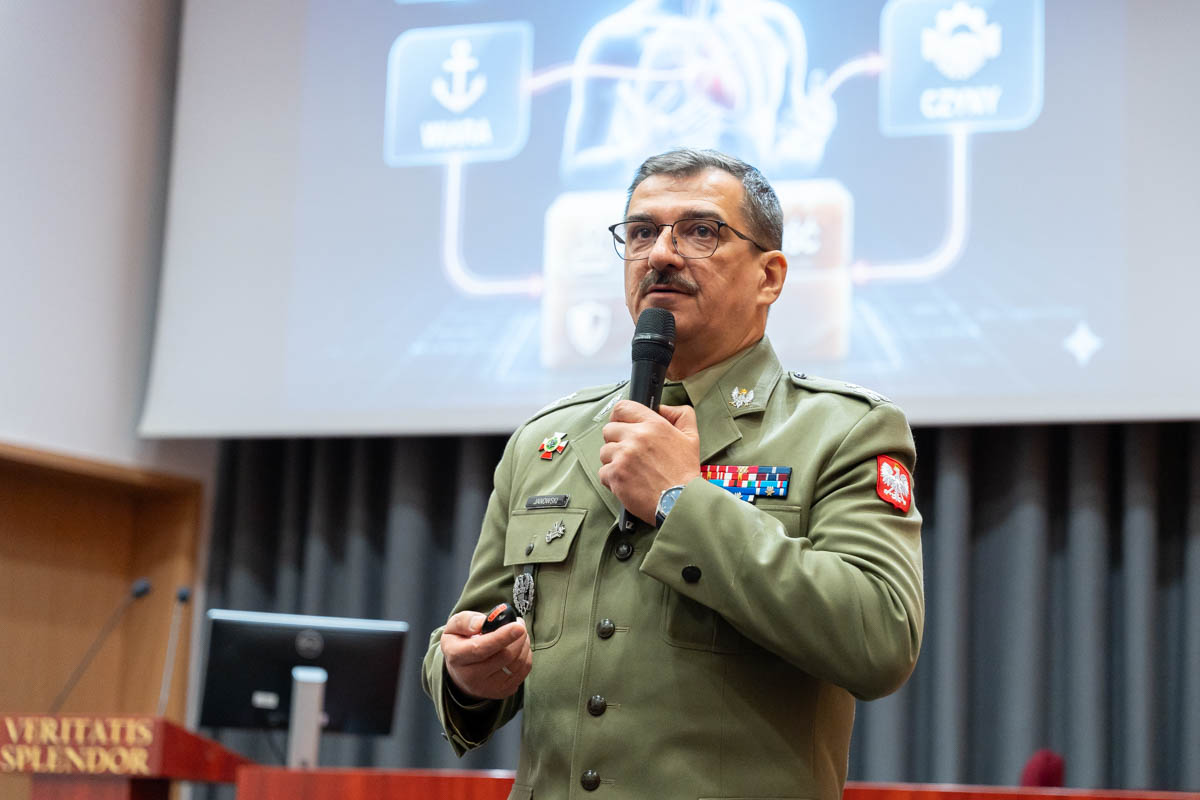
Health is a critical component of public security. Brigadier General Cezary Janowski from the Ministry of National Defense discussed its place in the state’s security strategy and its role in addressing contemporary threats such as globalization, armed conflicts, and migration.
“Healthcare builds resilience and social self-sufficiency. Social resilience means better adaptation and resistance to shocks, while social self-sufficiency means greater independence and stability,” the speaker stressed.
Katarzyna Lipka from NASK spoke about the dangers of medical disinformation.
“Online health disinformation is not limited to vaccines. It also discourages people from using professional medical care. False narratives appear about mammography screenings, for example, or call on people to stop taking medication for hypertension. Doctors are portrayed as incompetent, while healthcare institutions are presented as corrupt and acting against patients’ interests,” emphasized Katarzyna Lipka.
Health disinformation poses a real threat to patients. It delays diagnosis, increases the risk of complications, and reduces treatment effectiveness. It can lead people to abandon therapy or turn to unverified internet-based remedies, which may result in loss of health or even life. It also carries financial consequences, from spending money on ineffective products to data theft and online fraud.
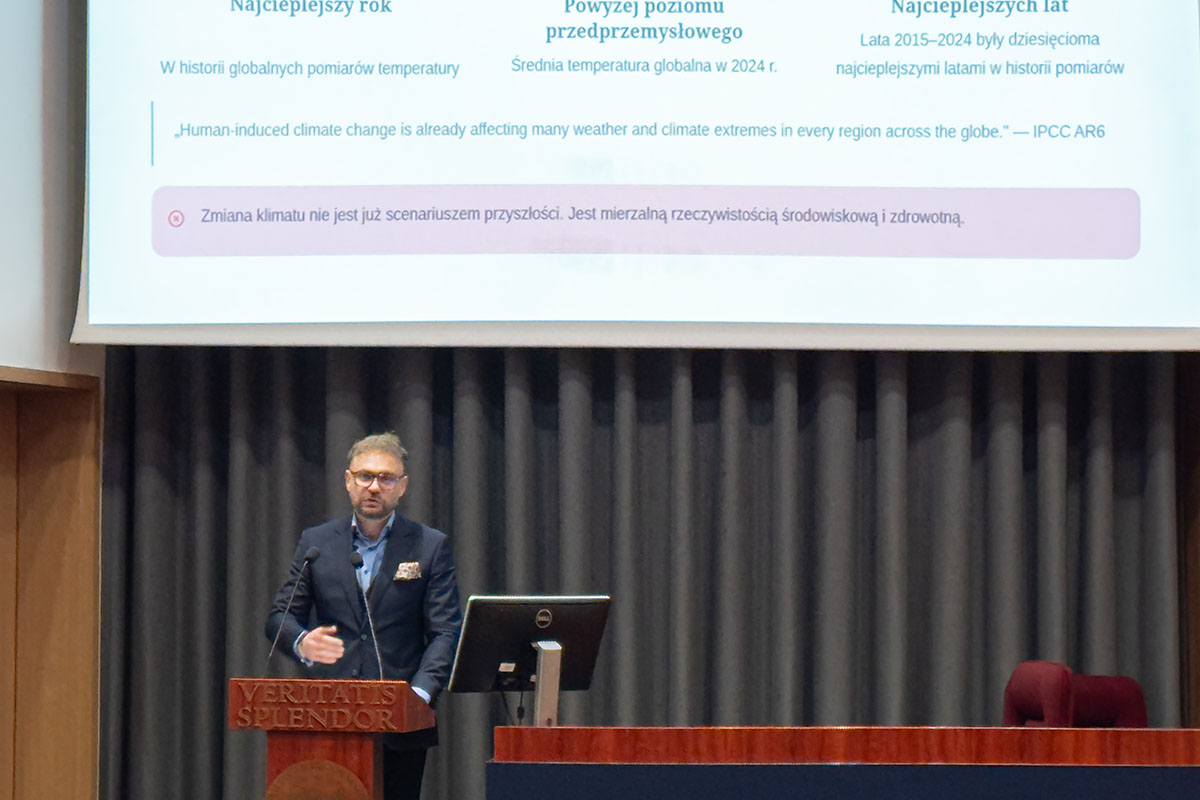
Climate change is another major health threat. Rising temperatures mean not only changes in weather but also a higher risk of heatstroke, dehydration, and the worsening of chronic illnesses. But those are not the only concerns.
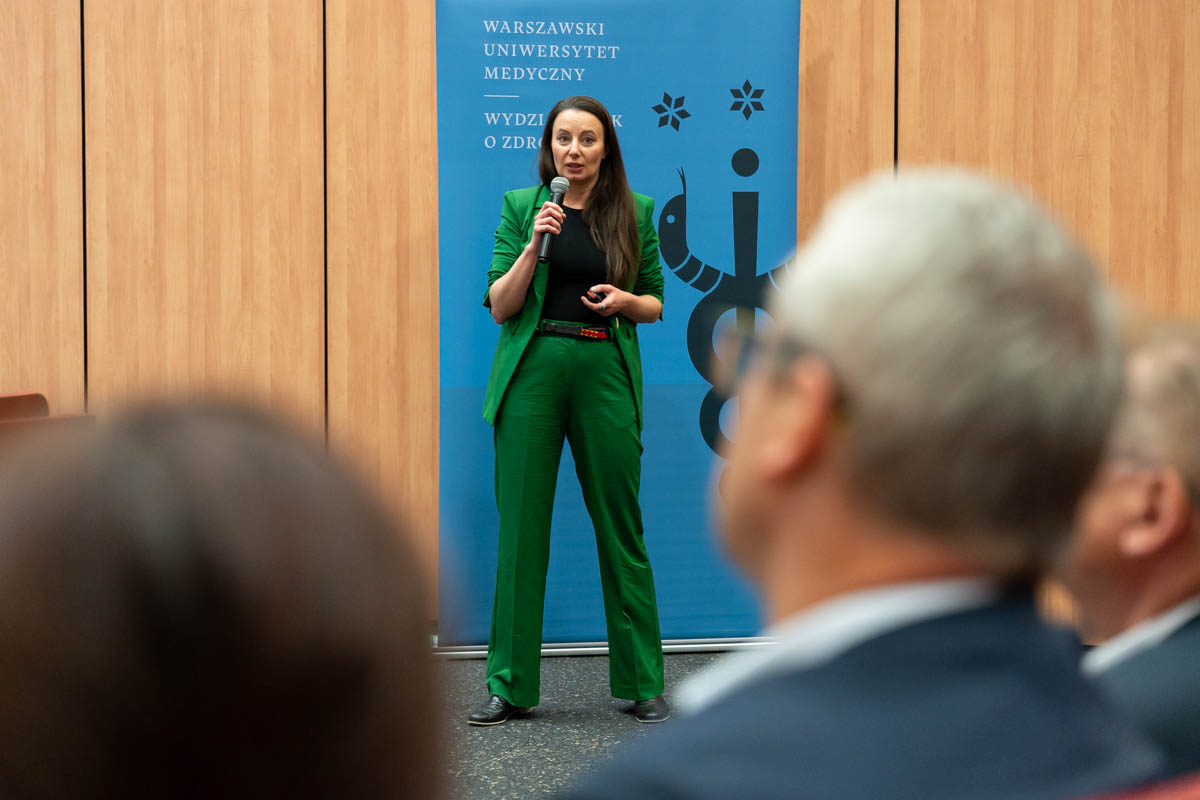
“Health does not always begin in a doctor’s office. It begins in the air we breathe, the water we drink, the apartment that overheats, or the city that can either protect us or further degrade our health,” said Dr. Tomasz Warężak.
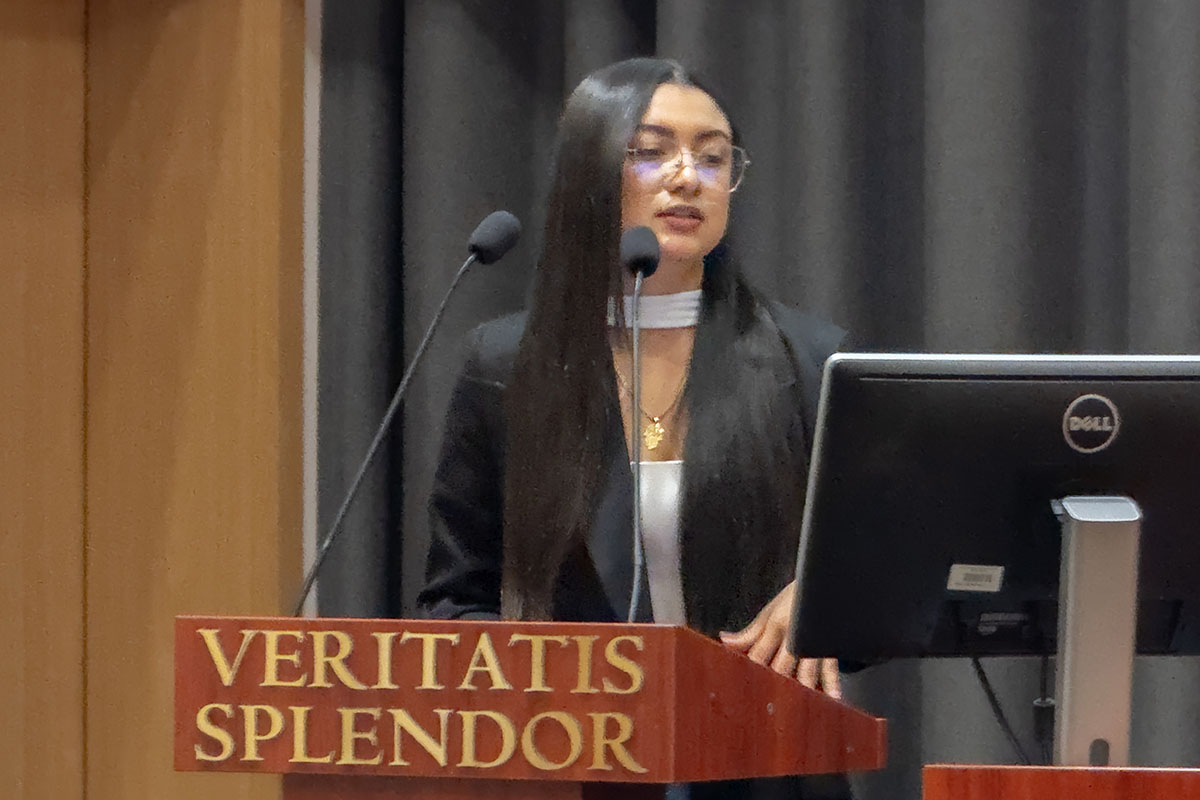
He stressed that climate must be discussed not only in environmental terms but also in the context of health, and that cities, universities, and future public health experts must consider how to respond to the climate crisis. Another presenter, Valeria Castaño, a student from Universidad del Quindío, talked about a nature-based solution designed to reduce health risks arising from environmental conditions.
Public health in practice
As a field of science, public health has a real impact on people’s lives: from prevention and health education to organizing healthcare systems and responding to crises such as epidemics or the effects of climate change. It should not be seen as academic theory but as concrete, systemic action. This was the message emphasized by the panelists in the second part of the event.
Agnieszka Niemczynowicz from the Ministry of Climate and Environment, speaking about environmental projects such as the creation of the Lower Oder Valley National Park, noted:
“Regardless of whether we are talking about health, security, climate change, or specifically the protection of a national park, we must understand our audience, know whom we are addressing when we are talking about those problems, and adapt our language and methods accordingly."
Medical journalist Katarzyna Grodzka explained how public health graduates can support the media in combating fake news. This includes navigating information overload, identifying reliable sources, maintaining ethical communication, resisting fleeting trends, and promoting expert knowledge over celebrity or influencer opinions.
“As journalists, we chase clickbait. Medical information has to be highly attractive, which is why we often see headlines like: ‘A cure for cancer has been discovered,’” she explained. “Public health graduates can act as an informational filter for us. You have the required knowledge and expertise.”
Reducing the risk of disinformation and easing anxiety caused by information overload also requires digital hygiene, especially since online algorithms are designed to capture our attention, collect our data, encourage clicks and shares, and shape the way we think.
“The way the digital economy affects individuals and society today is already a matter of public health. It influences the kind of country we live in, the state of public debate, social relationships, and how we value and perceive the effectiveness of certain tools,” emphasized Magdalena Bigaj from the “Digital Citizenship Institute” Foundation.
Would I want to know what my genome reveals?
“This question appears increasingly often in public discussion, but unfortunately, public understanding of what genetic testing can actually be used for remains highly imprecise, so most of us would not be able to make a fully informed decision,” explained Dr. hab. Mirosław Kwaśniewski from the Medical University of Białystok, who discussed the role of genetic testing in disease prevention.
Its importance is immense. According to estimates, around 80 percent of people worldwide will develop genetically linked diseases, including 200 million cases of cancer, 150 million cases of cardiovascular diseases, and 400 million cases of rare diseases. Reliable information about the benefits of genetic testing for healthy individuals is therefore essential. It must also be emphasized that such test results should always translate into concrete therapeutic decisions.
At the end of the event, Dr. hab. Filip Raciborski presented some of the most interesting scientific projects in public health conducted by teams from the Faculty of Health Sciences, demonstrating the field’s interdisciplinary nature. These included a project identifying current and past SARS-CoV-2 infections among police officers and civilian police employees, as well as a study investigating the causes of declining trust in vaccination programs.