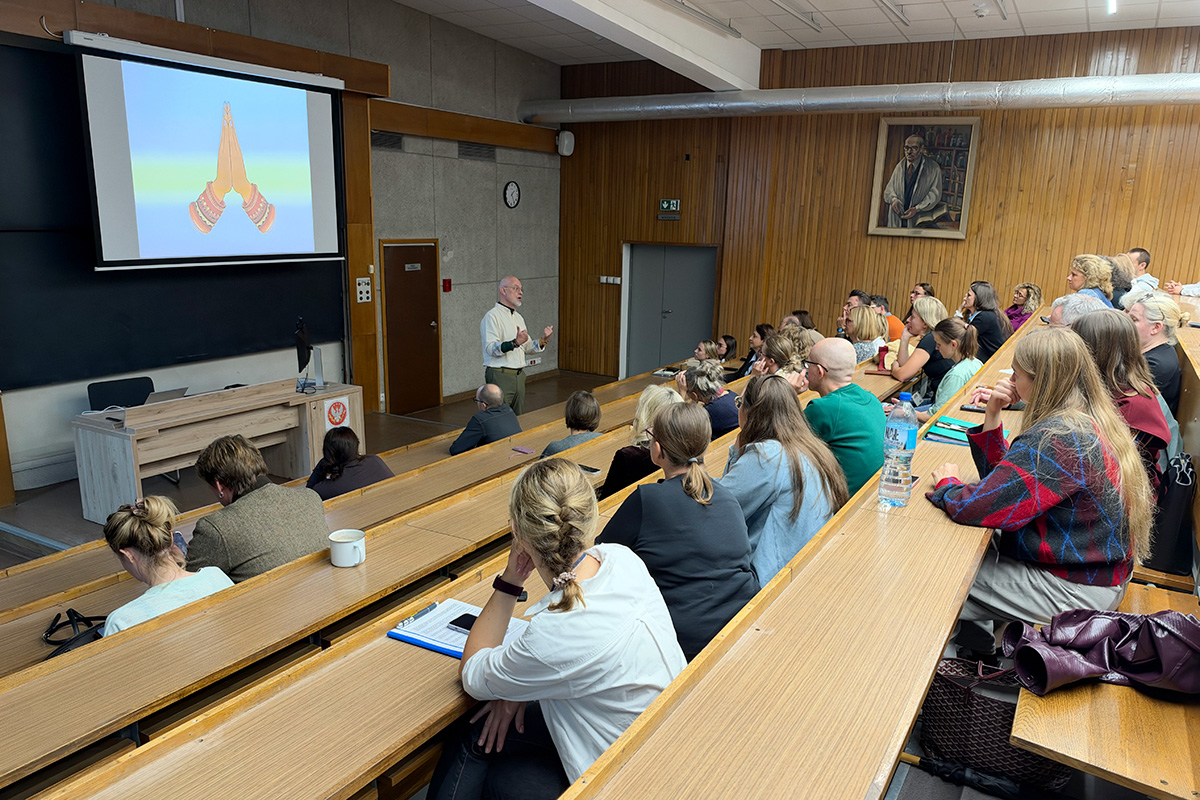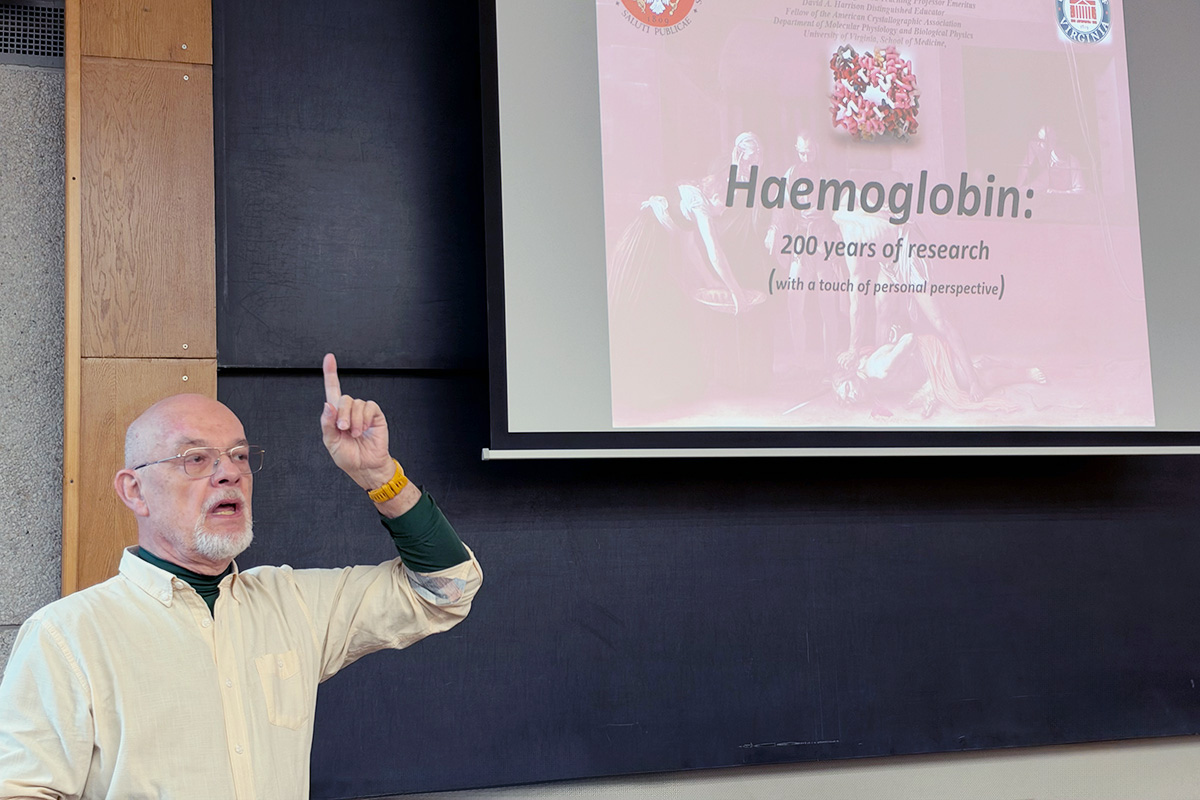
Professor Derewenda from the University of Virginia (UVA) in Charlottesville, USA, attended a seminar in pharmaceutical sciences, and the topic of his speech was hemoglobin – one of the most important proteins in the history of science, responsible for the transport of oxygen from the lungs to tissues and organs, also involved in the transport of carbon dioxide.
The meeting was held on October 20, 2026, at the Faculty of Pharmacy. Professor Derewenda arrived at the invitation of Dr Edyta Pindelska from the Chair and Department of Pharmaceutical Chemistry and Biomaterials.
On the evolution of hemoglobin research
In the 1970s and 1980s, Prof. Zygmunt Derewenda studied the structural characteristics of intermediate states of human hemoglobin, which resulted in two publications in the “Nature” journal (1984, 1988).
During the seminar, he talked about when and how research on hemoglobin began, repeatedly emphasizing that scientific progress depended on interdisciplinary cooperation and serendipity.
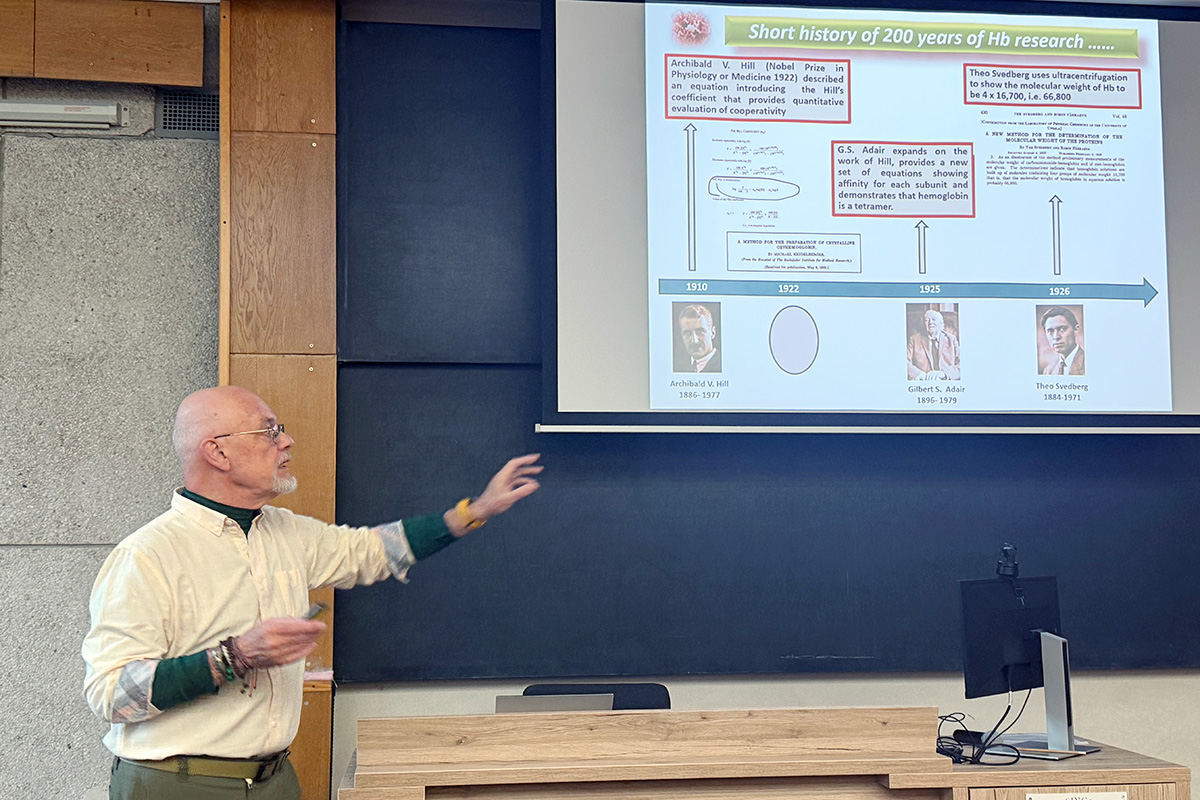
Biochemical research on this unusual protein, which is found in red blood cells (erythrocytes), was started in 1825 by Johann Engelhardt. Hemoglobin was the first protein that was successfully crystallized (1840), and the first one whose molecular weight was precisely determined using ultracentrifugation (1925). Groundbreaking crystallographic research using X-rays was started in 1938 by Max Perutz, paving the way for the development of protein structure science. The structures of met- and deoxyhemoglobin led to the emergence of the theory of allostery and cooperativity and the model of induced fit.
In conclusion, Professor Derewenda admitted that scientific research never ends and never leads to a complete explanation of natural phenomena.
About the speaker
Zygmunt Derewenda is a structural biologist specializing in X-ray crystallography of proteins. His scientific interests include the structure and function of proteins and crystallographic methodology, including the function of insulin, structural enzymology, smooth muscle signaling and new methods of protein crystallization. Prior to joining UVA, he had been a Research Fellow at the University of York in the United Kingdom and an Associate Professor of Biochemistry at the University of Alberta in Edmonton, Canada. He is the author and co-author of over 160 publications and chapters in monographs (Hirsch index 67). He graduated from the University of Łódź.