Polyphenols and postbiotics against C. difficile
Ninety years have passed since the discovery of the human pathogen Clostridioides difficile, which remains one of the most challenging adversaries in the unequal fight against healthcare-associated infections. The treatments currently used for patients with C. difficile infection (CDI), such as vancomycin and metronidazole, are not always effective, while treatment with fidaxomicin is costly. Various research groups are searching libraries of natural biological compounds to identify the most effective and safe agents that may help limit the development of this pathogen in the future.
Effects of selected polyphenols and potential postbiotics on gut microbiota modulation and Clostridioides difficile physiology
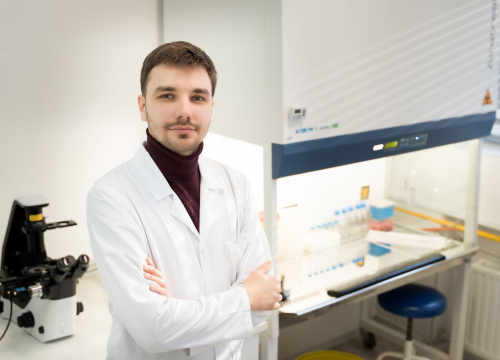
In the PRELUDIUM24 project, funded by the National Science Centre and led by me, I will investigate whether selected polyphenols and so-called postbiotics alter the physiology of C. difficile. Specifically, I will assess whether they affect bacterial adhesion to colon epithelial cells, toxin production, sporulation (spore formation), and biofilm formation (biofilm is a biological structure that provides microorganisms with increased resistance, including resistance to antibiotics).
At the same time, I intend to investigate whether these substances support the restoration of the gut microbiota, which plays a key role in protection against infection. Particular attention will be given to the context of inflammatory bowel diseases (IBDs), in which disturbances in the microbiota and recurrent C. difficile infections represent a significant clinical problem.
Virulence mechanisms of C. difficile and the scale of the epidemiological problem
Clostridioides difficile is an anaerobic, Gram-positive, spore-forming bacterium responsible for antibiotic-associated diarrhea, non-pseudomembranous colitis, pseudomembranous colitis, and the most severe complication, toxic megacolon.
The pathogenicity of C. difficile is mainly determined by several key mechanisms, including the ability to form spores, adhere to intestinal epithelial cells, produce biofilms, and secrete toxic proteins such as toxins TcdA, TcdB, and the binary toxin (CDT). These toxins disrupt the cytoskeleton of intestinal epithelial cells, induce inflammatory responses, and increase intestinal barrier permeability, ultimately exacerbating clinical symptoms and promoting disease progression.
From an epidemiological perspective, C. difficile infections remain a serious clinical challenge. Particular concern is associated with the increasing proportion of healthcare-associated infections, but also with community-acquired infections, which in some populations reach approximately 30%. Moreover, the rapid spread of specific highly pathogenic strains of C. difficile, namely hypervirulent PCR ribotypes, is characterized by increased virulence. Additionally, the high rate of recurrence, estimated at approximately 20–25% after the first episode and reaching up to 60% after subsequent episodes, clearly demonstrates the limited effectiveness of standard therapies based solely on antimicrobial drugs.
Although antibiotic therapy remains the cornerstone of CDI treatment, it is also a key risk factor for recurrence because it exacerbates intestinal dysbiosis, defined as a quantitative and qualitative imbalance of the gut microbiota, and reduces colonization resistance of the microbiota. Other significant risk factors include advanced age (over 65 years), hospitalization, and the presence of chronic diseases, including cardiovascular diseases and inflammatory bowel diseases.
Defense mechanisms of the gastrointestinal tract
Resistance to C. difficile colonization in the gastrointestinal tract results from multiple overlapping mechanisms. These include microbial competition for nutrients, the production of antibacterial metabolites such as organic acids and bacteriocins, and the ability of the microbiota to convert primary bile acids into secondary bile acids, which inhibit spore germination. The microbiota also plays an important role in maintaining the integrity of the intestinal barrier and regulating immune responses. The loss of these functions following antibiotic therapy creates an ecological niche that favors colonization by C. difficile.
In response to the limitations of conventional treatment, supportive strategies are being developed that aim to modulate the gut microbiota without directly eradicating or completely removing the pathogen from the body. These approaches include fecal microbiota transplantation (FMT), the use of probiotics, prebiotics, and postbiotics, and natural bioactive compounds such as polyphenols. Such supportive strategies focus on weakening the pathogen’s virulence potential and restoring the functional balance of the intestinal microbiome.
How can polyphenols affect intestinal pathogens?
Polyphenols, including epigallocatechin gallate, quercetin, and resveratrol, exhibit pleiotropic biological effects, meaning that they influence multiple, seemingly unrelated biological processes. In addition to their direct antimicrobial activity, these compounds modulate host signaling pathways, influence the composition and metabolic activity of the gut microbiota, and possess strong antioxidant properties. In recent years, attention has increasingly focused on their potential use as adjunctive agents in gastrointestinal infections, including those caused by C. difficile. Experimental studies suggest that certain polyphenols may affect microbial growth and survival as well as the expression of genes associated with virulence factors. However, these mechanisms have not yet been clearly characterized in the context of C. difficile.
An important aspect of polyphenol activity is their interaction with the gut microbiota. These compounds are primarily metabolized by the colonic microbiota, and the resulting metabolites may promote the growth of beneficial microbes and increase the production of short-chain fatty acids (SCFAs). Indirectly, this may lead to strengthening the intestinal barrier and improving colonization resistance, which is crucial for preventing the development and recurrence of CDI.
Next-generation probiotics and their metabolites – a promising research direction
Bacteria such as Faecalibacterium prausnitzii, Akkermansia muciniphila, and non-enterotoxigenic strains of Bacteroides fragilis (NTBF) are currently being intensively studied as next-generation probiotics (NGP). They constitute an important component of a healthy gut microbiota, and reduced abundance of these bacteria is observed in dysbiosis associated with many diseases, including inflammatory bowel diseases. Their activity includes the production of SCFAs, particularly butyrate, modulation of immune responses, and support for the integrity of the mucosal barrier. Butyrate plays a key role as the primary energy source for enterocytes, strengthening tight junctions between intestinal epithelial cells and exerting anti-inflammatory effects.
However, the clinical use of NGP faces several limitations. These bacteria are sensitive to oxygen, difficult to culture and standardize, and their administration may pose potential risks for patients with impaired intestinal barriers or those undergoing immunosuppressive therapy. For this reason, increasing attention is being paid to postbiotics, which are metabolites (such as SCFAs, indoles, and bacteriocins) or structural components of bacterial cells (such as membrane proteins) capable of reproducing beneficial biological effects without the need to administer live microorganisms. Postbiotics represent a promising direction for the development of supportive therapies in C. difficile infections, particularly as part of strategies aimed at preventing recurrence and modulating the gut microbiota in patients with inflammatory bowel diseases.
A potential opportunity for patients with Crohn’s disease?
One of the main forms of inflammatory bowel disease is Crohn’s disease. Patients with this condition exhibit significant disturbances in the gut microbiota, including reduced microbial diversity and impaired intestinal barrier integrity. This predisposes them to increased colonization by C. difficile, a more severe course of CDI, and a higher risk of recurrence. Additionally, immunosuppressive therapy, which is necessary in the pharmacological treatment of the disease, may further exacerbate unfavorable changes in the gut microbiome. In this context, investigating whether polyphenols and NGP-derived metabolites can simultaneously reduce the virulence (the ability to invade, colonize, multiply, and cause pathological changes in the body) of C. difficile and restore beneficial metabolic profiles in the microbiota of patients with Crohn’s disease has significant translational importance.
Summary
The clinical challenge posed by C. difficile is complex. Its ability to form spores, produce toxins, adhere to intestinal epithelial cells, and form biofilms makes strategies aimed at reducing virulence and restoring the gut microbiome a promising direction for future research.
Polyphenols and metabolites produced by anaerobic bacteria demonstrate mechanistically justified anti-virulence and microbiota-modulating effects. However, their actual clinical effectiveness requires confirmation in well-designed studies. An integrated evaluation of the effects of these compounds, both on C. difficile virulence factors and on the composition and metabolomic profiles of the microbiota in patients with Crohn’s disease, may provide the data necessary to develop safe and targeted therapeutic strategies aimed at reducing the risk of CDI development and recurrence.