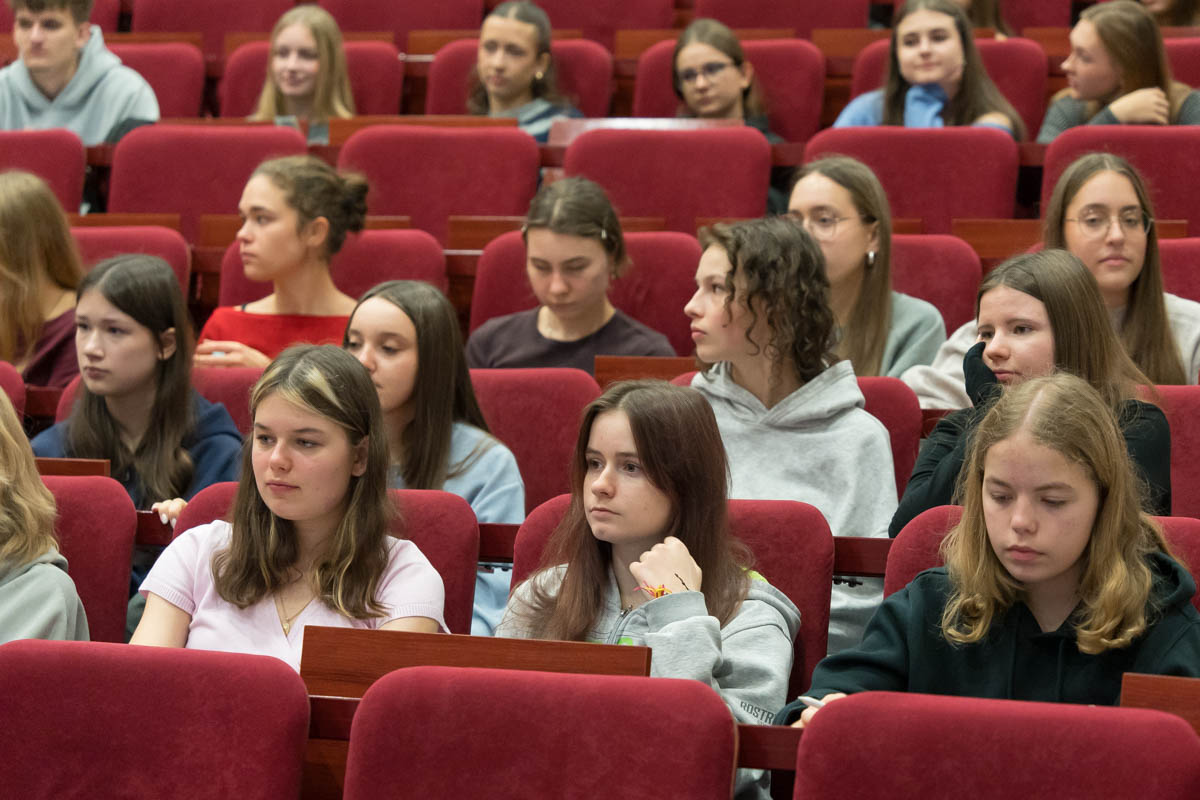
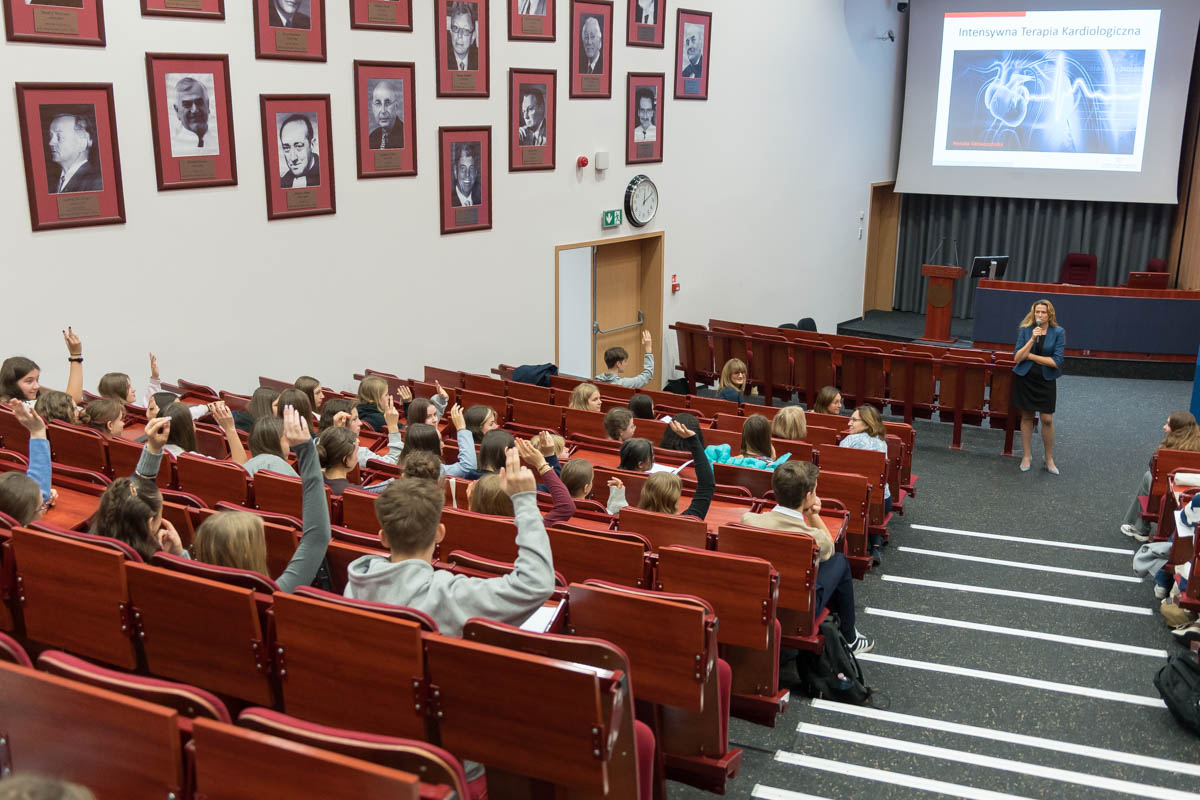
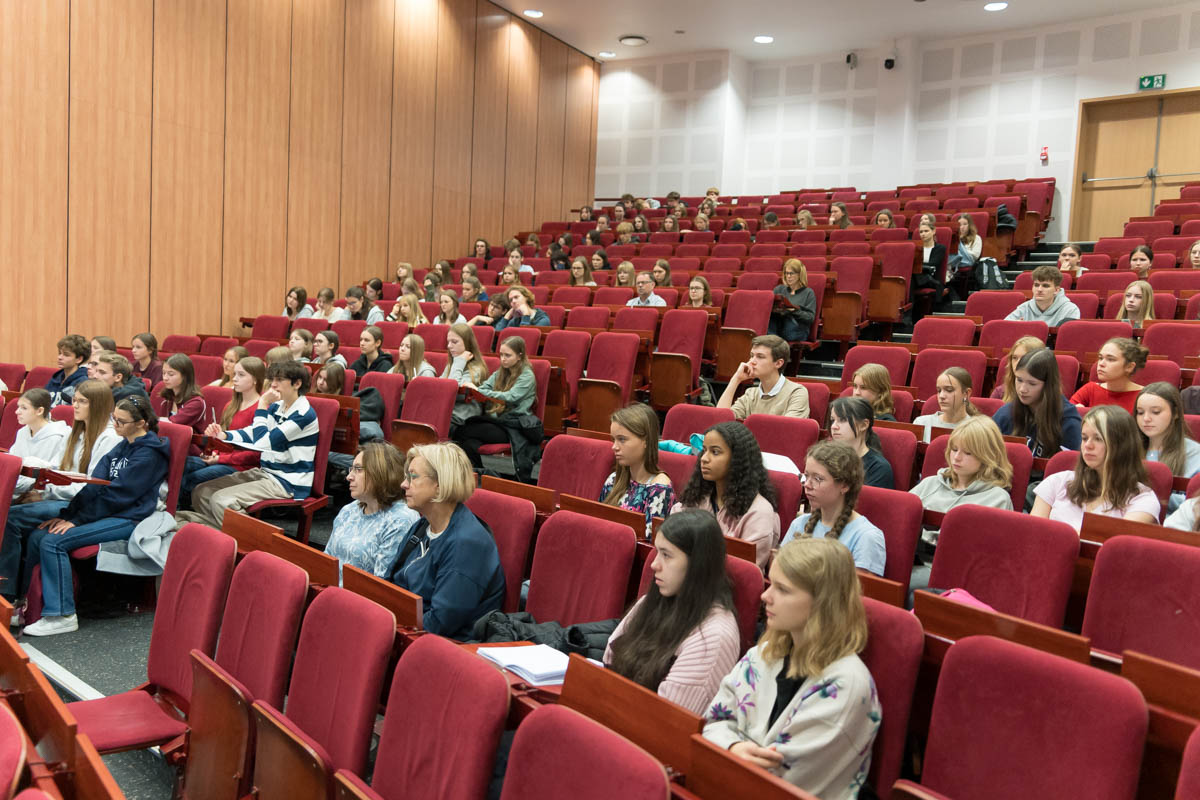
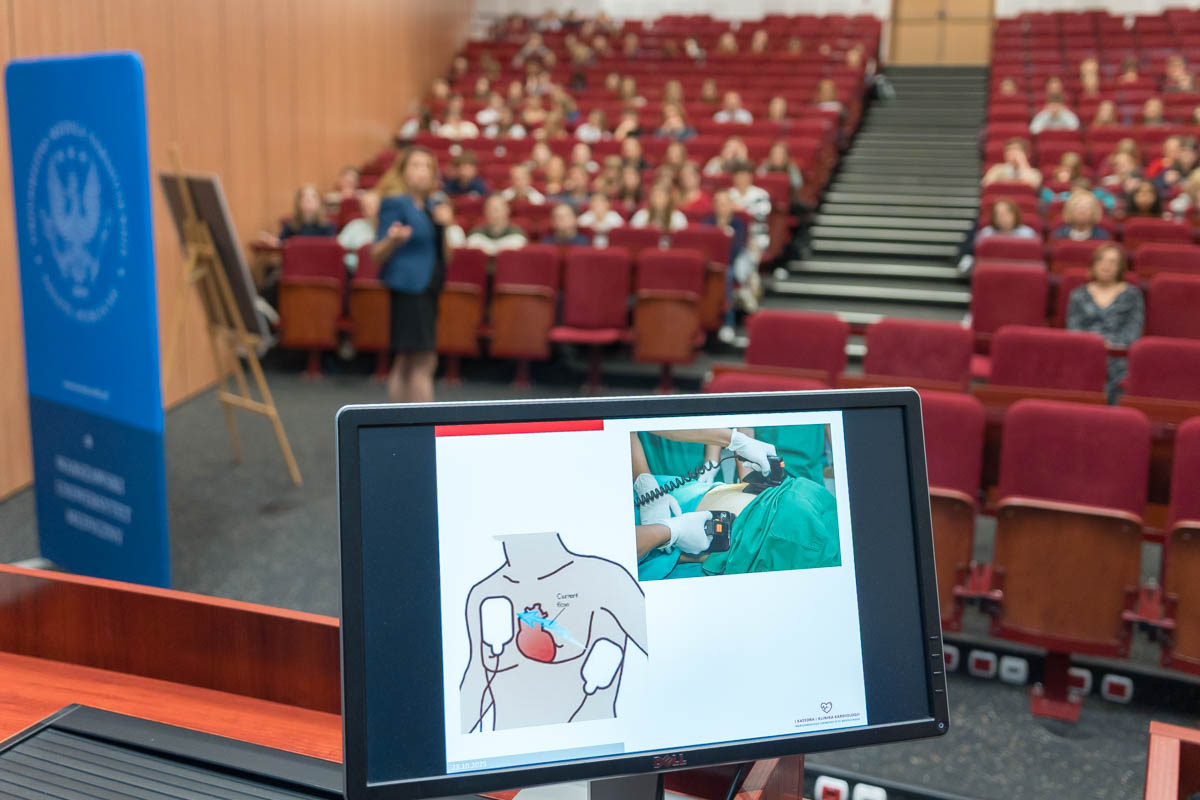
This year, WUM has taken patronage over King Władysław IV High School No. 8 and Stefan Żeromski High School No. 40 with Bilingual Classes. As part of this patronage, young people will participate in lectures and workshops prepared by our scientists and students.
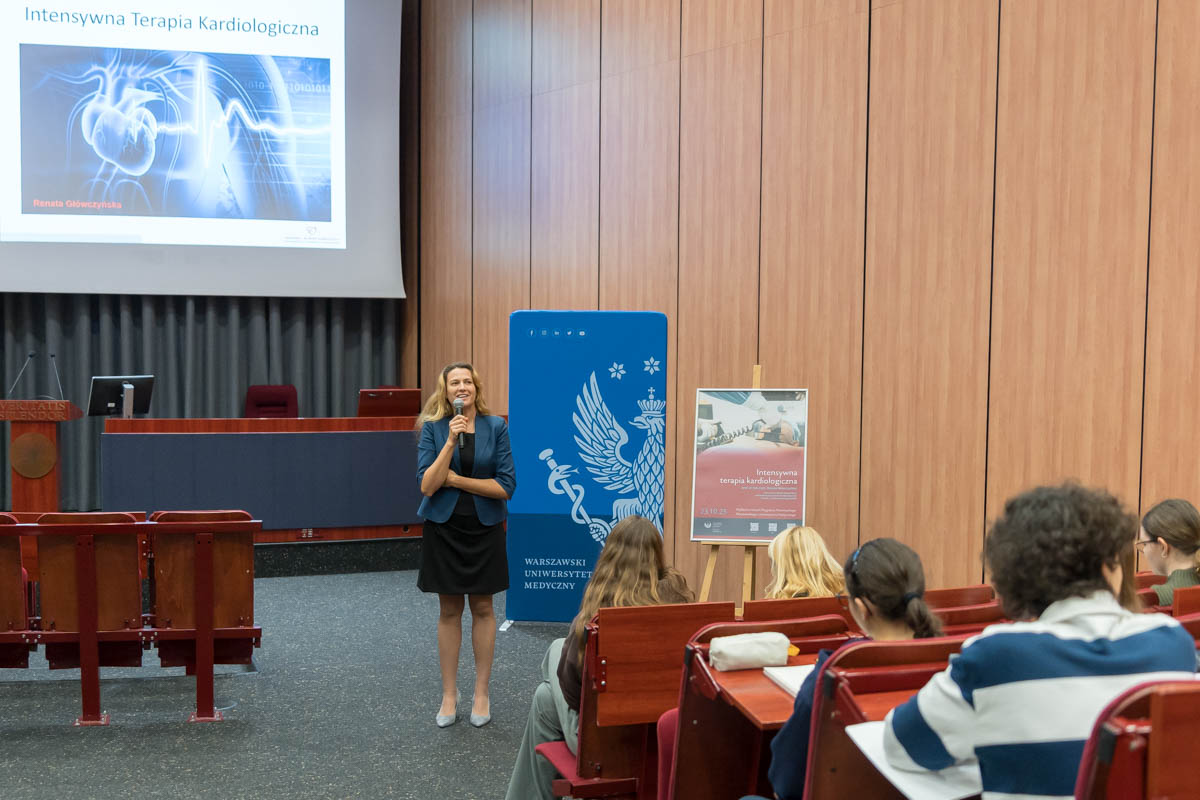
The first lecture of this edition was attended by 150 high school students. Most of them are considering studying medicine. They met with our expert in cardiology and intensive care, Prof. Renata Główczyńska, Head of the Department of Cardiac Diseases and Outpatient Care at the 1st Chair and Department of Cardiology WUM.
What happens in the cardiac intensive care unit
The professor showed what a cardiac intensive care unit looks like and what equipment is used there. It was also possible also see patients (unidentifiable, of course) surrounded by a network of tubes and wires needed to monitor their condition and perform the necessary tests.
Our expert emphasized that patients often arrive at the ward straight from the street, a family event, a swimming pool, or a bike trip. Cardiac arrest occurs suddenly, and it is then extremely important for witnesses to the event to quickly perform CPR. The professor also demonstrated how to intubate a patient and explained when and how defibrillation is performed, dispelling several myths that are perpetuated in popular medical TV series.
Once we have restored our patient's breathing and circulation, we have time to consider what happened. We perform a series of tests to explain it - said the lecturer.
The high school students could also learn what an ECG is, what coronary angiography is, when angioplasty is performed, and when computed tomography is performed. There was also a talk about drugs used in emergencies (such as adrenaline) and those that patients must use after leaving the hospital.
What challenges do doctors often face?
The lecture was exceptionally engaging, mainly because it was presented “from the perspective of the intensive care unit.” Professor Główczyńska shared her experiences and talked about difficult or surprising “cases.” She made no secret of the fact that her work is also very demanding in emotional and physical terms.
We often face emotional challenges. We have to deal with difficult emotions related to illness, the death of a patient, the emotions of patients' families... On top of that, there are physical challenges. During working hours, i.e. from 7:30 a.m. to 3:00 p.m., I already “walk” several kilometers. And during my shift, I walk nearly 10 km - said the professor.
The lecture was followed by a short question and answer session. The high school students were curious about the details of angioplasty, asking about the possible side effects of intensive cardiac therapy and what they could and could not do after a heart attack.
The first lecture as part of the WUM Patronage Program took place on October 23 this year in the auditorium of the Teaching Center WUM.