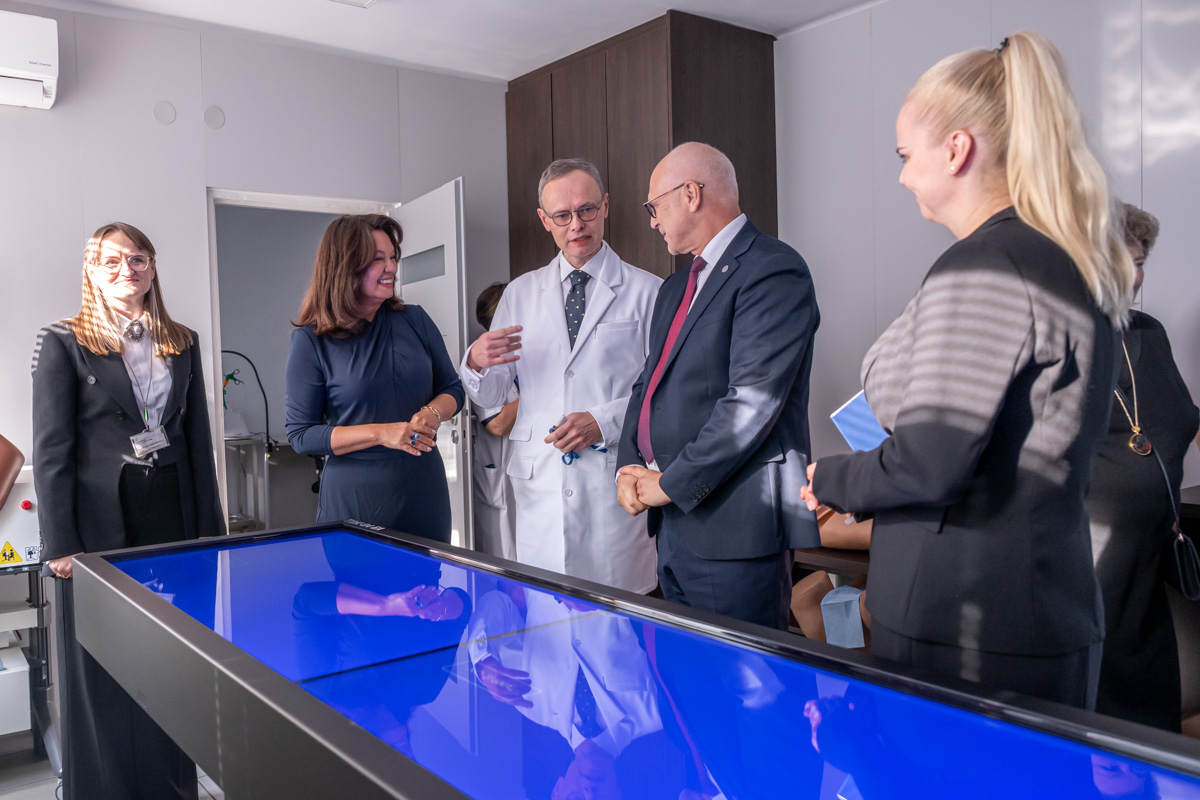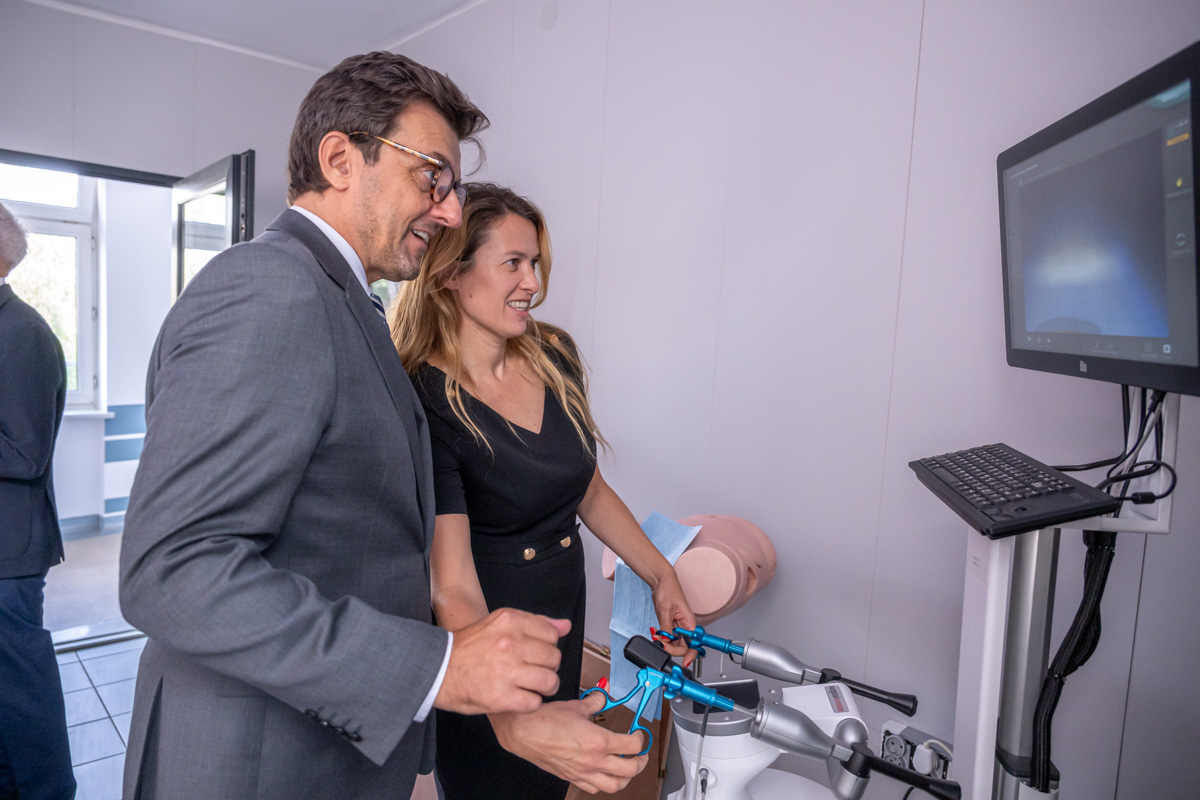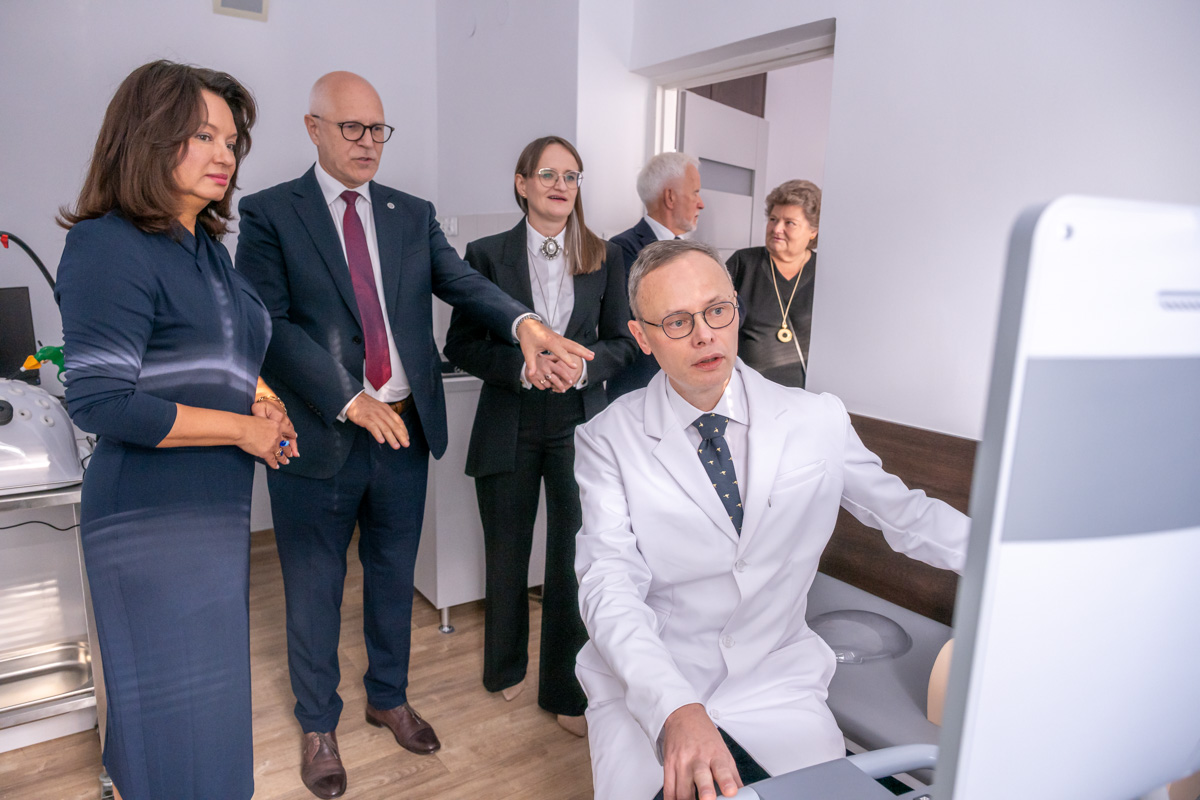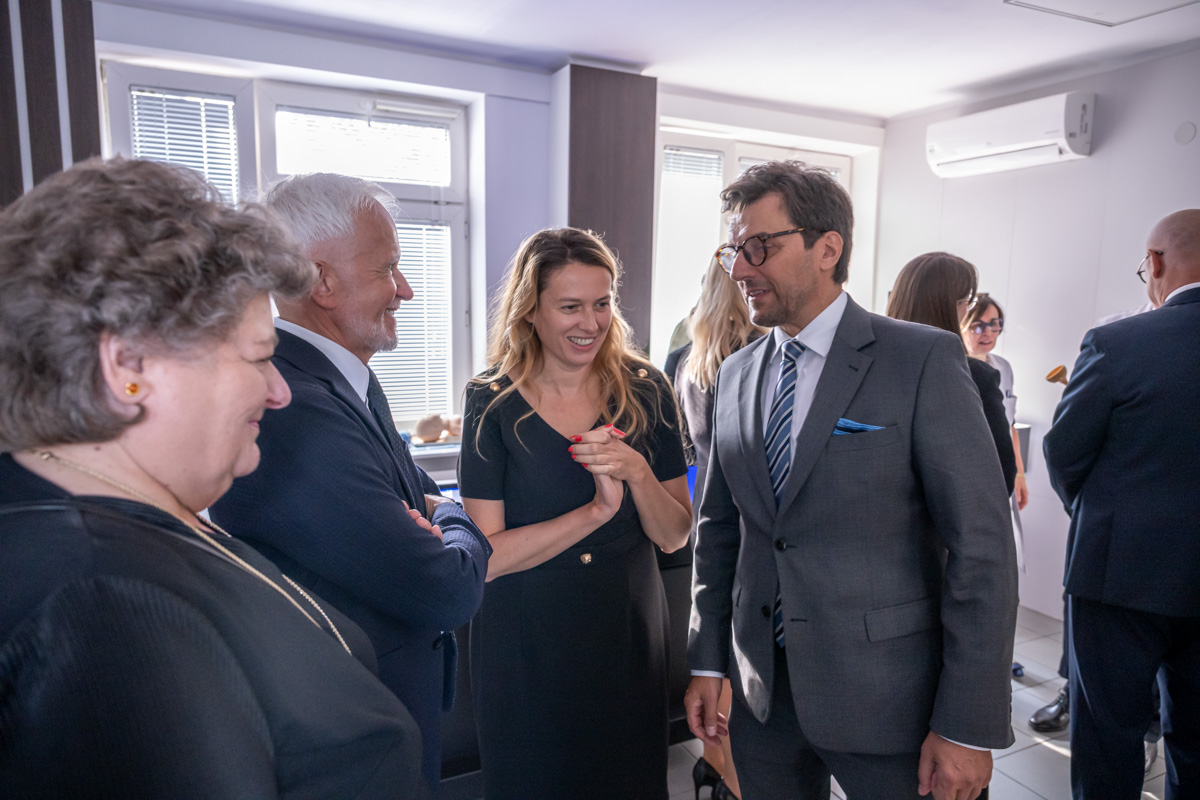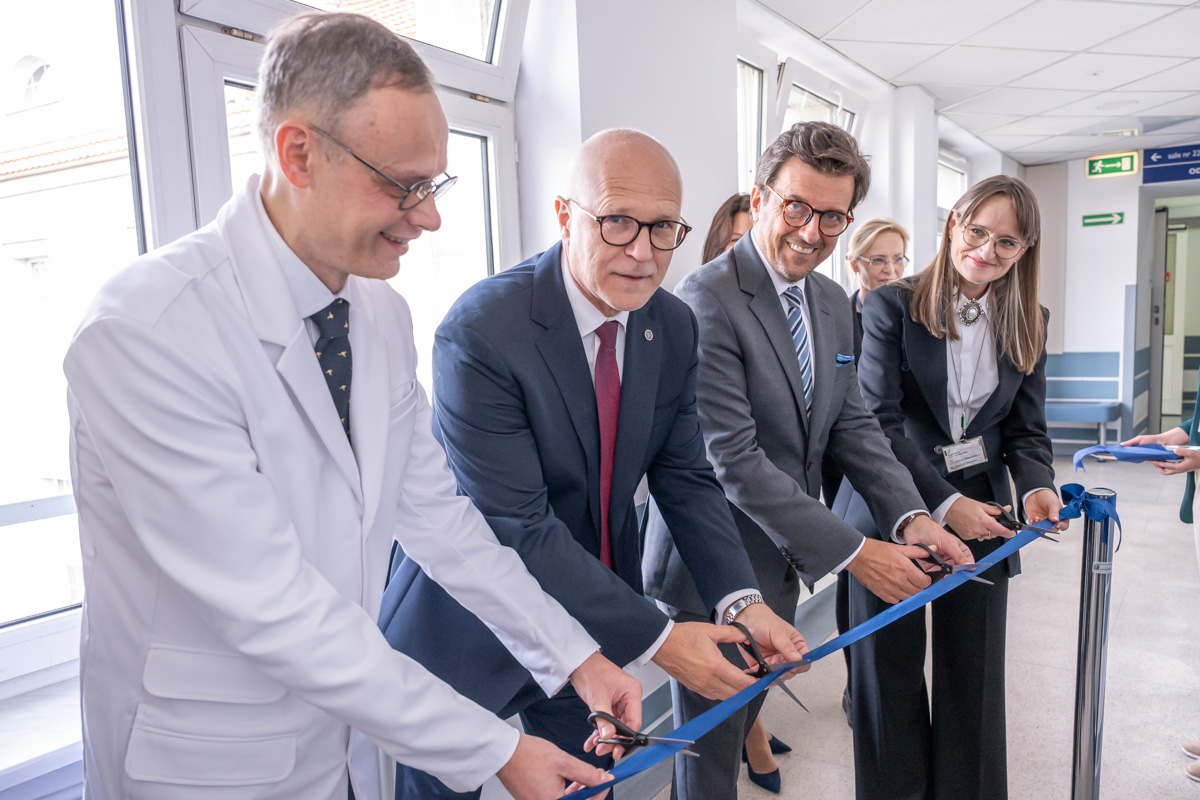
The new classrooms are intended for students attending classes in three WUM departments at Duchess Anna Mazowiecka Teaching Hospital. In addition to the 2nd Chair and Department of Obstetrics, Gynecology and Gynecological Oncology, these include: Department of Gynecological Endocrinology and Department of Neonatology and Neonatal Intensive Care.
The minicenter also provides the opportunity to conduct joint interdisciplinary exercises.
“In the minicenter, students will attend classes in small groups, which will allow them to practice medical procedures repeatedly, receive immediate feedback and better prepare for clinical classes,” emphasized Dr Jacek Sieńko, the Head of the 2nd Chair and Department of Obstetrics, Gynecology and Gynecological Oncology WUM. “In addition, the minicenter will allow students to prepare for practical exams such as the OSCE and mini-OSCE.”
The simulation rooms were funded by the National Recovery and Resilience Plan intended for the development of didactics and improvement of the quality of practical education.
What can you learn here?
The center is equipped with modern birth simulators, fetal ultrasound simulators, gynecology phantoms, models for laparoscopy training and a virtual anatomical table.
The classes that will be held there include gynecological examination, basics of ultrasound diagnostics in obstetrics, interpretation of CTG records, assisting physiological childbirth and management of complicated childbirth, recognizing emergencies, and basics of laparoscopic techniques.
The minicenter to complement the CSM WUM
The minicenter complements the main Center for Medical Simulation (CSM) for WUM students located at the Banacha Campus on Pawińskiego Street.
“The concept of developing simulation minicenters corresponds to the vision of our university authorities, according to which the high-fidelity Center for Medical Simulations on Pawińskiego Street should be complemented by smaller teaching labs located directly within the departments,” explained Dr Jacek Sieńko. “This will allow students to practice their skills regularly and close to the place of daily clinical education. On the other hand, the most advanced simulation scenarios remain the domain of the main Center for Medical Simulation WUM.”
Artificial intelligence in teaching communication
The use of artificial intelligence to learn how to conduct difficult conversations with patients is one of the directions of the development of the minicenter. A station equipped with an AI agent will enable students to learn how to convey bad news, respond to emotions and communicate empathetically in a safe and controlled environment. Currently, work is underway to train the chatbot and test the application with the participation of students.
The tool is created as part of the Integra program carried out in cooperation with the Faculty of Mathematics and Information Sciences of the Warsaw University of Technology, the Department of Pediatrics WUM, and the 2nd Chair and Department of Obstetrics, Gynecology and Gynecological Oncology WUM.
The opening of the minicenter was attended by: the Rector of WUM, Prof. Rafał Krenke, the Dean of the Faculty of Medicine, Prof. Paweł Włodarski, the Vice Deans of the Faculty of Medicine, Prof. Aneta Nitsch-Osuch and Prof. Renata Główczyńska, the Director of the Duchess Anna Mazowiecka Teaching Hospital, Anastazja Więckiewicz, Dr Justyna Teliga-Czajkowska, the Vice Dean at the Faculty of Health Sciences, Dr Piotr Dziechciarz, the Chairman of the University Team for the Quality in Teaching, Dr Andrea Horváth-Stolarczyk, a member of the University Team for the Quality of Teaching, and Dr Agnieszka Dobrowolska-Redo, the Chair of the Faculty Team for the Quality of Teaching of the Faculty of Medicine.
The event was hosted by Dr Jacek Sieńko, the Head of the 2nd Chair and Department of Obstetrics, Gynecology and Gynecological Oncology WUM, the Vice Dean of the Faculty of Medicine.