The grant in the amount of PLN 120,000 was signed by President of WFOŚiGW in Warsaw Zbigniew Deptuła, WUM Chancellor Dr. Marta Kijak-Bloch, and WUM Vice-Chancellor for Operations Jarosław Prugar.
This is the third consecutive year of WUM receiving a grant from WFOŚiGW for the development of the Banacha campus. Since 2024, our University has received a total of over PLN 420,000 for this purpose, which demonstrates how effective our efforts have been and how consistently the plan for transforming campus grounds is being implemented.
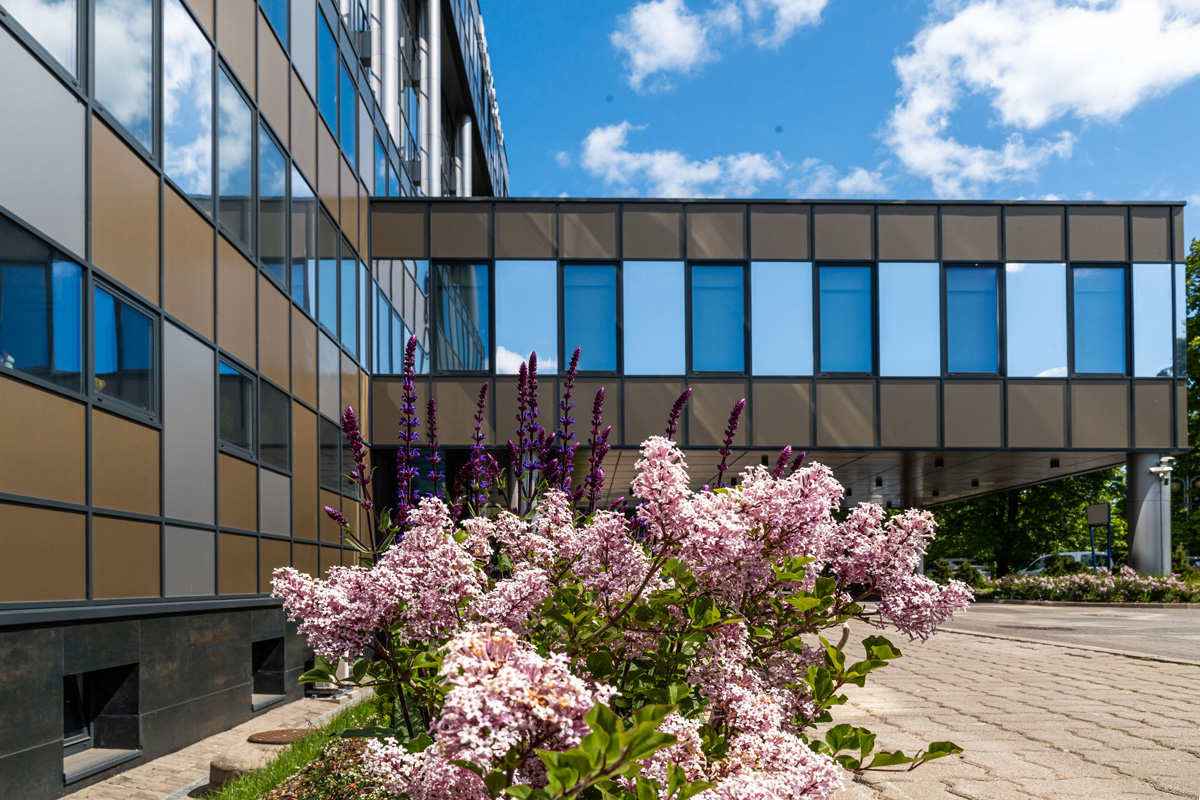
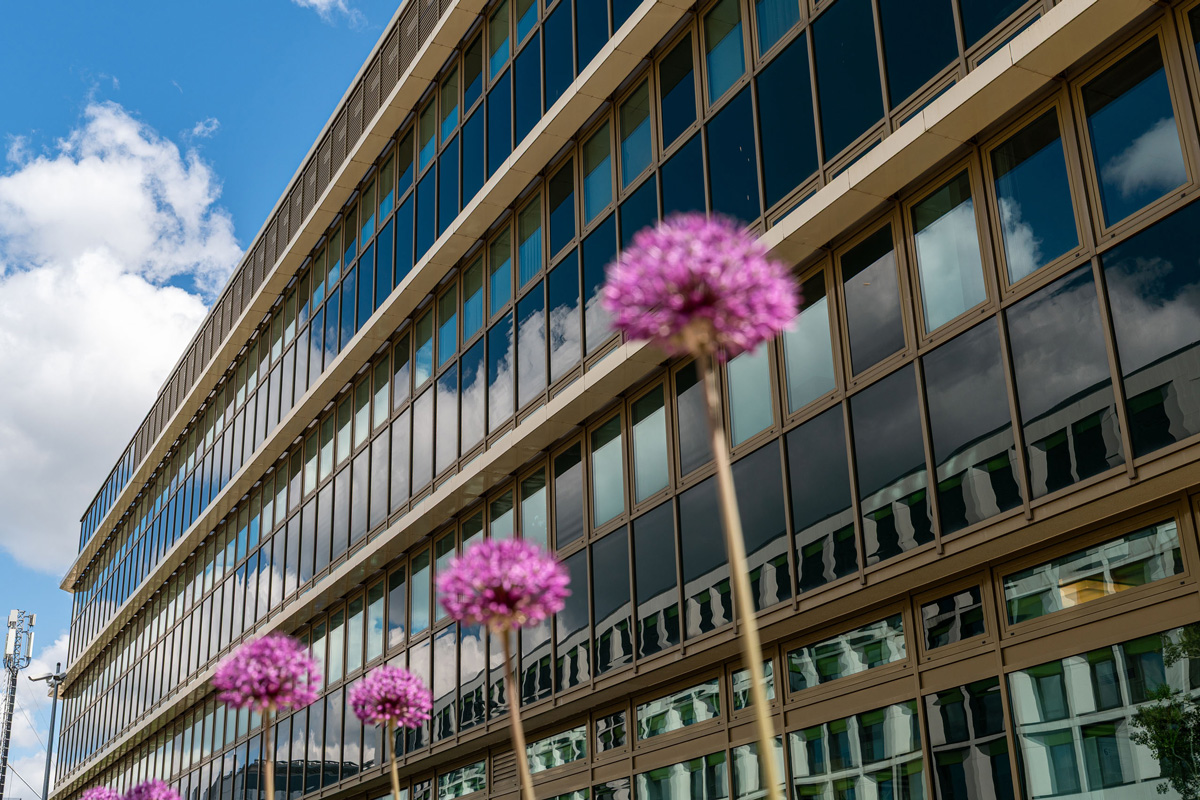
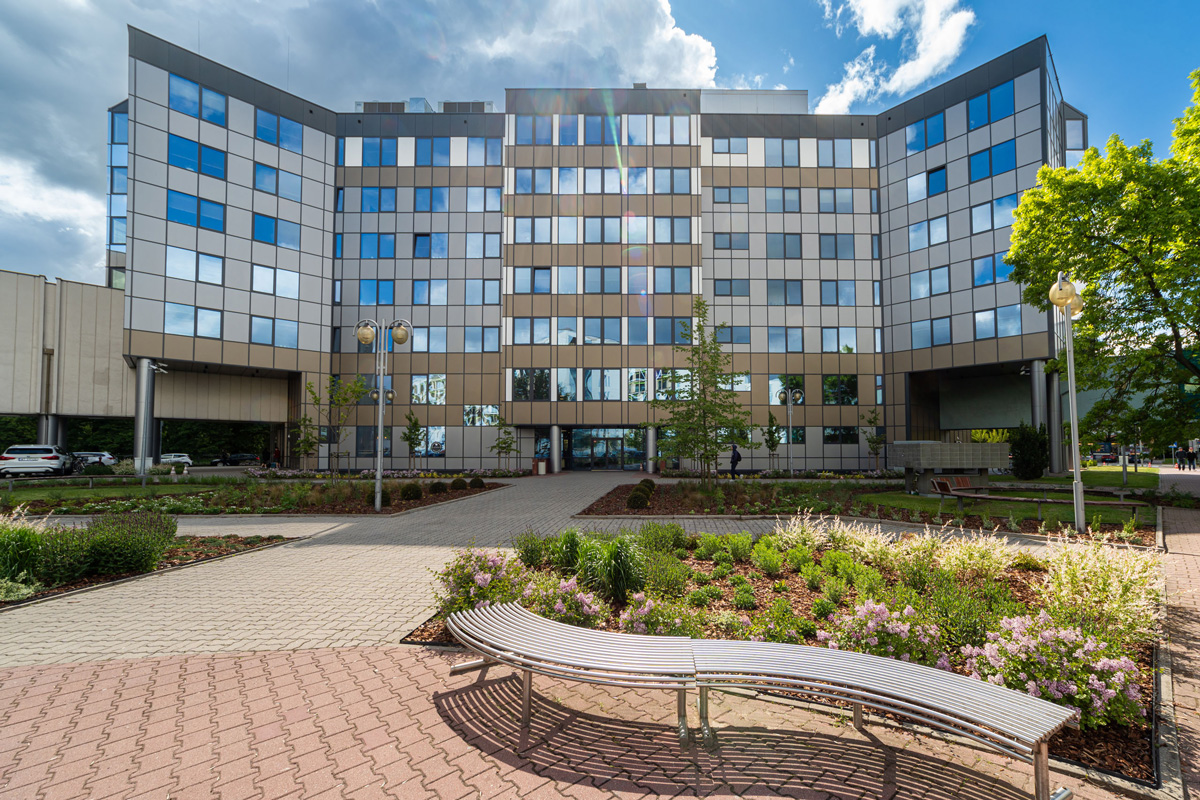
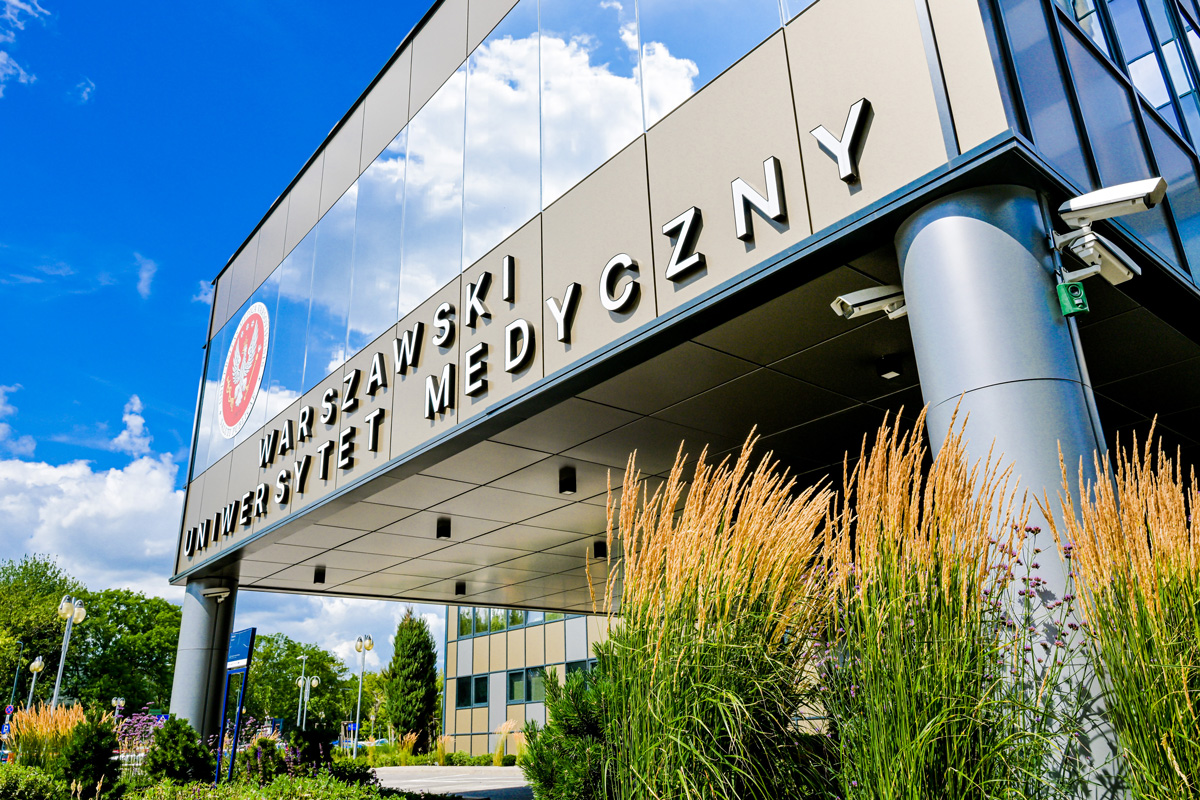
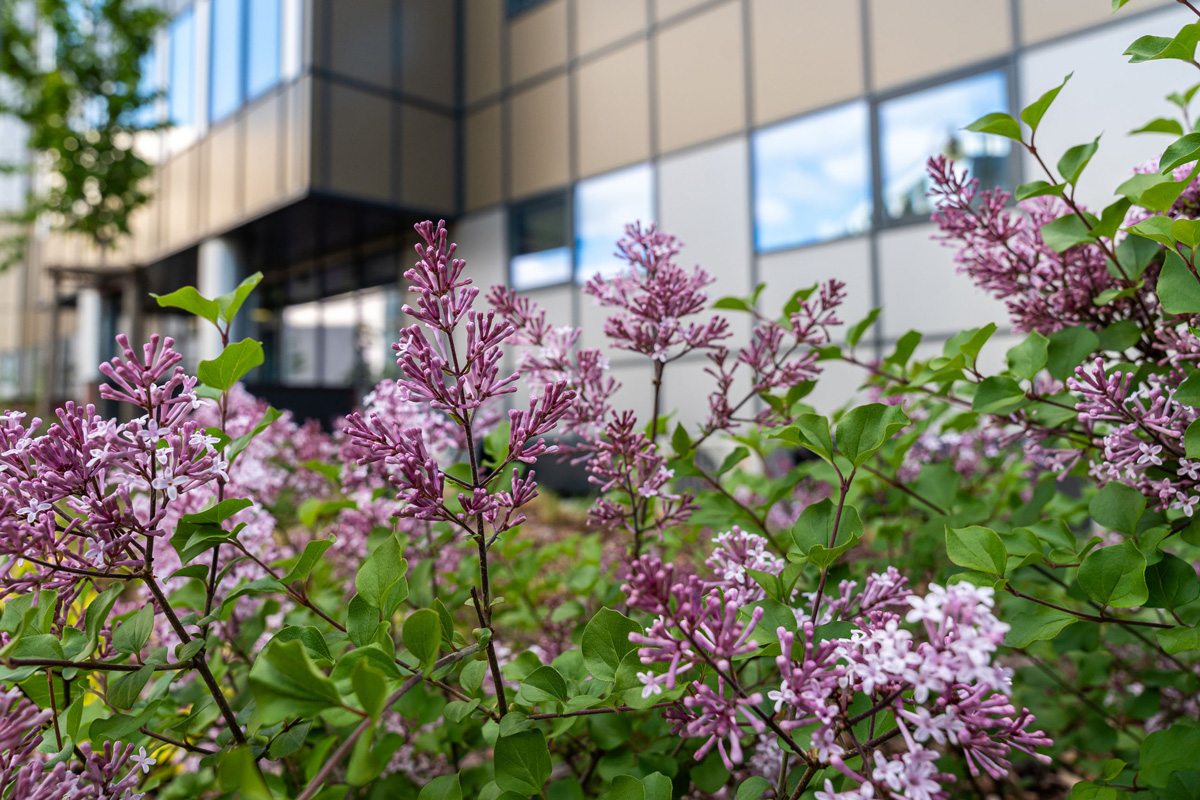
The effects are already clearly visible. The Banacha campus have become more green and is now a more pleasant space for learning, work, and recreation.
Over 5.5 thousand new plants for the campus
As a result of the grant, over 5,500 new plants will be brought to the campus, and campus grounds will be fitted with new benches, where students and staff can rest between classes or in breaks between visiting hospital patients. This is because close contact with nature has relaxing, stress-reducing effects, and it improves general wellbeing.
The new plantings will be plentiful and multi-species. There will be roses in several varieties, lilacs, panicle hydrangeas, evergreen yews and spindle trees, as well as swaying ornamental grasses. The greenery arrangements will be complemented by nectar-rich perennials, including coneflowers, verbenas, yarrows, speedwells, sages, thymes, catmints, and hardy geraniums.
The variety of species is important not only for the appearance of the campus. Multi-species plant arrangements will become home to bees, bumblebees, butterflies, and other tiny creatures; they will also help retain water in the soil, improve microclimate, and limit overheating. These green spaces are intended not only to be visually pleasing, but also to be well designed, functional, and resilient.
“The result of the last three years’ efforts is not only more greenery, but also a gradual transformation of the Banacha campus. The green spaces are being developed following a consistent, long-term plan, intended to support the microclimate and biodiversity on one hand, and creating high-quality, relaxing spaces for people on the other. The effects of previous stages of this project can already be seen, and we still have further plans and ideas. We would like to make greenery one of the components shaping for the quality and character of the Banacha campus,” said Agnieszka Broda-Kruzel, a landscaping architect and specialist from the Campus Facilities and Administration Department, responsible for developing green spaces in the Banacha campus.