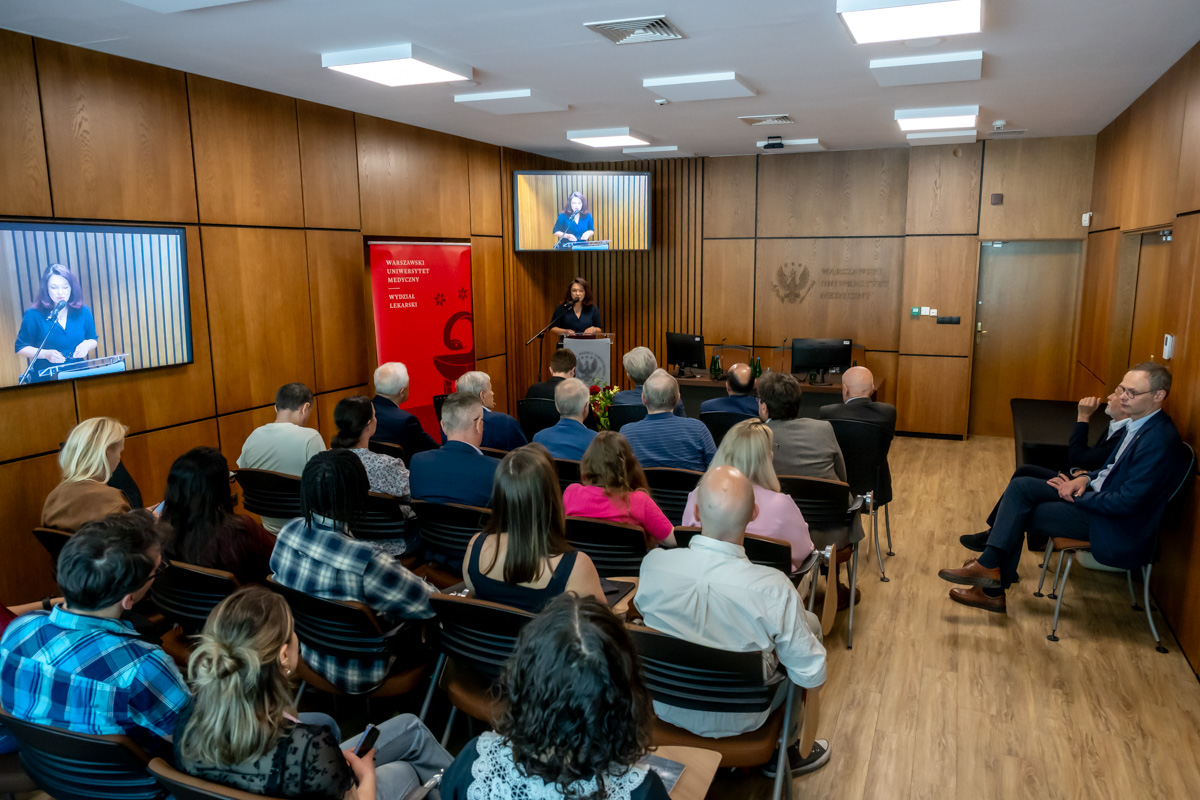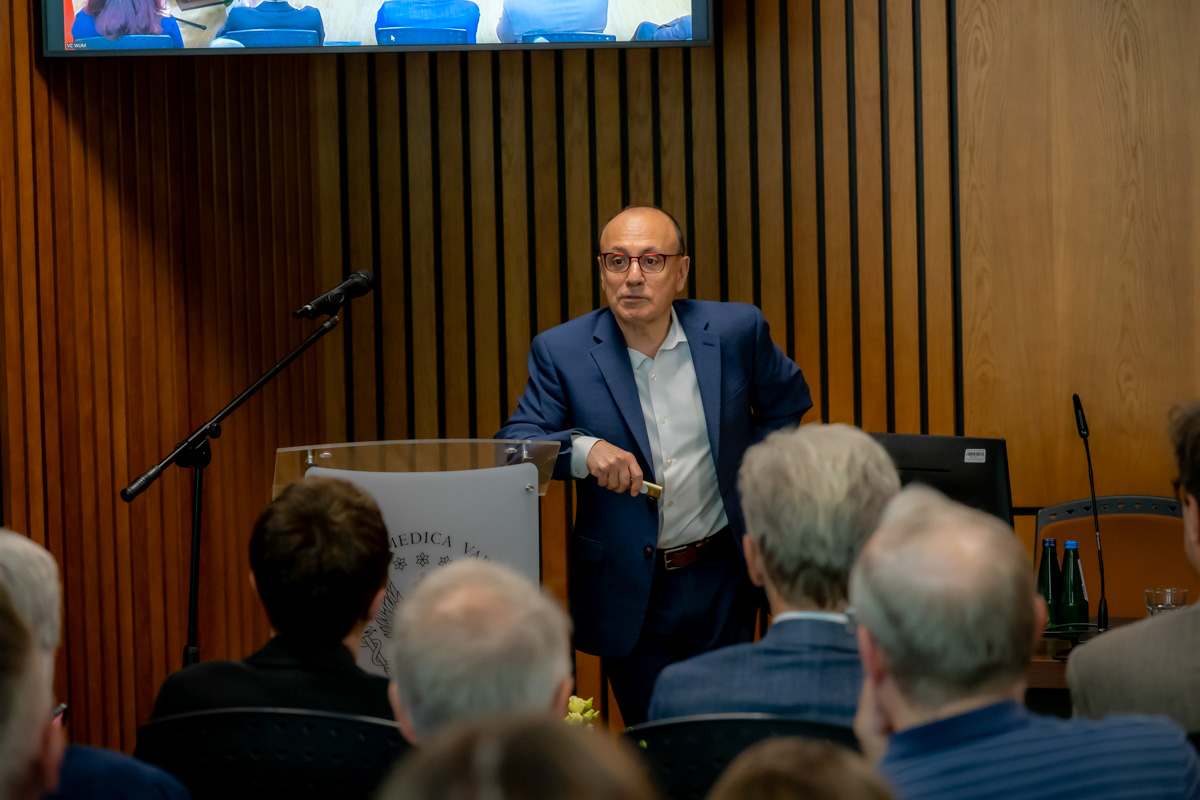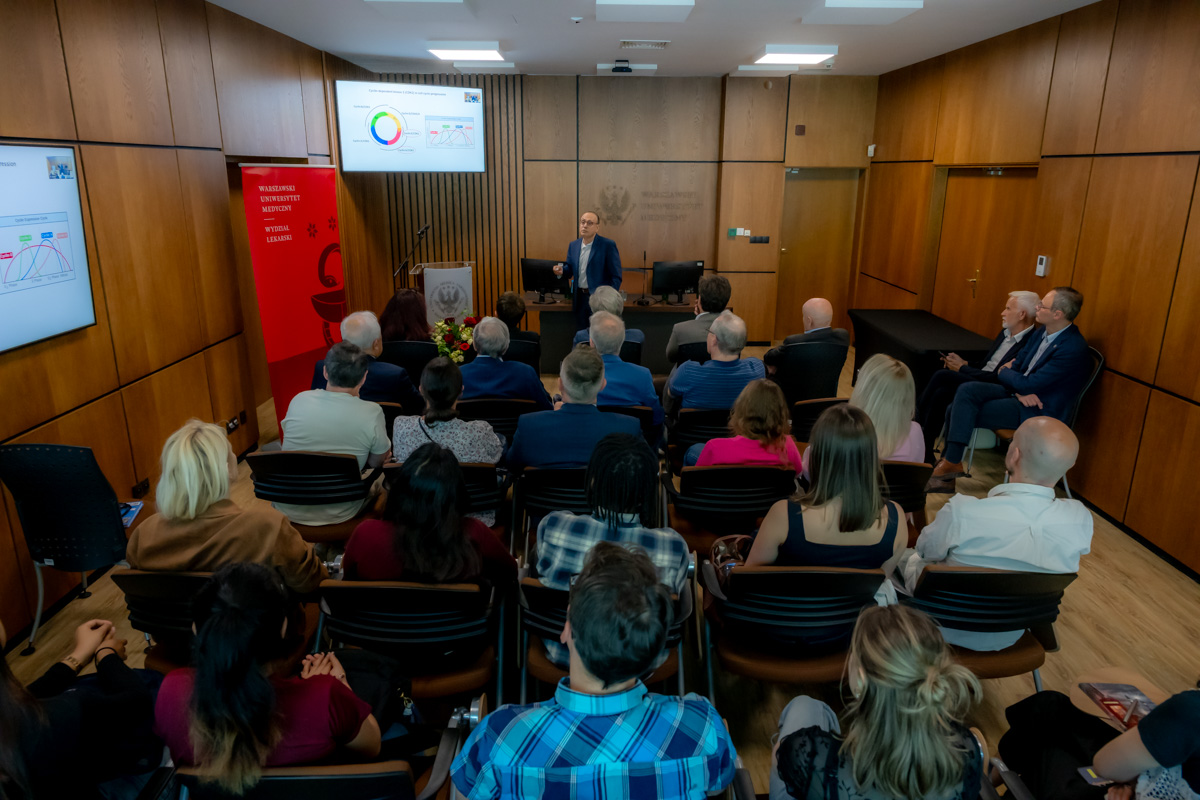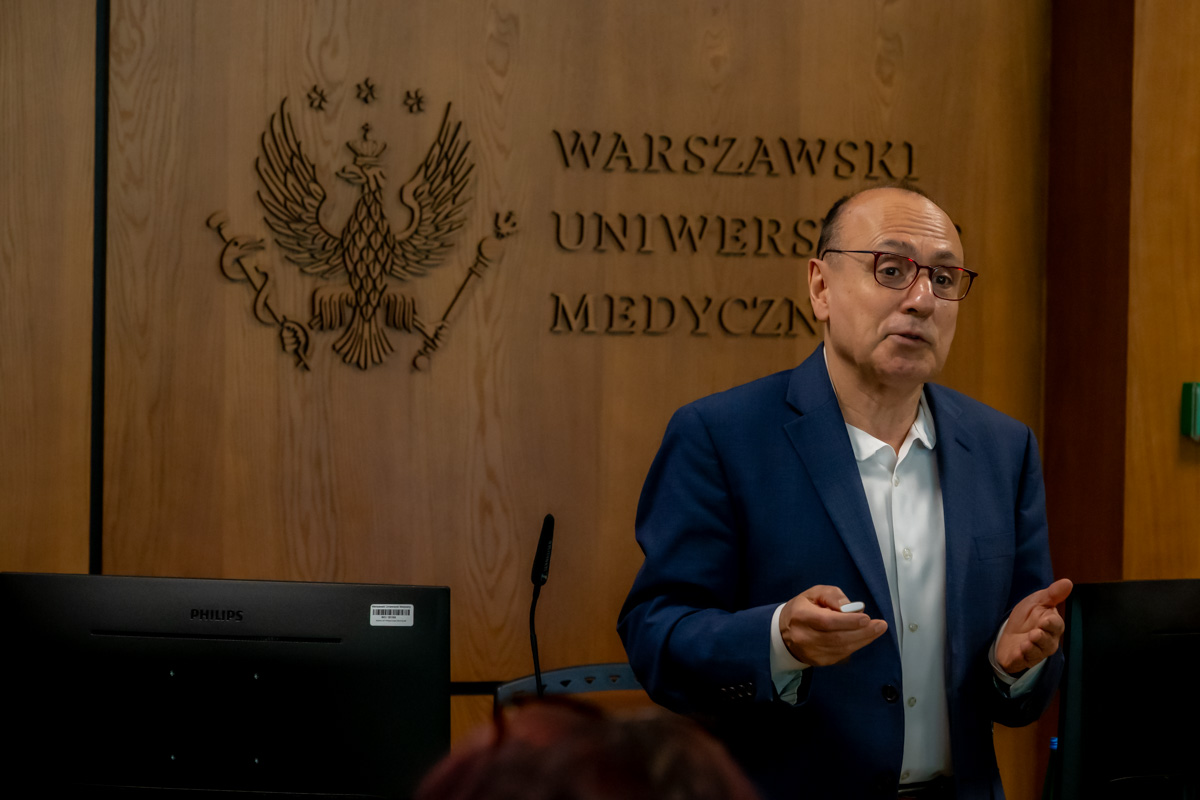
The Professor visited the Medical University of Warsaw at the invitation of the Faculty of Medicine at WUM and Division V of the Warsaw Scientific Society. His lecture took place on June 17.
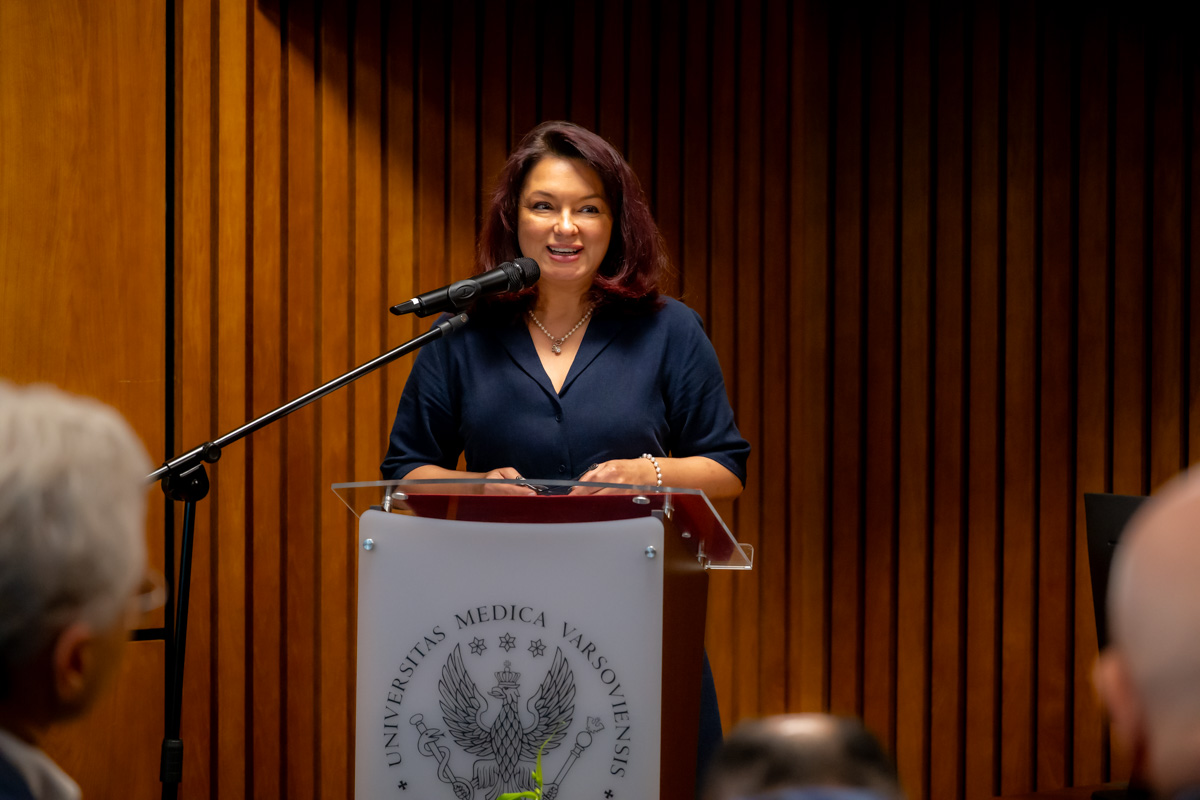
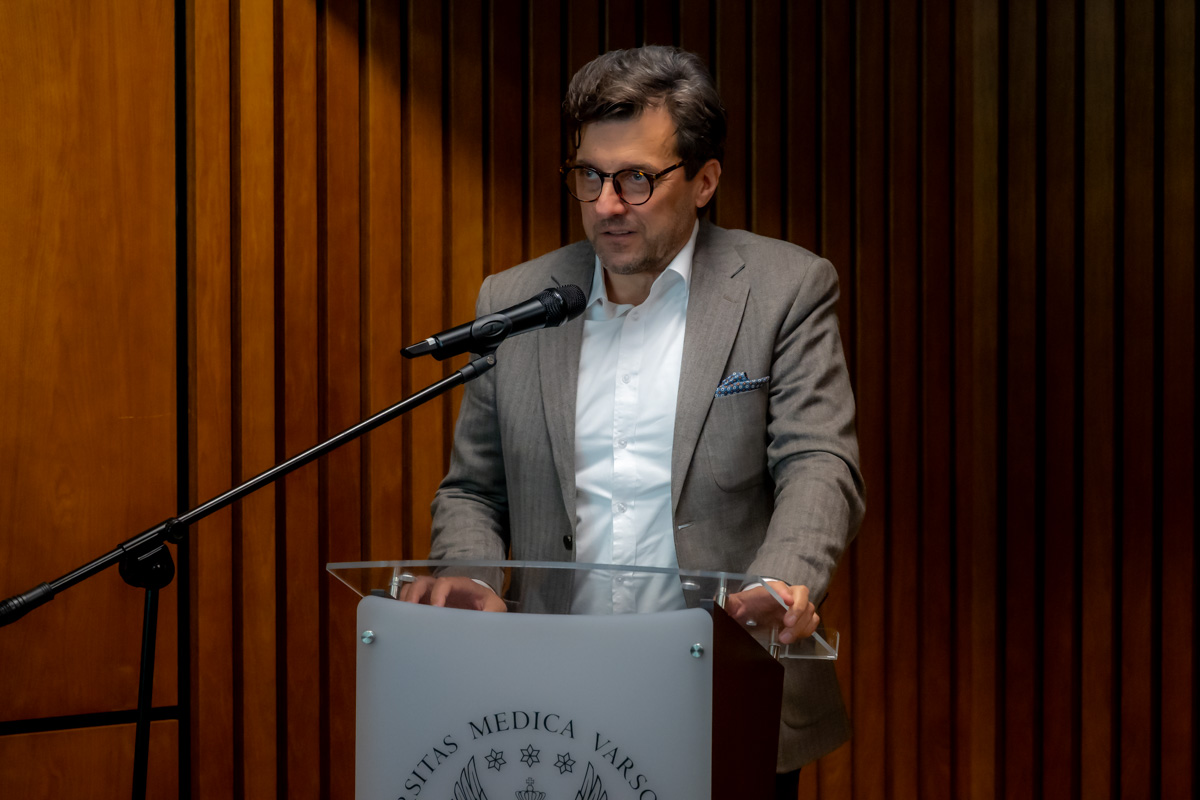
The participants were welcomed by Prof. Aneta Nitsch-Osuch, Vice-Dean of the Faculty of Medicine for Curriculum and Educational Quality, and Chair of Division V. Prof. Paweł Włodarski, Dean of the Faculty of Medicine, introduced the speaker and emphasized that he is a graduate of our university and one of the world's leading scientists.
For more than a decade, the Professor’s research has focused on elucidating why the mechanisms of cell division function differently in healthy cells compared to cancer cells, as well as on developing ways to use these molecular differences for cancer treatment.
The role of D-type cyclins in cancer development
At the beginning, our guest explained that a cell is surrounded by various factors that either trigger cell division — these are so-called mitogenic factors — or inhibit it, known as antimitogenic factors. Cells have developed highly complex signal transduction pathways that allow them to interpret the extracellular environment and transmit signals through the cytoplasm to the cell nucleus.
“All of these growth-stimulating or growth-inhibiting signals ultimately converge on the core mechanism of the cell cycle, which operates in the cell nucleus,” explained Prof. Sicinski. “A key component of this mechanism consists of proteins called cyclins, which are named sequentially using the alphabet: a, b, c, d.”
As the Professor emphasized, from the perspective of cancer development, D-type cyclins are the most important. In normal cells, the activity of D-type cyclins is very strictly regulated by the extracellular environment. In cancer cells, however, the situation is different. D-type cyclins show excessive activity, meaning they are no longer controlled by extracellular signals. In other words, they drive cell division even when external signals instruct the cells not to divide.
Then, the Professor spoke about research conducted by his team of scientists aimed at investigating the molecular function of individual cyclins in cancer development, as well as studies focusing on the analysis of the role of cell cycle proteins in tumors. The results of these and other studies (carried out in collaboration with other laboratories) led to the discovery that mice lacking cyclin D1—or the associated protein CDK4—do not develop breast cancer driven by a specific oncogenic alteration. The researchers also demonstrated that the same mechanism operates in humans, which ultimately contributed to the development of new therapies for patients suffering from this type of cancer.