The scope of the collaboration
The collaboration between WUM and SIAF builds on the strong clinical base of our university and the advanced research infrastructure of the leading immunology centre in Europe. WUM and SIAF will implement the WUM–SIAF CARE project (Children’s Allergy Research Excellence – WUM–SIAF CARE: A Strategic Partnership for Paediatric Allergy Research).
The project will focus on investigating the mechanisms underlying asthma and allergic diseases in children, using state-of-the-art proteomic and metabolomic methods. In parallel, research fellowships, training courses, and the exchange of academic staff and PhD students, as well as an international scientific conference in Warsaw, have been planned.
Who will implement the project?
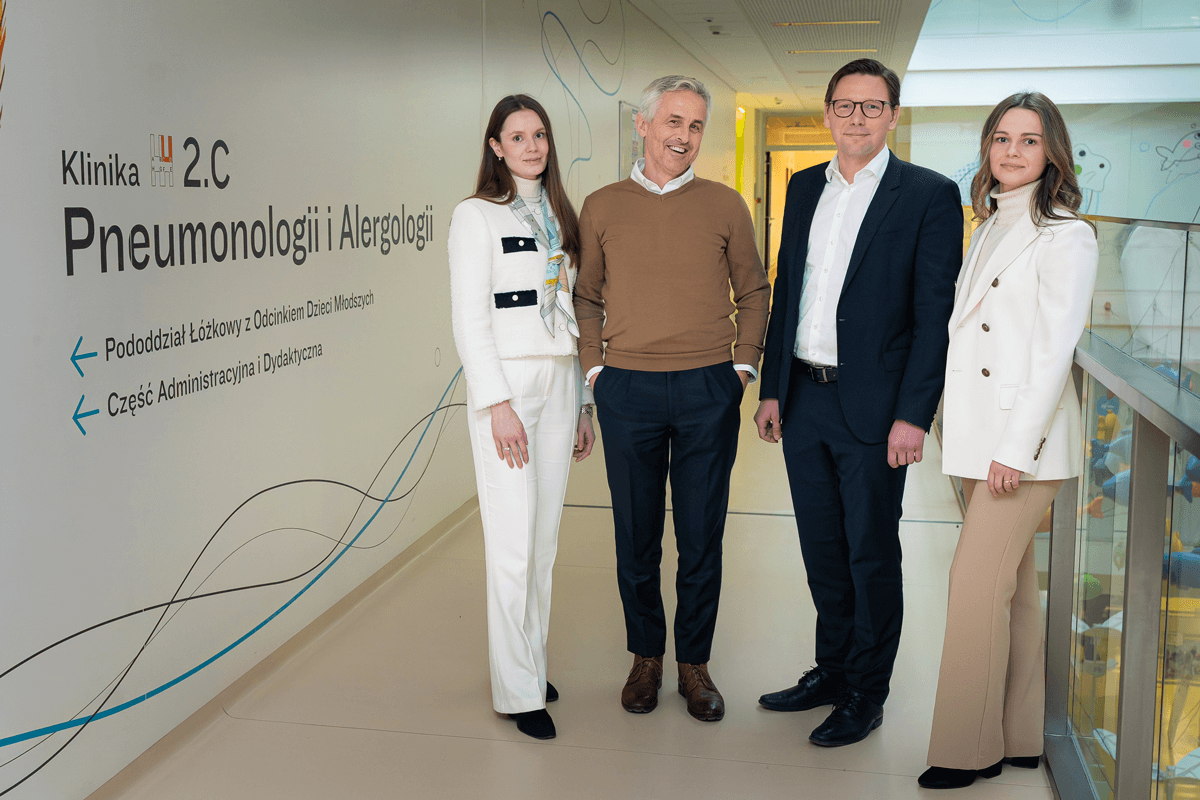
On the WUM side, the project is carried out by the team from the Department and Clinic of Paediatric Pneumonology and Allergology, comprising Dr hab. Wojciech Feleszko, Dr Karolina Dumycz, and Dr Dominika Ambrożej. The Swiss team is led by Milena Sokolowska, MD, PhD, PD.
The project is funded by the Polish National Agency for Academic Exchange (NAWA) under the Strategic Partnerships programme.
What does the project mean for children with allergies and asthma and their parents?
Genuine research conducted within this collaboration aims to provide a deeper understanding of why some children develop asthma or severe allergic diseases while others do not, and why treatment is highly effective in some patients but less effective in others.
“We want to look very deeply – right down to the level of individual skin cells obtained from the patient, their immunology and metabolism – so that these discoveries can later be translated into real benefits in the doctor’s surgery,” explains Dr hab. Wojciech Feleszko. “For parents, I have good news: in the future there will be less guesswork and more precision. We want to identify the risk of asthma and food allergy earlier, adjust treatment more effectively – most importantly – reduce the number of exacerbations and hospital admissions.”
What does the project mean for WUM?
The collaboration enables genuine knowledge and technology transfer, access to research methods that are difficult to obtain in Poland, and a strengthening of the University’s publication and grant potential.
“The project will also contribute to the internationalisation of teaching – WUM students and young scientists will benefit from seminars and classes delivered by SIAF experts. The outcome will be the development of research competences, the initiation of joint scientific projects, and publications in prestigious international journals, which will ultimately improve the diagnosis and treatment of allergic diseases in children,” says Prof. Michał Grąt, Vice-Rector for International Relations, Promotion and Development at WUM.
WUM–SIAF CARE is an example of collaboration in which the ultimate goal of science is healthier children, more reassured parents, and modern medicine grounded in reliable molecular research.