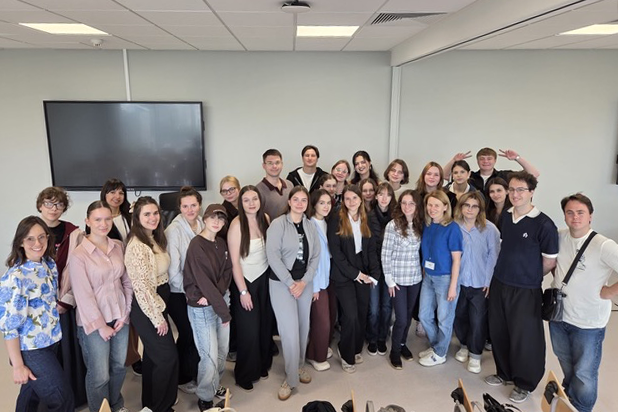
Prepared for the challenges of public health
The Summer School of Preventive Medicine is a project of the Department of Social Medicine and Public Health, funded by the Polish National Agency for Academic Exchange (under the SPINAKER – Intensive International Education Programmes).
The school’s unique 150-hour programme was created in response to current and key social needs in the field of public health. It focused on the prevention of lifestyle-related diseases, including obesity, metabolic disorders and cardiovascular diseases, the prevention of infectious diseases, and the development of effective communication skills with patients and in interdisciplinary teams.
Student support was provided by an experienced and interdisciplinary team from the Department of Social Medicine and Public Health. The project manager was Prof. Aneta Nitsch-Osuch, Head of the Department and Vice-Dean for Educational Programmes And Evaluation at the Medical Faculty of WUM.
Practical and hybrid classes were held, among other things, using modern facilities of the Medical Simulation Centre at WUM.
“The Summer School of Preventive Medicine is another important step in the internationalization of the Medical University of Warsaw’s educational offer and in promoting preventive healthcare at the global level,” emphasizes Professor Nitsch-Osuch.
Microcredentials as part of modern education at WUM
At the end of the programme, 123 participants of the summer school received microcredentials – official documents confirming the qualifications they had acquired in preventive medicine.
Microcredentials can stand on their own or be combined into larger sets of qualifications. Their digital format makes it easy to collect, present and share educational achievements, for example with employers or training institutions. Their issuance by our university is in line with the latest European trend towards the confirmation of specific competences and learning outcomes.
