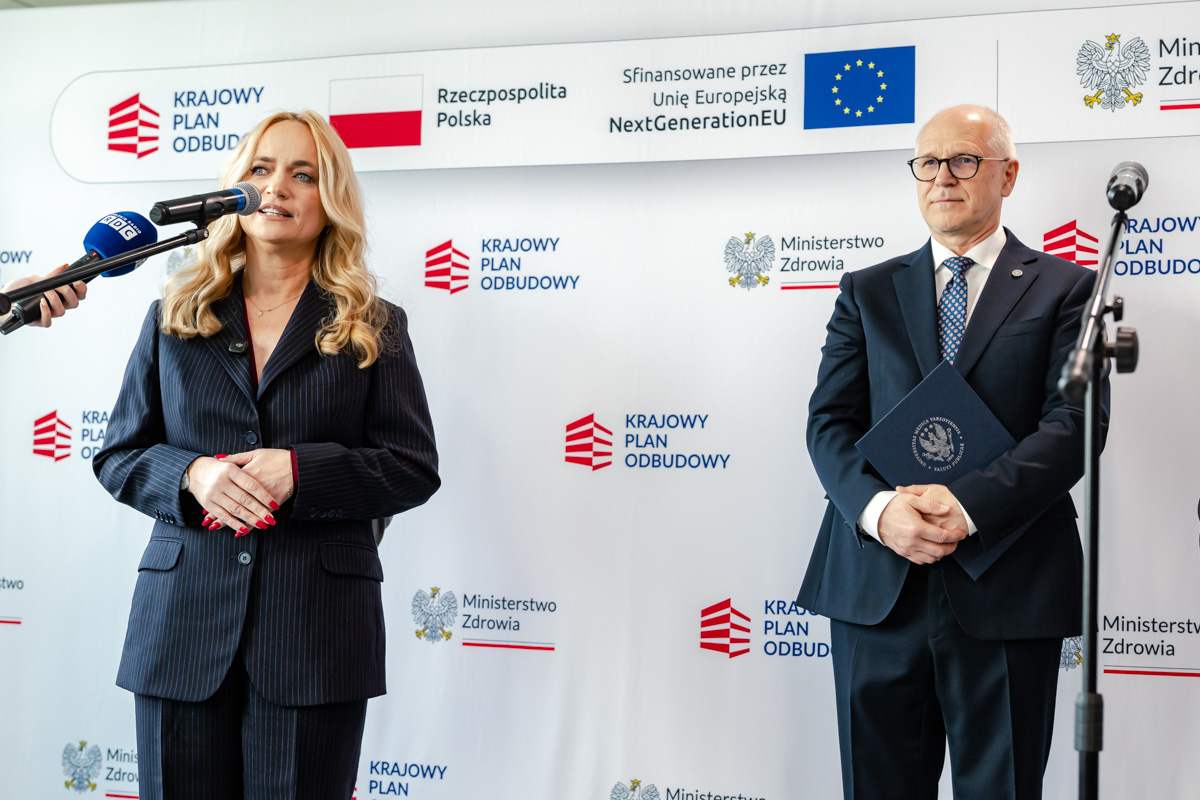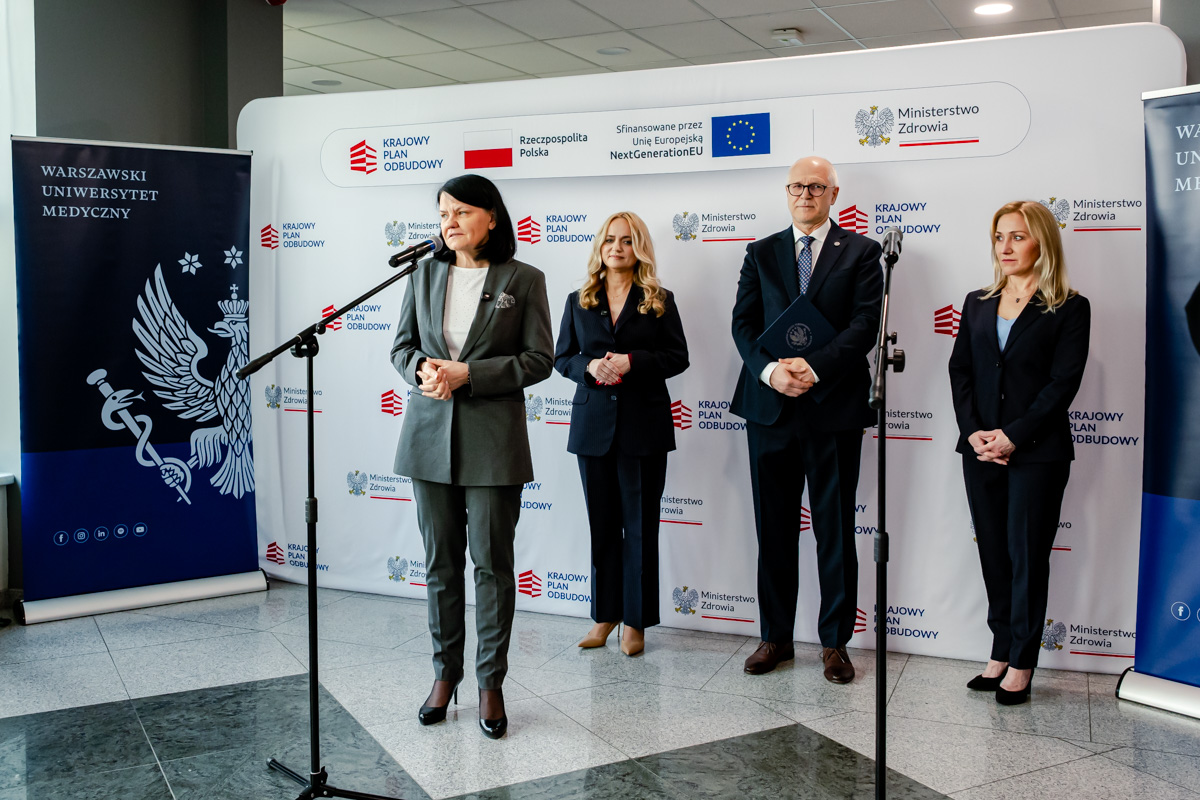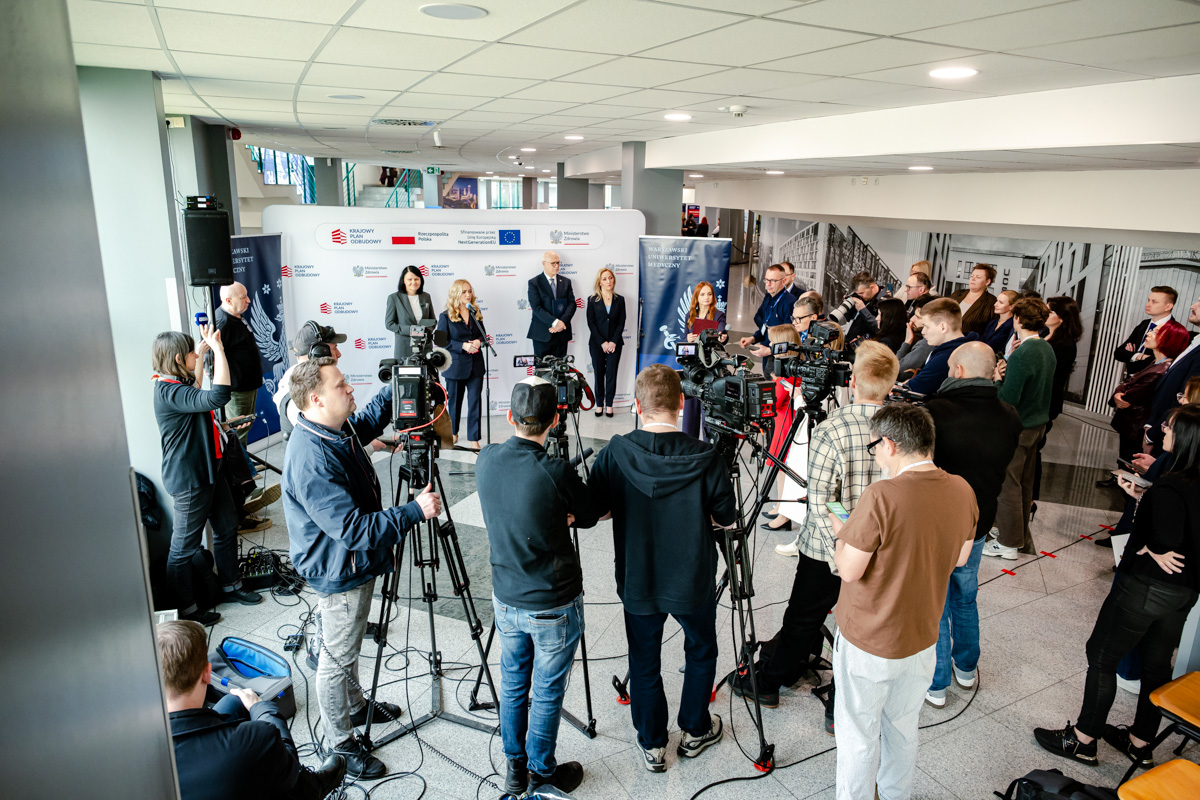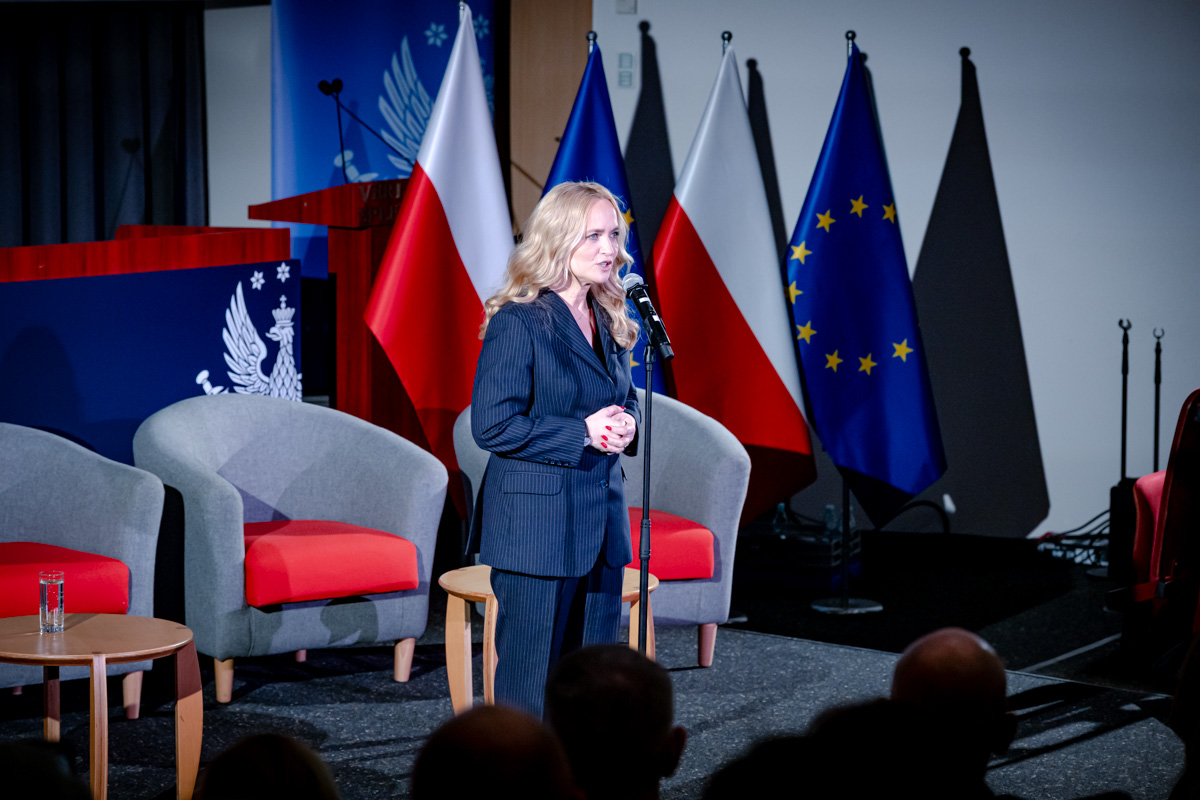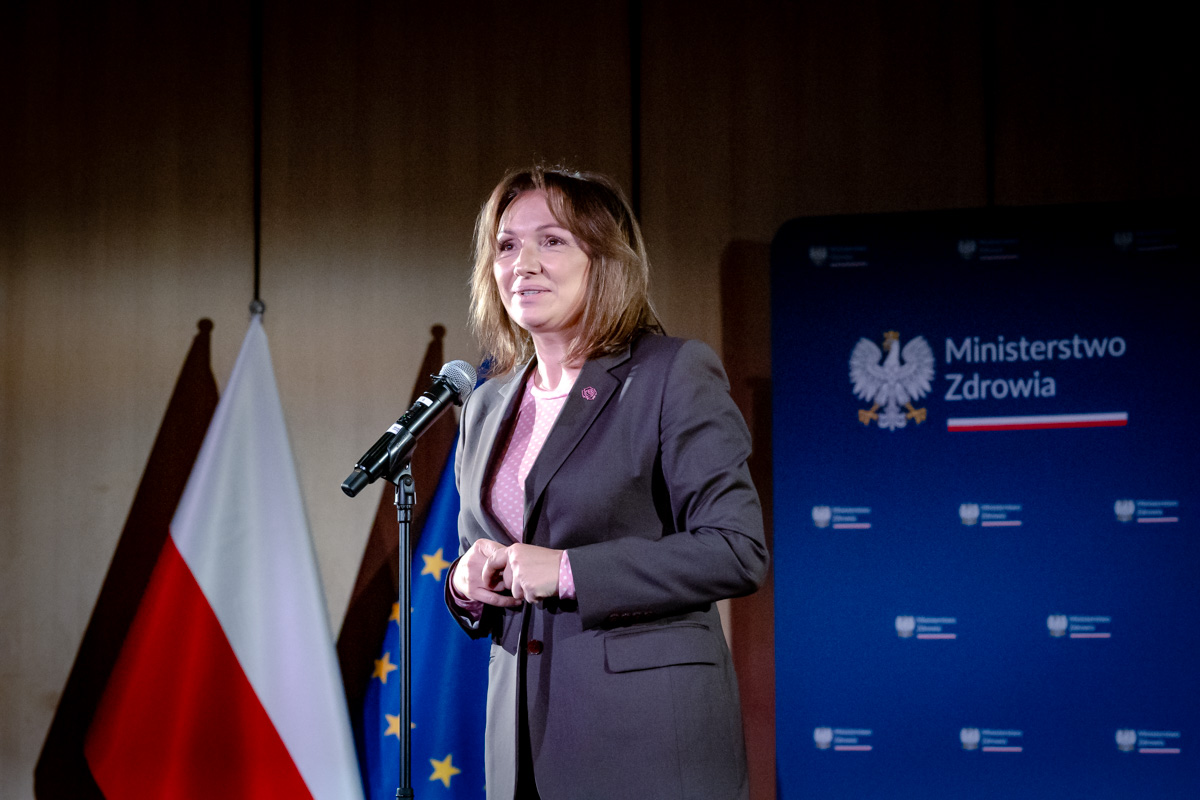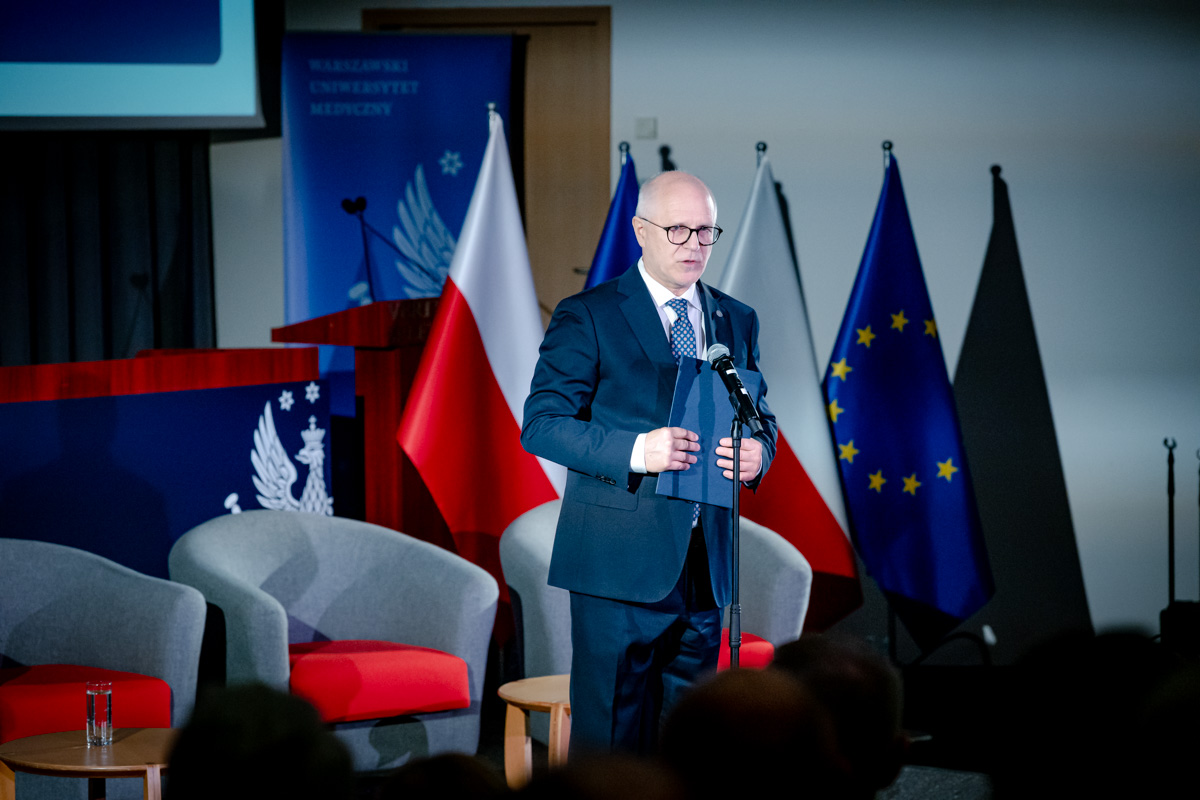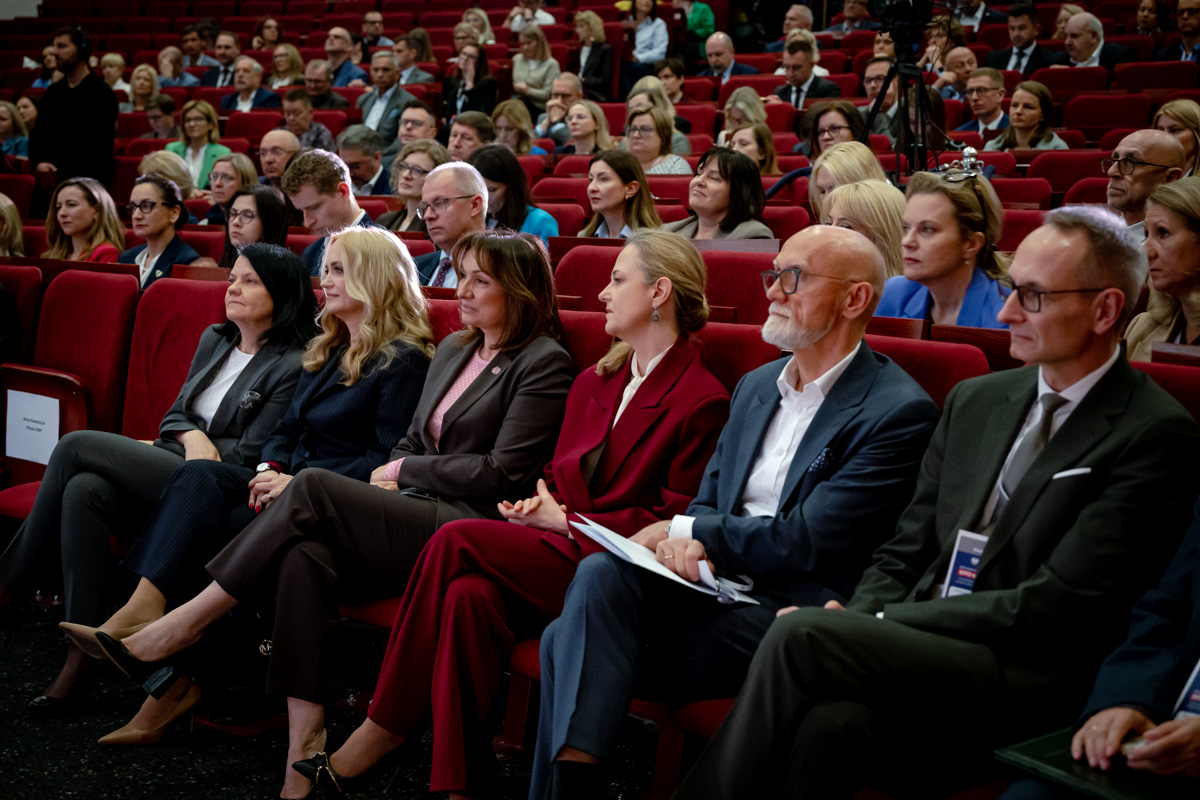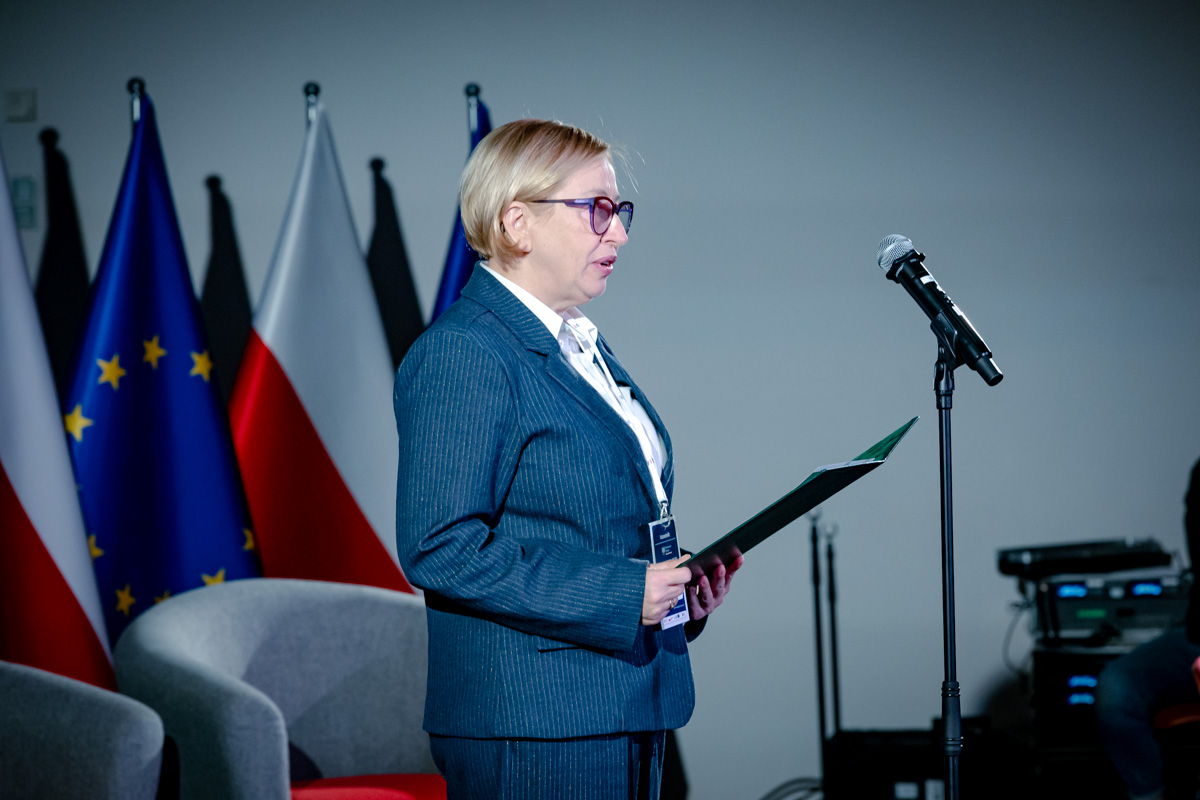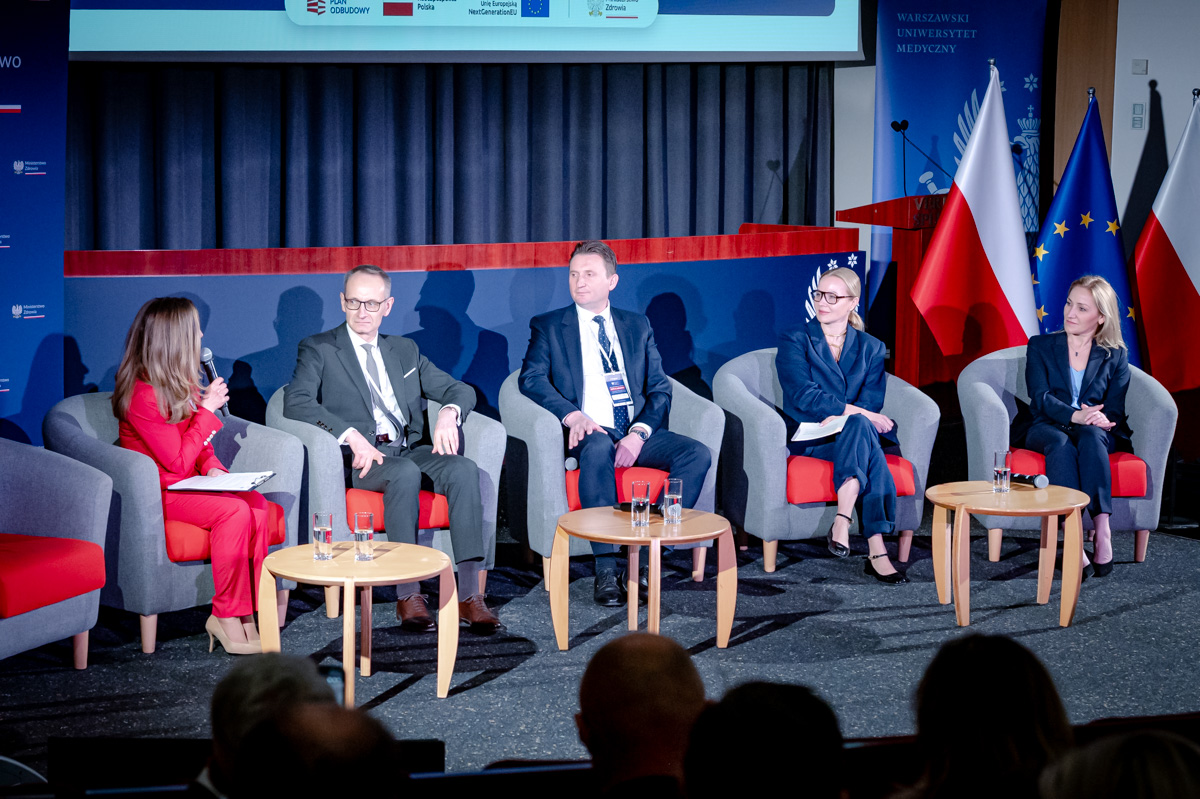
The exceptional conference, organized by the Ministry of Health at our university, was attended by more than 800 participants, including hospital directors, representatives of medical universities, and entities implementing research and development projects from across Poland.
Record funding
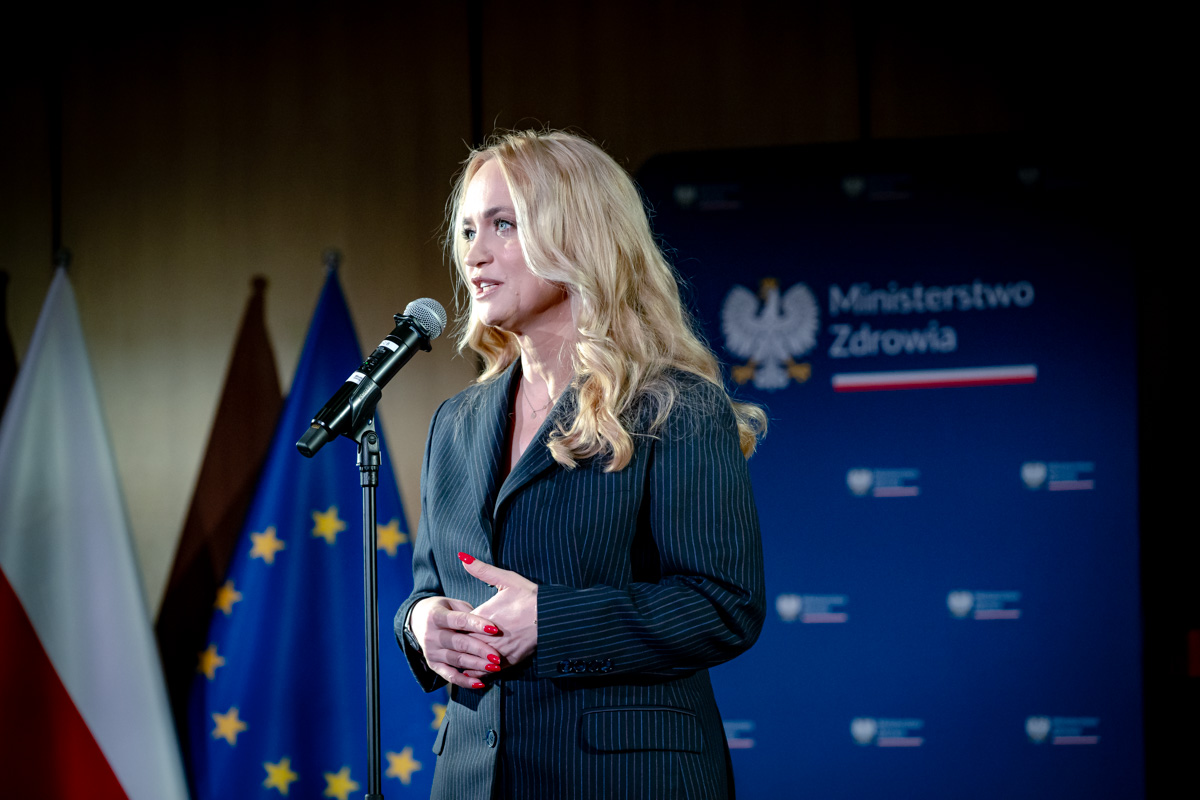
Minister of Health Jolanta Sobierańska-Grenda highlighted the importance and diversity of the projects implemented under the NRP.
“We can celebrate. PLN 18 billion from the NRP is a historically significant amount. These funds are transforming oncology, cardiology, long-term care, digitalization, research activity, and the development of medical staff,” said the minister. She added that the Council of Ministers had adopted a draft e-health act the previous day: “This is a great day for patients. We are building a new digital future – the e-DILO Card, e-konsylium (e-consultation), and the digitization of medical records will soon become a reality and serve patients, thanks to NRP funding. Poland is digitally innovative, and our solutions are among the best in Europe.”
The minister also thanked Deputy Minister Katarzyna Kacperczyk, who is responsible for implementing NRP-related tasks in the ministry, and the ministry team:
“Thanks to her determination and work, we can celebrate the fact that so many investments are already underway.”
Deputy Minister Kacperczyk emphasized that, for the first time, funding on such a scale reached not only highly specialized centers but also county and regional hospitals, which are the closest to patients in everyday care. She also noted that the most challenging element of the NRP was renegotiation:
“We had very little time. Today, we can talk about investments, but we must remember that the NRP also included reforms. I felt relief when the Prime Minister announced that the NRP had been unblocked, but after our first meeting with the European Commission, I learned that it had been unblocked everywhere except in healthcare, because reforms had not been implemented. We had to renegotiate every milestone; we were the only ministry that had to renegotiate everything and rebuild the NRP from scratch. There was enormous time pressure. We were constantly wondering whether hospitals would manage in time. A call for proposals had to be launched, evaluations carried out, and then hospitals had to implement the projects.”
The largest share of funding, amounting to PLN 5.2 billion, was allocated to oncology, PLN 2.5 billion to cardiology, and PLN 4 billion to the digital transformation of the healthcare system. Over 34% of NRP funds went to county hospitals, where patients most often receive first-line care. Another 30% was allocated to regional hospitals, also ensuring local distribution of funds.
Rector of WUM, Professor Rafał Krenke, reminded participants that the university is also one of the beneficiaries of the National Recovery and Resilience Plan:
“The University Clinical Center of WUM received PLN 75.5 million from the NRP. These funds are being used to purchase equipment for cardiology and for the modernization of the department of cardiac surgery and transplant surgery. Part of the funding is invested in IT, particularly in digital medical records systems and cybersecurity. As a university, WUM received PLN 190 million, which we are investing in modern education. The largest share has gone to Poland’s most advanced Center for Medical Simulation.”
Among the guests were also Deputy Speaker of the Sejm Monika Wielichowska and Member of Parliament and Chair of the Standing Subcommittee on Public Health Joanna Wicha, who read a letter on behalf of Włodzimierz Czarzasty, Marshal of the Sejm.
Discussions on investments
During the conference, ministry leadership and NRP beneficiaries discussed investments supporting the development of healthcare in Poland. Four panel sessions covered the following topics:
- Infrastructure investments – from investment to patient benefits
- Digitalization – the digital transformation of healthcare
- Education, workforce, and science – investing in human capital
- Research and development – from research to innovation in healthcare
Participants included ministry representatives, hospital directors, representatives of medical universities, and organizations involved in research and development projects. They shared their experiences, including key challenges and major successes in implementing NRP-funded initiatives.
Key figures of the NRP in healthcare
PLN 5.2 billion will be distributed among institutions within the National Oncology Network.
PLN 1.5 billion was allocated for long-term care and geriatrics in county hospitals.
PLN 2.65 billion will support hospitals within the National Cardiology Network.
PLN 4.3 billion will be used for digital transformation in hospitals and the e-Health Center.
PLN 3 billion will be spent on the development of medical staff, infrastructure, and student support.
PLN 1 billion was allocated for research in medical and health sciences.