Human milk – a natural miracle
When we think about breastfeeding, we tend to have this idyllic image of a mother cuddling a child at her breast. Yet the actual definition paints a somewhat different picture. What exactly does it say?
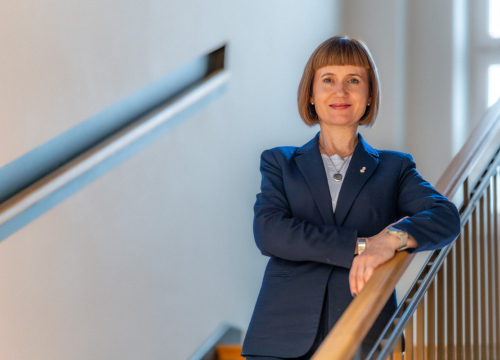
Professor Aleksandra Wesołowska: Indeed, the WHO proposes a much broader definition of exclusive breastfeeding, one that covers feeding the child with human milk – regardless of whether it is directly from the mother’s breast, or using expressed milk. Interestingly, it is also irrelevant whether the milk originates from the child’s biological mother, or another woman. This is true even if it is obvious that the best option is for the baby to be latched directly onto its mother’s breast, as the physical proximity between the mother and the child also brings other health benefits.
Do Polish women know how important breastfeeding is? Do they want to feed their children this way? What are the statistics?
A.W.: Unfortunately, we do not have a system for collecting data on breastfeeding-related indicators. Data from the last decade are fragmentary, and come from regional rather than national studies. However, it does appear that Polish women realize how important breastfeeding is, as over 90% of them confirm their willingness to breastfeed. The child should be breastfed for the first time shortly after birth, during skin-to-skin contact – this is vital not just for health but also for mental reasons, as it supports the proper development of lactation and bonding between the mother and the child. Unfortunately, in Polish hospitals, newborns are often additionally fed with artificial formulas, without medical indications but rather due to insufficient lactation care. We also do not know the actual scale of the problem, as national data collected as part of hospital statistics are not sufficiently precise; but we do have data that show that up to ¼ of children receive an artificial formula in the first days of their lives. The new method of collecting data, especially on the feeding of ill and premature babies, will include information on how many children are latched onto the breast in the first hour, and how many receive expressed milk or milk from the milk bank.
Another important indicator regarding breastfeeding is exclusive breastfeeding until the sixth month. This guideline follows from the undeniable evidence for how feeding the baby solely with human milk for the first six months of its life prevents many illnesses. That is why it is recommended by the global and European health bodies such as the WHO, UNICEF, the American Academy of Pediatrics (AAP), and the European Society for Paediatric Gastroenterology Hepatology and Nutrition (ESPGHAN). Alas, the data we do have show that only 30 to 40% of women in Poland do not introduce other foods apart from their own milk in the first six months, and in the sixth month that percentage drops below 20%.
What could be the percentage of mothers who do breastfeed but not directly from the breast?
A.W.: That group has been certainly growing. They call themselves “breastfeeding differently” (Polish: “karmiące piersią inaczej”, or KPI). You can find them online, they have their groups on social media. They do not feed their children directly from the breast, but use the breast pump and then a bottle. The reasons for this are manifold. Sometimes it is a matter of choice, but more often a necessity, e.g. when the child is ill. Some KPI mothers are so determined that they express their milk for their children throughout the entire six months. I believe that is heroic, as it involves hard work that must be recognized.
Why is human milk so special? What does it contain that will never be present in modified milk?
A.W.: It is hard to single out one ingredient that makes human milk so special. You certainly cannot replicate the dynamics and changing composition of human milk. The mother’s milk adjusts to the child’s needs, at every stage of its development, and it contains precisely what the child needs at that specific moment. And this is true for both nutritional and immuno-stimulating ingredients. We observe that milk composition changes depending on many factors related to the overall health and nutrition status of the mother, as well as the environment, e.g. in periods when virus infections are common, human milk contains a lot of specific antibodies. We must emphasize the fact that ultimately, milk composition is the result of the cooperation within the mother-and-child dyad; that is the ultimate unique feature that cannot be replicated in the composition of artificial formulas.
Of course, there are ingredients that we can synthesize and add to modified milk to make it more nutritious. Those include human milk oligosaccharides. They are saccharides that influence both the immune system and the gut microbiota. But they differ so much from person to person, and they work in so many complex ways that it is not certain whether adding one or several such molecules to modified milk will have the same effect as in nature.
Nowadays, it is beyond any doubt that human milk is relevant for more than just nutrition. That is why there is interest in using its components for therapeutic purposes, not just in neonatology or pediatrics, but also in cancer treatment, neuroprotection, or wound treatment. A compound that has been studied to the greatest extent is HAMLET, or Human Alpha-lactalbumin Made Lethal to Tumor cells; those human milk proteins are a complex between alpha-lactalbumin and oleic acid. The discovery that this complex has the capacity to induce programmed cell death (also known as apoptosis) has been the deciding factor for conducting further research, which is already at the stage of trials with the participation of patients with bladder cancer or brain neoplasms.
Does the milk of mothers of premature babies also have all those beneficial properties?
A.W.: Let’s start with the fact that mothers of premature babies themselves often doubt whether their milk is appropriate for such a tiny baby as a premature infant with a birth weight under 1 kg. Indeed, the calorific value of the milk, which depends on protein and fat content, may be insufficient for the nutritional needs of a premature baby. But that is not the rule – mothers of extremely premature babies often produce highly calorific milk.
But it must be emphasized that even if that does happen, it is still beneficial to feed a preterm newborn with human milk. One reason is that human milk contains enzymes such as lipoprotein lipase, which is not produced by the immature digestive tract of preemies. In such circumstances, the lipase from human milk facilitates digestion.
Because human milk contains growth factors, cytokines, hormones, and antibodies, feeding it to preterm babies is considered to be a type of therapy.
When a preterm baby is fed its mother’s milk, it leaves the hospital sooner, and with better prognosis. This has been demonstrated in randomized trials, where the condition of preterm babies fed with human milk was compared to that of preemies fed with formulas. The results indicate that human milk reduces the risk of developing necrotizing enterocolitis (NEC) by up to 33%. And that condition comes with very severe consequences, which may entail the need for multiple surgeries or even prove fatal. We also know that in preemies fed with human milk through the feeding tube, their digestive tracts mature faster, which allows for switching them to oral feeding, thus avoiding many complications.
Sometimes mothers of preterm babies encounter difficulties, lactation does not evolve in the right way, there is no milk – what then?
A.W.: Preterm birth is often followed by difficulties with feeding, both on the part of the mother and of the baby. Lactation may not develop correctly, because the natural stimulation is missing – that of the baby being latched onto the breast. When the biological mother’s milk is absent, the first alternative should be human milk supplied by a professional milk bank. But it is equally important to stimulate lactation in the preemie’s mother, using an appropriate type of breast pump. Milk from the milk bank is usually used only until lactation develops in the biological mother. This may be difficult sometimes, but it is not impossible.
What is a professional milk bank?
A.W.: It is an organization that collects human milk, tests it, and distributes it safely to children that need it. Milk from the milk bank may be fed to children in various clinical situations and in different circumstances (adopted children, children of chronically ill mothers, children with rare diseases), but the needs of preterm babies are always top priority. In Poland, milk from the milk bank is even covered by health insurance for preterm and ill babies that cannot be fed directly from the breast, but only for newborns fed through the feeding tube in hospital. This significantly limits access to milk from milk banks in Poland.
How can you donate milk to such a bank?
A.W.: In order to donate milk, you need to come directly to the hospital that operates a milk bank. We have 16 such establishments in Poland, in almost every voivodeship (except for the Warmińsko-Mazurskie and Świętokrzyskie voivodeships). Usually, milk banks are run by highly specialized centers, with the second or third referral level (see www.bankmleka.pl). Some women decide to donate milk while still in hospital after premature birth. As I said before, stimulating lactation requires expressing milk regularly, and the preterm baby’s needs are initially very limited. That is why many mothers of premature babies have too much milk, which they can share with those children whose mothers are experiencing difficulties. There are also mothers of full-term babies who breastfeed their babies properly and feel the need to share their milk irrespective of whether or not they experience temporary surplus supply. Donating milk is in many ways similar to donating blood, also in terms of physiology. An honorary blood donor does not have surplus blood, and yet they may donate it, as the body will re-supply the amount they need. It works exactly the same way with milk and lactation.
Does that mean that any breastfeeding mother may donate her milk?
A.W.: The basic criterion is that of the woman’s health. But there are also other factors that influence the possibility of donating, e.g. nutritional habits and having a lifestyle free of addictions and risky behaviors. Motivation and determination are important, too. Milk is donated to the milk bank pro bono, and expressing it takes time. Of course, milk banks make efforts to facilitate the process – the necessary blood tests are free, and mothers are instructed how to express and store the milk in hygienic conditions. Most banks provide mothers with bottles, and sometimes also with breast pumps, and the milk is usually collected by the hospital using special means of transport. But some mothers do not meet the criteria to donate, even if they successfully feed their own babies.
As a country, do we have a long history of milk banks?
A.W.: A very long one. One of the first lactation centers in Europe was established in 1913 in Lviv, which was in Polish territory back then. It was launched by Professor Progulski, a famous Polish pediatrician. There were many such centers during the inter-war period. After WWII, lactation centers were closed down for fear of infections transmitted via milk, including HIV, and also due to the increasing availability of artificial formulas. The longest to operate in Poland was the center at the Polish Mother’s Health Center Institute in Łódź, closed down in 1999. In the first decade of the 21st century, modern milk banks were created thanks to the growing awareness of the importance of breastfeeding, and the development of technologies to handle human milk. There are 300 such centers across Europe at present.
Going back to the present, human milk has recently attracted the interest of the European Union, and got designated as a “substance of human origin” in EU laws. How important is that?
A.W.: Up until recently, human milk had not been regulated in the laws of the European Union. Some countries treated it as food, others – as tissue or medicinal product, while in Poland it was not regulated by law at all. The lack of laws is especially significant when donated milk is used in hospitals. That is why the European Parliament has passed a special resolution, in which it included donated milk under the same regulation that applies to other substances of human origin used for medical purposes, i.e. generative cells, tissues, or blood, jointly referred to as “substances of human origin”, or SoHO. This is incredibly important, in a positive way, as it gives human milk the importance it deserves.
What does that mean for human milk banks?
A.W.: This certainly entails the need for milk banks to observe very strict rules with regard to monitoring the safety of donated milk, and maintaining records of handling the milk. The records required under the new EU laws are much more complex than the current ones. Furthermore, each Member State, including Poland, will establish an authority responsible for monitoring, overseeing, and auditing milk banks. Currently, work is underway on implementing the new regulations. There are also measures to facilitate that process that are being implemented at the European level. This includes the IMAGINE – HMB project, carried out by the European Milk Bank Association, with the participation of four Member States: Germany, Ireland, Spain, and Poland. Our country is represented by the Human Milk Bank Foundation, and experts from the Medical University of Warsaw are also involved. The key objective of the project is to prepare two sets of recommendations: for the banks themselves and the hospitals that use their services (known as “SoHO entities”), and guidelines for the authorities that monitor milk banks with respect to SoHO handling. In this respect, we count on good cooperation with the Ministry of Health as well as other institutions that work with other types of SoHO. Blood donation organizations have much more experience with SoHO regulations, and their guidelines may serve as a template for the milk bank sector, although the specific nature of human milk will have to be taken into account as well.
Interview by: Iwona Kołakowska
Photo: Tomasz Świętoniowski
Communication and Promotion Office