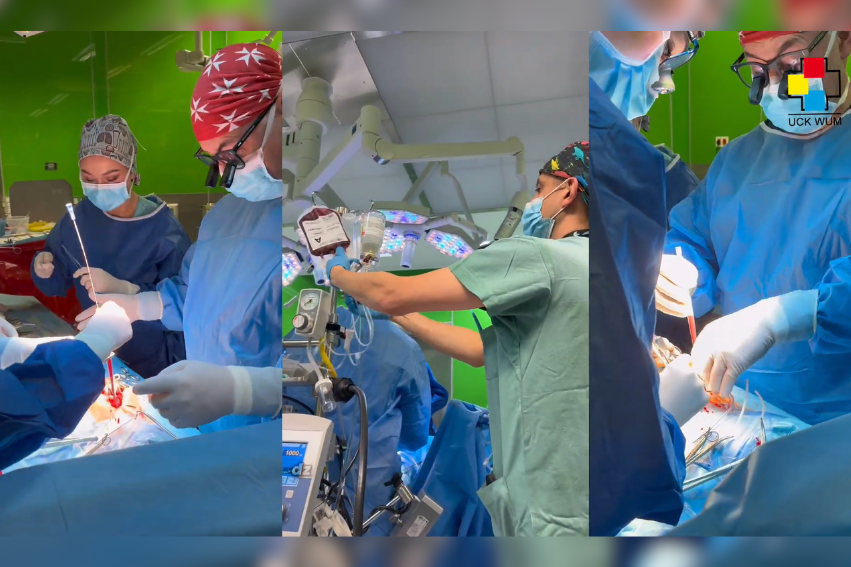
Heart autotransplantation involves temporarily removing the patient’s own heart from the body, conducting the necessary reconstruction of anatomical structures, and then reimplanting the organ. Unlike conventional transplantation, the patient’s own heart is used. This technique provides access to structures whose reconstruction during standard surgery would be impossible or would be burdened with a significantly higher risk.
The procedure offers another treatment option for selected patients with single-ventricle circulation for whom the conventional multi-stage treatment pathway or heart transplantation is temporarily or permanently impossible.
In the case of several-month-old Kornelka, the only chance for further treatment was to perform simultaneously a Glenn procedure, aortic arch reconstruction, pulmonary artery reconstruction, and enlargement of the pulmonary veins. The use of the autotransplantation technique enabled the surgical team access to areas that could not have been reached during a standard procedure, making it possible to perform all the necessary stages of treatment during a single operation.
Heart autotransplantation does not replace conventional transplantation or standard treatment methods. However, it represents a valuable alternative for carefully selected patients with the most complex congenital heart defects, expanding therapeutic options in situations in which existing approaches prove insufficient.
Kornelka’s story shows that advances in pediatric cardiac surgery depend not only on perfecting existing treatment methods but also on implementing innovative techniques that make it possible to treat even the most difficult clinical cases.