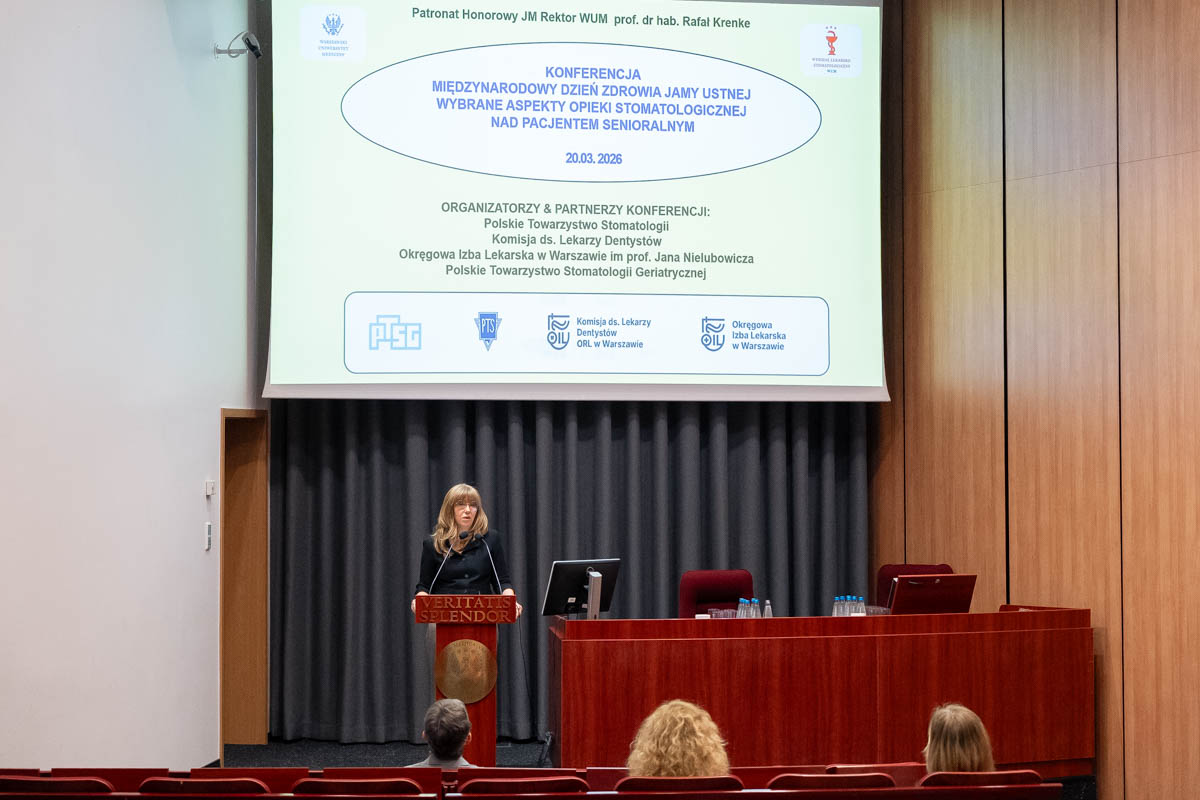
The conference was organized by the Faculty of Medicine and Dentistry, with the participation of the Regional Medical Chamber, the Committee for Dentists of the Regional Medical Council in Warsaw, the Polish Dental Society, and the Polish Society of Geriatric Dentistry.
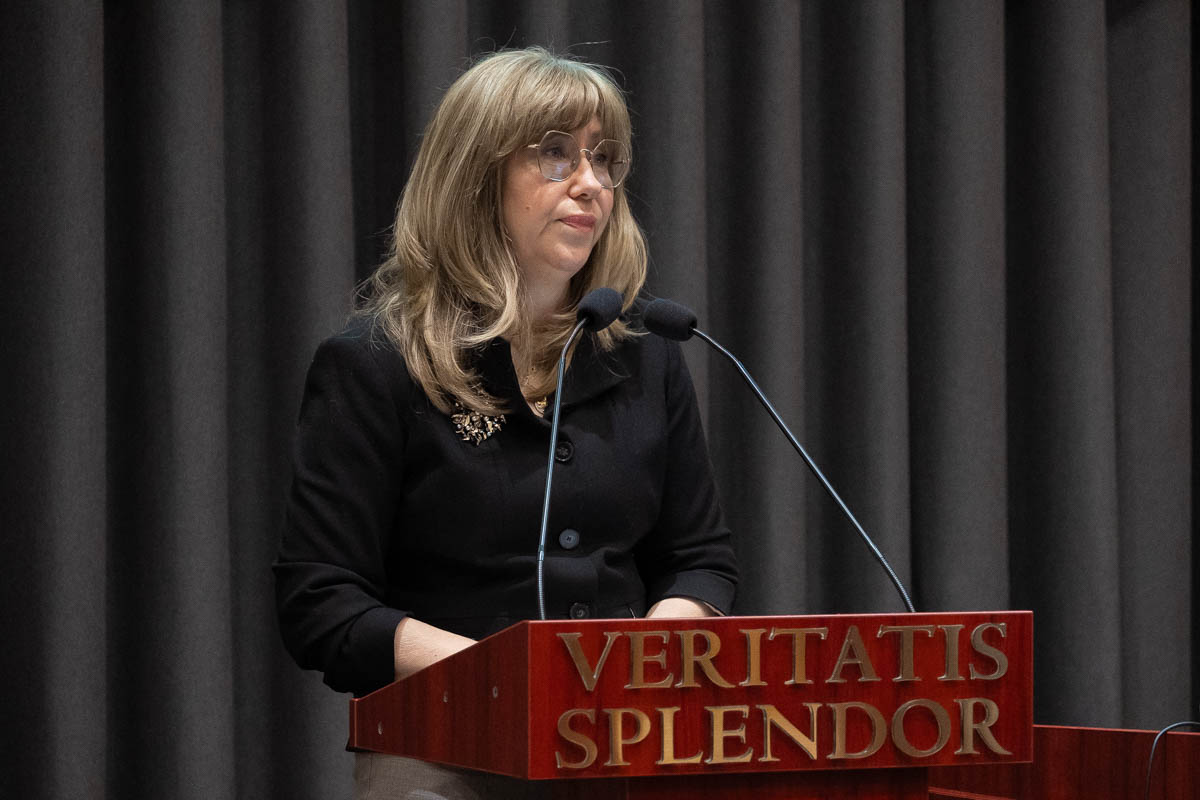
“Currently, the population of Poland is just over 37 million. According to forecasts by the Central Statistical Office, by 2060 this number will fall below 30 million, of which 40 percent will be elderly people, meaning those over the age of 65,” emphasized Professor Agnieszka Mielczarek, Dean of the Faculty of Medicine and Dentistry, opening the conference. “Geriatric dentistry has not yet found its proper place in the Polish healthcare system, but I would like today’s meeting to mark the beginning of a broad discussion on how to care for elderly patients properly.”
Seniors in Norway – do they have healthy smiles?
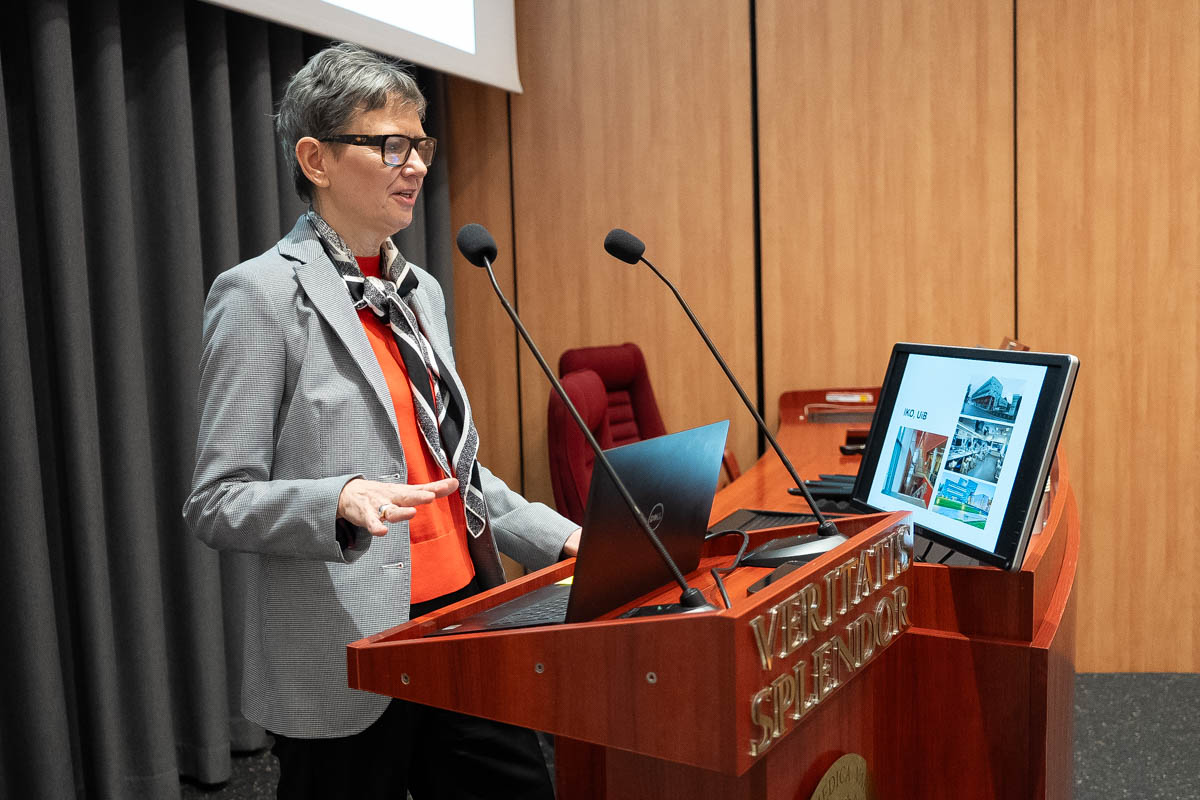
The lecture part of the conference began with a presentation by Professor Ewa Rodakowska from the Department of Clinical Dentistry at the University of Bergen in Norway, who discussed how dental care for elderly patients is organized in Norway.
As she emphasized, Norwegian seniors regularly visit dentists, retain more of their natural teeth than people in other countries, and have lower rates of caries. As a result, they require more frequent and enhanced oral hygiene measures to prevent secondary caries and periodontal disease. Dental problems tend to increase as independence declines, which typically occurs after the age of 80.
“With age, we can expect a higher number of chronic diseases, increased medication use, dependence on others for care, cognitive impairment, reduced manual dexterity, malnutrition, and frailty. In fact, these changes can be readily observed in the oral cavity, as there will be more root caries, periodontal disease, mucosal inflammation, as well as drug-induced xerostomia,” the speaker explained.
However, she added that Norway lacks integrated dental care for seniors. Older individuals can access home care services, which include free dental care, but in practice, staff do not provide dental care, so the actual oral health status of these patients remains unclear. In nursing homes, of which there are around 850 in Norway, there are no permanent dentists or dental hygienists; dental care is provided externally and irregularly. As a result, treatment is predominantly intervention-based, and preventive care is insufficient.
Lectures by experts from WUM
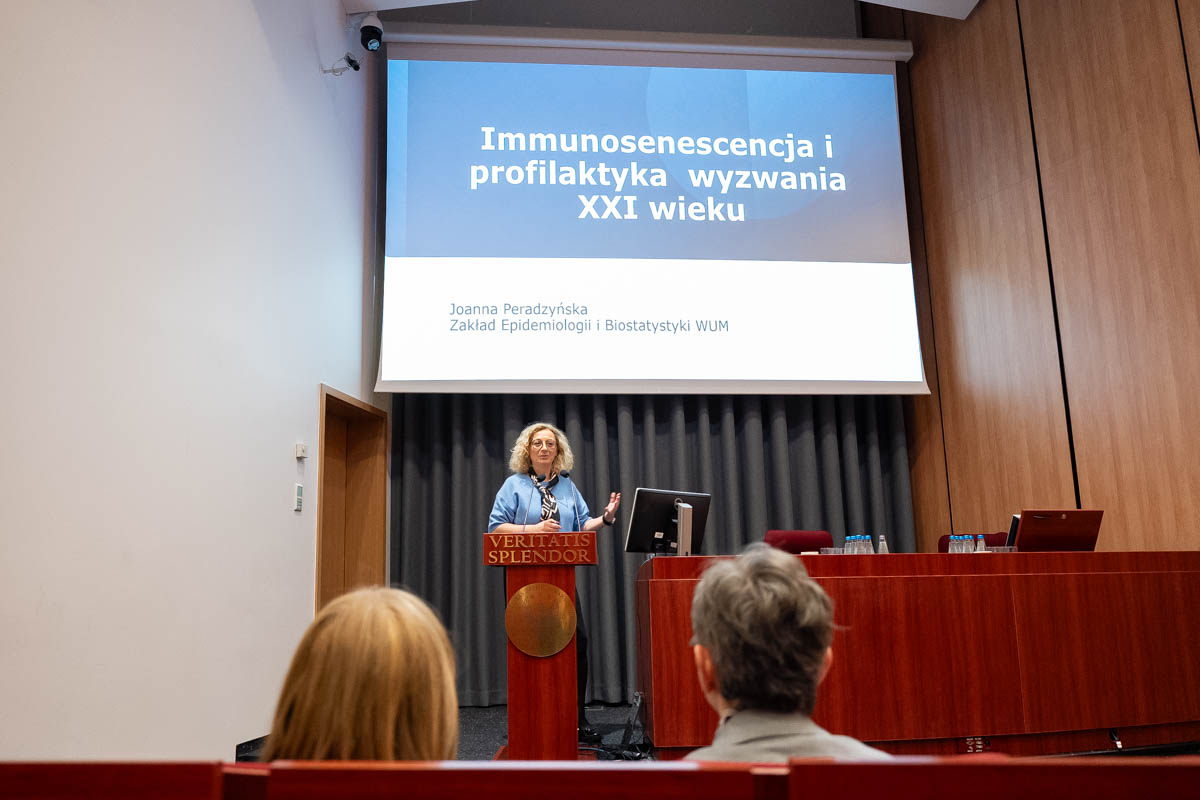
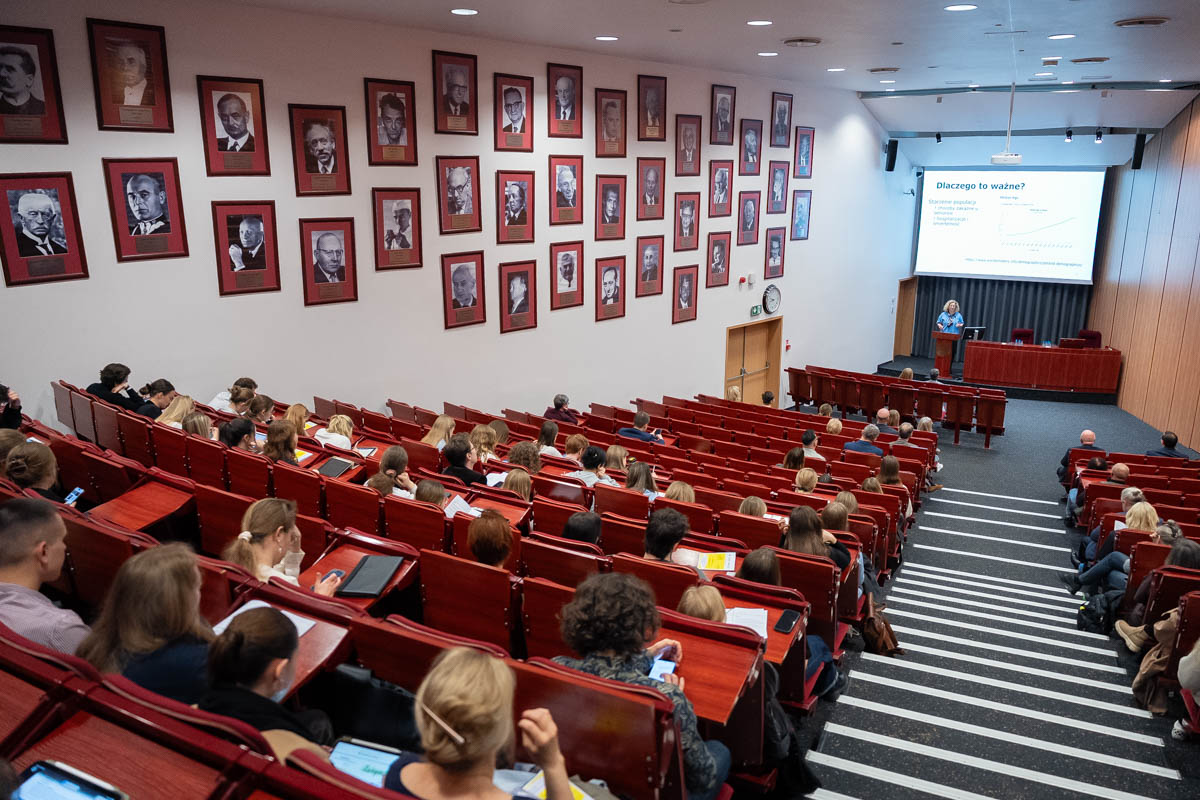
Dr hab. Joanna Peradzyńska from the Department of Epidemiology and Biostatistics at WUM spoke about immunosenescence, the age-related decline in immune system function, which increases susceptibility to infections in older adults, leads to more severe disease courses, and raises mortality.
“We cannot stop the aging of the immune system, but we can limit its negative effects and somewhat slow down the process,” the speaker emphasized.
The key method of mitigating its effects is vaccination – especially against influenza, pneumococcal infections, COVID-19, RSV, and shingles – as well as preventive lifestyle measures, including physical activity, sleep, and a healthy diet that supports the gut microbiota. These measures can significantly reduce the risk of hospitalization and improve the overall health of seniors.
Dr. Justyna Zaorska from the Chair and Department of Psychiatry at WUM discussed the use of pain medications among seniors, emphasizing that chronic pain affects about half of patients in this group and significantly impacts their physical and mental functioning. She referred to the use of opioids in elderly patients, noting that although they are effective, they require careful dosing, monitoring for signs of addiction, and cooperation with a primary care physician.
“Before introducing opioids into treatment, it is worth considering other options. Alternatives with well-established effectiveness include physiotherapy and physical activity, which reduce chronic pain and may prevent or delay the need for opioids. Psychoeducation, relaxation training, and cognitive-behavioral therapy can also be used,” Dr. Zaorska explained.
Dr hab. Piotr Regulski from the Department of Dental and Maxillofacial Radiology discussed the use of mobile applications in the care of elderly patients.
“Elderly patients generally do not need technology for its own sake, but tools that address specific problems,” he emphasized.
He explained that applications used by older adults should not only be functional but also simple, predictable, and easy to use. He identified several main categories of apps supporting elderly care: medication and pharmacotherapy support apps; health and chronic disease monitoring apps; telemedicine apps; safety and caregiver-support apps; apps supporting physical and cognitive activity; and dental applications. He also discussed robots and AI-based assistive solutions that support independence, provide companionship, remind patients to take medications, and respond to users’ behavior. He concluded by emphasizing that all these tools should complement, not replace, medical care.
Prof. Jolanta Kostrzewa-Janicka from the Department of Prosthodontics at WUM spoke about the relationship between masticatory muscles and the brain. She presented numerous data indicating that proper chewing function reduces stress levels, improves cerebral blood flow and oxygenation, and supports emotional expression, concentration, and memory, while its impairment negatively affects the entire body.
“It is very important to provide our elderly patients with proper prosthetic restorations and enable them to chew correctly, including hard foods. This not only facilitates daily functioning, supports cognitive functions, and helps regulate stress, but may also prevent certain neurodegenerative diseases,” she said.
Discussion on dental care for elderly patients
The panel discussion addressed the scope of dental services available to seniors, coordination between healthcare and social policy, the introduction of clinical pharmacists into therapeutic teams, new training programs, and increasing the role of dental hygienists in preventive care for the elderly.