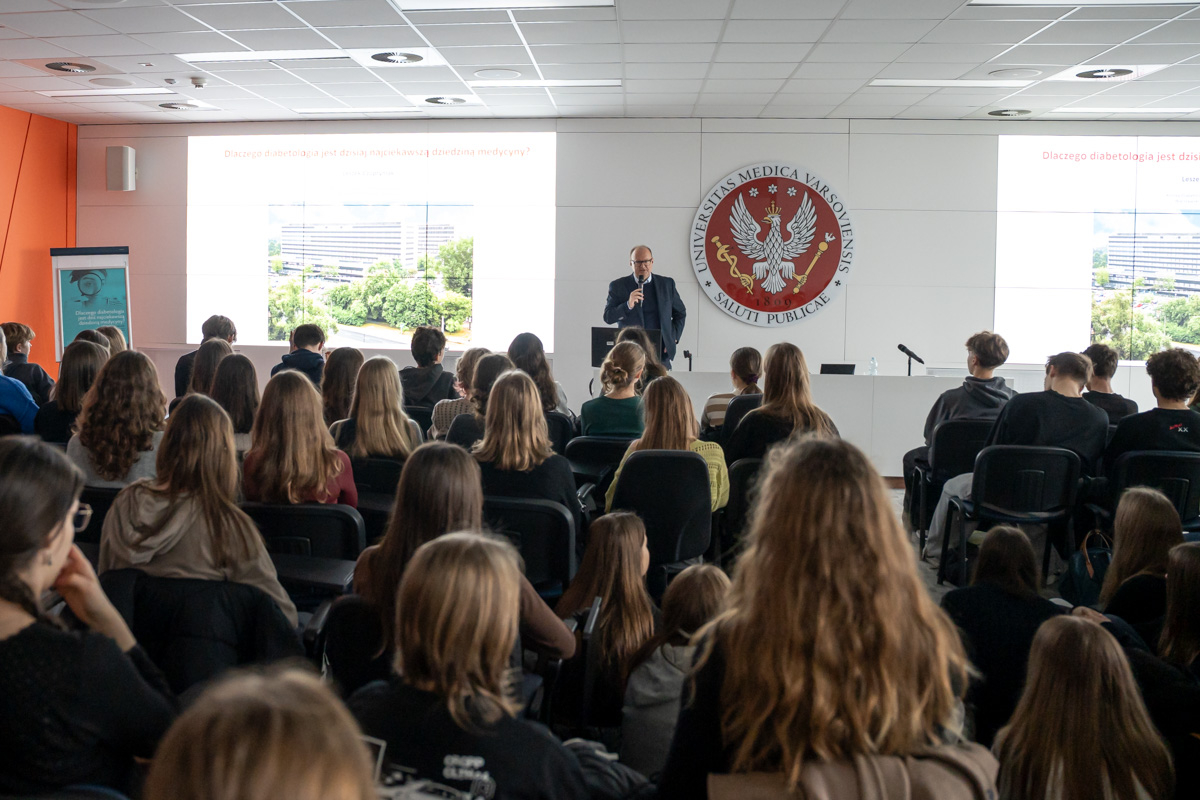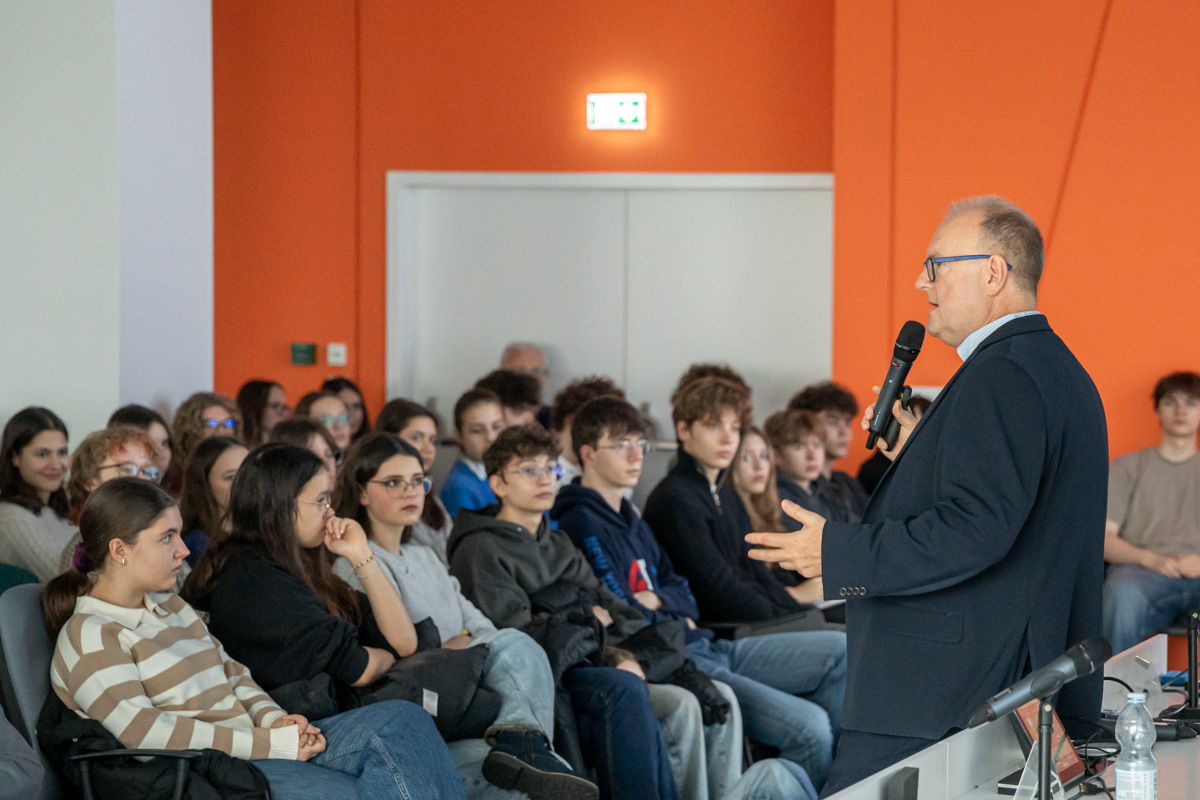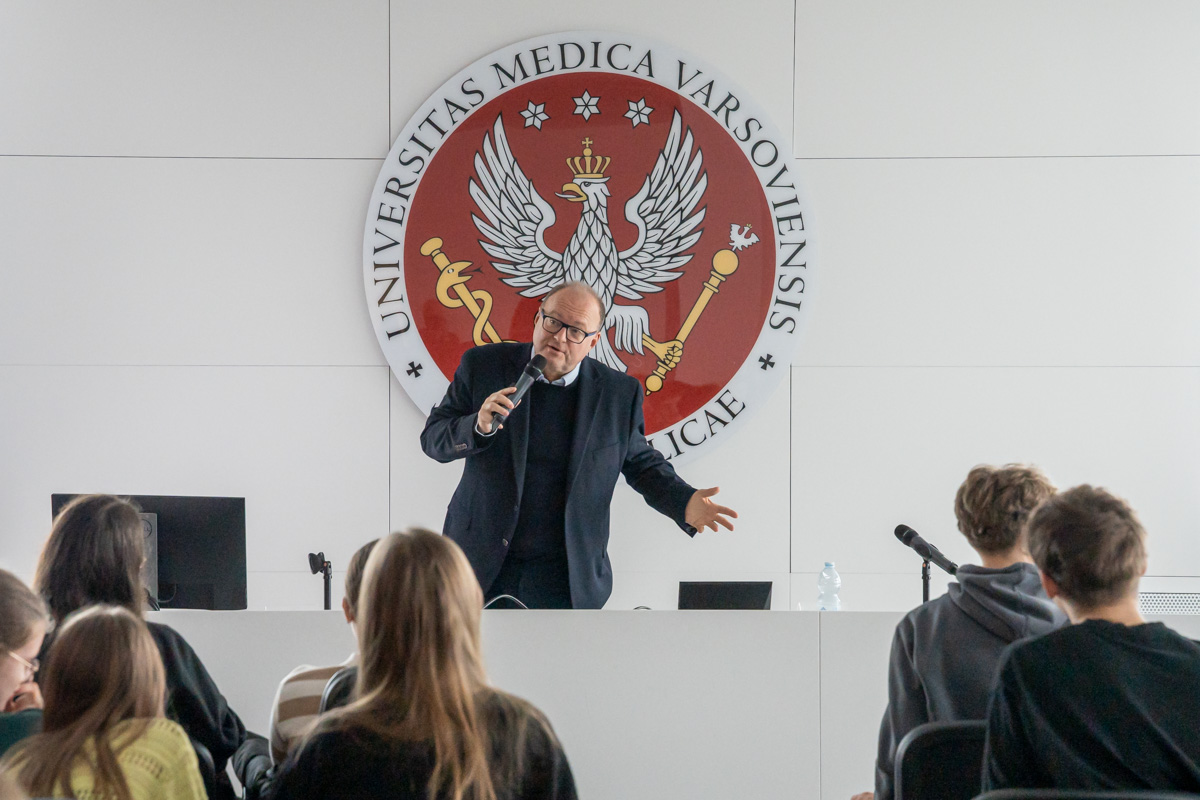
“If you want to make money, go study law,” joked Professor Czupryniak at the start of the lecture, and immediately added: “But the satisfaction is certainly greater when you work as a doctor.”
He told the students some stories from his youth, when he worked at a hospital in Łódź. During one of his shifts, in the corridor he met a woman who had come to see him about abdominal pain a few years before. She reminded him that after the examination, he had recommended that she undergo colonoscopy, as it was likely that she had colon cancer.
“«I had it done, it turned out I had cancer, and they removed it. Now I’m healthy, and you’ve saved my life,» she told me,” reminisced the Professor. “That was years ago, but I remember that story, because it throws a spotlight on how it’s worth graduating from this university and working in this profession. You won’t hear this in any other job.”
Professor Czupryniak talked about what studying involved, and he did not hide that it would require reading very thick books, taking tough exams, and, starting from the third year, getting up early in the morning to make it to the 8 o’clock clinical classes. However, he encouraged students to get involved, let others see you.
“Don’t hide near the sinks in patients’ rooms. As students, and generally in life, push to be in the front row, how will anyone notice you otherwise?”
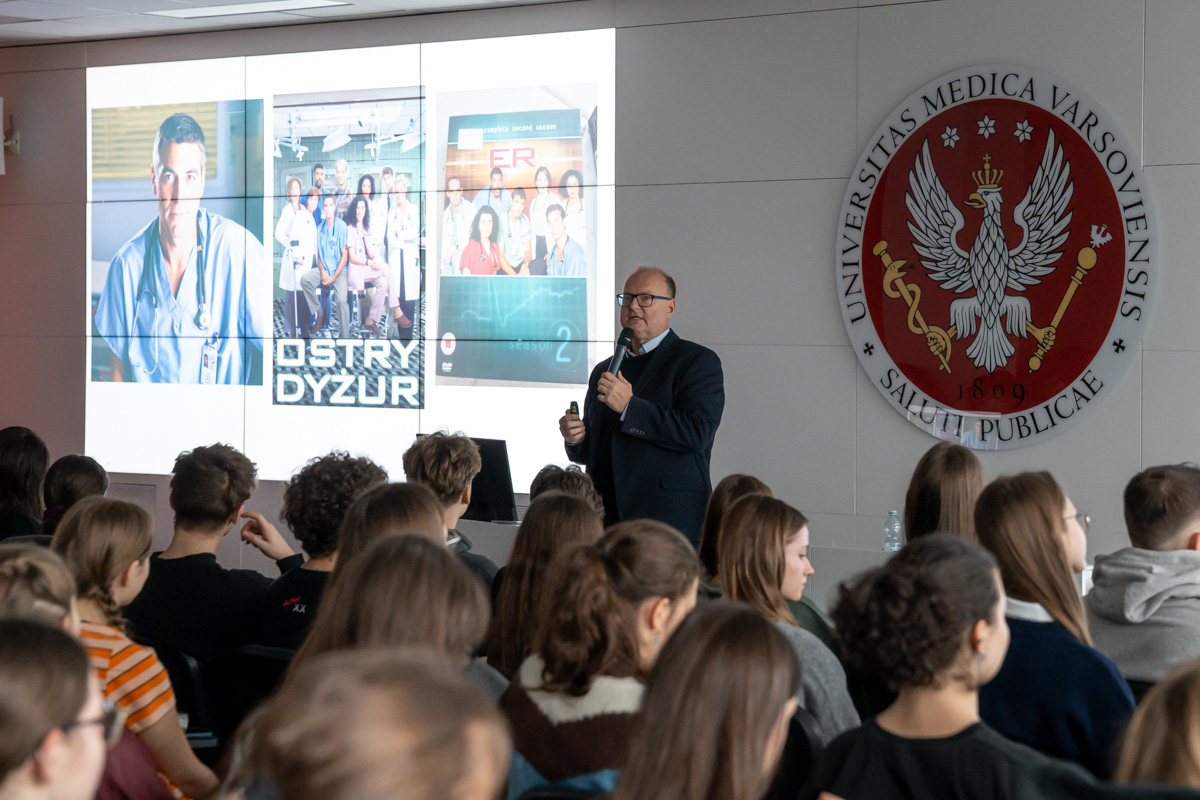
Referring to the famous doctors from medical shows, Dr. Quinn, Dr. Ross, and Dr. House, he encouraged the students to reflect on what kind of doctor it was worth being. He also presented a few principles that he believes are worth remembering. First of all, it is best to stop thinking you’ll be an ideal doctor. Second, you need to approach, diagnose, and treat any patient the way you would like to be treated yourself. It is also necessary to be aware that you cannot heal everyone, but everyone can be helped. And that you should never take away one’s hope. He also emphasized the importance of communicating with patients. He said that you needed to be honest, but also to listen to your patients and understand their expectations.
One Disease That Makes the Entire Person Ill
Professor Czupryniak made that observation already during his studies, and this is what sparked his interest in diabetology.
“Such a simple thing as high sugar level goes deep and affects cell structures, in fact all the way to the level of molecular biology. And this causes various diseases, the complications of diabetes, such as retinopathy, neuropathy, or heart damage.”
He also talked about how incredibly important insulin was in regulating glucose levels. He also recalled how that hormone was discovered over 100 hears ago. That was accomplished by Dr Frederick Banting, a surgeon and orthopedist, and Charles Best, a student of medicine. Their discovery in 1923 was honored with a Nobel Prize, but most importantly – it meant that diabetic patients would no longer die. Professor Czupryniak is of the opinion that the discovery of insulin is one of the greatest breakthroughs in the history of medicine.
“Insulin opens the cells to glucose and causes blood glucose level to drop; that is, glucose enters the cells, so nearly all cells in the body may burn it,” he emphasized while explaining the way this unique hormone acts.
He devoted the last part of the lecture to the modern methods of treating diabetes. For Type 1 diabetes, this includes modern insulin pumps; for Type 2 diabetes, there is a new generation of drugs that allow patients with obesity – the most likely to have this type of diabetes – to reduce their body mass by up to 20%, thereby reducing their blood glucose levels.
“I work in a field that is absolutely fascinating, and maybe one of you will one day become a diabetologist,” he said at the end of his lecture, adding yet another joke: “I only know one person who wanted to become a diabetologist, and that was me. But I see that was right.”
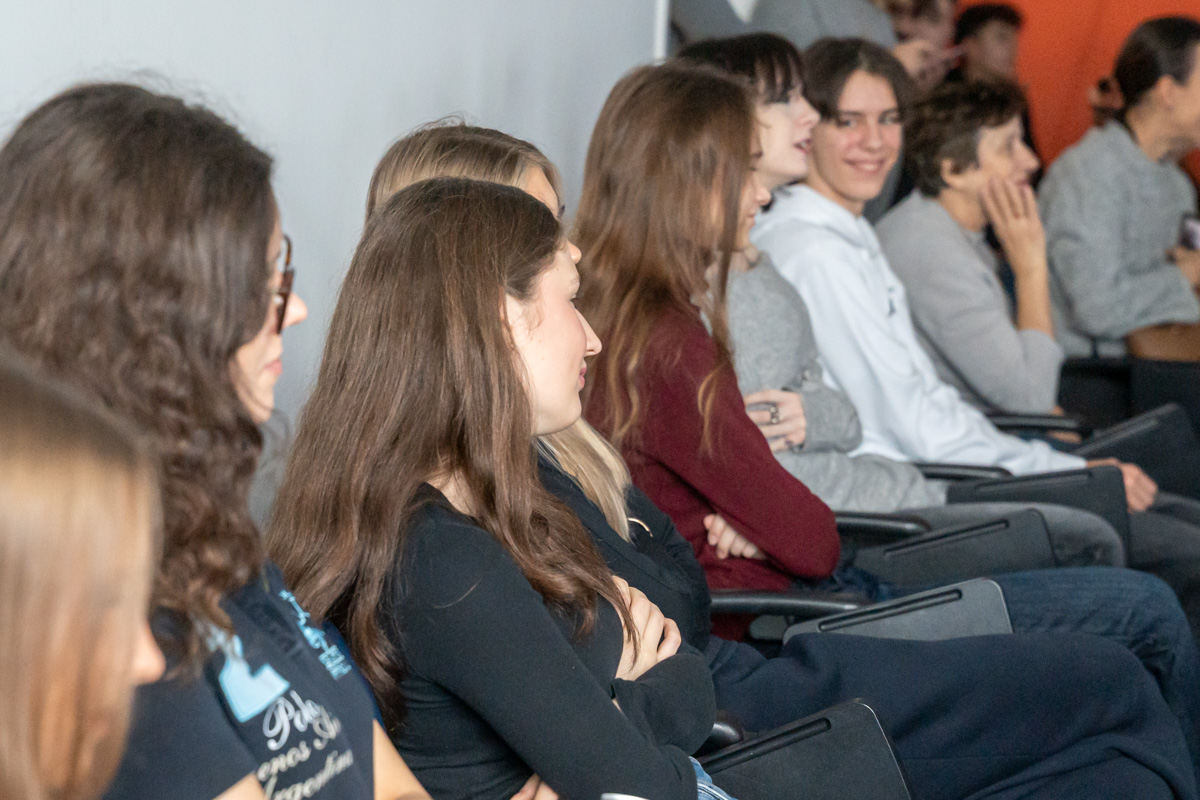
The lecture finished with a series of questions from the students.
They came from the Władysław IV and Stefan Żeromski high schools, both included in the new edition of WUM’s Patronage Program. We also invited students from high schools that cooperate with the Faculty of Health Sciences.