Transplants of paired kidneys connected en bloc remain rare in Poland and worldwide. The procedure performed by specialists from our department, led by Prof. Zbigniew Gałązka, was also unique due to the non-standard donor-recipient matching criteria. A child’s kidneys are much smaller than an adult’s, which increases the difficulty of such a transplant.
Child donor, adult recipient
The heart and the liver were retrieved for pediatric recipients from a deceased 2.5-year-old donor, who weighed slightly over a dozen kilograms. The kidneys were retrieved by the team from our department.
“We had been preparing for this surgery for months. When our transplant coordinator called to say there was a donor for whom the Children’s Memorial Health Institute did not have a suitable recipient, we knew this was the right moment,” explains Dr. Michał Macech from the Department of General, Vascular, Endocrine, and Transplant Surgery of UCK WUM.
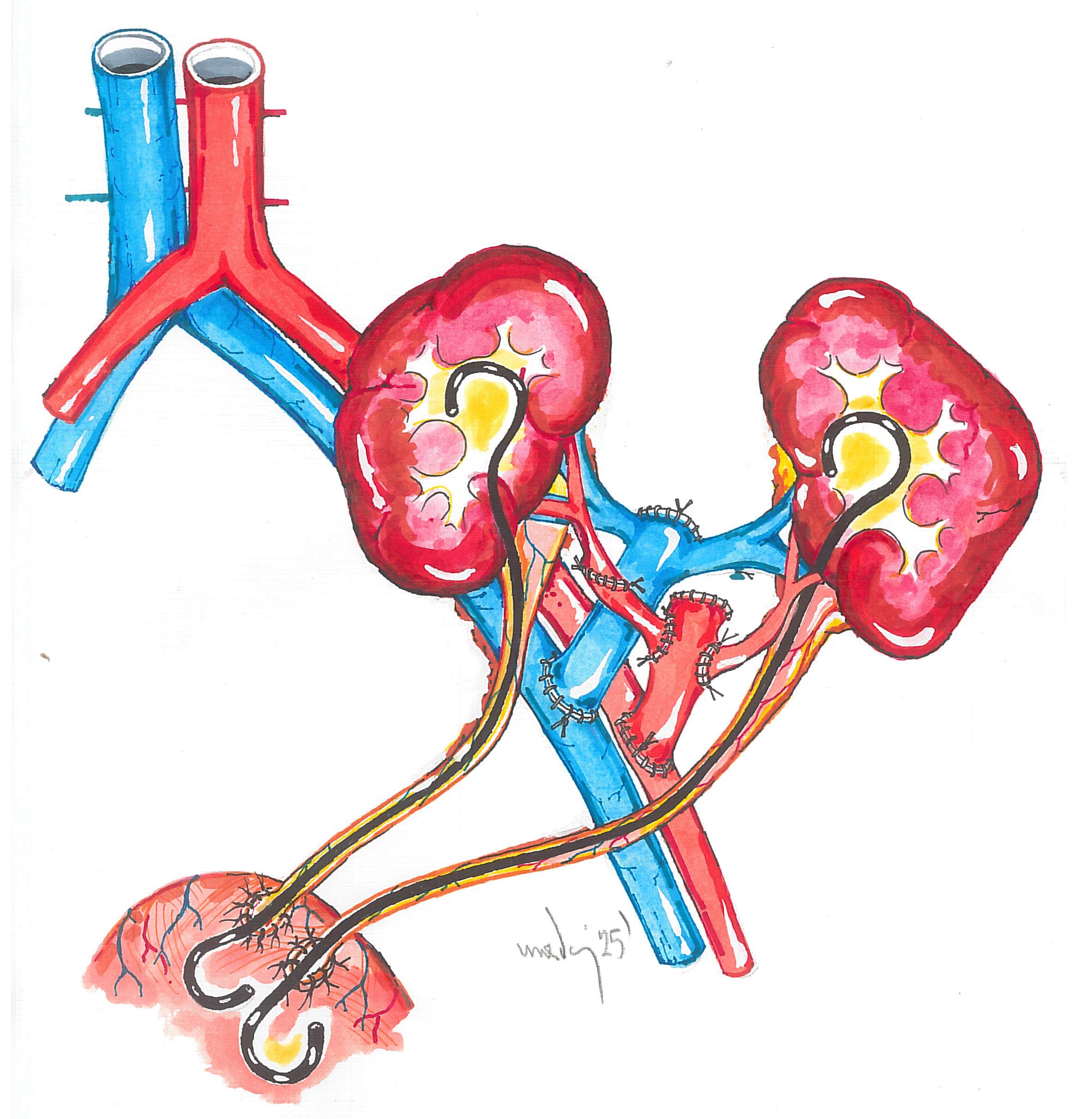
Each kidney measured approximately 5 cm in length. Due to the anatomical conditions, it was necessary to reconstruct and reimplant the two-millimeter kidney vessels into a fragment of the seven-millimeter donor aorta.
Meanwhile, a recipient was selected. He was a 31-year-old man with IgA nephropathy. The patient had been on dialysis for six years and had not produced his own urine for more than two years.
How the procedure was performed
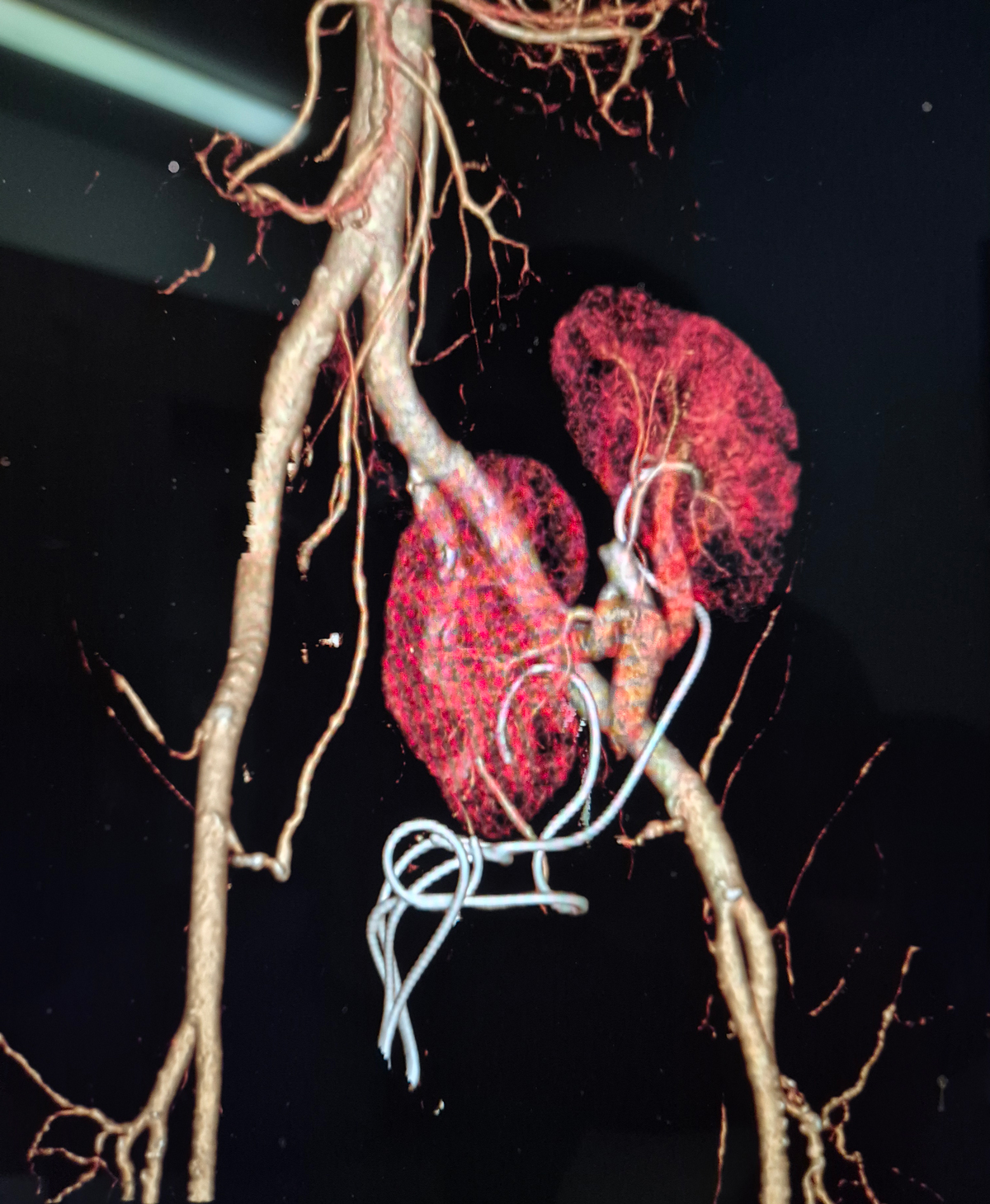
“During typical transplants from a deceased adult donor to an adult recipient, we do not have to think about the kidneys growing. In this case, we were facing that scenario, which is why it was necessary to perform microvascular anastomoses and position both kidneys appropriately in the iliac fossa,” explains Dr. Michał Macech.
The kidneys began functioning on the operating table, and the recipient’s creatinine level immediately started decreasing to normal values. According to follow-up imaging, the kidneys have already grown to 8 cm.
Transplant team
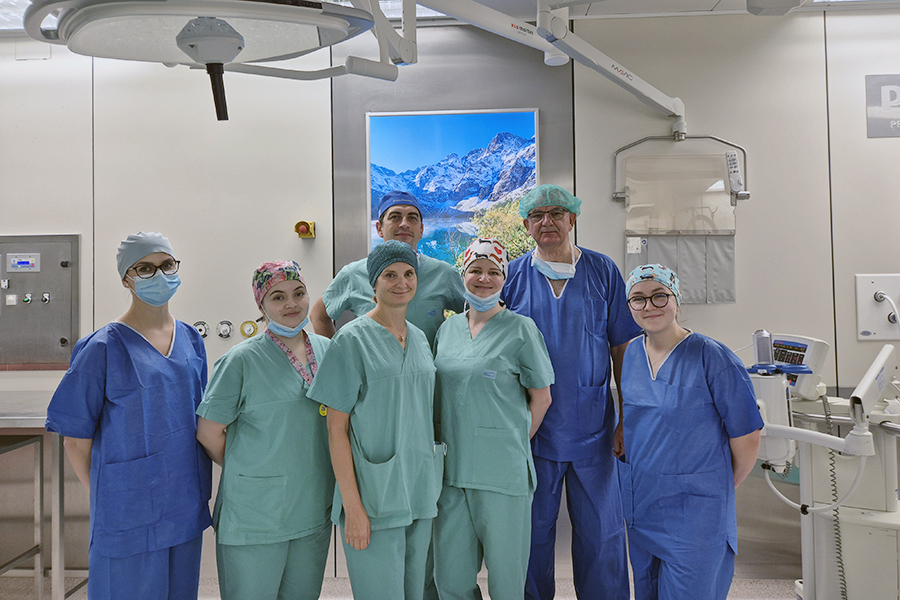
The determination of the transplant coordinator team, as well as the nursing and medical staff, led to the effective use of kidneys that otherwise would likely not have been transplanted in Poland.
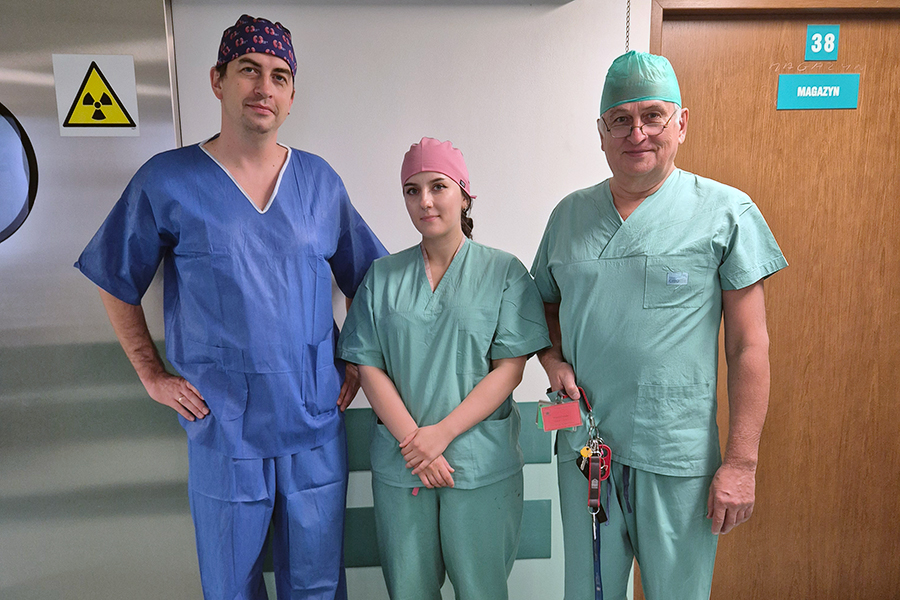
- Members of the retrieval team were: Dr. Michał Macech, Dr. Krzysztof Madej, and scrub nurse Małgorzata Klimczak;
- The transplant was performed by: Dr. Michał Macech, Prof. Zbigniew Gałązka, anesthesiologist Dr. Alicja Kwiatkowska, nursing team: Izabela Gizińska, Edyta Zhulevich (scrub nurses), and Anna Chrostowska (anesthesia nurse);
- Post-transplant nephrology care was provided by Prof. Jolanta Małyszko, Dr. Ewa Wojtaszek, Dr. Tomasz Głogowski, and Dr. Zuhier Shebani.
Members of the team hope that this transplant will not remain a single event but will become the beginning of an en bloc kidney transplant program in cases where there is no suitable pediatric recipient. They emphasize that such transplants do not take away opportunities from pediatric recipients but demonstrate that many lives can be saved.
A department handling the most complex cases
“The Department of General, Vascular, Endocrine, and Transplant Surgery of UCK WUM is the oldest organ transplant center in Poland and at the same time a center with the highest reference level in vascular surgery,” emphasizes Prof. Zbigniew Gałązka, head of the department. “Combining these two features, for many years we have been performing organ transplants for recipients disqualified by other transplant centers and treating vascular complications that occur after kidney transplant.”