Breastfeeding – a lasting foundation for life
More than an individual choice
Why does the ability to start and continue breastfeeding still depend on where a woman lives, how perinatal care is organized, the knowledge and skills of healthcare professionals, the parents’ employment situation, and sometimes even which shift and which specialist a mother happens to visit? The answer is simple: a natural process does not take place in a social or organizational vacuum.
Breastfeeding requires the right conditions, knowledge and a well-prepared healthcare system. It also needs a family which does not judge but provides support, a workplace that respects the needs of breastfeeding women and a society that sees lactation as a public health aspect rather than simply a private matter for the mother.
This is precisely the perspective highlighted by the theme of World Breastfeeding Week 2026: “Breastfeeding – a lasting foundation for life: let’s support proven solutions.”
It is not about returning to nature, but about making wise application of knowledge
World Breastfeeding Week, coordinated by the World Alliance for Breastfeeding Action (WABA), is observed every year from 1 to 7 August. Its aim is to raise public awareness and mobilize governments, healthcare systems, employers, social organizations, and local communities to protect, promote, and support breastfeeding.
This year’s theme shifts the focus from declarations to results. It encourages us to identify solutions that bring about real improvements, draw conclusions from experience and strengthen those actions whose effectiveness has been confirmed in practice and through research.
This is an important shift in emphasis. It is not enough to keep repeating that breastfeeding is beneficial. Most expectant mothers are already aware of this. A much more difficult question is: will a woman who wants to breastfeed receive timely, comprehensive support that is consistent with current medical knowledge?
But there are many more difficult questions that need to be answered. Will healthcare professionals recognize a breastfeeding problem before it leads to premature cessation of breastfeeding? Will the mother of a premature baby receive support in initiating and maintaining lactation? Will she have access to safe facilities for expressing and storing breast milk? In a crisis situation, will she receive information free from commercial influence? After returning to work, will she be able to continue breastfeeding without jeopardizing her professional position? It is precisely in these everyday situations that we determine whether the system truly supports breastfeeding.
Knowledge about lactation cannot cannot be left to chance
One of the greatest threats to effective lactation support is not so much a complete lack of information as an overload of information that is inconsistent, oversimplified, or lacking scientific evidence.
Today, parents receive advice from healthcare professionals, family members, friends, social media, manufacturers of infant products, and online experts. Individual recommendations often contradict one another. A woman may be told to breastfeed on demand while, at the same time, she may be advised to supplement her baby’s diet without a proper assessment of the indications. She may be reassured that “every mother has enough milk,” even though her actual problem requires assessment and professional intervention. She may also be blamed for a failure whose real cause was organizational errors or a lack of appropriate support.
We need science, not just good intentions
That is why the promotion of breastfeeding must be inseparably linked to the development in the science on human milk and lactation. We need research that enables us to better understand the composition and biological activity of human milk, the physiology of lactation, the effects of diseases and medications, the safety of breastfeeding in special circumstances, the needs of preterm infants, and the effectiveness of specific interventions. We also need to evaluate how care is organized: not only what we recommend, but also whether our recommendations are actually implemented, whom they serve, and where inequalities still persist.
Without such knowledge, lactation support may become little more than a collection of good intentions. With a strong scientific foundation, it can become part of safe, effective, and equitable healthcare.
Ten years of building bridges between the laboratory, the hospital, and society
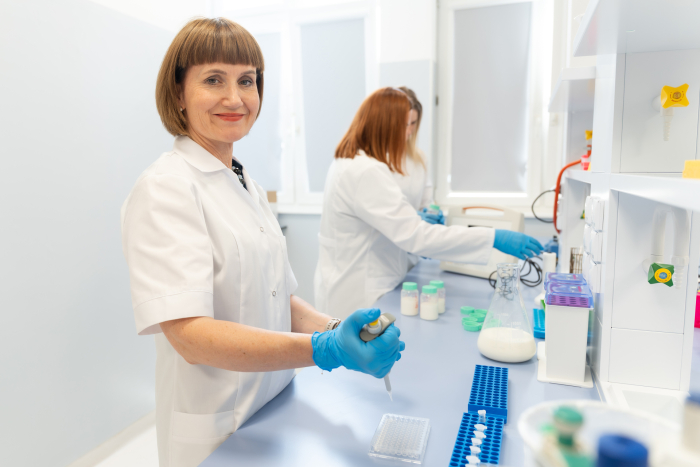
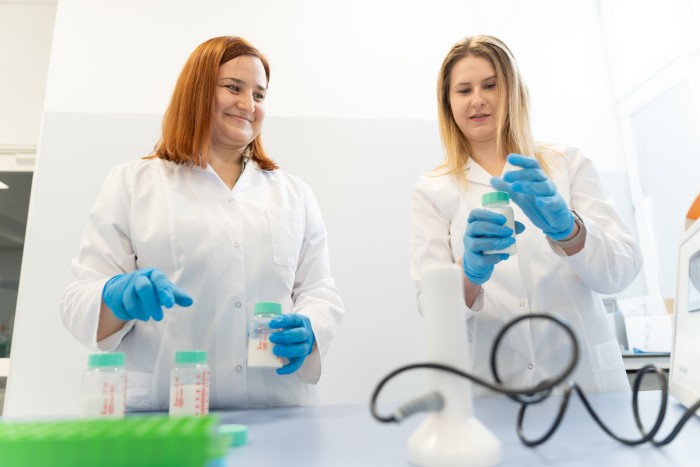
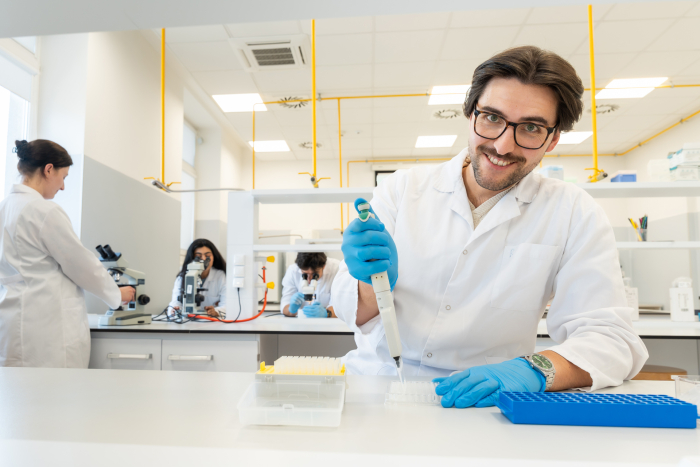
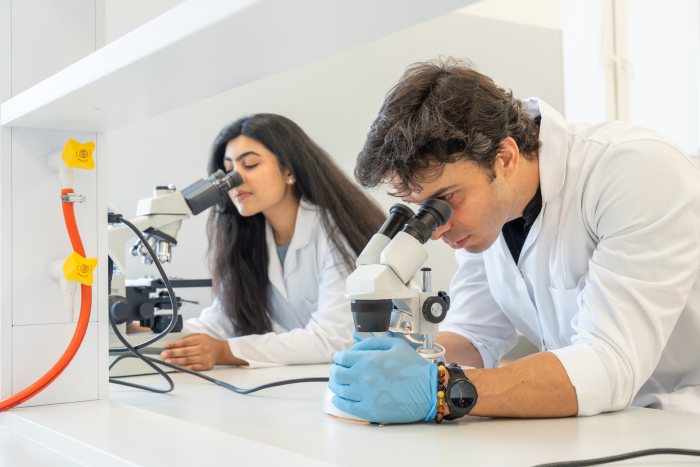
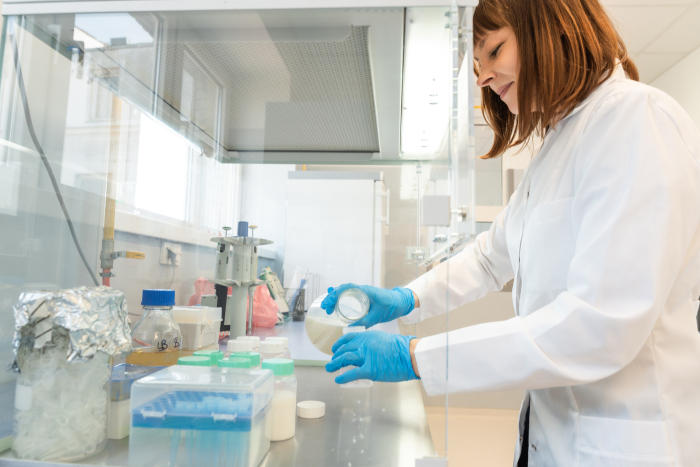
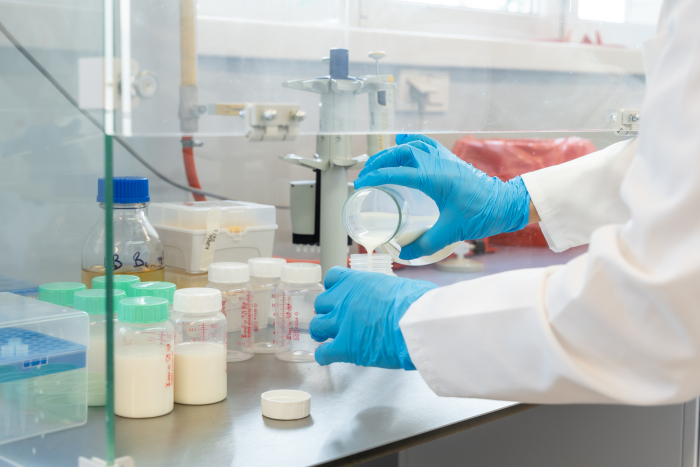
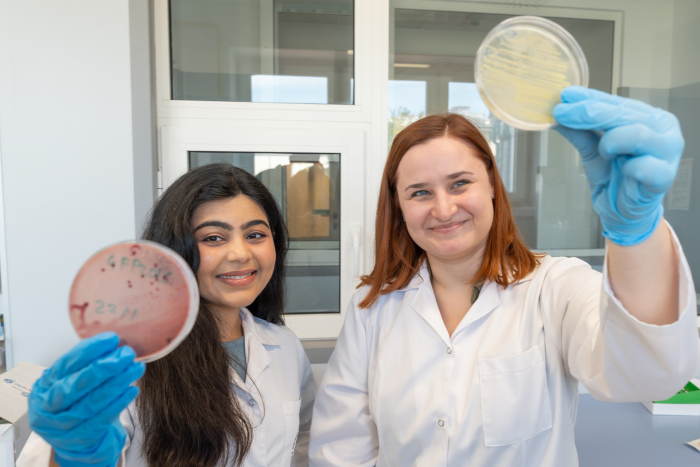
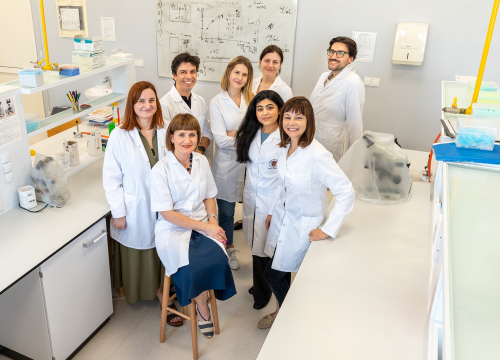
For the past ten years, this approach has been developed by the Laboratory of Human Milk and Lactation Research at the Medical University of Warsaw – the first scientific centre of its kind in Poland.
The Laboratory was established on the belief that research on human milk should not end with a scientific publication. Its findings should lead to improvements in maternal and infant care, changes in clinical procedures, the development of human milk banks, and greater public understanding of lactation.
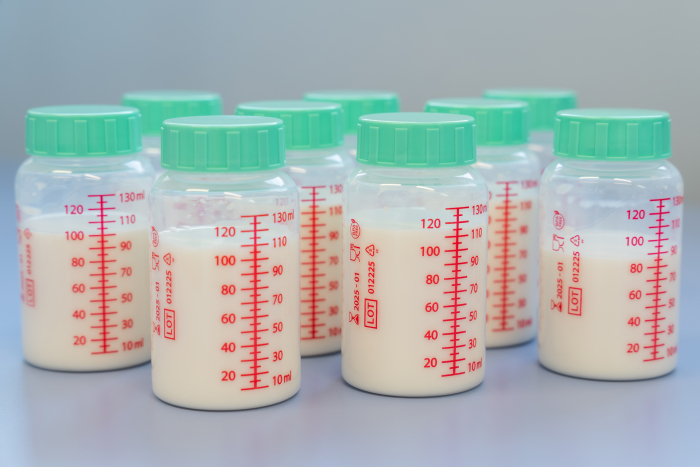
From the beginning, the team has combined research activities with their practical application. Many years of cooperation with the Human Milk Bank Foundation have contributed to the development of the concept of human milk banks in Poland and to the creation of standards for their safe operation. The monograph “Human Milk Banks in Poland: Operation in Healthcare Institutions – Theory and Practice”, edited by Prof. Aleksandra Wesołowska, was for many years the only Polish guide to the organisation and safe operation of human milk banks.
The Laboratory has also undertaken initiatives to improve the quality of information reaching parents. As part of a project under the National Health Programme, the marketing of breast-milk substitutes was analysed, and the principles of the International Code of Marketing of Breast-milk Substitutes were popularised. For the first time in Poland, a systematic assessment of marketing messages concerning infant formula was carried out, identifying content that could mislead consumers.
This is an example of scientific activity whose aim is not to persuade parents to make one particular decision. Its aim is to create conditions in which decisions can be truly informed, based on reliable information and free from undisclosed commercial influences.
Science must also be present when a crisis emerges
The importance of science becomes particularly clear in situations that are not anticipated by standard care schemes.
Following the outbreak of the COVID-19 pandemic, the laboratory’s team conducted research into the risk of virus transmission from mother to child and the safety of vaccination during lactation. This was a response to the very real concerns of women who needed not reassuring slogans, but reliable evidence to help them make safe decisions.
Similarly, following the outbreak of the war in Ukraine in 2022, the laboratory and the Human Milk Bank Foundation became involved in initiatives addressing infant and young child feeding in emergency situations. Webinars, conferences and educational materials were developed, along with expert recommendations for a national strategy in this area.
A crisis demonstrates that breastfeeding is not simply part of a lifestyle. It can be one of the most important mechanisms for protecting the health and food security of the youngest children. At the same time, mothers must not be left to bear sole responsibility for maintaining breastfeeding. The more difficult the circumstances, the stronger the systemic support should be.
Let us support proven solutions – but first, we need to identify them
This year’s theme contains an extremely important call to action: let us support proven solutions. However, it is impossible to determine which interventions are really effective without reliable data and fair evaluation.
In Poland, information on breastfeeding is collected through hospital and primary healthcare records, administrative reporting systems, and periodic surveys. However, these sources do not form a coherent, regular and publicly accessible monitoring system. There is still a lack of comparable data showing how many infants are exclusively breastfed and how many receive breast milk during successive months of life, why women stop breastfeeding, and what differences exist between regions and social groups.
Nor do we have a complete picture of the availability and quality of breastfeeding counselling, the situation of mothers of premature infants or the barriers encountered by women returning to work. Information on the number of staff training sessions conducted is not enough if we do not assess whether the knowledge gained transforms clinical practice and improves breastfeeding outcomes. Supporting proven solutions, therefore, requires not only collecting data, but also integrating, analysing and regularly sharing it.
Proven does not mean the same for everyone
Supporting proven solutions also requires a willingness to revise the concepts we use to describe infant feeding. For many years, direct breastfeeding at the breast was regarded almost exclusively as the exemplary form of feeding. However, modern family life, women returning to work, shared caregiving, and clinical circumstances mean that feeding expressed breast milk is becoming increasingly important.
In Poland, women who use this method refer to themselves as KPI mothers – mothers who “breastfeed differently.” For some, it is a temporary solution; for others, it is a long-term way of feeding their child. It can make it possible to provide a premature infant with their own breast milk, feed a baby who has difficulty sucking, or continue providing breast milk when the child is cared for by the other parent. It should not be presented as a failure of breastfeeding, but rather as one of the possible ways of achieving the mother’s goal.
At the same time, KPI is not an easy solution. It requires time, equipment, knowledge of how to maintain lactation and handle breast milk safely, as well as the genuine involvement of other caregivers. We know very little about KPI mothers in Poland because the monitoring system generally does not distinguish between direct breastfeeding at the breast and feeding expressed breast milk. We do not know how large this group is, what its needs are or how this method affects the duration of breast milk feeding, women’s mental health, and the division of responsibilities within the family.
This is in fact an example of an area where a proven solution does not mean one approach that is right for everyone. Rather, it means care tailored to the circumstances of the mother and child, based on knowledge, respect for the woman’s decisions, and a reliable assessment of both the benefits and the burdens.
Feeding on demand in a new perspective
Another example of a shift in the approach we have been accustomed to for many years is moving away from the simple recommendation to feed “on demand” towards feeding “according to need.” Feeding on demand has traditionally been understood primarily as responding to the baby’s cues, whereas a contemporary approach should take into account the needs of both sides of the relationship. A mother may offer the breast not only when the baby signals hunger, but also when she feels full, wants to feed the baby before going out, needs some rest, or wants to better to organise care.
This is a small change in language, but it has important implications. It reminds us that breastfeeding should not be at the expense of a woman’s health, sleep, autonomy, or sense of security. Those closest to her should respect her decisions, help care for the baby, and take on other responsibilities rather than expecting her to be constantly available. Supporting breastfeeding, therefore, means more than simply encouraging a mother to respond to her baby’s needs. It also means creating conditions in which her own needs are noticed and treated as equally important.
A lasting foundation requires a lasting support system
The most important message of World Breastfeeding Week 2026 is simple: a good start in life for every child should not depend on luck, chance or solely on a mother’s individual determination.
We need a system that works both in everyday circumstances and during hospitalisation, preterm birth, illness, humanitarian crises or a woman’s return to work. A system based on competent healthcare staff, continuity of care, protection from misinformation and commercial influences and solutions that are regularly evaluated.
Breastfeeding can provide a lasting foundation for health for life, but this foundation does not build itself. It is built through knowledge, competence, trust, access to professional support and the responsibility of public institutions.
That is why research into human milk and lactation is not a narrow field of interest only to specialists. It concerns the quality of healthcare, food security, social equity and the health of future generations.
In this sense, the work of the Laboratory for Research on Human Milk and Lactation responds perfectly to this year’s message. It brings together science, education, clinical practice and social dialogue. It translates research findings into practical solutions for parents, healthcare staff and public institutions. It builds a bridge between the laboratory, hospital wards, human milk banks, the university, and the everyday experiences of families.
More about the Laboratory’s work: Laboratory for Research on Human Milk and Lactation