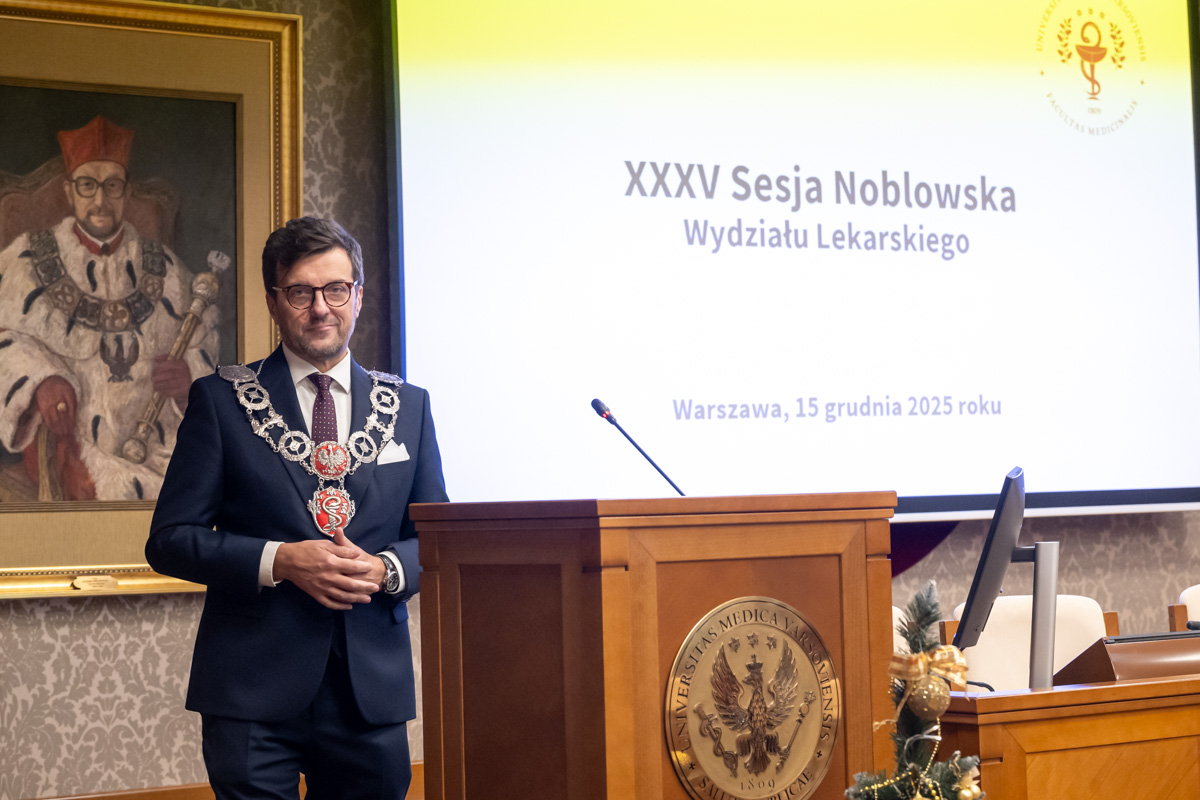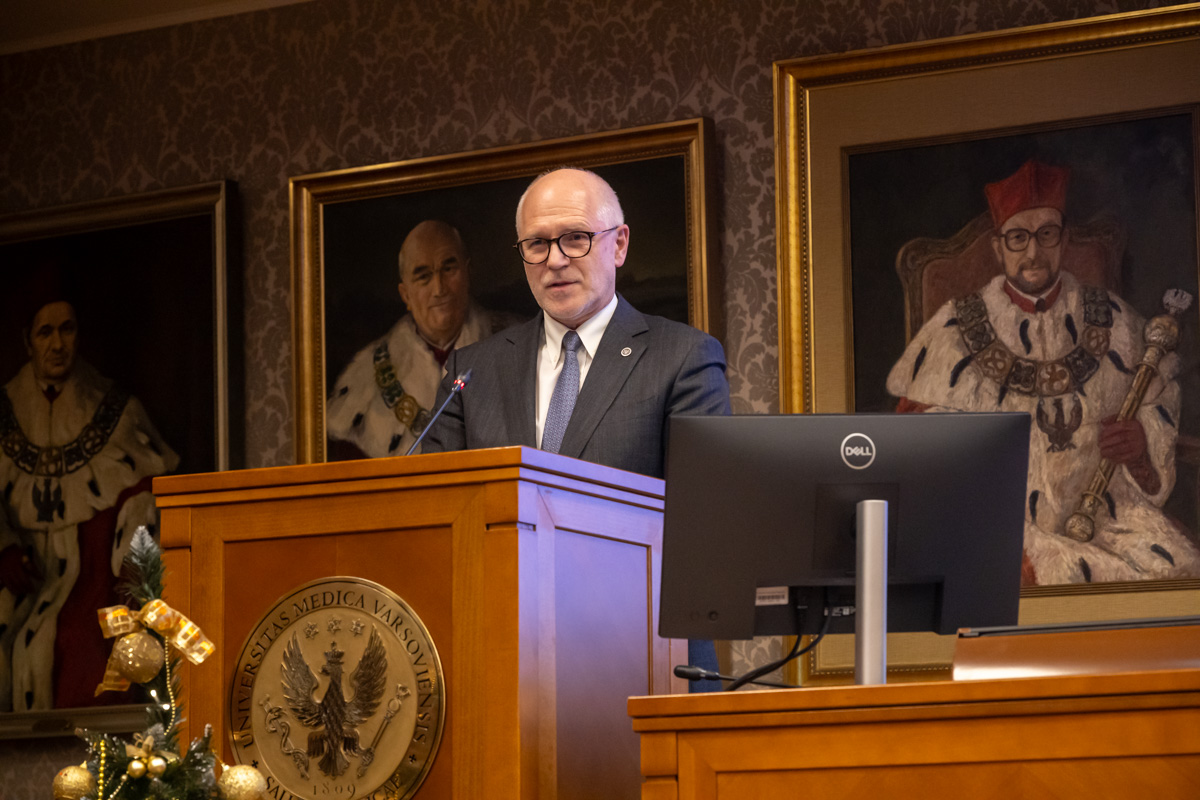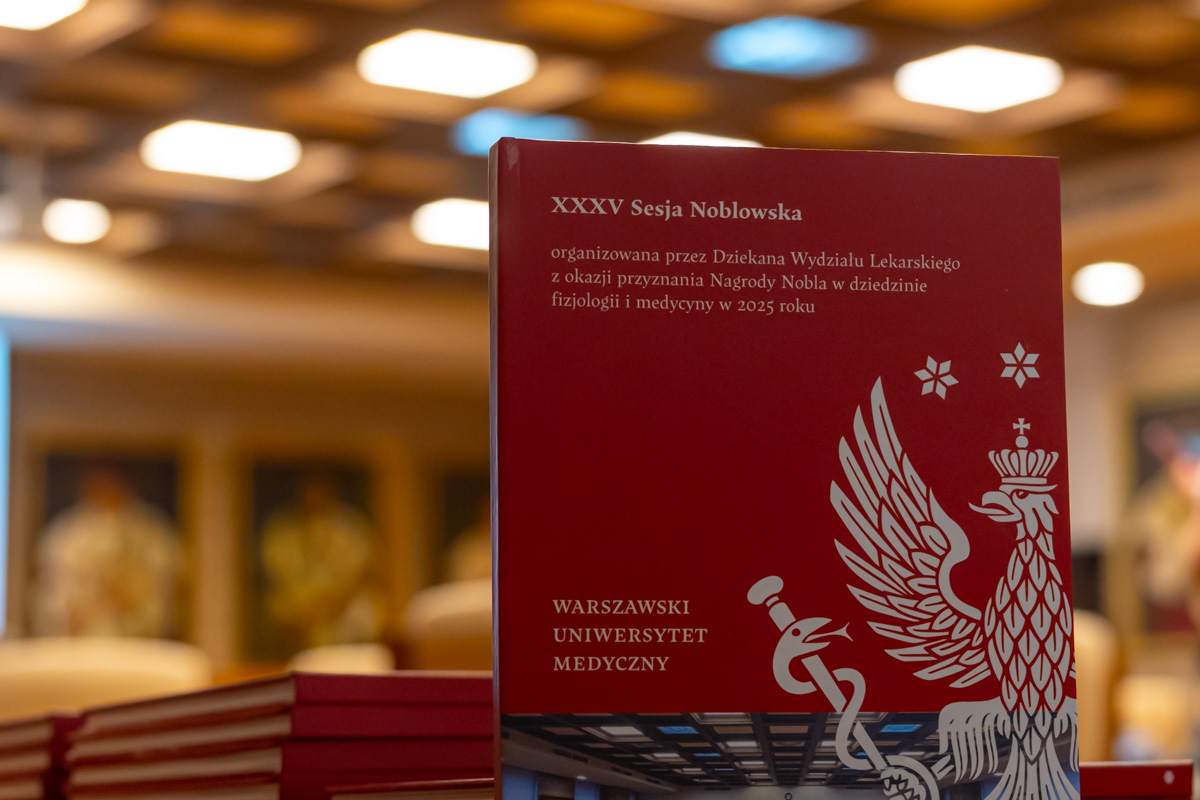
The Nobel Prize award ceremony took place in Stockholm on December 10, on the anniversary of Alfred Nobel’s death. Professor Shimon Sakaguchi, Mary Elizabeth Brunkow, PhD, and Fred Ramsdell, PhD received medals from the King of Sweden, Carl XVI Gustaf. Five days later, the Nobel Prize Session took place at our University, organized by the WUM Faculty of Medicine and hosted by the Faculty’s Dean, Professor Paweł Włodarski.
“Scientific discoveries are typically recognized by the Norwegian Nobel Committee many years later,” said the Dean. “And this year, too, the prize was awarded for work carried out back in the previous century. We have been teaching our students about immune tolerance from their very first years of study. That is why this knowledge may seem fairly obvious... If any of you think that way, or believe that some other discovery was more deserving of the Nobel Prize, you might change your mind after Professor Jakub Gołąb’s lecture.”
Introducing Nobel Prize Laureates
The lecture was preceded by speeches by Professor Rafał Krenke, WUM Rector, and the representatives of the Student Scientific Society. The Rector highlighted the significance of the discoveries made by this year’s laureates.
“The work of this year’s Nobel Prize laureates has given rise to a new field of research, called peripheral immune tolerance, which opens the door to treating autoimmune diseases and cancer, and to improve transplantation outcomes. The achievements of the laureates are incredibly inspiring. They highlight that fundamental research may have very broad practical implications for the development of medicine. Even if their potential only becomes apparent many years later.”
Representatives of the Student Scientific Society took the floor after the Rector. This was the first time they were taking part in the session as speakers. Each of them briefly presented one of the Nobel laureates. Maria Żmijewska, a 6th-year student of the Faculty of Medicine and chairperson of the Student Scientific Society, talked about Mary Elizabeth Brunkow, PhD. Kamila Krupa, a 4th-year student of the Faculty of Medicine and 2nd-year student of dietetics at the Faculty of Health Sciences, discussed the academic journey of Fred Ramsdell, PhD. And finally, Jakub Góra, a 5th-year student of the Faculty of Medicine, talked about Professor Shimon Sakaguchi.
Expert Lecture
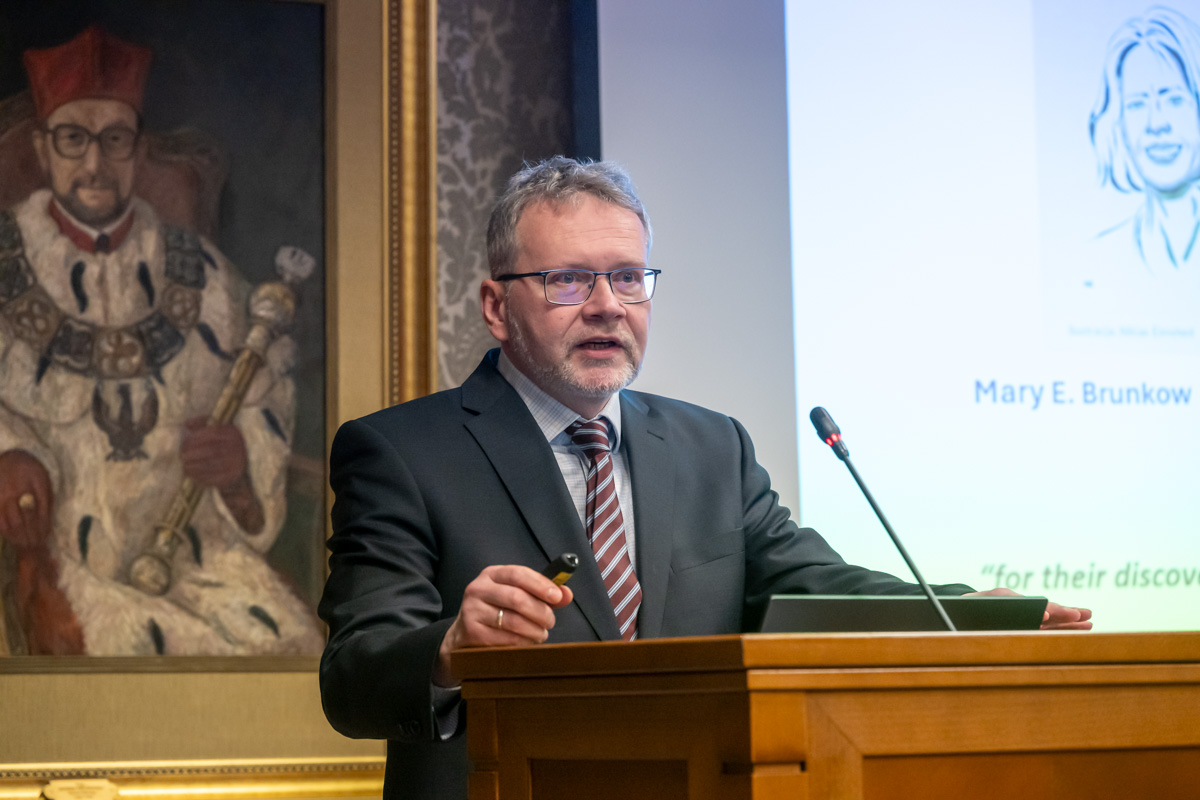
Professor Jakub Gołąb presented a lecture titled “Regulatory T cells – their Discovery, Mechanism of Action, and Role in Immunity.”
“This year’s Nobel Prize laureates were awarded for discoveries that make it easier for us to understand immune tolerance. This is about understanding how our immune system tells the difference between the body’s own molecules and the molecules of foreign microbes, and how it tells which molecules of those microbes are a threat for us and which are harmless,” he explained.
Lymphocyte Diversity and Training
Professor Jakub Gołąb started his lecture by explaining the structure and diversity of lymphocytes.
“Each lymphocyte has a T-cell receptor, or TCR, on its surface. This is obviously not the only receptor, there are lots of them. Each lymphocyte has between a dozen to tens of thousands TCR copies. But a single lymphocyte only has one TCR capable of recognizing a specific antigen. How many lymphocytes can we produce? As many as there are sand grains on our planet. We could fit all the lymphocytes with various TCRs that one human being can produce into 10 billion people. This means that from this entire spectrum, one person only has a tiny percentage of all the possibilities. Lymphocytes are produced in the thymus and are then released into the periphery. They circulate in our bodies and enter various organs, mostly the peripheral lymphatic organs. They search for the antigen, and soon die if they do not find it. The thymus produces new lymphocytes to replace them. This process goes on throughout our lives.”
Professor Gołąb also discussed lymphocyte training in the thymus, i.e. how the thymus checks whether lymphocytes can recognize foreign antigens. How to do that if those antigens are not present in the thymus?
“Only those lymphocytes that have not recognized anything inside the thymus pass this «test». The others die. This eliminates self-reactive lymphocytes, because the only thing they could recognize inside the thymus were own antigens,” the Professor explained. “However, just as in everyday life, there may be «smarty-pants» also in the thymus. Those are the lymphocytes that survive despite being able to recognize the body’s own antigens. We do not know how they accomplish that, but we do know that the thymus may also release self-reactive cells. Learning about this mechanism has made immunologists realize that negative selection may not be the only mechanism responsible for maintaining tolerance of the body’s own antigens. There must be mechanisms operating outside the thymus. And one of those mechanisms was discovered by this year’s Nobel Prize laureates,” he remarked before proceeding to discuss Professor Shimon Sakaguchi’s research.
Research by the Nobel Prize Laureates
In one of his studies, Professor Sakaguchi isolated lymphocytes from healthy mice. He placed them in two test tubes. In one of them, he eliminated CD25+ lymphocytes. Then he administered the contents of the test tubes to nude mice, which do not have the thymus and do not produce T cells. The scientist first injected the lymphocytes into a healthy mouse. The result? The nude mouse stayed healthy. But when he injected the contents of the test tube devoid of CD25+ lymphocytes, the nude mouse developed a range of autoimmunological disorders. Why?
“Because the second sample included self-reactive lymphocytes and lacked regulatory T cells (CD25+ lymphocytes), which block their activity,” Professor Gołąb explained. “If we remove regulatory T cells, the self-reactive ones are capable of causing a disease. This gives us the cells that regulate autoimmune response. Professor Shimon Sakaguchi found the Holy Grail of medicine.”
Professor Gołąb’s lecture also included an explanation of the research carried out by Mary Elizabeth Brunkow and Fred Ramsdell. They worked on scurfy mice (mice with scaly skin). The mice displayed autoimmune disorders that resulted in scaling and crusted skin. This resembles the symptoms of systemic lupus erythematosus, an autoimmune disease that affects humans. At that time, the IPEX syndrome was also known; it affects children, and its symptoms include psoriasis-like skin lesions. The Professor emphasized that the aim of Brunkow and Ramsdell’s research was to identify the mutation first in those mice, and then in the children affected by the IPEX syndrome.
The scientists hoped to be able to develop a drug that could be used to treat autoimmune diseases. By using the old technique of mapping genetic coupling in the X chromosome and sequencing, Brunkow and Ramsdell identified a mutation in the gene that encodes the FOXP3 transcription factor. The mutation of that gene was present both in scurfy mice and in children affected by the IPEX syndrome.
What did that have in common with Professor Sakaguchi’s discovery? This complemented his research. Soon after cloning the FOXP3 gene, Sakaguchi observed that the gene was also indispensable for the functioning of the regulatory T cells (Tregs) he had discovered.
“The importance of those discoveries is shown by the fact that they served as an impulse for further research. Not only did they confirm the research results of the Nobel Prize laureates, but they also broadened our knowledge,” said Professor Gołąb. “They gave us a better understanding of how the immune system operates, and also laid the foundation for developing new therapies. I must say, however, that for now, no therapy that would include using or inhibiting Tregs has yet produced a breakthrough in treating any human disease. This is because the regulation of immune response is an incredibly complex process.”
Useful Information about Tregs
Professor Gołąb also explained the most important types of Tregs and their mechanisms of action. He also discussed their functions, listing processes such as own antigen tolerance, controlling the reaction to gut microbiota antigens, controlling the reaction to food antigens, as well as maintaining tolerance during pregnancy, inhibiting inflammation, and participation in organ regeneration or even in the development of immune memory. The lecture also discussed conditions for which experiments have been conducted that involved using Tregs in humans. This includes autoimmune disease such as rheumatoid arthritis, Type 1 diabetes mellitus, systemic lupus erythematosus, multiple sclerosis, pemphigus, and non-specific inflammatory bowel diseases (e.g. Crohn’s diseases). There have also been attempts to apply Tregs in allergies and organ transplantation.
“We expect that the ideas for how Tregs could be used will soon contribute to alleviating the suffering of many patients,” concluded Professor Gołąb.
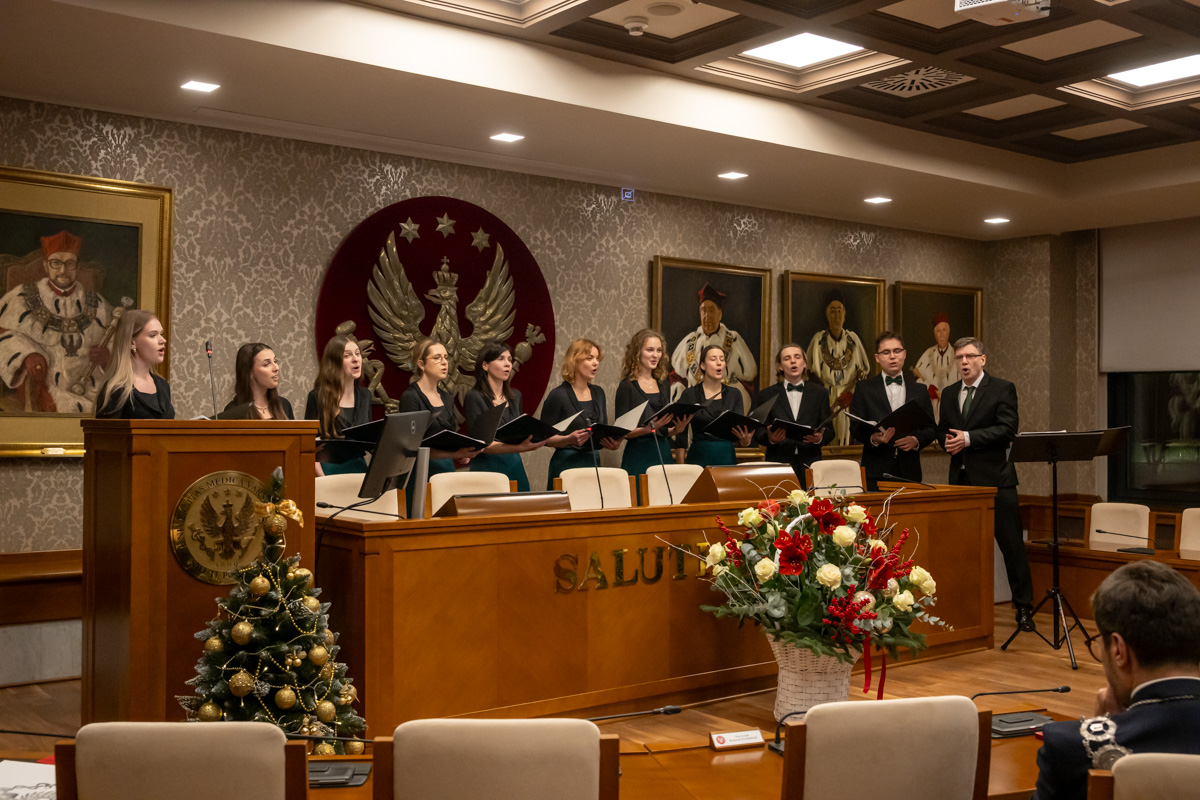
The Nobel Prize Session concluded with the performance by the WUM Choir, directed by Daniel Synowiec. The Choir performed eight Christmas carols in four languages.
Session Participants
The following professionals took part in the session: Professor Rafał Krenke, WUM Rector; Professor Agnieszka Cudnoch-Jędrzejewska, Vice Rector for Clinical Affairs and Investments; Professor Marek Kuch, Vice Rector for Student Affairs and Education; Professor Marek Krawczyk, WUM Rector between 2008 and 2016; Professor Adam Liebert, Chairman of the University Council; Professor Tomasz Jakimowicz, Vice Chairman of the Medical Sciences Discipline Council; Professor Maciej Dawidowski, Chairman of the Pharmaceutical Science Discipline Council; Professor Dagmara Mirowska-Guzel, President of the Warsaw Scientific Society and Vice President of the Warsaw Medical Society; Marta Kijak-Bloch, PhD, WUM Chancellor. Also Vice Deans of the Faculty of Medicine were present (co-organizers of the event) as well as members of the WUM Student Scientific Society and Doctoral Students Government from our University.
YT video from the Nobel Prize Session