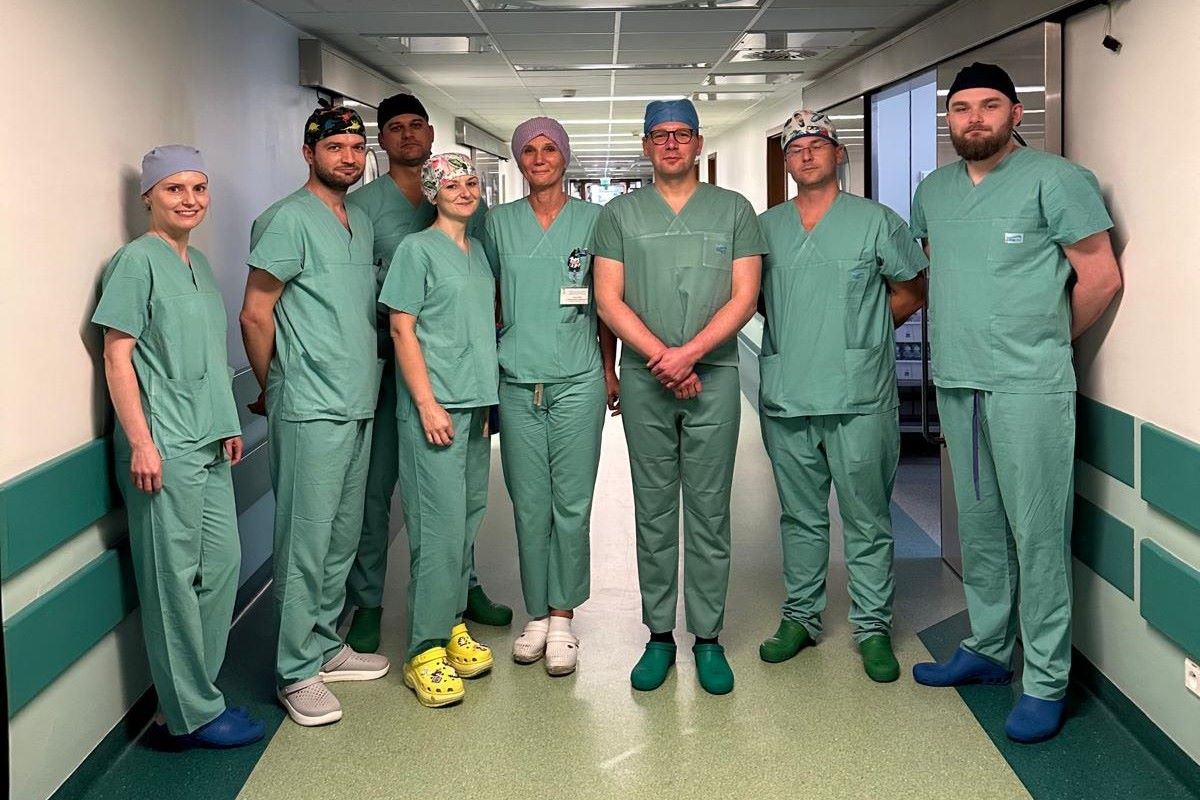
For the first time in the history of transplantology, a single transplanted organ was constructed from two liver fragments of different genetic origin: the patient’s own liver fragment and a fragment obtained from a deceased donor. These were combined on the back table into one functional chimeric liver graft, which was then implanted into the patient.
What a chimeric transplant involves
The operation combined the two most advanced techniques of modern transplantology - autotransplantation and allotransplantation. Due to the extent of the tumor, a conventional liver resection would not have allowed radical removal of the lesions while preserving a sufficient amount of properly functioning liver tissue — and the patient’s survival after surgery depended on this.
The patient’s own liver was therefore removed from the body and subjected to extracorporeal resection. In ex situ surgical conditions, that is, on the “back table”, most of the liver affected by the tumor was removed, and the healthy part of the organ was prepared for reimplantation. However, the remaining native liver fragment was too small to provide safe organ function on its own. Therefore, it was connected on the back table with an appropriately prepared fragment of liver obtained from a deceased donor. In this way, a single chimeric graft was created, which was then implanted into the patient.
The donor-derived fragment served as temporary biological support, enabling regeneration and growth of the patient’s own liver tissue.
Who performed the innovative surgery
Prof. Michał Grąt developed the concept of the surgical operation and was the lead surgeon during all its key stages - hepatectomy, extracorporeal resection, creation of the chimeric graft, and implantation.
During the abdominal stage of the surgery, he was assisted by Dr. hab. Wacław Hołówko and Maryla Turkot, MD. During the extracorporeal resection and preparation of the chimeric graft, assistance was provided by Dr. hab. Wacław Hołówko and Agata Konieczka, MD.
The division of the liver obtained from the deceased donor and preparation of the fragment used to create the chimeric graft were performed by Konrad Kobryń, MD, PhD, and Paweł Rykowski, MD PhD. Dawid Tomasik, MD, was responsible for the patient’s anesthesia.
The surgical team also included operating room nurses Ewelina Kamińska and Małgorzata Ponichtera, as well as anesthesia nurses Agata Małek and Joanna Podsiadła.
Thanks to the very good regeneration of the patient’s own liver tissue, on 18 May 2026 — just one week after the first operation — it was possible to perform a second procedure and remove the donor-derived portion of the graft. Only the patient’s own liver, which had grown sufficiently and was functioning properly, remained in her body.
The patient remains currently in good condition.
A new direction in liver surgery and transplantology
“The essence of this operation was the creation, on the back table, of one functional organ composed of two liver fragments of different genetic origin. The fragment from the deceased donor provided the patient with safe organ function during the period when her own liver part was still too small. Once sufficient growth had been achieved, we were able to remove the allogeneic part, leaving the patient with her own properly functioning liver. In practice, this means the creation of a new treatment concept for selected patients with advanced liver tumors for whom radical treatment had previously not been possible,” says Prof. Michał Grąt.
The chimeric liver transplant represents a unique combination of oncological surgery, transplantology, and ex situ surgery. It draws on experience gained from liver autotransplantation, transplantation of liver fragments, and advanced vascular reconstructions, creating an entirely new treatment strategy. This is another breakthrough achievement of the Department of General, Transplant and Liver Surgery at WUM. In recent years, the department’s team was the first in Poland to perform, among other procedures, the first liver autotransplantation, the first auxiliary liver transplantation, and to develop the country’s only program for transplantation of liver fragments from living donors in adult patients.