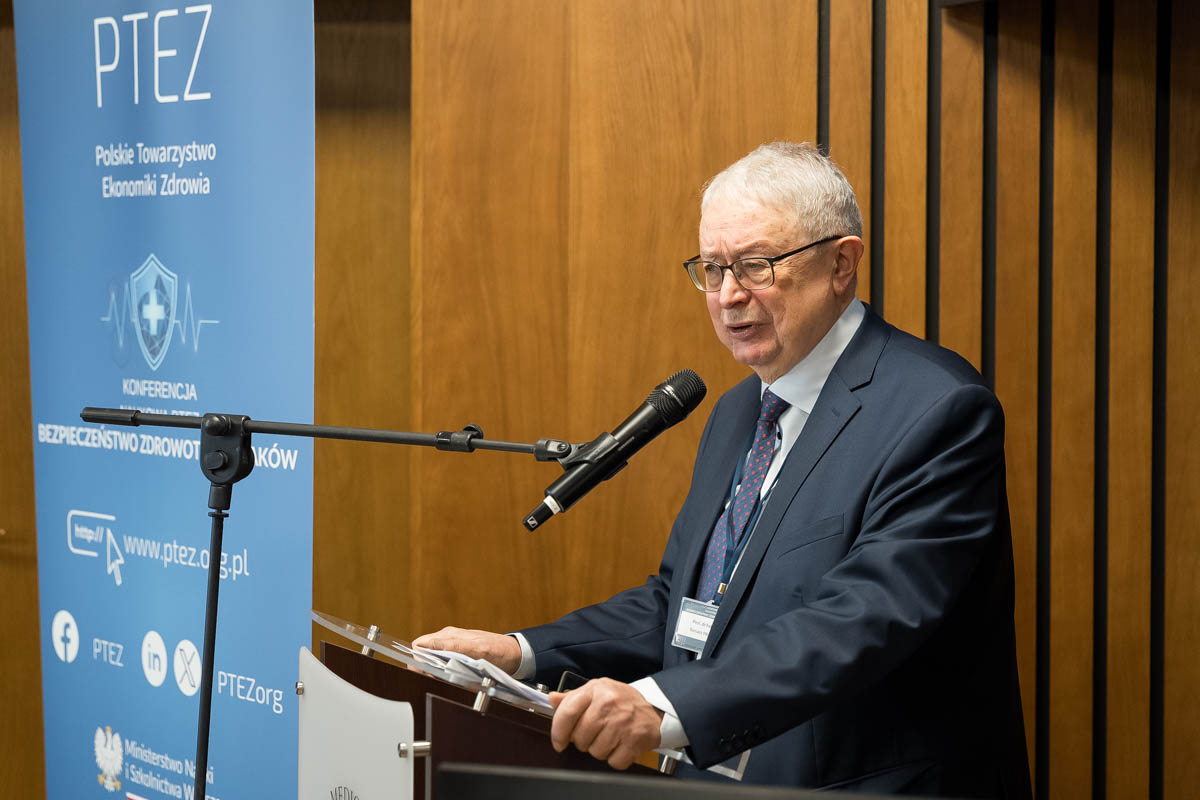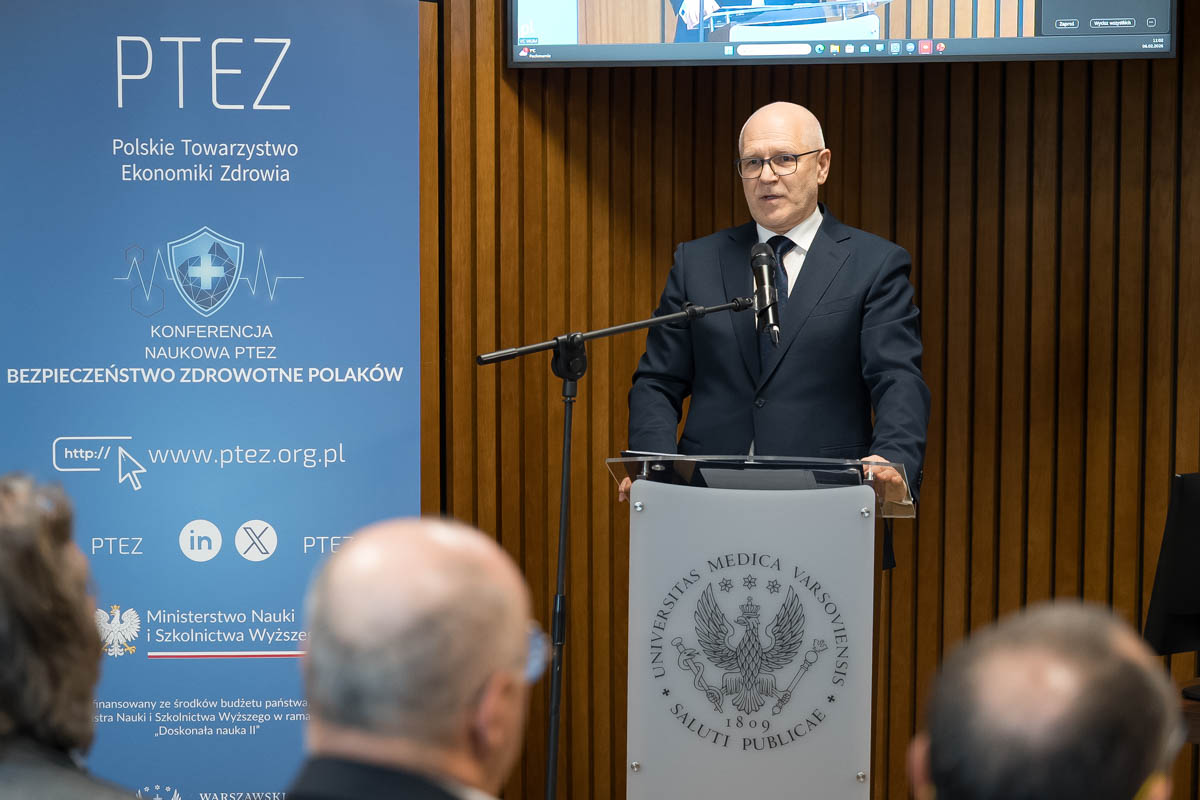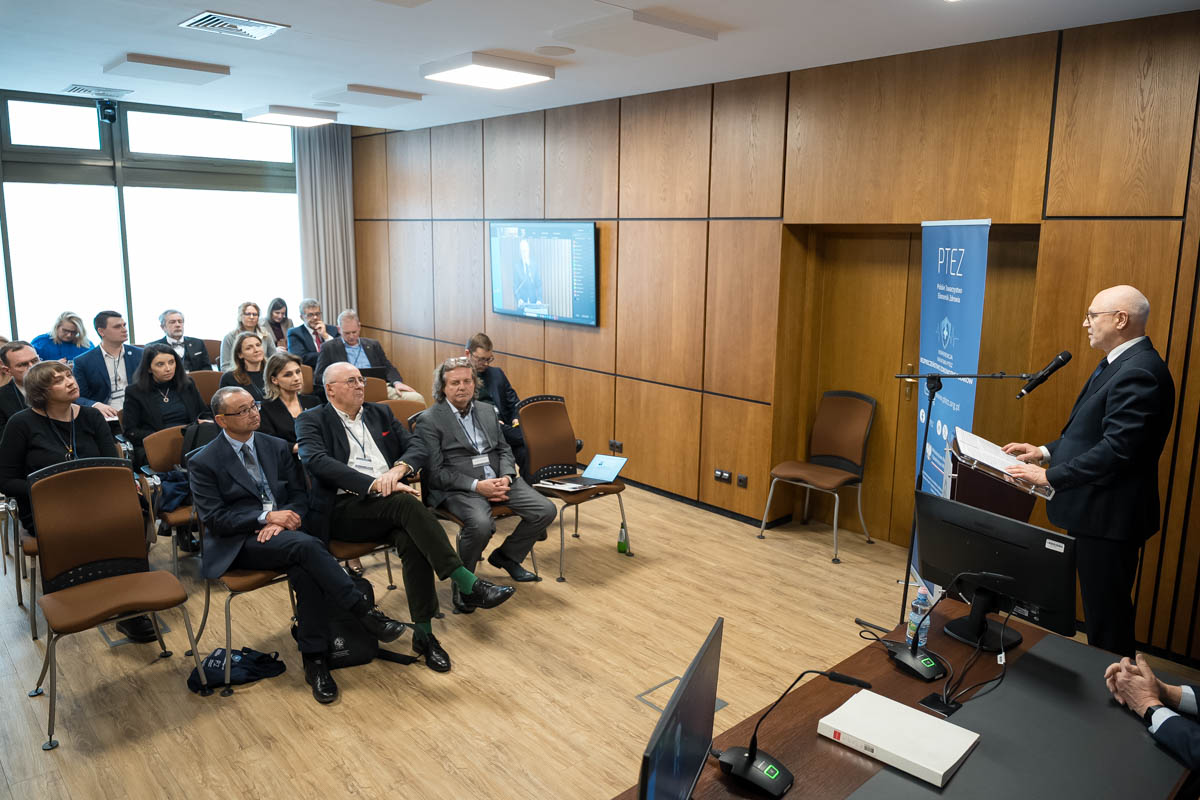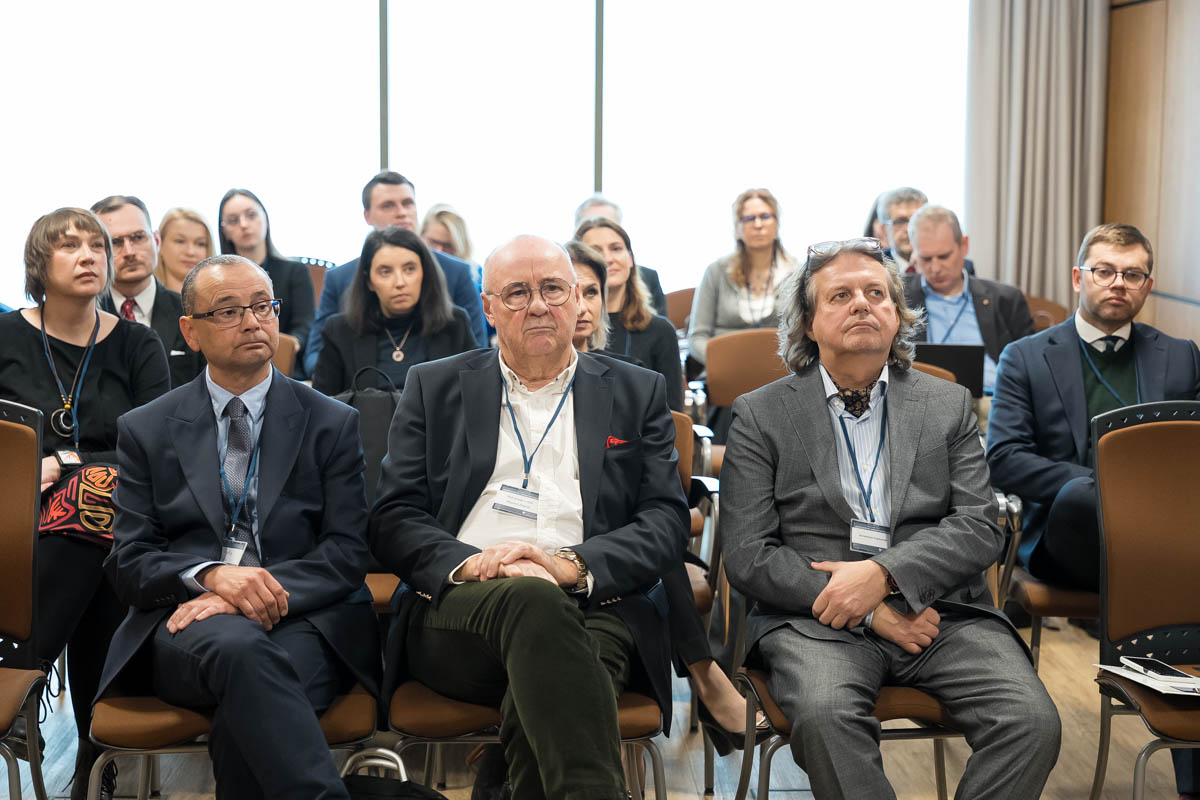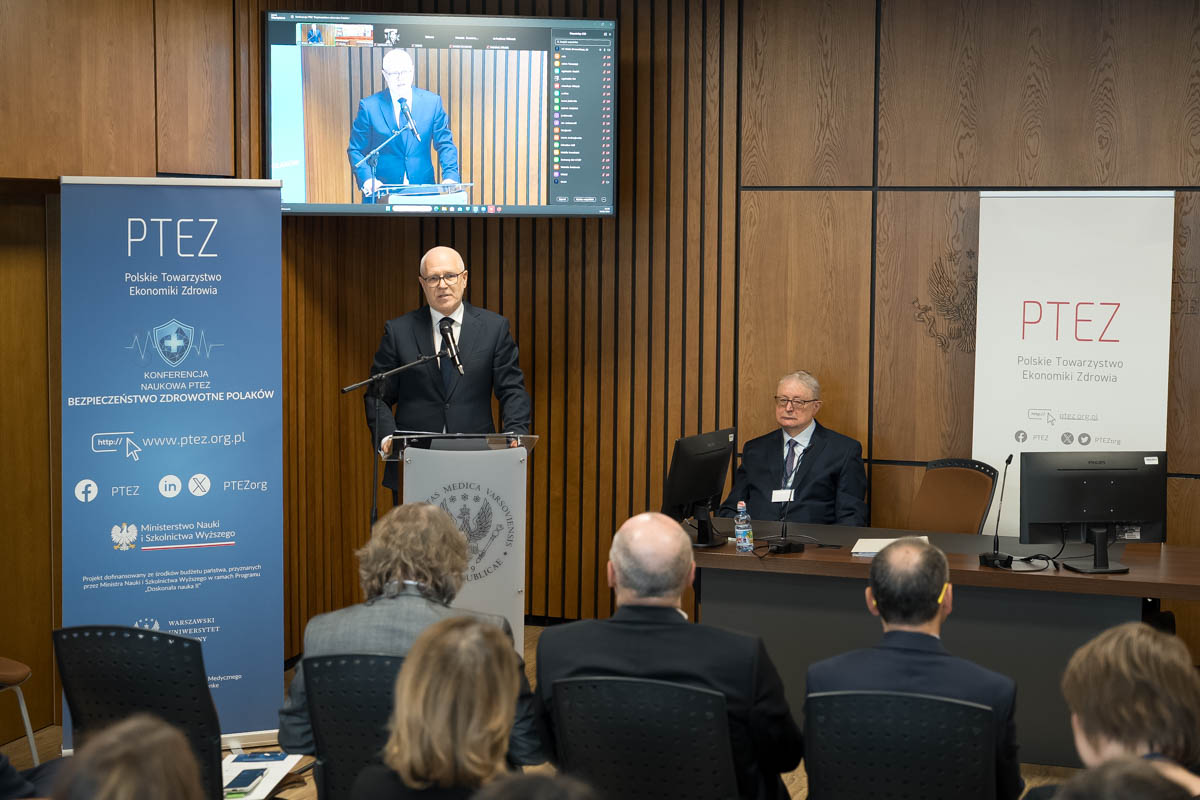
"The conference program reflects the complexity of the healthcare system and shows how many different factors shape it. It is also proof of a modern way of thinking about this system," emphasized the Rector of WUM, Prof. Rafał Krenke. He also expressed his conviction that necessary solutions and changes in the area of health security of Poles would be developed.
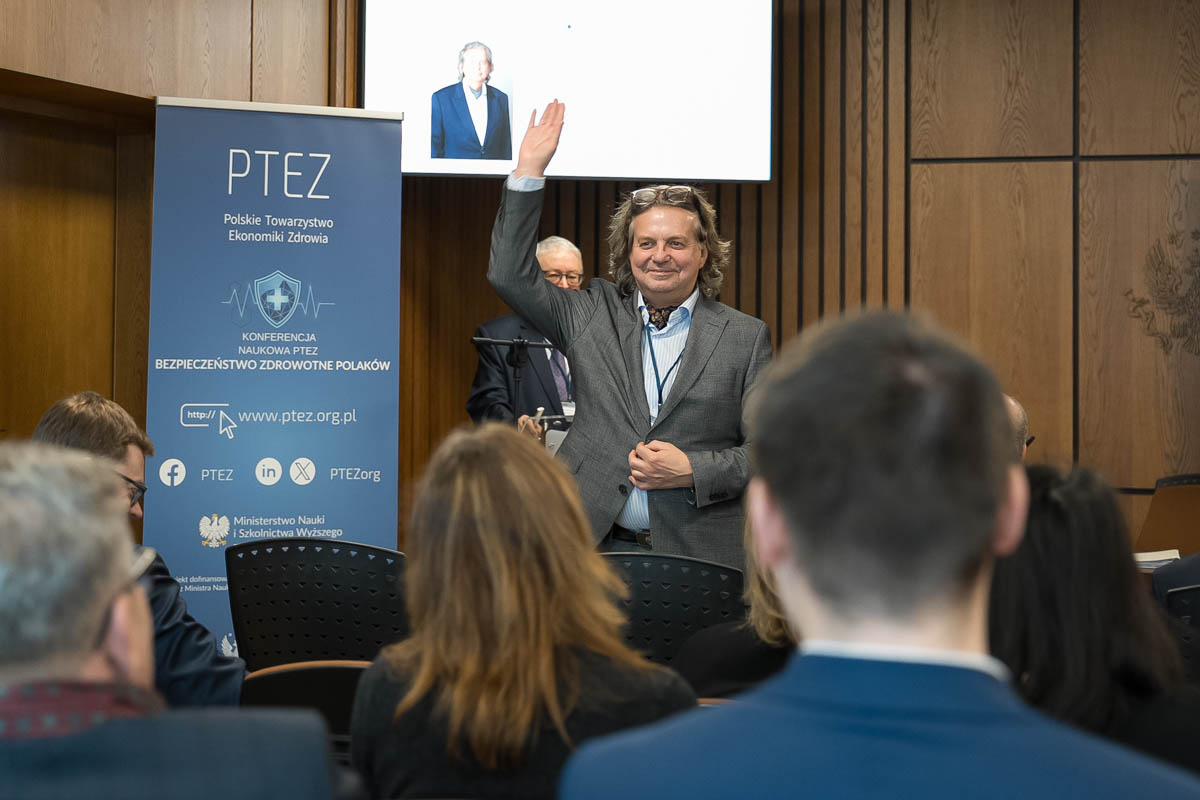
Prof. Tomasz Hermanowski, the President of the Board of the Polish Society for Health Economics, thanked those who made the greatest contribution to the organization of the conference. This group included the Rector, whose patronage helped to obtain funding for the organization and invite the best speakers, as well as the Ministry of Health, which provided the funding. Then, the professor talked about the most important goal of organizing the event.
"We want the conference to result in recommendations that we will send to the management of the Ministry of Health, at the same time proposing directions for further research. The aim is that a standard of healthcare management based on scientific evidence is introduced in Poland, which we are still striving for, but unfortunately we are still very far from reaching it."
Key topics of the conference and the voice of experts
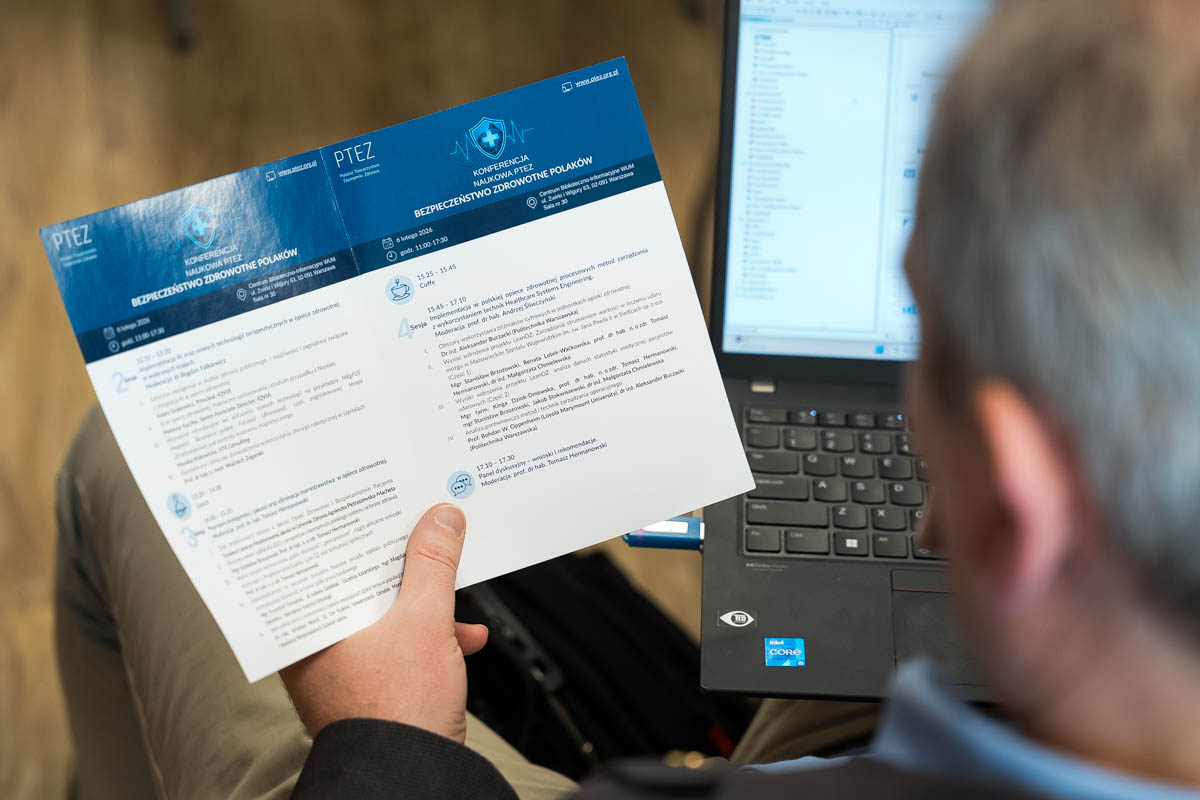
As regards conference presentations, the organizers managed to invite a group of excellent experts and authorities in various fields. The program of the event was divided into four thematic sessions. The entire event concluded with a panel discussion.
Analysis and recommendations for ensuring drug safety at national and EU level
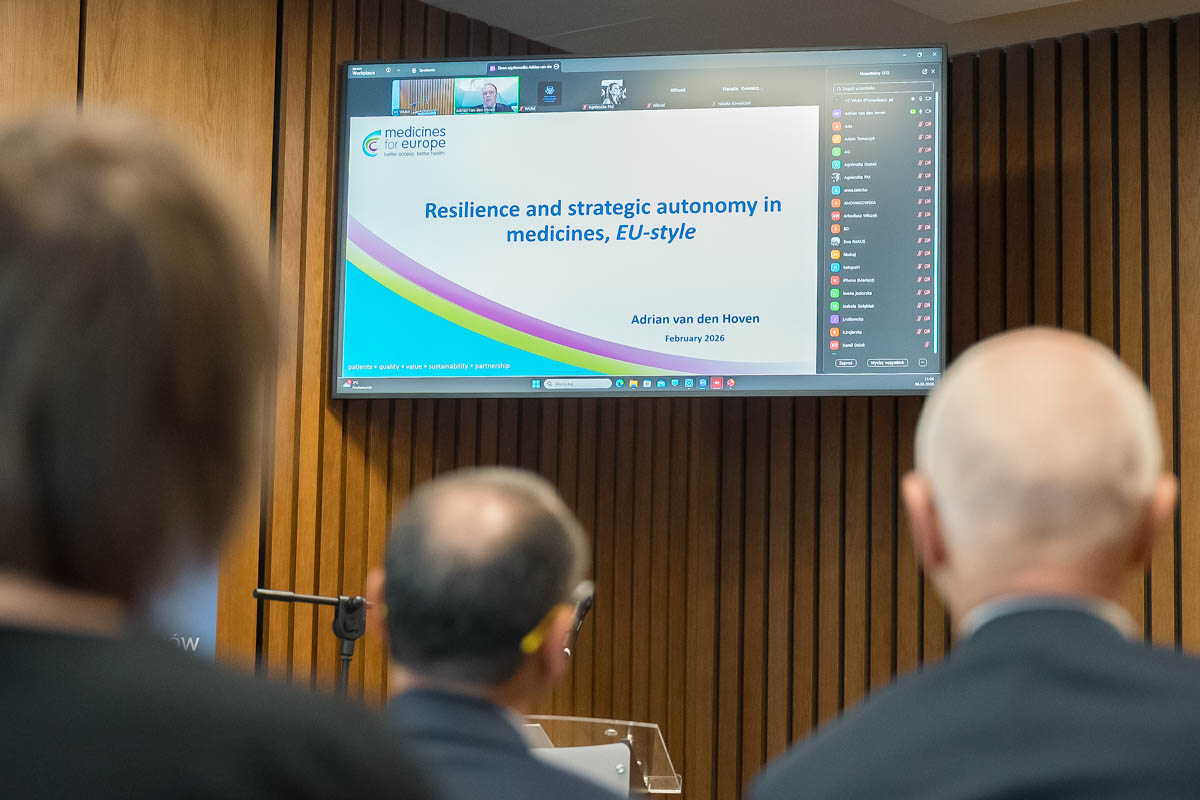
In this panel, Adrian van den Hoven, Director General of Medicines for Europe, was the first to speak about drug independence from the European perspective.
“Today, it is difficult to talk about health care without also thinking about health security. This is due to growing geopolitical tensions in the world. Of course, the largest of these is the Russian invasion of Ukraine, but there are also tensions with Asia, and now, unfortunately, also with the United States," the speaker noted and added: "Many people today talk about the fact that the European Union is very weak. It is true that in political terms the EU sometimes faces difficulties. But the European industry remains strong and, in my opinion, this applies especially to the pharmaceutical industry."
Then, the subject of the list of critical medicines in Poland and in Europe was discussed by Grzegorz Rychwalski, the Vice-President of the Medicines for Poland, the Vice Chair of Business at OECD Health Committee, and a Member of Critical Medicines Alliance at DG HERA European Commission.
Finally, Dr. Jarosław Frąckowiak, the Director of Strategy and External Relations, PEX presented the answer to the question of what pharmaceutical companies need to be able to invest in the development and production of medicines in Poland.
Implementation of AI and new therapeutic technologies in healthcare in selected countries
Adam Grabowicz, IQVIA Principal, analyzed the opportunities and threats associated with the integration of artificial intelligence in healthcare. Mateusz Łuczko, Senior Associate Director at IQVIA, presented an example of the use of AI in Germany. Monika Małowicka from HTA Consulting talked about the reimbursement challenges in the implementation of new technologies on the example of MRgFUS, i.e., magnetic resonance-guided focused ultrasound, while Prof. Wojciech Zegarski focused on the economic and clinical experience of using robotic surgery in hospitals.
"Last year, our hospital performed the most robotic surgeries in Poland: 1,152 surgeries performed by urologists, surgeons, gynecologists and thoracic surgeons. This justified the purchase of three DaVinci robots. All these robots work," said Professor Zegarski. "Does the robot work on its own? Of course not, it cannot make any decision, but it helps and informs us about some dangers."
Improving accessibility and quality, and eliminating wastefulness in healthcare
The third panel began with a speech by Agnieszka Pietraszewska-Macheta, the Director of the Healthcare Quality Monitoring Center, who talked about the state of the implementation of the Healthcare Quality and Patient Safety Act.
Subsequently, Stanisław Brzozowski and Prof. Tomasz Hermanowski discussed the priorities of hospital reforms in 2025 from the perspective of stakeholders in the Polish healthcare system. Another presentation delivered by Professor Hermanowski concerned the use of "public disclosure" and "peer pressure" mechanisms as well as conclusions resulting from the InterQuality and Lean OZ projects and public consultations.
Responsibility for the violation of the financial discipline of the management board of a public hospital operating in the form of a commercial company was discussed by Krzysztof Osmański and Dr. Izabela Gołebiak from Łazarski University, as well as Magdalena Sakowicz from the National Institute of Oncology.
At the end, Dr. Jarosław Woroń from Jagiellonian University Medical College in Kraków and the University Center for Monitoring and Research on Adverse Drug Reactions, presented the conclusions drawn from the monitoring and research of adverse drug reactions in the Polish population.
"Undesirable effects are expensive. According to data from 2025, a drug-related complication in terms of hospitalization costs ranges from 6,000 to 8,000 euros," emphasized the speaker.
Implementation of process management methods in Polish healthcare using Healthcare Systems Engineering techniques
The last panel featured: Aleksander Buczacki, PhD Eng., from the Warsaw University of Technology, who presented the areas of use of digital twins in health care facilities; Stanisław Brzozowski, Renata Lotek-Waćkowska, Prof. Tomasz Hermanowski and Małgorzata Chmielewska, PhD Eng., who discussed the results of the implementation of the LeanOZ project and value stream management in the treatment of stroke at the St. John Paul II Mazovian Provincial Hospital in Siedlce Ltd. Subsequently, a team including: Kinga Dziok-Dmowska, MSc., Prof. Tomasz Hermanowski, Stanisław Brzozowski, Jakub Stokwiszewski and Małgorzata Chmielewska, PhD Eng., presented the analysis of data on medical statistics of stroke patients, carried out as part of the same project.
Finally, the conference participants could listen to a comparative analysis of operational management methods and techniques, presented by Prof. Bohdan W. Oppenheim from Loyola Marymount University and Aleksander Buczacki, PhD Eng., from the Warsaw University of Technology.