New exam – new challenges
The OSCE (Objective Structured Clinical Examination) exam remains one of the most important topics for medical universities. Starting in the 2028/2029 academic year, it is to become a mandatory element in the degree program in dentistry, and starting in 2029/2030 – a mandatory component in the degree program in medicine. The exam will assess students' practical skills. Ultimately, it is to be introduced in other fields: nursing, obstetrics, emergency medicine and physiotherapy. The proposed changes also include an optional OSCE I exam (pre-OSCE), which will check the preparation of students for clinical classes at an earlier stage of education.
The introduction of OSCE exams means a huge organizational and financial effort for universities. Therefore, this topic received special attention during the KRAUM conference. A special OSCE Expert Subgroup of the KRAUM Education Commission was responsible for developing guidelines and the analysis of the estimated costs of conducting the exam.
The exam requires, among other things, upgrading simulation centers, implementing IT solutions for administering and grading the exam, preparing scenarios and training staff. Regular training of those working in examination committees will also be needed. Disposable materials used at examination stations, where the student performs specific tasks reflecting various clinical situations also constitute to an important share of the costs.
In the coming years, universities will have to prepare not only for the organization, but also for the constant administration of examinations in this formula. Long term expenses include the development of the station's substantive content, the purchase of audio-visual equipment and an assessment system, equipment of workstations, depreciation of simulators, participation of simulated patients, disposable materials and staff training. It is estimated that preparing a large university for the OSCE may cost approximately PLN 1 million. In addition, annual costs of psychometrics and IT services estimated at approximately PLN 200,000 and the cost of a person responsible for coordinating the exam have to be added.
Upcoming development in education
The rectors also discussed the planned amendments to the Act on the professions of nurse and midwife. One proposal calls for restructuring midwifery training: the first three years of study would focus on nursing education, followed by 18 months of midwifery training. Therefore, the graduate would complete her studies with two qualifications: as a nurse and a midwife. The proposed model is also widely discussed outside the KRAUM – due to the provision that only teaching hospitals, research institutes, universities, Center of Postgraduate Medical Education and district chambers of nurses and midwives could conduct postgraduate training in these professions.
The KRAUM unanimously expressed its support for the activities of the National Accreditation Council for Nursing and Midwifery Schools (KRASzPiP), which evaluates universities conducting or planning to conduct studies in nursing and midwifery.
Future standards for training speech therapists, prepared by the Ministry of Science and Higher Education, were also discussed. The preservation the interdisciplinary nature of speech therapy, including its clinical dimension, was a key theme, as this is necessary for working in hospital wards, medical centers and specialized clinics, including rehabilitation centers.
Allocating subsidies according to the new algorithm
A lot of attention was devoted to the amount of state budget subsidies for medical universities and the new indicators used by the Ministry of Health to calculate them. In the new algorithm for medical universities, the internationalization component was removed, and the project component did not include some of the projects funded by such entities as the NAWA, the European Commission, the Ministry of Digitization or the Ministry of Health.
Growing university competition for hospitals
Increasing admission limits and a higher number of universities offering medical programs mean that non-university-affiliated hospitals are becoming indispensable for student training. However, access to such facilities is not guaranteed by law to public universities – it is based on contracts and negotiations, and its costs are increasing. At the same time, the planned shortening of the postgraduate internship will increase the importance of the quality of clinical education during undergraduate studies, which requires an adequate hospital infrastructure. With a limited university clinical infrastructure, the rates that hospitals and external centers offer to universities for conducting classes with students are increasing. In some places, the increase reaches up to 300%.
Important guests of the KRAUM conference on important directions of change
- Senator Beata Małecka-Libera, the chairwoman of the Senate Health Committee, spoke about the committee's work on changes in the public health education curriculum. She emphasized the need to standardize education and strengthen the role of graduates of this field in the implementation of preventive programs and health education, for example in schools. The Committee is also involved in promoting the development of counseling and prophylaxis in pharmacies and the increasingly more common topic of adherence, i.e., supporting patients in the implementation of therapeutic recommendations, especially in chronic diseases.
- Katarzyna Zioło-Pużuk, the Secretary of State at the Ministry of Science and Higher Education, discussed the new model for the evaluation of scientific activities for the years 2026–2028. The model was submitted for legislation in connection with the draft amendment to the act – Law on Higher Education and Science. It assumes two pillars of evaluation: the quality of scientific activity in disciplines and the potential in research and education. The law is expected to be passed by the end of the year. Some comments submitted by the KRAUM have already been taken into account, and the minister encouraged to submit others.
- Katarzyna Kęcka, the Undersecretary of State in the Ministry of Health, commented on two pending acts: the Act on the professions of doctor and dentist, currently at the stage of submitting comments, and the Act on the professions of nurse and midwife, covering the issues of undergraduate and postgraduate education. She also thanked the rectors for the effective use of funds from the National Reconstruction Plan (KPO), e.g., for the development of medical simulation centres where OSCE examinations will be conducted.
- Tomasz Maciejewski, the Undersecretary of State at the Ministry of Health, drew attention to the necessity for preparing medical staff for digitization and the use of AI tools. He emphasized that new technologies should support the development of knowledge and competences of doctors, not replace them. He also highlighted the need to better prepare graduates and young doctors to work with modern diagnostic and clinical solutions.
- Mariusz Klencki, the Director of the Department of Medical Staff Development at the Ministry of Health, presented the changes to the Act on the professions of doctor and dentist, including those concerning the new rules for the allocation of residency positions throughout the country.
- Zuzanna Nowak-Życzyńska, the Director of the Department of Science and Evaluation of the Medical Research Agency, discussed the plans to continue current programs and introduce new initiatives in the field of medical sciences and health sciences. She also talked about the role of Regional Digital Medicine Centers and plans to turn them into a network.
- Janusz Uriasz, the Chairman of the Polish Accreditation Committee, presented the assessment of the current situation in higher education in Poland, with particular emphasis on changes concerning the university market, the quality of education and challenges related to the growing number of majors. Currently, 52% of faculties at universities are or will be PKA-accredited, and 45% do not have such accreditation.
- Jan Kraszewski, the Chairman of the Board of the Polish Union of Hospitals, drew attention to the difficult financial situation of university hospitals, resulting from factors including the high value of uncovered hospital services for 2025 and for the first half of 2026.
Acknowledgments to the conference participants and hosts
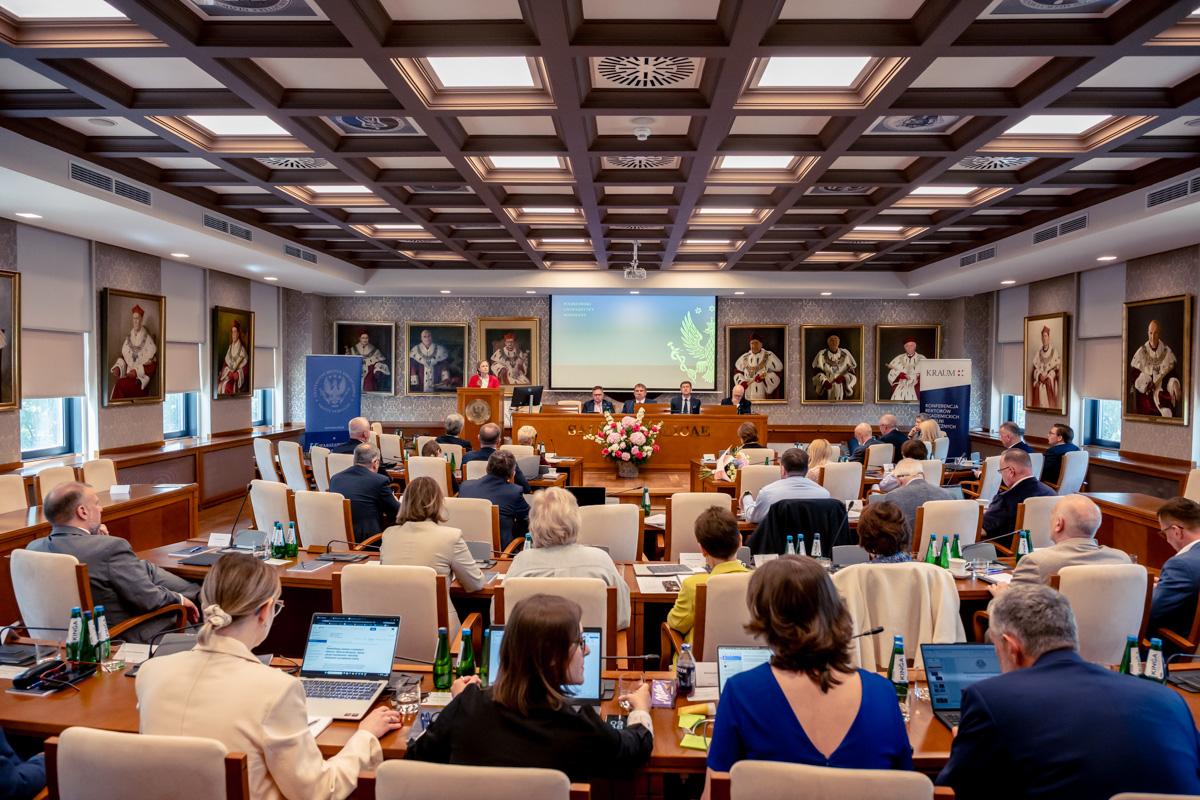
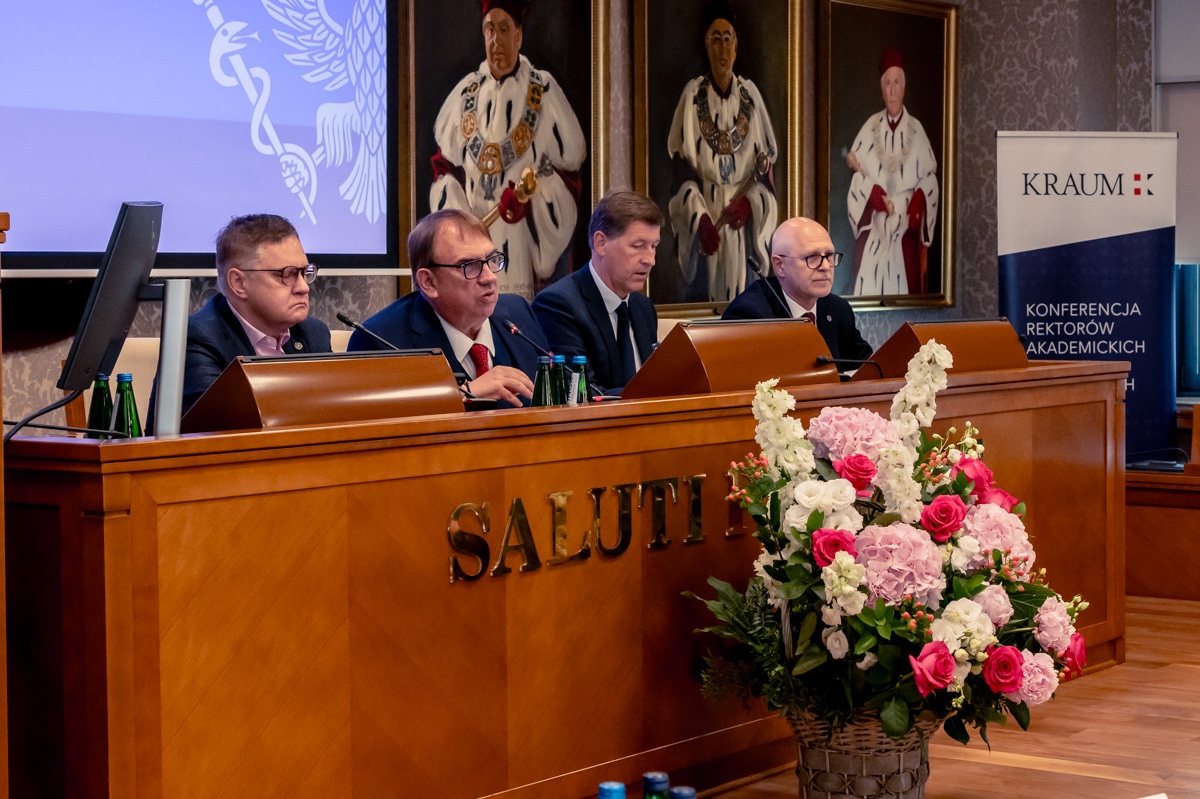
At the end of the conference, the conference chair, Prof. Wojciech Załuska, the Rector of the Medical University of Lublin, thanked the participants and emphasized the importance of such meetings for exchanging views, agreeing positions and building cooperation between medical universities. He pointed out that the KRAUM is constantly working on the development and modernization of education in medical universities. He addressed special thanks to the host of the meeting in Warsaw – the rector of the WUM, Prof. Rafał Krenke and to everybody involved in organizing and conducting the conference.
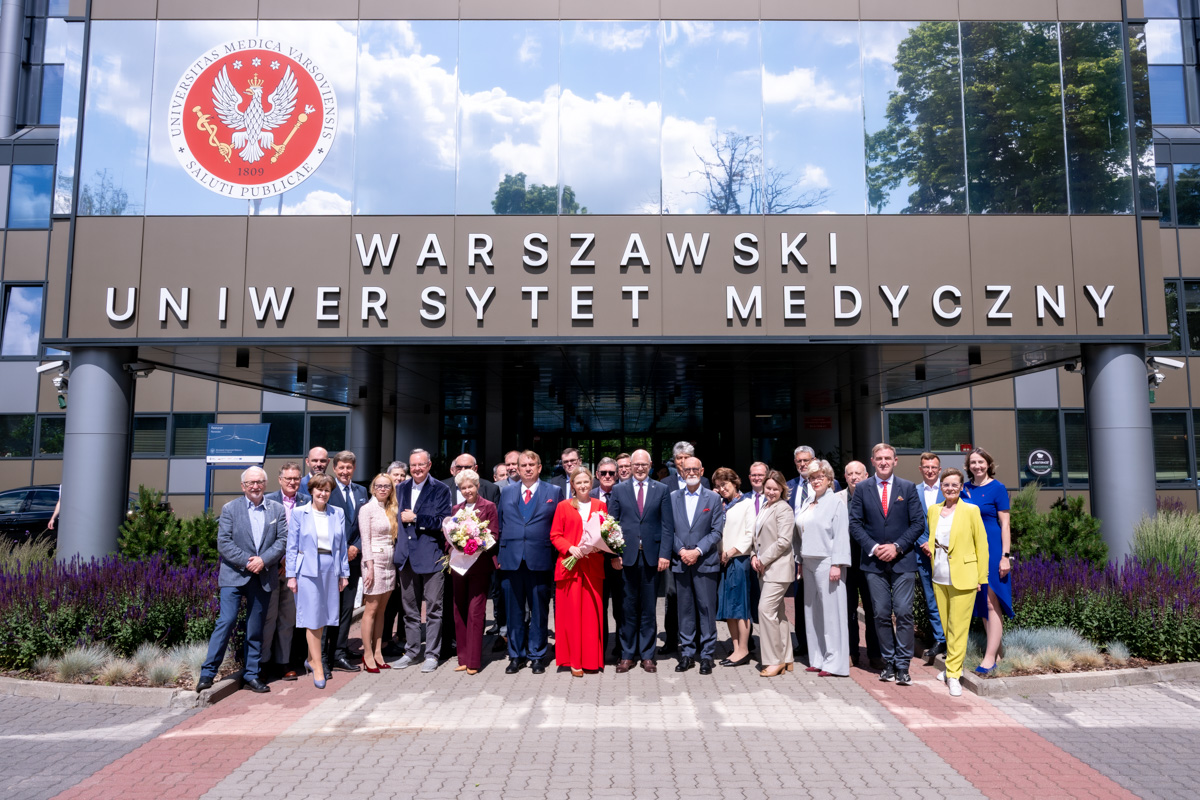
In addition to the guests mentioned, the meeting was attended by representatives of all universities affiliated with the KRAUM: Prof. Wojciech Załuska – the Rector of the Medical University of Lublin; Grzegorz Cebula, MD, PhD, Jagiellonian University Professor – the director of the Center for Innovation in Medical Education, Jagiellonian University, Collegium Medicum; Prof. Leszek Domański – the Rector of Pomeranian Medical University in Szczecin; Prof. Krzysztof Filipiak, the Director/Rector of the Center of Postgraduate Medical Education, Prof. Dariusz Grzanka – the Vice Rector for the Medical College, Nicolaus Copernicus University in Toruń, Ludwik Rydygier Collegium Medicum in Bydgoszcz; Prof. Marcin Gruchała – a honorary chairman of the KRAUM, Medical University of Gdańsk; Dr Mariusz Wysokiński, University Professor – the chairman of KRASPiP, the Dean of the Faculty of Health Sciences, Medical University of Lublin; Prof. Irina Kowalska – the Vice Rector for Science and Evaluation, Medical University of Bialystok; Prof. Zbigniew Krasiński – the Rector of Karol Marcinkowski Medical University in Poznań; Dr Beata, UJK Professor – the Vice Rector for Medical Affairs, Jan Kochanowski University in Kielce, Collegium Medicum; Prof. Maciej Małecki – the Vice Rector for the Medical College, Jagiellonian University Collegium Medicum; Prof. Michał Markuszewski – the Rector of the Medical University of Gdańsk; Prof. Artur Mazur – the Vice Rector for the Medical College, University of Rzeszów, Collegium Medicum; Prof. Janusz Moryś – the Chairman of the University Committee for the Quality of Education at the Medical Faculty of the KRAUM, Medical University of Gdańsk; Prof. Agnieszka Piwowar – the Vice-Rector for Students and Didactics, Wrocław Medical University; Janusz Piekarski – the Rector, Medical University of Łódź; Prof. Jerzy Stojko – the Vice-Rector for Studies and Students, Medical University of Silesia in Katowice; Dr Magdalena Krajewska-Włodarczyk, UWM Professor – the Vice Rector for the Medical College, University of Warmia and Mazury in Olsztyn, Collegium Medicum; Prof. Maciej Zabel – the plenipotentiary for cooperation with the KRAUM, University of Zielona Góra, Collegium Medicum; Prof. Marcin Zaniew – a Vice Rector of the University of Zielona Góra, Collegium Medicum.
Representatives of the host – Medical University of Warsaw: Prof. Rafał Krenke, the Rector; Prof. Agnieszka Cudnoch-Jędrzejewska, the Vice Rector for Clinical Affairs and Investments; Michał Grąt, the Vice Rector for International Relations, Promotion and Development; Prof. Marek Kuch, the Vice Rector for Student Affairs and Education, Prof. Dorota Olczak-Kowalczyk, the Vice Rector for Human Resources, Prof. Marcin Sobczak, the Vice Rector for Science and Technology Transfer.